
Custom Cleaning Brush
Anti-Static Printing Plastic Brush
Anti-Static Printing Plastic Brush gives the operator controlled access to contacts, slots, and boards for precision electronics and static-control cleaning. Head shape, reach, handle form, and filament stiffness are matched to lint, oxide, and flux residue and the available working space.
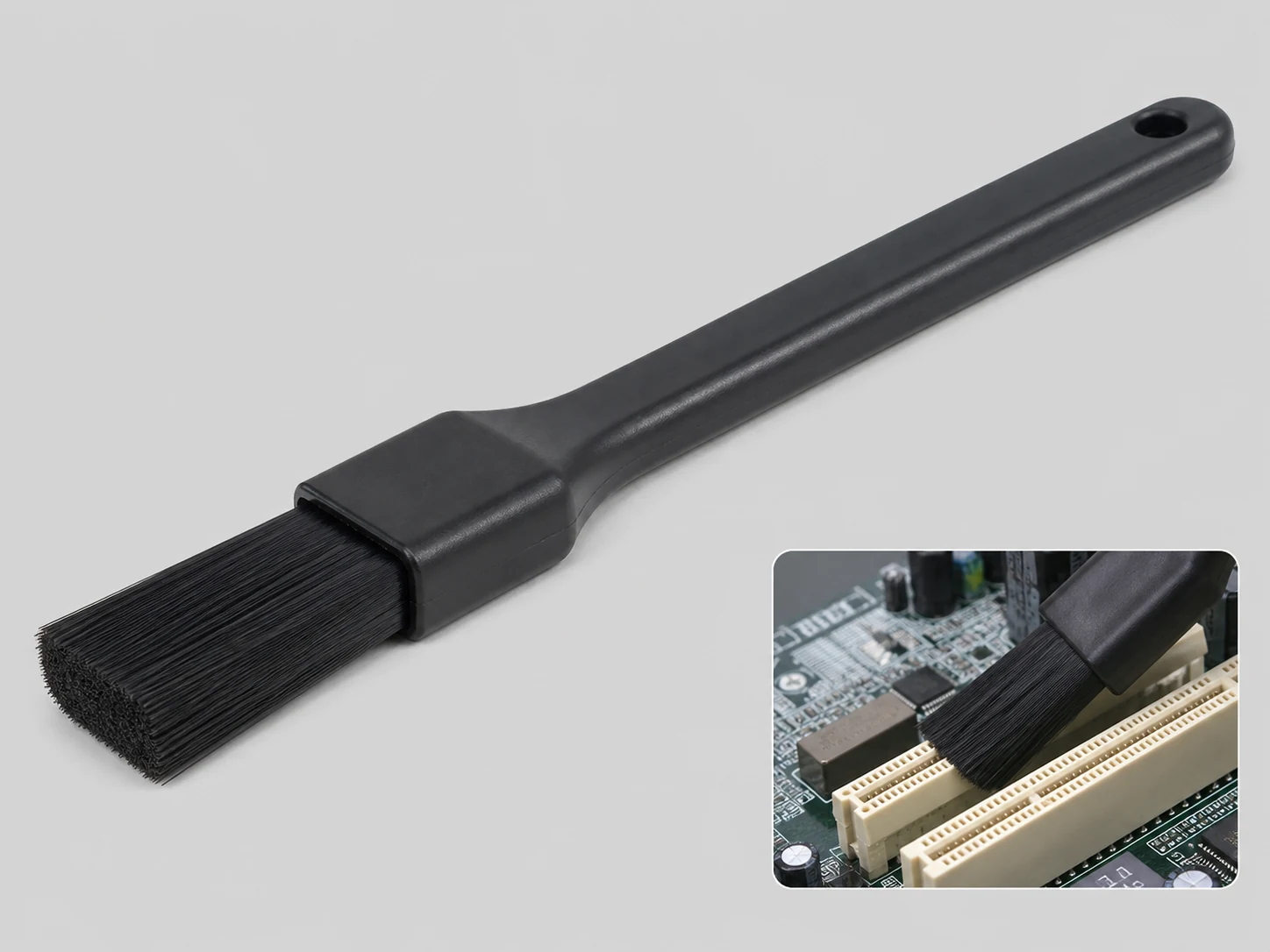
Product Features
Dissipative contact reduces static on printed plastic — Conductive nylon or antistatic filament helps limit charge while loose particles are brushed away.
Soft bristles protect glossy and printed surfaces — Flexible contact removes dust without using a rigid scraper or metal wire.
Handheld head targets local defects — The brush can clean edges, recesses, lettering, and small printed areas before inspection or assembly.
Fine trim follows shallow surface texture — Bristle tips enter molded detail and inked contours without requiring heavy pressure.
Dry cleaning limits smearing — Loose dust can be removed without introducing a liquid that may affect ink or coating.
Configured to the printed part — Head width, filament resistance, trim, handle shape, grounding provision, and packaging can be customized.
Product Overview
Anti-Static Printing Plastic Brush starts with how the operator reaches and sees the cleaning zone. The brush should place the active tips on contacts, slots, and boards, dislodge lint, oxide, and flux residue, and keep the handle, ferrule, or rigid backing clear of nearby parts. The head, handle, and working angle must reach the complete target area without forcing the brush against adjacent surfaces.
Key dimensions start with Brush head diameter 5–200 mm and Brush head length 5–200 mm. This product uses a handheld detail-brush layout for controlled manual cleaning. The specified interface is shaft-mounted / flange. Conductive Nylon and Anti-static Filament are the principal material directions in the current specification. The handle, neck, and brush head should give the operator enough reach and control without forcing the bristles into the surface.
Technical Specifications
| Head or working size | Specified from the target part, sample, or access opening |
|---|---|
| Filament and trim | Selected for the residue, surface sensitivity, and required contact |
| Handle or holder | Matched to manual reach, grip, and cleaning direction |
| Manual use method | Operator-controlled push, pull, rotation, or brushing pressure as appropriate |
Application Areas
Anti-Static Printing Plastic Brush is primarily mapped to Dust Removal. When adapting this brush to another job, confirm the workpiece surface, how debris will leave the area, and the required finish.
- Dissipative contact reduces static on printed plastic — Conductive nylon or antistatic filament helps limit charge while loose particles are brushed away.
- Soft bristles protect glossy and printed surfaces — Flexible contact removes dust without using a rigid scraper or metal wire.
- Handheld head targets local defects — The brush can clean edges, recesses, lettering, and small printed areas before inspection or assembly.
Selection Guidance
Structure fit
Match the handheld detail brush geometry to contacts, slots, and boards, the available access, and manual operation. Confirm Brush head diameter 5–200 mm and Brush head length 5–200 mm against the complete working envelope before finalizing the brush.
Contact material
Choose from Conductive Nylon and Anti-static Filament according to the behavior of lint, oxide, and flux residue, the surface sensitivity, and any wet, chemical, temperature, or hygiene requirements. The material name does not fully describe stiffness. Filament size, free trim length, and density complete the specification.
When to use another solution
For Anti-Static Printing Plastic Brush, use another cleaning method when lint, oxide, and flux residue cannot be released by controlled filament contact, when contacts, slots, and boards cannot tolerate the selected contact material, or when the access path prevents safe engagement and residue removal.
Customization Options
| Brush Head Diameter (mm) | 5–200 [Industry Reference Range; Legacy Source] |
|---|---|
| Brush Head Length (mm) | 5–200 [Industry Reference Range; Legacy Source] |
| Handle Length (mm) | Not Applicable (No separate handle in this product configuration) |
| Handle Grip Diameter (mm) | Not Applicable (No explicit grip or handle-diameter dimension in the product specification) |
| Bristle Material | Conductive Nylon, Anti-static Filament |
| Handle Material | 304 Stainless Steel |
| Mounting / Interface | Shaft-Mounted / Flange |
| Grip Style | Not Applicable (Machine-Mounted Brush) |
| Color | Custom PANTONE Color ([Industry Reference Range]) |
| Logo Process | Laser Engraving / Screen Printing / Pad Printing ([Industry Reference Range]) |
| Surface Treatment | Smooth / Textured / Overmolded / Coated (Depending on Substrate; [Industry Reference Range]) |
Frequently Asked Questions
How should Anti-Static Printing Plastic Brush be selected?
Start with electronics, connector, PCB, battery, cleanroom, terminal, slot, and static-control cleaning, contacts, slots, housings, boards, terminals, film, precision holes, and equipment surfaces, and dust, lint, oxide, flux residue, particles, and static-attracted contamination. Then set Head width, Trim length, and Carbon or metal fiber diameter, choose the fill from the material and residue table, and match the mounting interface and operating condition.
Which dimensions define Anti-Static Printing Plastic Brush?
The primary dimensions are Head width (5–200 mm), Trim length (10–40 mm), and Carbon or metal fiber diameter (0.008–0.012 mm). Also provide the minimum clearance, working envelope, trim or engagement, and the existing holder, shaft, stem, thread, or handle.
Which filament or contact material is used for Anti-Static Printing Plastic Brush?
The primary options are Conductive Nylon and Anti-static Filament. The final choice follows surface sensitivity, residue adhesion, wet or dry use, temperature, chemicals, conductivity, and required cutting action.
When is Anti-Static Printing Plastic Brush not the best cleaning method?
Anti-Static Printing Plastic Brush is not the first choice for ionized air, vacuum, PVA sponge, megasonic, wipe, or solvent cleaning where bristle contact is unsuitable.
What information is required to quote Anti-Static Printing Plastic Brush?
Send the part or machine drawing, photos of contacts, slots, housings, boards, terminals, film, precision holes, and equipment surfaces, Head width, Trim length, Carbon or metal fiber diameter, and Conductive nylon diameter, the residue description, wet or dry conditions, motion or use method, temperature, preferred Conductive Nylon and Anti-static Filament, quantity, and the existing interface or sample.
RELATED BRUSH RESOURCES
Recommended Reading & Related Brush Resources
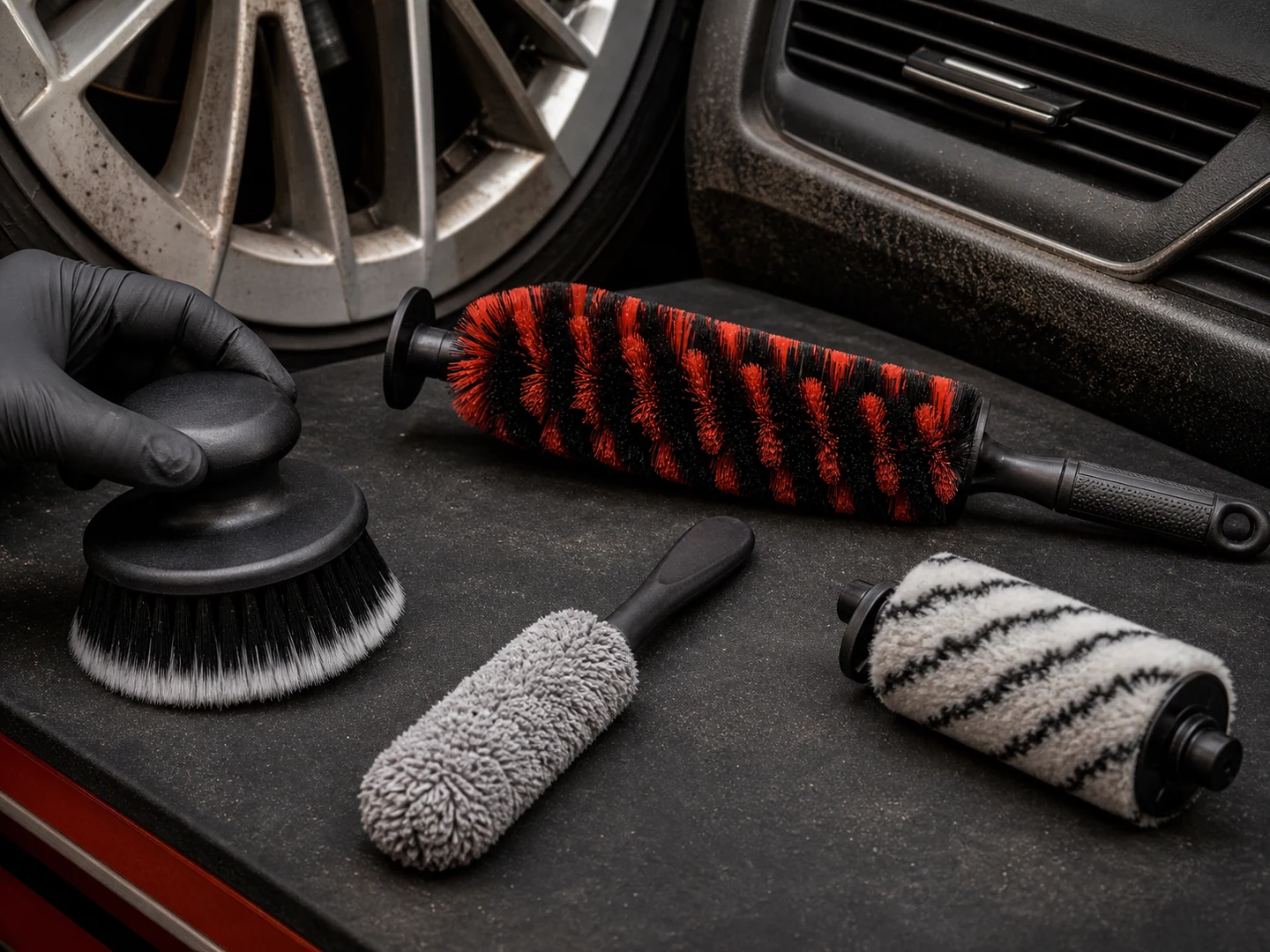
Custom Handheld Detail Brushes
Choose a handheld detail brush when the operator needs direct control in seams, recesses,…
Explore this brush type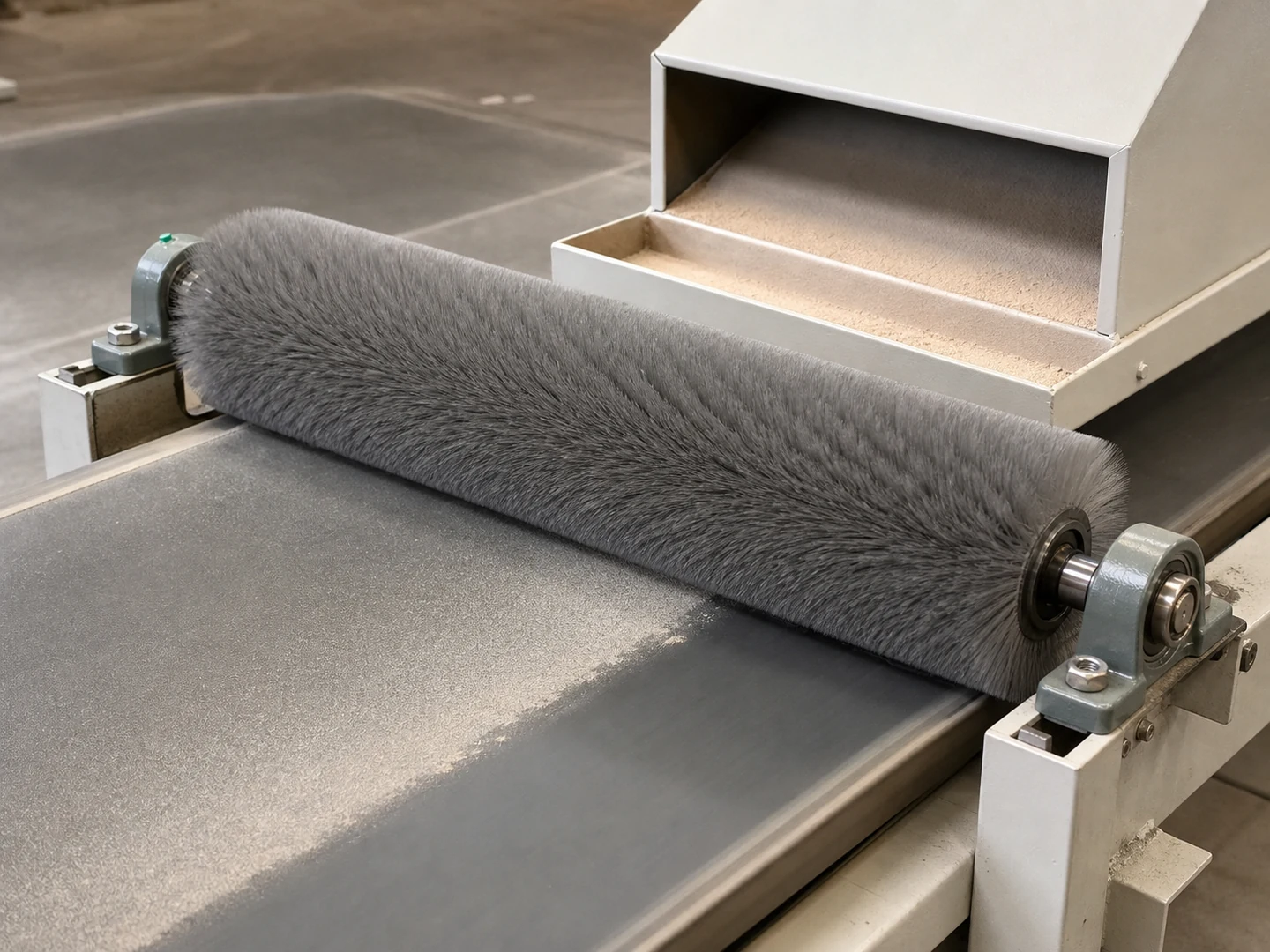
Dust Removal
For Dust Removal, the brush must reach the working area, disturb or collect loose…
Review application guidance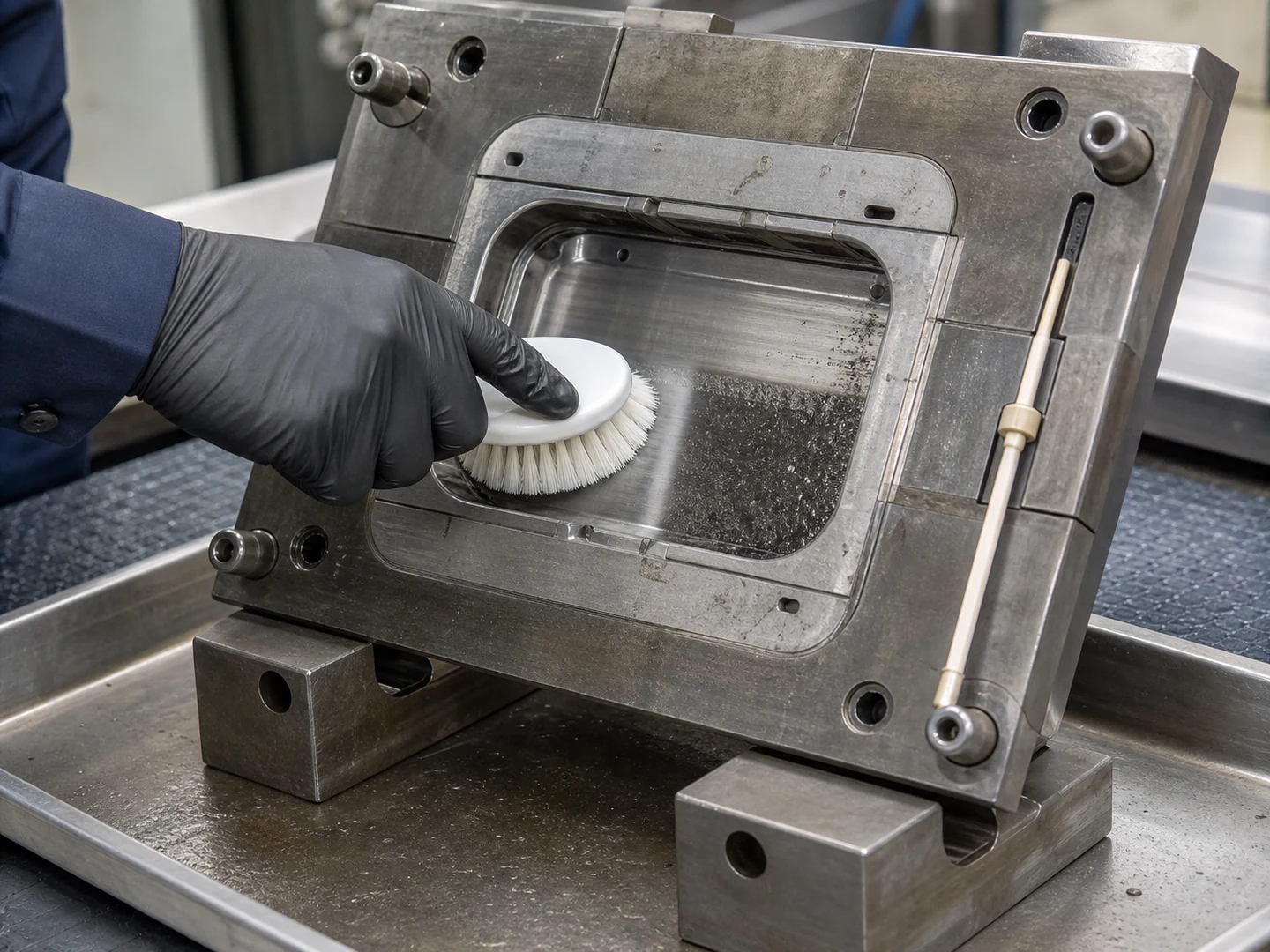
Mold Cavity Cleaning
For Mold Cavity Cleaning, the brush must reach the working area, disturb or collect…
Review application guidance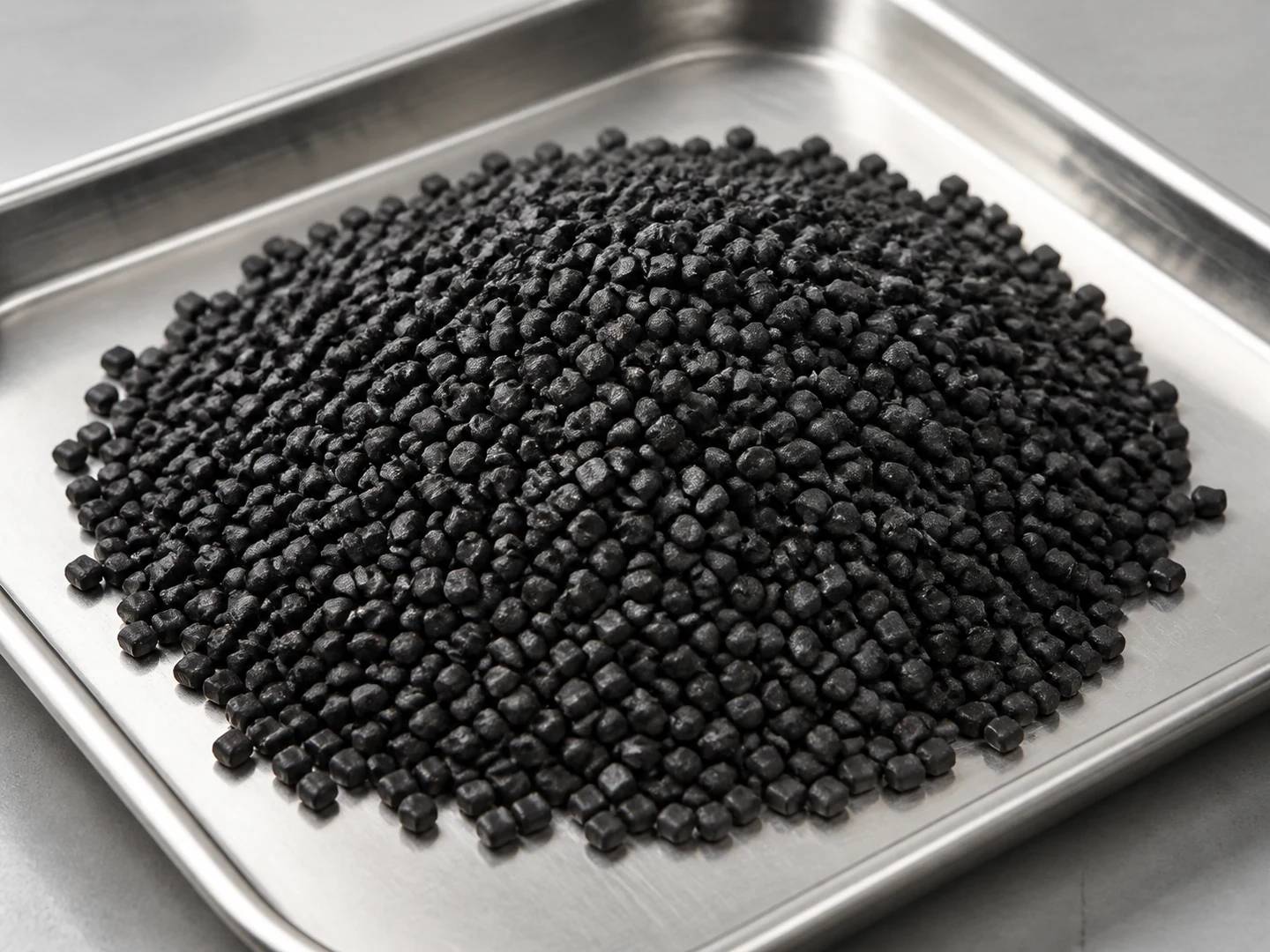
Conductive Nylon
Conductive Nylon is selected from its stiffness, recovery, wear, wet-service, chemical, and temperature behavior.
Compare material considerations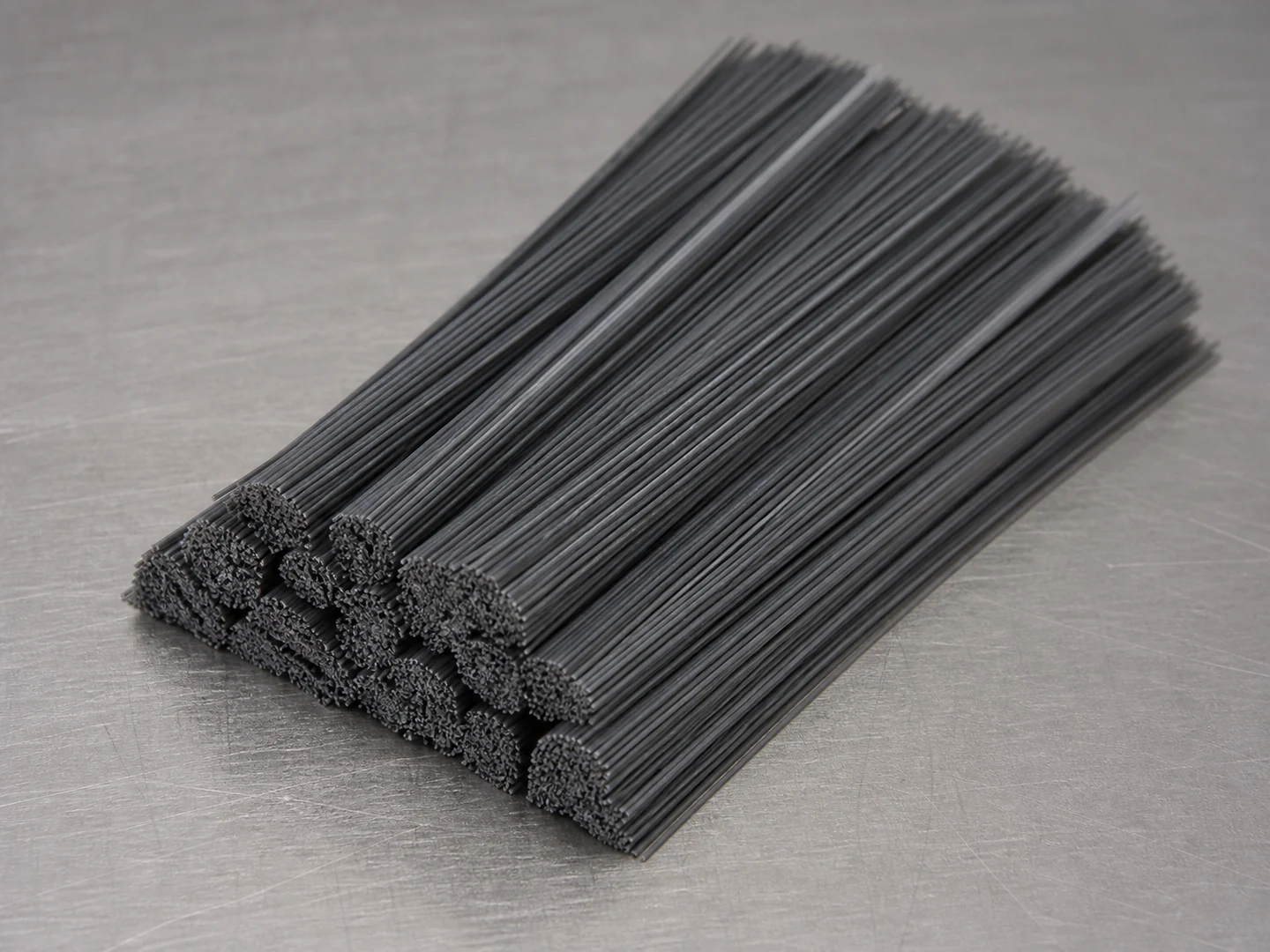
Anti-static Filament
Anti-static Filament is selected from its stiffness, recovery, wear, wet-service, chemical, and temperature behavior.
Compare material considerationsHow to Choose Anti-Static Plastic Brushes for Printing Lines
A practical guide for technical buyers and operators on selecting the right anti-static printing…
Read related guideCustom Manufacturing RFQ
Upload the Brush Drawing, Product Photo or Sample Details
To quote this brush accurately, send the size, material, cleaning target, residue, quantity, and any available drawing or sample photo.
Custom Brush RFQ
Send Your Brush Project
Upload a drawing, product photo, or sample photo and provide the core dimensions and cleaning conditions.