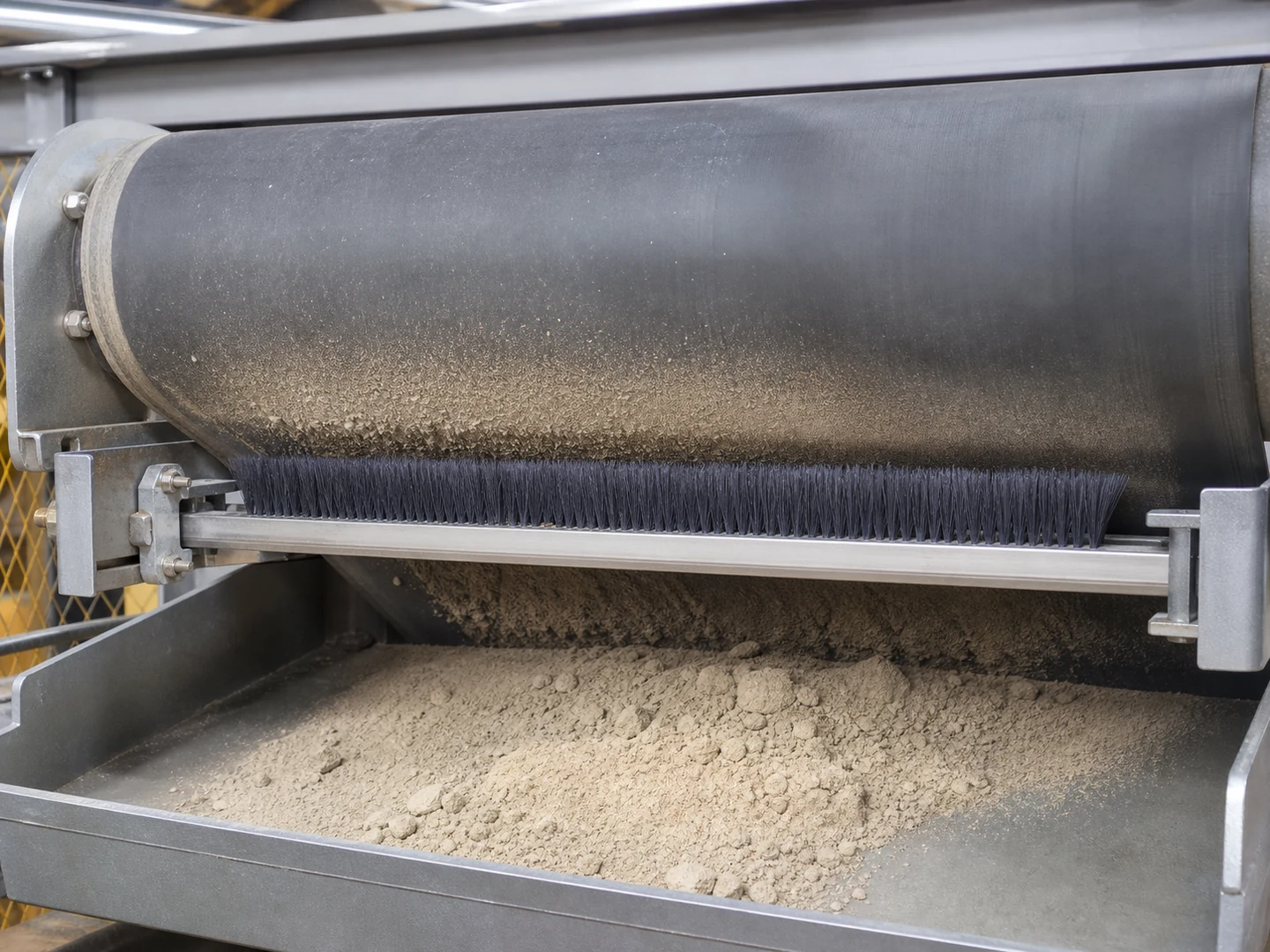
What Is a Conveyor Belt Tire Brush?
A conveyor belt tire brush is a motorized or belt-driven cylindrical brush assembly that rotates against the conveyor belt surface to dislodge and sweep away material that clings after the discharge point. The brush typically contacts the belt near the head or tail pulley, but can also be positioned along the return side. The “tire” designation often refers to the brush’s resilient, flexible hub that allows the bristles to conform to the belt surface without excessive wear. It is commonly used in mining, aggregates, food processing, recycling, and other industries where carryback creates housekeeping, safety, or equipment reliability problems.
Common Brush Types and Configurations
For the safety point in this section, the relevant OSHA reference is OSHA — Machine Guarding.
For the safety point in this section, the relevant OSHA reference is OSHA — Control of Hazardous Energy.
For the safety point in this section, the relevant OSHA reference is OSHA — Combustible Dust.
For the environmental or chemical-safety point in this section, the supporting reference is EPA — Particulate Matter Basics.
For tire, wheel, and vehicle-safety context, the relevant source is NHTSA — Tire Safety Ratings and Awareness.
Most conveyor belt tire brushes fall into one of three broad design approaches. Selecting the right type depends on the belt width, speed, residue characteristics, and available mounting space.
- Cylindrical (full‑face) brush: A single brush roll that spans the entire belt width. Provides consistent cleaning across the belt and is the most common choice for general residue control.
- Segmented brush (strip or cassette): Made of individual brush segments that can be replaced independently. Useful when only the center or edges of the belt carry residue, or when frequent bristle changes are needed.
- Spiral‑wound brush: Bristles are wound in a helical pattern around a core. The spiral action can help guide loose material to one side for collection. Often used on steep inclines or where side‑drainage is required.
Comparing Bristle Materials
Bristle material is the most important decision after the brush type. The table below compares widely used bristle materials based on their suitability for different operating conditions.
| Bristle Material | Best For | Surface Sensitivity | Wet / Dry Operation | Temperature Resistance | Chemical Resistance | Line Speed Suitability | Typical Installation Space | Maintenance Access |
|---|---|---|---|---|---|---|---|---|
| Nylon (solid or abrasive‑filled) | General carryback, moderately abrasive residues | Medium – can lightly scour without damaging most belt covers | Wet or dry | Up to 180–200°F continuous; higher for short periods | Good against many hydrocarbons, oils, and weak acids | Up to 600 ft/min with proper trim | Compact; standard shaft‑mounted design | Periodic trim adjustment; replace segments if worn |
| Polypropylene | Light dust and dry particles | Low – very gentle, suitable for thin gauge belts | Dry preferred; absorbs very little moisture | Up to 180°F | Excellent resistance to acids, alkalis, and solvents | Up to 400 ft/min | Compact; similar to nylon brushes | Simple; often uses quick‑release hubs |
| Tampico (natural fiber) | Fine dust, flour, non‑abrasive powders | Very low – will not scratch or abrade belt covers | Dry only; degrades when continually wet | Up to 170°F | Poor resistance to strong chemicals | Up to 350 ft/min | Compact | Replace full brush or segments as needed |
| Wire (carbon steel or stainless steel) | Heavy, crusty, or frozen residues; scalping | High – can score or gouge belt if misapplied | Wet or dry | Stainless steel up to 400°F+ | Stainless resists most chemicals; carbon steel may rust | Up to 300 ft/min with careful pressure adjustment | May require more clearance for flung material | Sturdy; check for bristle breakage regularly |
| Abrasive nylon (silicon carbide or aluminum oxide filled) | Stubborn, baked‑on residues; light scale | Medium‑high – abrasive action can polish or lightly texture the belt surface | Wet or dry | Up to 200°F | Similar to standard nylon | Up to 500 ft/min | Compact | Monitor bristle wear; replace sooner than plain nylon |
Note: The temperature ranges listed are approximate and depend on belt exposure time and specific compound formulations. Always confirm with the brush supplier for your actual operating conditions.
How to Choose the Right Tire Brush
Use the following decision factors to narrow down your options.
- Residue type: Is it dry, sticky, abrasive, or chemically aggressive? Choose bristle material and density accordingly.
- Belt surface: A smooth belt cover tolerates stiffer bristles; a textured or thin cover needs a softer touch to avoid damage.
- Wet vs. dry operation: Wet residues often require nylon or stainless steel; avoid natural fibers in wet conditions.
- Temperature: High‑temperature applications (above 200°F) may require all‑metal construction or special heat‑resistant synthetics.
- Line speed: Faster belts demand brushes that can maintain contact without skipping. Heavier‑duty hubs and denser fill increase stable high‑speed operation.
- Installation space: Measure the available clearance around the belt. In tight spaces, a compact cylindrical brush with a direct‑drive motor may be the only option.
- Maintenance access: If the brush is in a hard‑to‑reach location, choose a design that allows quick removal, segment replacement, or remote tension adjustment.
Key Factors to Confirm Before Ordering
Once you have narrowed the brush type and bristle material, verify these details with your supplier to avoid installation delays or performance shortfalls.
- Dimensions: Overall length, brush diameter, and shaft diameter (or bore). The brush must span the full belt width plus a slight overhang on each side.
- Mounting method: End plates, shaft stubs, keyways, or set‑screw hubs. Confirm compatibility with your existing conveyor framework.
- Direction of rotation: Most tire brushes rotate against belt travel (counter‑rotation) for maximum cleaning, but occasionally a “with‑belt” rotation is used for delicate belts.
- Sample or drawing reference: If replacing an existing brush, provide a photo, drawing, or sample. If designing a new installation, share belt width, speed, and residue data so the supplier can recommend the right trim length and density.
- Expected cleaning result: Discuss realistic carryback reduction targets. A well‑applied tire brush typically removes 85–95% of loose residue, but stubborn sticky materials may require supplemental cleaning.
Common Mistakes When Selecting a Conveyor Belt Tire Brush
Avoid these frequent errors that can lead to poor performance, premature wear, or belt damage.
- Choosing by cost alone: A cheaper brush with the wrong bristle material or low fill density will wear out faster and may not clean effectively, raising total cost of ownership.
- Ignoring chemical compatibility: Some belt‑cleaning chemicals or the conveyed material itself can degrade certain bristle polymers. Always check chemical resistance charts.
- Using overly stiff bristles: Stiff wire or aggressive abrasive nylon can scratch, abrade, or groove the belt cover, especially on thin or textured belts. Start with the gentlest effective bristle.
- Neglecting installation alignment: A brush that is not parallel to the belt or is set with uneven pressure will wear unevenly and create streaks of uncleaned material.
- Overlooking routine maintenance: Even self‑adjusting brushes need periodic inspection. Failing to check bristle length, hub play, or motor condition shortens brush life and reduces cleaning efficiency.
When a Tire Brush Alone Is Not Enough
A tire brush is effective against loose, dry, or moderately sticky residues, but some applications require a combination of cleaning technologies.
- Heavy, paste‑like carryback: A primary scraper (polyurethane or carbide blade) can peel off the bulk, with the brush removing the remaining thin film.
- Very fine, airborne dust: Combined with a vacuum system or dust collection hood, the brush loosens particles while the vacuum captures them before they become airborne.
- High‑moisture or wet, sticky fines: An air knife or water spray in conjunction with the brush can prevent residue from re‑adhering further down the return run.
- Sanitary or food‑grade requirements: Brushes used in food plants may need to be combined with clean‑in‑place (CIP) spray systems or ultrasonic cleaning baths for the brush itself during washdowns.
- Extremely abrasive slurry: A heavy‑duty multi‑row scraper system may be more appropriate as the primary cleaner, with a brush only for final polishing, to prolong brush life.
Final Takeaway
Choosing a conveyor belt tire brush comes down to matching bristle material and brush design to your specific residue, belt surface, and operating environment. Start by identifying the residue characteristics and belt sensitivity, then select a brush type that fits your available space and maintenance routine. Always confirm mounting details and cleaning expectations with the supplier before ordering. A correctly chosen and installed tire brush can dramatically reduce carryback cleanup, improve safety, and extend the life of other conveyor components.
Frequently Asked Questions
What is the difference between a tire brush and a standard belt cleaner?
A tire brush uses flexible bristles to sweep residue, making it ideal for irregular or textured belts and for removing fine, dry particles. Standard belt cleaners typically use rigid blades (polyurethane or carbide) and are better suited for heavy, pasty carryback. Many systems combine both: a scraper first, then a brush.
Can I install a tire brush on an existing conveyor without major modification?
In most cases yes. Manufacturers offer universal mounting kits that clamp onto the conveyor stringers. You will need sufficient clearance around the belt and a way to power the brush, either through a separate motor or by tapping into a nearby driven roller. Always check dimensional constraints first.
How do I know when to replace the brush?
Replace the brush when the bristle tips wear down to about 30–40% of their original length, or if you notice a drop in cleaning performance. Some brushes have a wear indicator. Regular inspection based on wear condition, operating load, and the equipment maintenance plan (more often in abrasive services) will help you plan replacements before they become critical.
What is the recommended rotational direction for a tire brush?
Most tire brushes rotate opposite to the belt travel direction (counter‑rotation) for maximum cleaning efficiency. However, with very delicate or thin belts, a “with‑belt” rotation (same direction as belt travel) reduces the risk of snagging or lifting the belt. Always confirm with the brush supplier based on your belt type.
Can a tire brush damage the conveyor belt?
When correctly specified and installed, a tire brush will not damage the belt. Damage usually occurs when overly stiff bristles are used on a sensitive cover, or when brush pressure is set too high. Following the manufacturer’s alignment and pressure guidelines prevents most problems.
What power options are available for a tire brush?
Common options include an independent electric motor (direct or geared drive), a hydraulic motor for wet/dusty environments, or a belt drive that runs off a nearby head or tail pulley. The choice depends on available space, access, and cleaning workflow, safety requirements, and the brush torque needed for the residue load.
Is a tire brush suitable for underground mining or hazardous environments?
Yes, but you must select a brush and motor that meet the relevant explosion‑proof or intrinsically safe standards for your location. Stainless steel bristles and explosion‑proof motor enclosures are often specified. Always inform the supplier of the hazardous area classification early in the selection process.