What Is a Conveyor Belt Cleaner Brush?
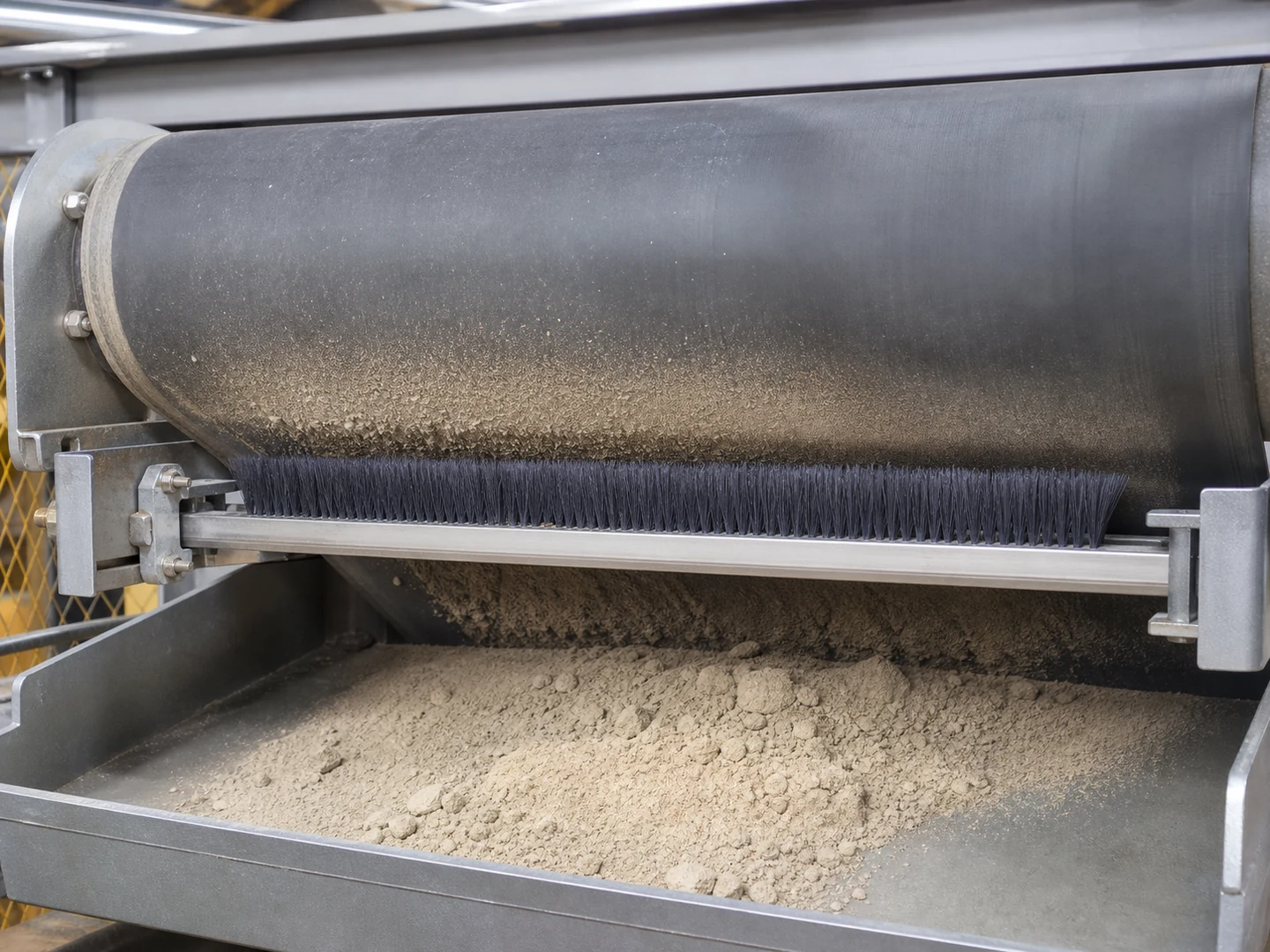
A conveyor belt cleaner brush is a rotary or fixed brush assembly designed to sweep or scrub the return side of a conveyor belt. It uses bristles, filaments, or wire elements to dislodge material that clings after the discharge point. Unlike scraper blades that use a hard edge, brushes provide a gentler, more adaptable contact that protects belt surfaces and splices while handling uneven loads, fines, or hygroscopic residues. The brush can be powered by the moving belt itself (friction-driven) or by an independent motor, and it typically mounts across the belt width with tension adjustment to maintain consistent contact pressure.
Common Types and Options
For the safety point in this section, the relevant OSHA reference is OSHA — Machine Guarding.
For the safety point in this section, the relevant OSHA reference is OSHA — Control of Hazardous Energy.
For the safety point in this section, the relevant OSHA reference is OSHA — Combustible Dust.
For the environmental or chemical-safety point in this section, the supporting reference is EPA — Particulate Matter Basics.
For brush terminology and construction language, this section references American Brush Manufacturers Association — Brush Lingo.
The right brush design depends on your residue type, belt material, and operating environment. Most brushes fall into one of these categories:
- Rotary driven brushes: Powered by an electric motor or gearbox, offering high scrubbing action independent of belt speed.
- Friction-driven or slave brushes: Use belt contact to spin the brush, simpler but dependent on belt movement.
- Stationary brushes: Fixed across the belt, often used for light dusting or as a secondary seal.
- Strip brushes: Extruded profiles with integral bristles, easy to cut to length and mount in holders.
The table below compares the most common material and design options you’ll encounter when specifying a conveyor belt cleaner brush.
| Brush Type / Material | Typical Filament | Best For | Limitations | Mounting Style |
|---|---|---|---|---|
| Soft Nylon Brush | Nylon 6 or 6.6 (0.3–0.6 mm) | Light dust, dry fines, food belts sensitive to scratching | Not for sticky or oily residues; lower temperature limit | Shaft with set-screw hubs or QD bushings |
| Medium Polypropylene (PP) Brush | PP (0.5–0.8 mm) | Wet environments, chemical resistance, moderate scrubbing | Lower abrasion resistance than nylon; may deform under high load | Solid core with end flanges or stub shafts |
| Stiff Polyester Brush | Polyester (0.8–1.2 mm) | Heavier wet fines, abrasive environments, longer wear life | Higher cost; less frequent replacement if incorrectly specified | Weld-on spool with through-shaft |
| Abrasive Wire (Steel/Brass) | Steel wire (0.2–0.4 mm) or brass | Stubborn crust, rust, heavy buildup; high-temperature applications | Risk of belt surface damage; not for food contact unless stainless/brass and validated | Keyed shaft with split-taper bushings |
| Roller Brush with Replaceable Strips | Mixed: nylon, abrasive-impregnated filaments | Frequent changeovers, multi-product lines, reducing waste | Replacement strips must match original design; higher upfront cost | Quick-release end caps or cartridge design |
How to Choose the Right Brush
Selection should be driven by the specific cleaning challenge, not a one-size-fits-all catalog pick. Evaluate these factors:
- Residue type: Dry fines need gentle flicking; sticky or oily residues require aggressive scrubbing and often a drive motor.
- Surface sensitivity: Belts with delicate coatings, thin profiles, or mechanical splices may need softer filaments and lower brush interference.
- Belt speed and width: Wider, faster belts need brushes with sufficient reach and RPM to maintain effective cleaning across the full width.
- Wet or chemical exposure: In washdown or caustic environments, choose stainless steel cores, polypropylene or nylon filaments, and sealed bearings.
- Hygiene expectations: For food or pharmaceutical applications, brushes must meet material compliance (FDA, EU 10/2011), be easy to clean, and resist microbial growth.
- Maintenance frequency: Brushes with quick-change designs reduce downtime; the trade-off is usually higher component cost.
- Custom size requirements: If your belt width or mounting points don’t match off-the-shelf lengths, plan for a custom brush assembly with shaft drawings reviewed by the supplier.
Setup and Operating Factors
Even the best brush will underperform if not installed and maintained correctly. Key practical considerations:
- Brush interference: The amount the bristles deflect against the belt—typically 2–6 mm—must be adjustable. Too little: poor cleaning. Too much: bristle damage and excessive belt wear.
- Speed differential: In rotary brushes, the bristle tip speed should be higher than the belt speed for effective flicking. A ratio of 1.2:1 to 2:1 is common, but test to avoid dust clouds or static buildup.
- Mounting rigidity: Weak brackets lead to vibration; the brush must run true across the belt. Ensure the support frame can handle the brush weight plus material load.
- Cleaning the cleaner: The brush itself may need periodic washing to remove imbedded fines, especially in sticky applications. Some designs include spray bars for self-cleaning.
- Access for changeout: Position the brush assembly so it can be removed safely without dismantling other components.
Common Mistakes to Avoid
- Choosing by cost drivers alone: A low-cost brush that wears out in weeks may cost more in downtime and belt damage than a well-specified brush with a higher initial cost.
- Ignoring chemical compatibility: Many filaments swell, soften, or become brittle when exposed to cleaning agents or process chemicals. Always check resistance charts or request a sample test.
- Assuming any brush fits any conveyor: Shaft diameter, keyway size, and mounting hole patterns vary. Verify dimensions from equipment drawings before ordering.
- Overlooking belt splices: Mechanical fasteners can catch on stiff wires. If you use hinged or riveted splices, discuss brush interference and filament stiffness with the supplier.
- Neglecting hygiene design: In food zones, threaded fasteners, open cores, and moisture traps create contamination risks. Specify sanitary designs with polished welds, sloped surfaces, and FDA-approved materials.
- Running without adequate guarding: Rotating brushes are entanglement hazards. Always install fixed guards and interlocks as required by local safety regulations.
When a Standard Cleaner Brush Isn’t Enough
A belt cleaner brush works well for most carryback, but there are situations where it cannot solve the problem alone—or where the wrong choice makes things worse.
- Extremely sticky or viscous residues: Some materials (bitumen, heavy slurry, uncured rubber) can clog bristles rapidly. A scraper pre-cleaner or a hot-water spray system upstream may be needed before the brush.
- Belt surface damage: Deep gouges, peeling covers, or lifting splices may require belt repair or replacement; no brush can clean a damaged surface effectively.
- High risk of bristle loss: If product contamination from a lost bristle is unacceptable (e.g., pharmaceutical tablets, optical films), consider non-brush alternatives like air knives, vacuum systems, or validated metal-detectable bristle materials with documented retention tests.
- Custom or non-standard conveyors: For curved belts, narrow lines, or reversible belts where standard brush assemblies won’t fit, request a supplier drawing review and possibly a sample test installation before committing to a full line.
Final Takeaway
Selecting a conveyor belt cleaner brush is a balancing act between cleaning effectiveness, belt preservation, and operational constraints. Start by defining the residue and belt surface, then narrow down filament material and stiffness. Next, confirm machine interface—shaft diameter, overall length, mounting style. Factor in chemical exposure, hygiene, and maintenance accessibility. Finally, test a sample brush if possible, and have the supplier review your conveyor drawings to avoid misalignment. When the standard approach falls short, upgrade to a pre-cleaning stage or a custom assembly before accepting unplanned downtime or product quality issues.
Frequently Asked Questions
What filament material is best for food-grade conveyor belts?
For direct food contact, nylon or polypropylene filaments that comply with FDA and EU regulations are common. Stainless steel wire can be used in dry, non-contact applications, but always verify the supplier’s certification and recommend a metal-detectable option to minimize contamination risk.
How do I determine the correct brush diameter for my conveyor?
Measure the distance from the belt surface to the mounting point and the available clearance around the brush. The brush outside diameter should provide the necessary interference (typically 2–6 mm) without bottoming out on the brush core. Allow extra space for bristle wear adjustment.
Can a brush replace a scraper blade on my belt cleaner?
Brushes work well as a secondary or finishing cleaner, but for heavy, wet, or compacted carryback, a primary scraper blade often remains necessary. Many systems combine a primary scraper with a secondary brush to achieve a clean, dry belt surface without damaging splices.
How often should I replace a conveyor belt cleaner brush?
Replacement intervals depend on abrasion, chemical exposure, and operating hours. A visual wear indicator (e.g., a colored core that becomes visible) helps; otherwise, monitor cleaning performance and adjust tension. In abrasive conditions, a brush may last 3–6 months; in light dusting, it can run a year or more.
Is a friction-driven brush reliable for high-speed belts?
Friction drives are simple and cost-effective but may slip on oily or wet belts, leading to inconsistent RPM. For belt speeds above 2 m/s or when consistent scrubbing is critical, a powered rotary brush with adjustable speed control is recommended.
When should I ask a supplier for a drawing review?
Request a drawing review when your conveyor has non-standard width, unusual mounting brackets, tight clearance, or when the operating environment includes extreme temperatures, chemicals, or washdown requirements that could affect brush materials and bearings. Additionally, if you are retrofitting an existing system, ensure the mounting points and shaft dimensions are compatible.