What Is an MLCC Carrier Cleaning Brush?
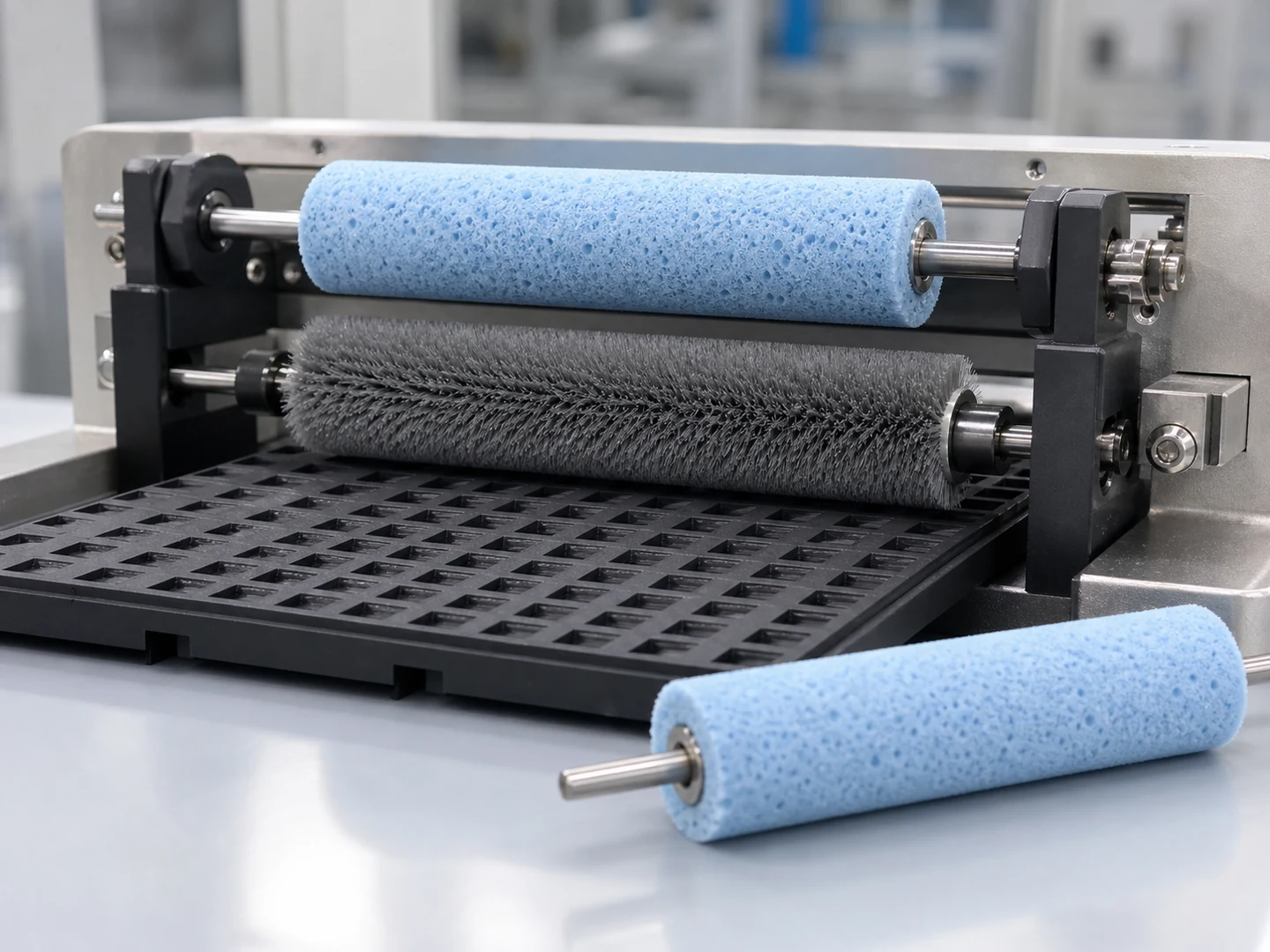
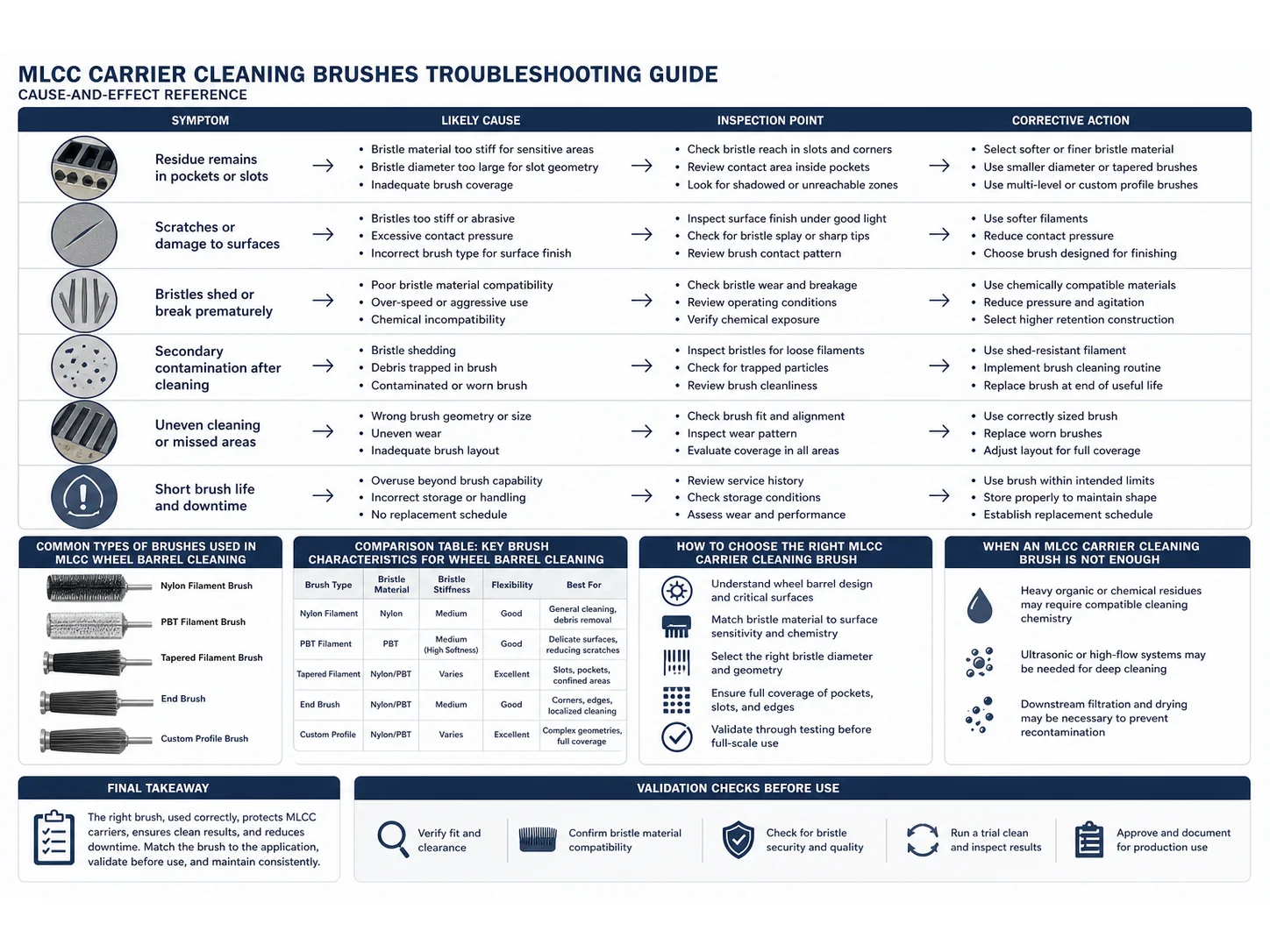
An MLCC carrier cleaning brush is a small-handled brush designed for precision cleaning in electronics manufacturing and maintenance environments. The bristles are typically made from anti-static or static-dissipative materials—often treated nylon, conductive fibers, or carbon-filled polymers—that safely remove particulate residue from MLCC carriers, PCB surfaces, and other sensitive components without generating a destructive electrostatic discharge. Handles are usually ergonomic, lightweight, and may be chemically resistant to common electronic-grade solvents. The overall design prioritizes controlled, low-abrasion cleaning rather than aggressive scrubbing.
What Are Standard Cleaning Brushes for Lug Nuts?
For static-control claims, this article uses EOS/ESD Association — ESD Fundamentals as the ESD reference.
For static-control claims, this article uses EOS/ESD Association — Principles of ESD Control as the ESD reference.
For semiconductor and wafer-cleaning context, NISTIR 4653 — Metrology for the Semiconductor Industry is used as the precision-cleaning and contamination-control reference.
For cleanroom-classification language, this article points to the official ISO 14644-1 Cleanrooms and Associated Controlled Environments standard page rather than inventing cleanliness claims.
For tire, wheel, and vehicle-safety context, the relevant source is NHTSA — Tire Safety Ratings and Awareness.
For brush terminology and construction language, this section references American Brush Manufacturers Association — Brush Lingo.
Standard lug nut cleaning brushes are the tough, no-nonsense tools found in almost any maintenance bay or garage. The most common types include:
- Stainless steel wire brushes: stiff bristles that cut through caked-on brake dust, rust, and corrosion. They can scratch softer metals but work well on standard steel lug nuts.
- Brass wire brushes: gentler than steel, less likely to mar aluminum or chrome finishes, making them a favorite for alloy wheels.
- Nylon abrasive brushes: embedded with grit for medium-duty cleaning; gentler than steel and often used with liquid cleaners.
- Detail brushes: small, shaped heads (like bottle brush style) that get into recesses. Bristles are usually nylon and may or may not be abrasive.
Handles vary from simple wooden grips to cushioned, chemical-resistant plastic, and some are designed to mount on a drill or rotary tool for powered cleaning.
Key Differences: MLCC Carrier Cleaning Brush vs. Standard Brushes
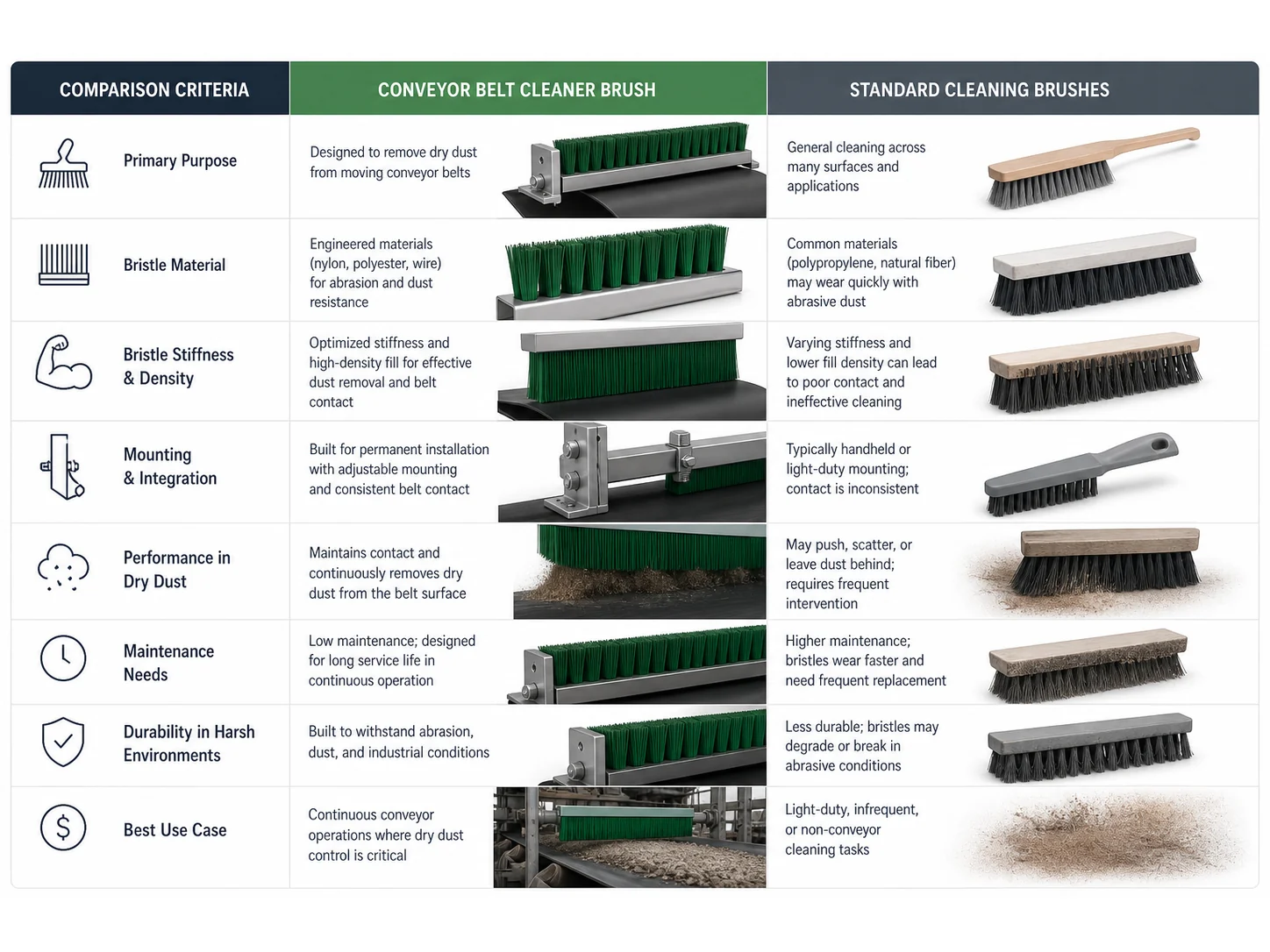
The table below compares the two types across the factors that matter most when cleaning lug nuts.
| Factor | MLCC Carrier Cleaning Brush | Standard Lug Nut Cleaning Brushes |
|---|---|---|
| Primary bristle material | Anti-static or static-dissipative polymer (often conductive nylon or carbon-charged fiber) | Steel, brass, stainless steel, or abrasive nylon |
| Typical stiffness | Soft to medium; designed for gentle, low-abrasion wiping | Medium to very stiff; made to break loose hardened deposits |
| Abrasiveness | Very low; risks matting or damage if used on heavy grime | Medium to high depending on material; wire brushes are highly abrasive |
| Handle design | Small precision grip, often anti-static; sometimes designed for robotic or precision manual handling | Larger, non-slip grip; may include long handles, drill shanks, or ergonomic shapes |
| Chemical/solvent resistance | Good resistance to electronic-grade alcohols and mild cleaners, but not always rated for harsh automotive degreasers | Typically rated for strong solvents, penetrating oils, and alkaline cleaners |
| Anti-static property | Essential for electronics; dissipates static to ground or low tribocharging | Not a design factor; metal brushes are conductive but not handled as ESD-safe tools |
| Typical cost range (relative) | Moderate to high for a small brush, due to specialized materials and manufacturing | Low to moderate; commodity items available in bulk |
| Lifespan on lug nut cleaning | Short if used on rough metal; bristles wear fast and lose anti-static consistency | Long on appropriate surfaces; wire bristles eventually fatigue, nylon wears down |
How to Choose the Right Brush for Cleaning Lug Nuts
Match the brush to the cleaning challenge, not just the tool you have on hand. Work through these decision factors:
- Residue type: Light oil or light dust? A soft nylon brush may be enough. Caked-on brake dust or rust? You need a wire brush. MLCC brushes are too gentle for heavy carbon or metallic buildup.
- Surface sensitivity: Chrome-plated or clear-coated lug nuts scratch easily. A brass wire brush or fine nylon brush is safer than stainless steel. An MLCC brush’s soft bristles could be used if you only need to dust off after polishing, but not for initial cleaning.
- Equipment interface: Will you hold the brush by hand, or does it need to chuck into a drill? Most MLCC brushes have tiny, hand-held handles not meant for power tool collets. Many standard lug nut brushes come with 1/4-inch hex shanks for power tool use.
- Wet or chemical exposure: If you plan to dip the brush in wheel cleaner, degreaser, or solvent, verify the handle and bristle material can withstand it. Standard wire brushes with chemical-resistant plastic handles are a safe bet. MLCC brushes may be rated only for mild solvents like isopropyl alcohol.
- Maintenance frequency: A brush used daily in a tire shop will wear out fast. The low replacement cost of standard brushes makes them practical. Using an MLCC brush for daily lug nut duty would be wasteful and ineffective.
- Custom size requirements: Tight, deep lug nut wells may need a long-reach brush with a small tip. Some standard detail brushes are purpose-built for this. MLCC brushes can be tiny, but their short handles limit reach unless you use an extension tool.
Common Mistakes When Selecting a Lug Nut Cleaning Brush
- Using an overly stiff wire brush on coated lug nuts: Stainless steel bristles can strip clear coat, leaving bare metal exposed to corrosion. Always test on an inconspicuous area first.
- Expecting an MLCC carrier cleaning brush to cut through heavy gunk: The delicate bristles will mat, smear the grime, or break, doing more harm than good.
- Ignoring chemical compatibility: A brush handle that softens or swells in degreaser becomes a safety hazard. Check manufacturer guidelines if you plan to use aggressive solvents.
- Overlooking handle ergonomics: A short, slick handle slipping out of a gloved hand when applying pressure can lead to scraped knuckles. Look for non-slip grips and a length that suits the job.
- Buying purely on brand name without checking brush specs: Not all wire brushes are equal. Pay attention to wire gauge, trim length, and handle material rather than the logo on the package.
When an MLCC Carrier Cleaning Brush Is Not Enough
An MLCC carrier cleaning brush is the wrong choice when:
- Lug nuts have heavy rust, thick carbon deposits, or embedded particulate that requires aggressive scrubbing.
- You need to clean a large set of lug nuts quickly—the brush is too small and too soft to maintain efficiency.
- The cleaning process involves soaking in harsh chemicals that could degrade anti-static bristles.
- The job requires a powered rotary brush; adapting a miniature ESD brush to a drill is rarely safe or effective.
- Cost control matters—a single MLCC brush can cost several times more than a pack of standard lug nut brushes, yet it will wear out faster in this application.
However, if you are working in a controlled environment where the lug nut assembly is part of a precision instrument with static-sensitive electronics nearby, and you only need to remove light dust or fingerprint oils, an MLCC carrier cleaning brush may have a niche role. In such a scenario, treat it as a specialized lint-free wiping tool, not a primary degreaser.
Final Takeaway
For the vast majority of lug nut cleaning tasks—whether you’re in an automotive service bay, a fleet garage, or a home workshop—a standard cleaning brush (stainless steel, brass, or abrasive nylon) will work better, last longer, and cost less than an MLCC carrier cleaning brush. The MLCC brush is a precision electronics tool that does an excellent job in its intended lane; using it on heavy grime, rough threads, or high-volume wheel work only wastes a good brush and makes the cleaning job harder. Save the specialized anti-static brush for the PCB bench, and keep a sturdy wire brush in your lug nut kit.
Frequently Asked Questions
Can I use an MLCC carrier cleaning brush with wheel cleaners or acid-based degreasers?
That’s risky. Most MLCC brushes are validated only for mild solvents like isopropyl alcohol. Strong wheel cleaners or acid-based products may attack the bristle polymer, weaken the handle bond, or degrade anti-static additives. Stick with brushes rated for the chemicals you intend to use.
What brush material is safest for aluminum alloy lug nuts?
Brass wire brushes are a popular choice because brass is softer than steel and won’t as easily scratch aluminum. Fine-grade nylon abrasive brushes can also work well if you prefer a scrubby, non-metallic option. Avoid coarse stainless steel bristles on aluminum unless you are willing to accept cosmetic marking.
Do I need an anti-static brush for lug nuts on an electric vehicle?
Generally, no. The lug nuts themselves are mechanically isolated and located well away from battery packs or high-voltage circuitry. A standard cleaning routine does not involve static-sensitive tasks. Only consider an ESD-safe brush if you’re explicitly working on a hybrid or EV component where the manufacturer’s service manual warns against uncontrolled static near a specific fastener.
How quickly does an MLCC carrier cleaning brush wear out when used on rough metal?
Very quickly. The soft bristles are not designed for abrasive surfaces. You’ll likely see fraying, bending, and loss of tip shape after just a few uses. If the brush’s anti-static properties rely on a surface treatment, that layer can rub off, rendering the ESD safety compromised.
Are there brushes with interchangeable heads for both electronics and lug nut use?
Some modular brush systems have interchangeable tip inserts, but they are rarely dual-purpose in the way you might hope. A universal handle could accept a soft anti-static tip for electronics and a wire brush tip for lug nuts, but the handle itself would need to be compatible with both cleaning chemistries and ergonomic demands. For most users, keeping two separate brushes is simpler and more reliable.
Can I use a wire brush to clean chrome lug nuts without scratching them?
It’s risky. Even fine brass bristles can leave micro-scratches on a bright chrome finish under pressure. For chrome lug nuts, start with a soft detailing brush and a pH-neutral wheel cleaner. If a brush must be used, a nylon-flagged bristle brush (non-abrasive) is safer, but it may not remove stubborn stains.
What diameter options are common for MLCC carrier cleaning brushes?
These brushes are usually small, with tip diameters ranging from about 3 mm to 15 mm (approximately 1/8 inch to 1/2 inch). Custom sizes can be produced, but in off-the-shelf terms, they are built for fine work. If you need a brush for a tight lug nut well, some standard detail brushes come in similar small diameters with longer reach.
Is special storage needed to maintain an MLCC carrier brush’s anti-static properties?
Yes. Most anti-static brushes should be stored in a clean, dry environment away from direct sunlight and extreme heat. Some may require storage in sealed bags with humidity control if sensitive to moisture. Always follow the supplier’s storage guidance to avoid losing the ESD-dissipative function before you even use the brush.