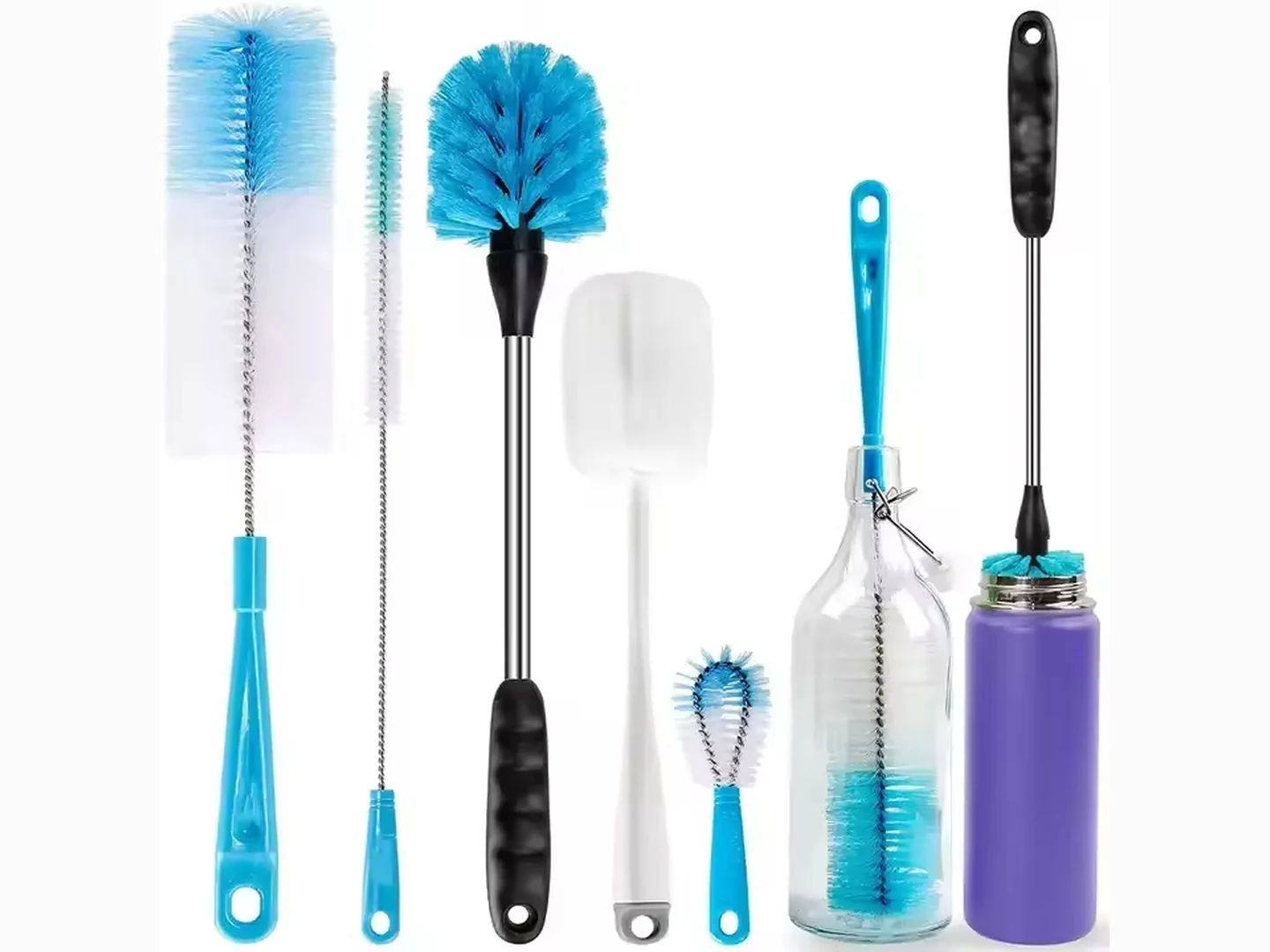
What Is a Feeder Bottle Brush?
A feeder bottle brush is a rotary or stationary industrial brush designed to make consistent surface contact with bottles as they travel along a production line. Its primary functions are removing loose dust, fiber, or light residues before filling or capping, and orienting or stabilizing containers during transfer. Unlike a handheld bottle brush, a feeder bottle brush is built for continuous use, often with a precision shaft or flange mount and a filament pattern engineered for specific container shapes and line speeds.
Common Material and Mounting Options
For kitchen cleaning examples, the FDA — Food Safety in Your Kitchen supports the distinction between normal cleaning, food handling, and hygiene habits.
For general foodborne-illness prevention language, the CDC — Preventing Food Poisoning is used as the public-health reference.
For the material or regulatory boundary in this section, the supporting reference is eCFR — 21 CFR 177.1500 Nylon Resins.
For the material or regulatory boundary in this section, the supporting reference is eCFR — 21 CFR 177.1520 Olefin Polymers.
For the material or regulatory boundary in this section, the supporting reference is eCFR — 21 CFR 177.1630 Polyethylene Phthalate Polymers.
For the safety point in this section, the relevant OSHA reference is OSHA — Machine Guarding.
Feeder bottle brushes are not one-size-fits-all. Their performance depends heavily on filament material, core construction, and how they attach to your line. The table below compares the most common filament choices, but always verify with your brush supplier that the exact grade meets your temperature, chemical, and food-contact requirements.
| Filament Material | Typical Stiffness | Approx. Max Temp | Chemical Resistance | Food Contact Suitability | Best Used For |
|---|---|---|---|---|---|
| Nylon (PA6, PA6.6) | Medium | ~200°F (93°C) | Good; not for strong acids | FDA-compliant grades available | General light dusting, dry or mild wet environments |
| Polyester (PBT) | Medium-High | ~250°F (121°C) | Excellent acid and alkali resistance | FDA-compliant grades available | Sticky or oily residues, higher temperatures |
| Polypropylene | Low-Medium | ~180°F (82°C) | Excellent | FDA-compliant grades available | Delicate surfaces (PET), chemical exposure |
| Natural Fibers (Tampico, Horsehair) | Soft | Low (dry use only) | Limited | Generally Recognized as Safe (dry) | Gentle dust removal on glass, heritage lines |
Filament stiffness is not only about material—diameter and trim length also play a role. Tighter trim (shorter bristle length) results in a stiffer brush face, while a longer trim flexes more and may be gentler on irregular surfaces.
Mounting options commonly include:
- Shaft-mount with keyway for direct inline drive.
- Flange plate for bolt-on attachment to a machine frame.
- Quick-change hub to reduce changeover time on multi-product lines.
How to Choose a Feeder Bottle Brush for Your Line
Start with the production problem rather than the brush itself. Go through these questions in order:
- What are you trying to remove? Dry paper dust needs a different filament than sticky syrup or label adhesive. Sticky residues often call for polyester with good release properties; dry dust may work with nylon or soft natural fibers.
- What is the bottle material? Glass is harder than PET or HDPE. A brush that works well on glass may scratch softer plastics. Always test on a sample run.
- Is the line wet or subject to washdown? For wet environments or CIP exposure, choose a filament that absorbs minimal water and a core material resistant to rust (stainless steel or engineered plastic). Polypropylene and polyester handle continuous moisture better than nylon.
- What are your hygiene requirements? In food-contact zones, you need FDA-compliant materials and a design that avoids harborage points. Check whether your supplier can provide documentation for 3-A or other relevant standards.
- What is the interface with your equipment? Note shaft diameter, available space, and RPM requirements. A brush that matches the shaft but has the wrong overall diameter will either be ineffective or cause bottle tipping.
- How often can you afford to replace it? In 24/7 operation, softer filaments wear faster. Factor maintenance access into your selection; a quick-change hub may justify a slightly more expensive brush that reduces downtime.
- Do you need a custom size? Off-the-shelf brushes often come in standard diameters and lengths, but many production lines benefit from a custom diameter that precisely matches the bottle profile. A simple drawing review with a manufacturer can clarify whether a custom brush is cost-effective.
Common Mistakes When Selecting a Feeder Bottle Brush
Even experienced engineers can fall into these traps:
- Choosing by cost drivers alone. The lowest-cost brush often wears out faster or damages containers, costing more in rejects and downtime than the brush itself.
- Ignoring chemical compatibility. A brush that holds up in plain water may degrade quickly when exposed to cleaning chemicals, ozone, or sanitizers. Always supply your chemical list when requesting a recommendation.
- Overspecifying stiffness. Stiffer is not always better. Overly stiff filaments can scratch glass or plastic, create micro-cracks, or generate static that attracts dust.
- Assuming “food-grade” without proof. Not all nylon is FDA-compliant. Request a letter of compliance or material certification for the exact brush part number.
- Not testing with actual production residue. A lab sample test using your own product residue and line speed is the most reliable way to avoid expensive mistakes. Water alone won’t simulate sugar or oil behavior.
- Forgetting the mounting interface. A brush that technically fits the shaft may still slip or vibrate under load if the hub design isn’t suited to your line’s RPM or torque.
When a Feeder Bottle Brush Isn’t the Right Solution
Feeder bottle brushes are excellent for light to moderate cleaning and gentle container handling, but they have clear limitations:
- Heavy or caked residues. If bottles arrive with thick mold, dried slurry, or hardened glue, a brush alone will not clean them. Pre-wash spray systems or ultrasonic washers are more appropriate upstream.
- Need for non-contact cleaning. Some sensitive containers (e.g., coated glass, thin-walled aseptic pouches) may be scratched by any bristle. In these cases, air blow-off, static neutralization, or ionized air rinsers may be safer.
- Cleanroom or ultra-sterile applications. While brushes can be sterilized, some aseptic filling lines prefer no moving contact parts at all to reduce particulate generation.
- Extremely high line speeds with irregular shapes. If bottles have deep recesses or unusual contours and the line runs above 1,000 bottles per minute, a simple rotary brush may miss surfaces. In such cases, a custom brush array or a different cleaning method may be needed.
If you’re unsure, ask for a brush drawing and a test sample to run on your line before committing to a full order.
Final Takeaway
A feeder bottle brush is the right choice for high-speed, continuous production lines when you need gentle, repeatable contact to remove light debris, stabilize containers, or orient bottles—and when you can match the filament material, stiffness, and mounting to your specific residue, bottle surface, and environmental conditions. Always test with real product, and don’t forget to review the drawing for interface compatibility. When the job outgrows what a simple brush can do, step up to a complementary system rather than pushing the brush beyond its limits.
Frequently Asked Questions
Can I use the same feeder bottle brush for glass and PET bottles?
It depends on the filament stiffness. A brush soft enough not to scratch PET may work for glass too, but if it’s too soft, it may not clean effectively on glass. Since glass is harder, a dedicated brush for each container type often yields the best results and reduces scratching risk.
How often should I replace a feeder bottle brush?
There is no fixed rule. Watch for visible bristle wear, reduced cleaning effectiveness, or bristle breakage. In dry dust applications, brushes may last months; in abrasive or chemical environments, they may need replacement every few weeks. Schedule regular inspections and track replacement intervals to build your own baseline.
What bristle stiffness is best for removing paper labels or adhesive residue?
Paper labels and light adhesive often call for a medium-stiff polyester or nylon filament with good release properties. For heavy glue, a stiffer trim and possibly a pre-soak stage may be necessary; a brush alone may not fully remove it.
Do I need a FDA-compliant brush for non-food-contact zones?
No. FDA-compliant materials are only required where direct food contact occurs. However, many facilities prefer to use the same compliant materials throughout to simplify inventory and reduce the risk of accidental misuse. Consult your plant’s food safety plan.
Can a feeder bottle brush handle hot-fill bottles right on the line?
It can if the filament is rated for the temperature. Polyester typically withstands higher temperatures than nylon or polypropylene. Always check the maximum service temperature of the exact filament grade and consider any thermal expansion of the core material.
What mounting option is best for quick changeovers?
A quick-change hub that allows the brush to be swapped without tools is ideal for multi-product lines where different bottle diameters require different brush sizes. Some designs use a snap-in or split-hub mechanism; verify that the hub maintains concentricity at your operating RPM.
Can I run a feeder bottle brush under continuous washdown?
Yes, if you select the right materials. Polypropylene filaments with a stainless-steel core and sealed bearings (or a design that shields bearings from direct spray) work well in wet environments. Ensure the filament does not absorb water, which can cause imbalance at high speeds.
What should I include in a RFQ for a custom feeder bottle brush?
A clear drawing or sketch showing overall diameter, bore/ shaft size, brush face length, and any special trim pattern. Also include the bottle material, line speed, residue type, chemical exposure, and any certifications you need (FDA, 3-A, etc.). The more detail, the more accurate the proposal will be.