What Is a Pool Filter Cartridge Brush?
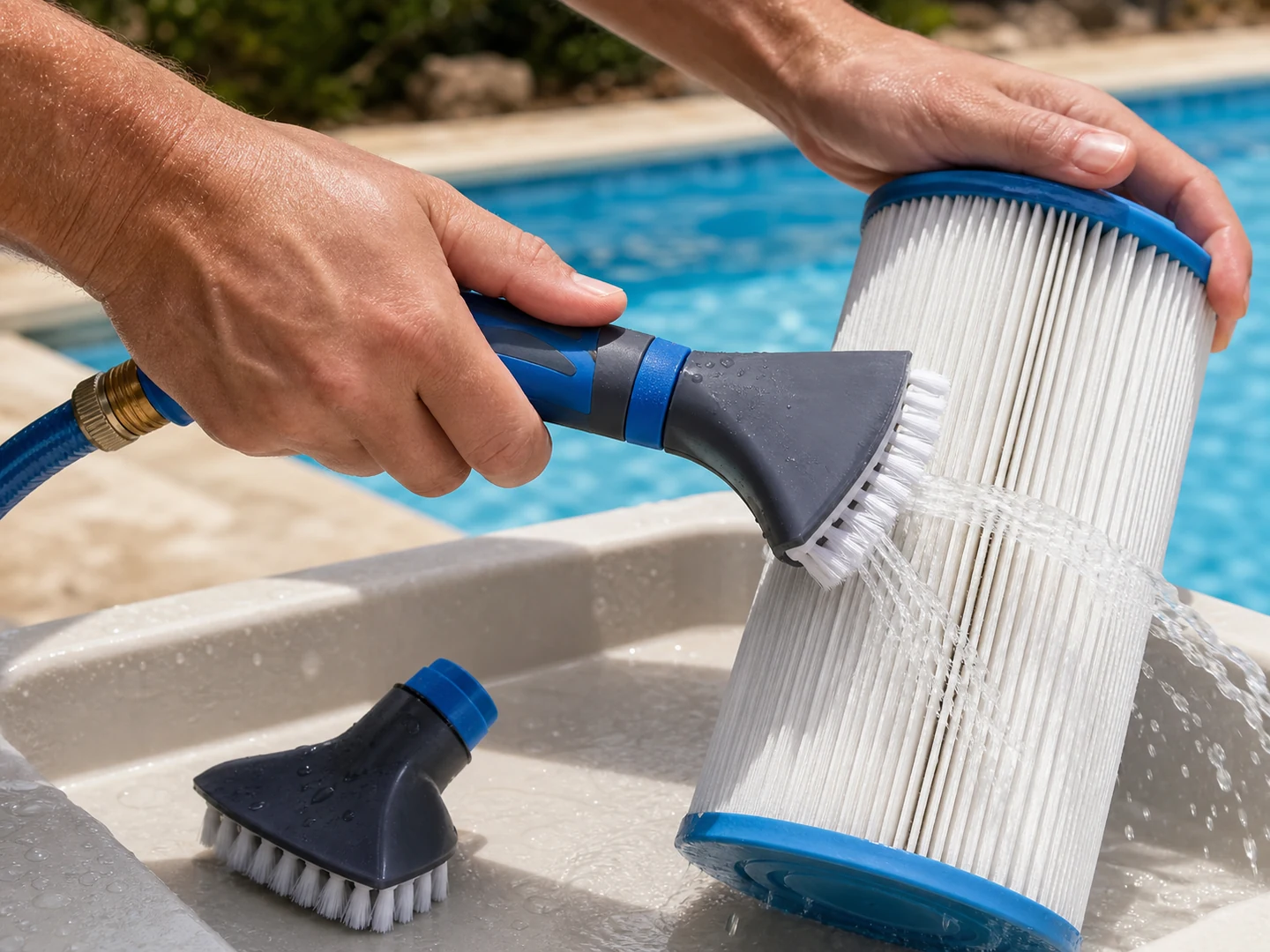
A pool filter cartridge brush is a narrow, hand‑held brush with bristles spaced and shaped to reach between the pleats of a cylindrical cartridge filter. Its primary job is to loosen and remove accumulated debris—such as hair, suntan oils, algae, and fine silt—without fraying the polyester or cellulose filter fabric. Brushes intended for cartridge filters typically have a longer handle or a flexible neck to access deep pleats, and they use bristle materials that are firm enough to dislodge residue but soft enough to avoid tearing the media.
For algae, nutrient pollution, pond/water-quality impact, and aquatic ecosystem context, this section references EPA — Nutrient Pollution Effects on the Environment.
For brush construction terminology, bristle/fill/backing/stem terms, this section references American Brush Manufacturers Association — Brush Lingo.
Common Types of Pool Filter Cartridge Brushes
While many brushes look similar at first glance, their performance depends on bristle material, bristle pattern, handle design, and overall dimensions. Understanding these differences will help you match the brush to your specific cartridge.
Comparing Brush Options: Bristle Material, Structure, and Fit
Below is a practical comparison of the most common cartridge brush styles. Use it as a starting point when evaluating what suits your cleaning routine.
| Brush Type | Bristle Material | Typical Shape | Best For | Compatibility Notes |
|---|---|---|---|---|
| Standard nylon bristle brush | Medium‑stiff nylon | Straight or slightly tapered head | Routine cleaning; light dirt and oils | Works with most 50–150 sq ft residential cartridges; avoid on very thin media |
| Soft polyester brush | Flagged polyester tips | Straight, often wider head | Delicate or older cartridges; frequent cleaning | Lower abrasion, reduces risk of fuzz; may require more passes |
| Combination brush (nylon + fine wire) | Nylon with thin stainless‑steel wire row | Curved or contoured head | Heavy buildup, calcium scale, or embedded oils | Use with caution; wire can snag or tear pleats if pressure is too high |
| Flexible neck / gooseneck brush | Nylon or polyester | Flexible shaft; often threaded for extension pole | Deep pleats and tall cartridges (18+ inches) | Needs to match cartridge inner core diameter; universal sizes available |
| Fixed‑handle narrow brush | Nylon or polypropylene | Rigid plastic handle, slim head | Compact cartridges (spa filters, small pools) | Often comes as a twin‑brush set; watch handle length for reach |
How to Choose the Right Brush for Your Pool Filter Cartridge
Selecting a cartridge brush isn’t just about bristle stiffness. Consider these practical factors to get the best clean without causing long‑term damage:
- Cartridge dimensions and pleat spacing. Measure the depth and width of your pleats. A brush that is too wide won’t reach the bottom of the pleat; one that is too thick will force pleats apart and weaken the fabric.
- Residue type. For light organic loads (leaves, bugs), a soft‑ to medium‑bristle brush is enough. For oily film, sunblock deposits, or light calcium, a combination brush with a fine wire row can break the surface layer, but it must be used sparingly and with a light touch.
- Handle and grip. Look for a comfortable, non‑slip grip and an extension‑pole thread if you plan to clean cartridges that are taller than 15 inches. A curved handle can improve wrist angle when cleaning pleats near the center core.
- Operating environment. If you clean cartridges indoors or in a confined space, a shorter, rigid brush may offer better control. For outdoor cleaning with a hose, a brush with a quick‑connect pole adapter saves time.
- Cleaning frequency and replacement cycle. Brushes that are used daily or commercially will wear faster. Nylon bristles lose stiffness after repeated use; polyester bristles may flatten. Plan on replacing a frequently used brush based on wear condition, operating load, and the equipment maintenance plan to maintain effective cleaning.
Common Mistakes When Selecting a Cartridge Cleaning Brush
Even experienced pool operators can pick the wrong brush. Watch out for these frequent errors:
- Choosing based on cost alone. A low-cost brush with uneven bristles or a brittle handle can damage cartridges and cost more in replacement filters.
- Using a stiff wire brush on every cartridge. Fine wire rows are useful for heavy buildup, but daily use tears the fabric and promotes premature plugging.
- Ignoring pleat direction. Brushes designed for straight pleats may snag on spiral‑wrapped filter media. Always check the manufacturer’s recommendation for pleat orientation.
- Applying too much pressure. A common instinct is to scrub hard when a filter looks dirty. Instead, let the bristle tips do the work—excessive force bends pleats and opens gaps in the media.
- Neglecting handle ergonomics. A brush that is too short, too heavy, or lacks a comfortable grip leads to poor technique and missed sections.
- Skipping brush maintenance. A dirty brush redeposits oils and slime back into the pleats. Rinse and disinfect the brush regularly.
When a Standard Brush Is Not Enough
Off‑the‑shelf cartridge brushes work for most residential and light commercial filters, but there are situations where a standard brush won’t do the job properly:
- Extremely tight pleat spacing (below 3 mm). Some high‑efficiency cartridges have pleats too close for standard bristle gauges. In these cases, a custom brush roll with thinner bristles or a non‑contact cleaning method (ultrasonic or soak‑only) may be necessary.
- Non‑standard core diameters or irregular shapes. If your cartridge has an oval core, a stepped center tube, or a very small diameter (under 2 inches), a standard gooseneck brush won’t fit. A custom brush drawing based on actual measurements is the safest path.
- Extreme adherence buildup (calcium silicate, heavy scale). Mechanical brushing alone won’t remove embedded mineral deposits. In such cases, a chemical soak or acid wash is required before brushing, and the brush should be used only to remove softened residue.
- Production‑line cleaning environments. For commercial pool operators cleaning dozens of cartridges per day, a fixed assembly with interchangeable brush heads and a dedicated rinsing station may outperform hand‑held brushes. These setups often require a custom brush design to match the exact cartridge model.
When you encounter these limits, asking a supplier for a custom sample or a small trial batch based on your cartridge drawing reduces the risk of purchasing brushes that don’t fit or perform.
Final Takeaway
The best pool filter cartridge brush balances bristle stiffness, head shape, and handle design with the real‑world demands of your cartridge. Start by identifying the residue you deal with most often, then measure your pleat spacing and core access before selecting a brush type. A simple nylon brush handles everyday cleaning, while a flexible‑neck version with a light wire row can target stubborn buildup when used carefully. Avoid over‑scrubbing, match the brush to the pleat direction, and replace the brush before it becomes a source of contamination. With the right tool, you’ll extend cartridge life and keep flow rates where they belong.
Frequently Asked Questions
Can I use a regular bottle brush to clean my pool filter cartridge?
A household bottle brush often has stiff, un‑flagged bristles and a wire core that can scratch or snag the filter fabric. While it might work in an emergency, it is not recommended for regular use. A brush designed for filter cartridges uses materials that protect the pleats and reaches the full depth of the cartridge.
What size brush should I use for my cartridge?
The brush head should be narrow enough to slide easily between pleats without forcing them apart. As a rule of thumb, the bristle portion should be no wider than the pleat spacing minus 1–2 mm. For most residential cartridges, a head width between 1/2 inch and 1 inch works well. Always measure your cartridge’s pleat gap before purchasing.
How often should I replace my pool filter cartridge brush?
Replace a brush when the bristles become permanently bent, flattened, or lose stiffness—typically every 6 to 12 months with weekly use. Using a worn brush increases the effort required and may leave residue behind, eventually shortening cartridge life.
Is it safe to use a wire brush on a pool cartridge?
Only use a brush that includes a fine wire row if the pleat material is robust (e.g., heavy‑duty polyester) and the buildup resists nylon bristles. Even then, use light pressure and limit wire use to occasional deep cleaning. Avoid wire brushes on cellulose or blended media, as they tear easily.
What is the difference between a pool filter cartridge brush and a pool filter brush cleaner?
“Pool filter brush cleaner” is sometimes used to refer to liquid cleaning sprays or soaks that are applied with a brush. In contrast, a “pool filter cartridge brush” is the physical tool itself. Many maintenance routines combine a cartridge brush with a specialized cleaner, but the terms describe different products.
Can I clean a cartridge filter with just a hose and no brush?
Hosing alone removes loose debris but does not eliminate oily films or embedded particles. If you skip brushing, the cartridge will clog faster and require more frequent replacement. A brush is the most effective way to deep clean the pleats and restore flow.
What handle length do I need for tall cartridges?
For cartridges taller than 18 inches, look for a brush with an accept threaded extension pole or a built‑in flexible gooseneck. The total reach should equal the cartridge length plus about 6–8 inches for comfortable grip outside the filter tank.