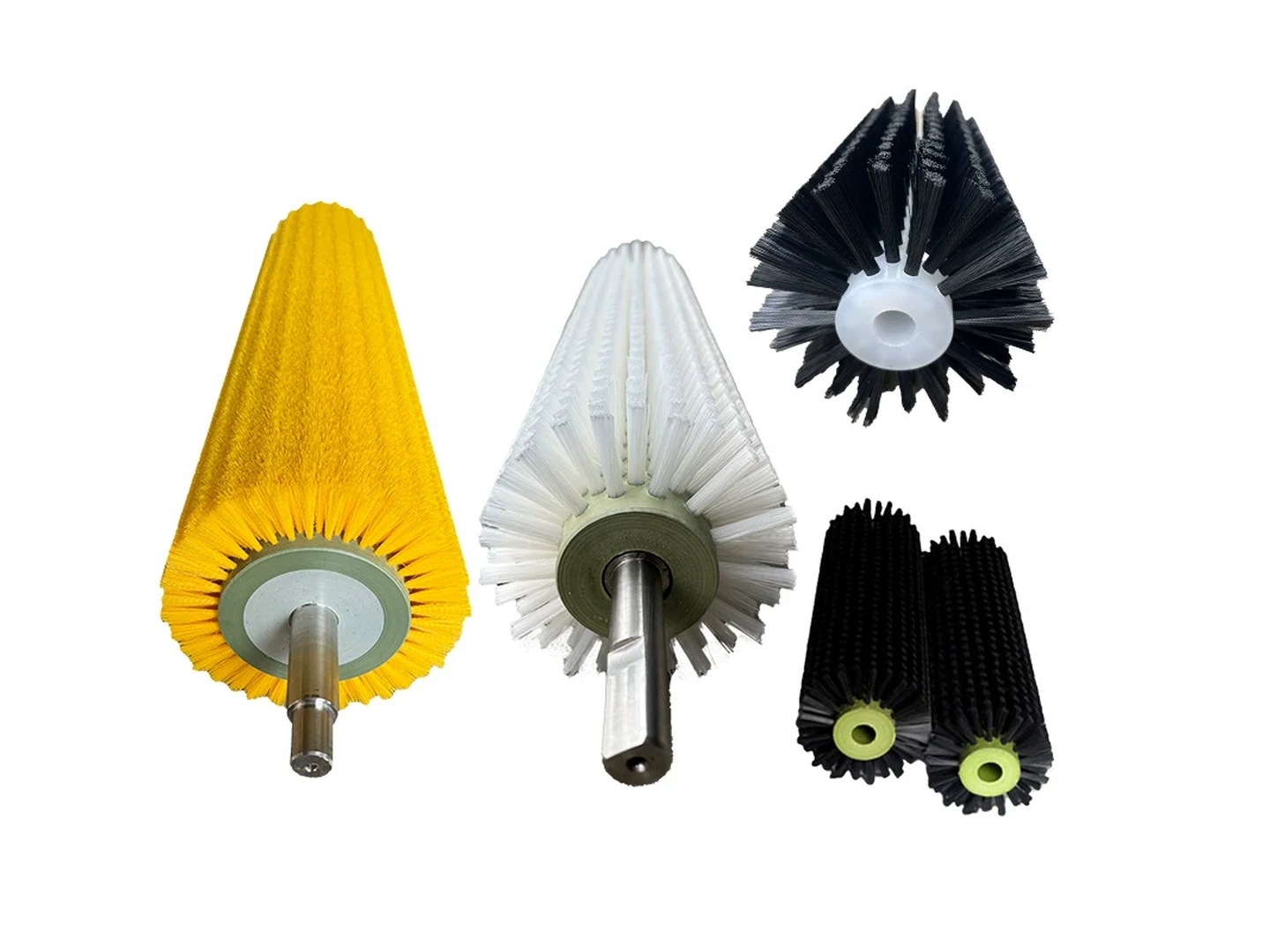
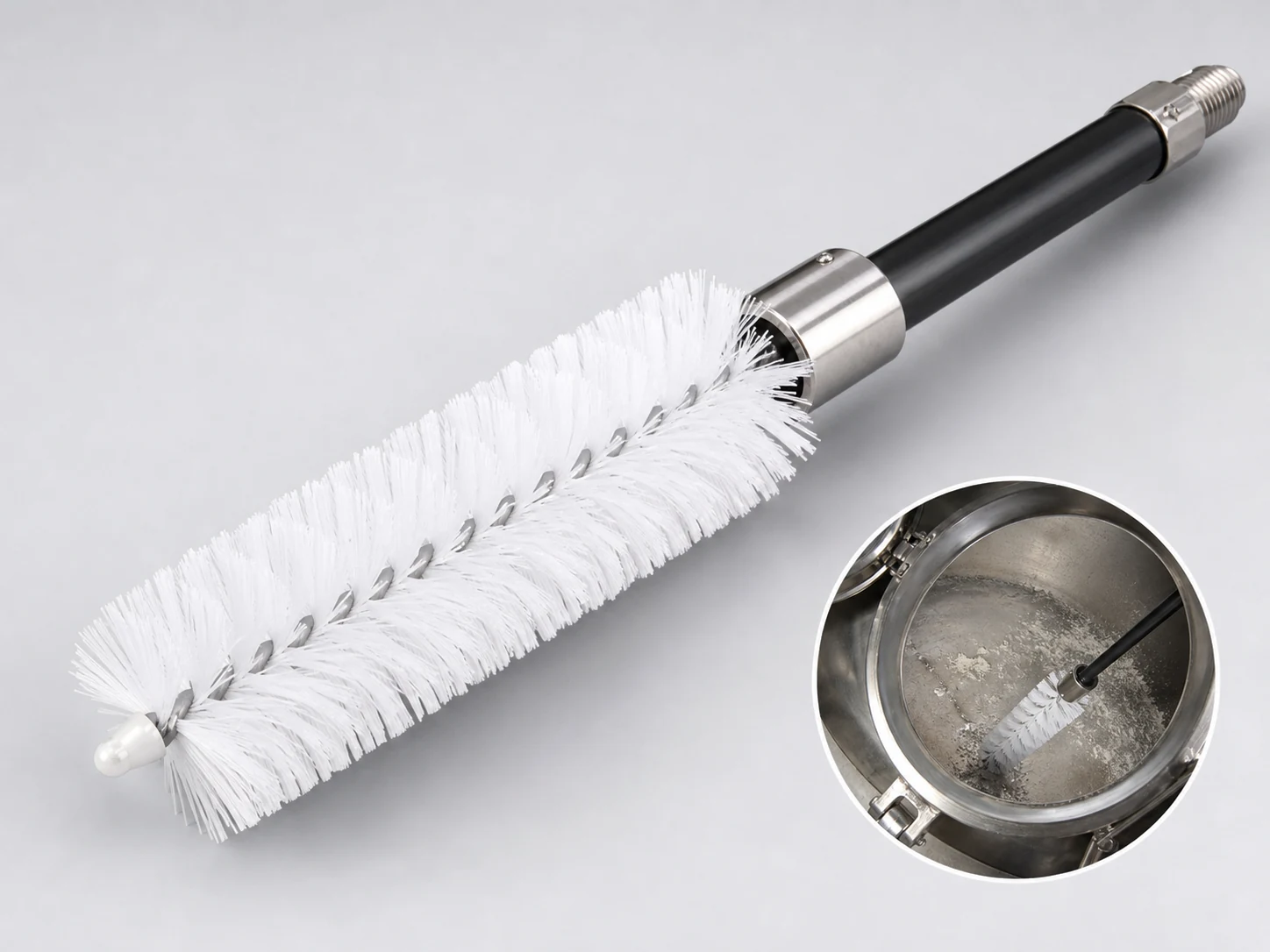
What Is a Brewery Tank Brush?
A brewery tank brush is a purpose-built cleaning tool that uses bristles arranged on a core or handle to scrub internal surfaces of stainless steel tanks. Unlike generic bottle brushes or kitchen scrubbers, these brushes are engineered with food-safe materials, chemical resistance, and dimensions that match standard brewery manways, racking ports, and CIP (clean-in-place) system constraints. The primary function is to physically dislodge residues, including protein films, sugars, and mineral deposits, without damaging polished tank walls.
For food-manufacturing equipment and wet food zones, eCFR — 21 CFR Part 117 Human Food CGMP and Preventive Controls is the production-side CGMP and preventive-controls reference.
When the article mentions sanitizing food-contact articles, eCFR — 21 CFR 178.1010 Sanitizing Solutions provides the regulatory context for sanitizing solutions.
For food-service sanitation language, the FDA — Food Code is the reference point for food safety terminology rather than a brush manufacturer’s preference.
For the material or regulatory boundary in this section, the supporting reference is eCFR — 21 CFR 177.1500 Nylon Resins.
For the material or regulatory boundary in this section, the supporting reference is eCFR — 21 CFR 177.1630 Polyethylene Phthalate Polymers.
For brush terminology and construction language, this section references American Brush Manufacturers Association — Brush Lingo.
When milk residue enters the picture, the brush must tackle a sticky, proteinaceous layer that can harbor bacteria if left behind. The right brush bridges the gap between chemical cleaning cycles and manual or mechanical scrubbing, ensuring surfaces return to a sanitary state quickly.
Common Material, Design, and Mounting Options
Before diving into selection criteria, it helps to know the main building blocks of brewery tank brushes. The table below captures the options you will encounter most often.
Bristle Materials
- Polyester (PBT): Stiff, widely used for high-scrub applications. Resists most brewery chemicals and temperatures up to 280°F. Good for heavy milk residue.
- Nylon 6 or 6.6: Flexible, softer than PBT. Works well on polished surfaces but may wear faster with aggressive use.
- Food-grade Tampico (natural fiber): Softer natural bristle, useful when minimal abrasion is critical. Absorbs water and can swell, so it is rarely first choice for persistent milk films.
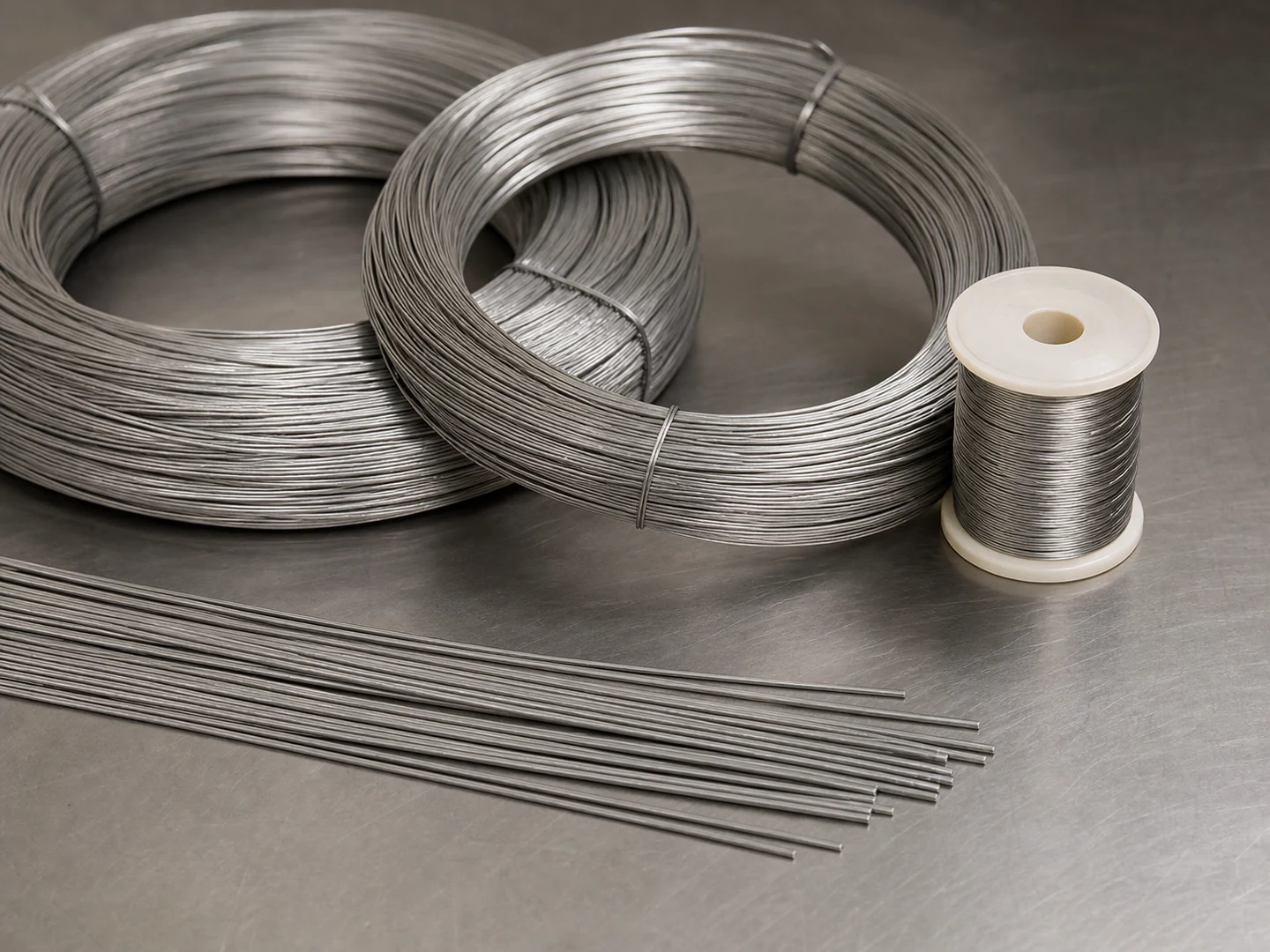
- Stainless steel wire (with caution): Sometimes used for spot cleaning heavily fouled surfaces, but risks scratching and embedding metal particles—generally not recommended for food-contact surfaces without a risk assessment.
Handle and Core Types
- Fixed wooden handle: Inexpensive, can be replaced. Must be sealed to prevent moisture absorption and bacterial growth.
- Plastic or fiberglass handle: Lightweight, moisture-resistant, and often chemical-tolerant. A safe middle-ground option.
- Stainless steel shaft/rod: Heavy-duty, autoclavable, and compatible with most sanitizers. Preferred when hygiene demands are highest.
Mounting and Interface
- Single straight handle: Manual scrubbing through a manway door or port. Common for periodic deep cleans.
- Through-handle / pistol grip: Offers better leverage for scrubbing tank domes or hard-to-reach corners.
- Machine-mount (e.g., drill-driven): Speeds up repetitive scrubbing but requires careful speed control to avoid surface damage.
Key Selection Factors Compared at a Glance
When milk residue is your primary target, several design attributes directly impact cleaning success. Use the comparison table below to weigh common trade-offs.
| Selection Factor | Option A (Stiff / Aggressive) | Option B (Moderate / Standard) | Option C (Soft / Specialized) | Why It Matters for Milk Residue |
|---|---|---|---|---|
| Bristle Material | PBT, coarse diameter | Nylon 6.6, medium diameter | Tampico or fine nylon | PBT cuts through dried lactose films; nylon may require more passes; Tampico may not break the residue layer. |
| Bristle Stiffness / Diameter | 0.50–0.60 mm | 0.30–0.40 mm | 0.15–0.25 mm | Thicker bristles dislodge stubborn milk stone; thinner bristles protect polished surfaces. |
| Overall Brush Diameter | Matched closely to tank ID (2–4 in smaller) | Slightly undersized (4–6 in clearance) | Flexible flag tip design | Tight fit ensures wall contact for film removal; too tight risks jamming or scratching the tank wall. |
| Handle/Core Material | Stainless steel | Plastic or fiberglass | Wood (sealed) | Stainless steel handles withstand high-temperature CIP sanitation; wood may deteriorate with repeated chemical exposure. |
| Mounting Type | Drill/mechanical drive | Manual straight/offset | Flexible extension | Milk residue often needs mechanical action beyond hand scrubbing; drill-attached brushes cut cleaning time. |
| Chemical Compatibility | Resistant to strong acids and caustics | Resistant to common brewery cleaners | Limited chemical resistance | Milk protein requires alkaline cleaners; brushes must survive repeated soak/scrub cycles without degrading. |
How to Choose the Right Brush Based on Your Operating Conditions
Every brewery handles milk residue differently. Evaluate these conditions before selecting a brush.
- Residue Type and Age: Fresh milk residue from a just-emptied lactobacillus fermentation wipes away more easily than dried, baked-on milk stone from a hot rinse cycle. For heavy, aged residue, lean toward stiffer PBT bristles and consider a mechanical drive to reduce labor.
- Surface Sensitivity: High-polish interior finishes (e.g., 2B or #4) require softer bristles to prevent micro-scratches that can harbor bacteria. Start with a medium-stiffness nylon brush and test on a small, consistent area before committing to a full-scale brush order.
- Equipment Interface: Identify every port, manway, and racking arm you will use. The brush handle length and diameter must pass through the opening without binding. For tanks with a top manway, a longer handle or extension pole is necessary; for side ports, a shorter, more maneuverable design works better.
- Wet and Chemical Exposure: Milk residue cleaning often follows a caustic CIP cycle. Choose bristles and handle materials that withstand pH extremes (2–13) and temperatures up to 185°F for at least 30 minutes. PBT and stainless steel generally hold up best in this environment.
- Hygiene Expectations: If you are cleaning tanks that return to cold-side production immediately, the brush itself must be easily cleanable and sanitizable. Smooth, non-absorbent materials (stainless steel + polyester) reduce the risk of harboring contaminants.
- Maintenance Frequency: Brushes degrade over time. Inspect bristles for flattening, breakage, and chemical swelling every 2–3 deep-clean cycles. Design a replacement schedule into your SOP rather than waiting for visible failure.
- Custom Size Requirements: Off-the-shelf brushes rarely fit every tank perfectly. Work with a supplier who can adjust bristle diameter, trim length, and handle length to match your exact tank dimensions. Provide a drawing or list of critical dimensions (tank ID, manway ID, distance from opening to farthest point) when requesting a quote.
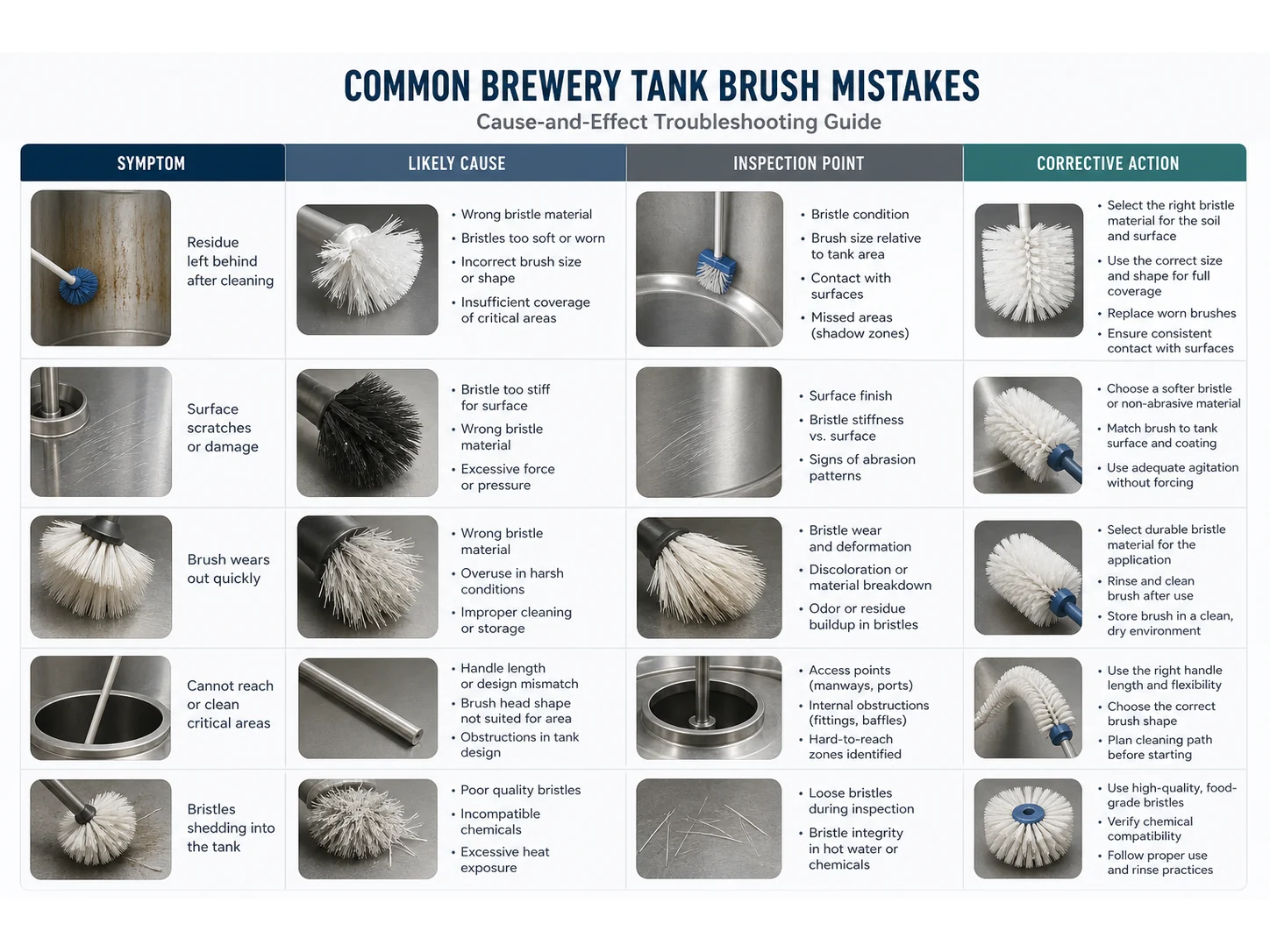
Common Mistakes When Selecting a Brewery Tank Brush
Even experienced operators can make avoidable errors. Watch for these frequent pitfalls.
- Choosing by cost drivers Alone: A low-cost brush that degrades after two uses costs far more in downtime and re-scrubbing than a well-built one rated for dozens of cycles.
- Ignoring Bristle Stiffness Data: Vague terms like “medium” mean nothing without a specified filament diameter or flexural modulus. Request a sample or spec sheet that quantifies stiffness.
- Mismatching Brush Diameter to Tank: A brush that is too small leaves a film ring just below the fill line where milk residues concentrate. A brush too large can jam and damage the tank or the operator’s grip.
- Overlooking Chemical Interactions: Nylon bristles can absorb moisture and swell in high-acid environments, reducing scrub effectiveness and trapping chemicals that later rinse into beer.
- Skipping a Sample Test: Every tank setup is unique. Before buying 20 brushes, order one sample and run it through a full clean–sanitize–inspect cycle on the same residue you need to remove.
- Neglecting Operator Ergonomics: An overly long, heavy handle leads to operator fatigue and uneven scrubbing, leaving residue in corners. Match handle design to the typical user’s height and tank access.
- Assuming One Brush Fits All Tanks: A fermenter with a sharp cone requires a different brush tip shape than a horizontal lagering tank. Map each geometry separately.
When a Standard Brewery Tank Brush Is Not Enough
Even the best manual brush has limits. Recognize these boundary cases early to avoid wasted effort and safety risks.
- Thick, Caked-on Milk Stone: If a normal caustic soak followed by scrubbing cannot dislodge deposits thicker than 0.5 mm, you need a more aggressive mechanical approach—possibly a rotary CIP spray head with higher pressure or a specialized acid foam treatment before brushing.
- Deep Pitting or Crevices: A brush cannot effectively clean inside pits or gasket grooves where milk residue hides. In such cases, have a stainless steel surface specialist evaluate whether mechanical polishing or passivation is required first.
- Large Horizontal Tanks with Remote Areas: Brushes with fixed handles cannot reach more than about 6 feet from the manway. For longer reaches, consider a modular segmented handle system or a powered rotary brush on a flexible shaft.
- Extreme Hygiene Requirements: Some packaging breweries require validated cleaning processes with consistent log reduction of specific pathogens. A manual brush cannot provide validated, repeatable coverage—this demands an automated CIP system with verified spray patterns and flow rates.
- Brushes That Shed Bristles: If a sample brush leaves even a few bristles in the tank, it must be replaced immediately. Shedding indicates poor manufacturing or a material mismatch, and ingestion of bristle fragments is a consumer safety hazard.
Final Takeaway
Selecting the right brewery tank brush for milk residue comes down to matching bristle material, stiffness, and handle design to your specific residue type, tank geometry, and chemical exposure. Start with a stiff PBT brush on a stainless steel shaft for moderate-to-heavy milk films, validate performance with a sample, and adjust from there. Always design a cleaning SOP that treats the brush as a consumable with a planned replacement cycle rather than a one-time purchase.
Frequently Asked Questions
How do I know if my tank needs a brush instead of just CIP?
If CIP alone leaves a visible film or if ATP swab tests show persistent organic residue, manual scrubbing or a brush-assisted cycle is the next step. Milk protein particularly resists spray-only removal.
What bristle material is safest for polished 304 stainless tanks?
Nylon 6.6 with a filament diameter around 0.30 mm is typically safe for polished surfaces. Always test on a discreet spot first, and avoid metal wire bristles unless surface scratching is acceptable.
Can I use the same brush for both hot-side and cold-side tanks?
It is not recommended. Cross-contamination risk is high. Maintain separate brushes or, at minimum, clean and sanitize the brush thoroughly between uses and store it in a dry, labeled location.
How often should I replace a brewery tank brush?
Inspect after every 2–3 deep-clean cycles. Replace when bristles show more than 25% flattening, breakage, or when scrubbing effort noticeably increases. A good quality brush in regular use might last 3–6 months in a mid-size brewery.
Does brush length include the handle, or just the bristle portion?
Different manufacturers define length differently. When requesting a custom quote, specify “overall length” (handle tip to brush tip) and “trim length” (the bristle-bearing portion). Provide a dimensioned drawing if possible.
Is a stiffer brush always better for dried milk residue?
Not necessarily. Too stiff a bristle can scratch the tank surface, creating micro-crevices that harbor future residue. Start with a medium-stiffness brush, and only move to stiffer options if scrubbing time is unreasonable.
What should I look for in a brush that will be used with acidic cleaners?
Polyester (PBT) and stainless steel handles generally tolerate acidic environments well. Nylon can degrade over long exposure. Confirm acid resistance with the supplier and ask for a chemical compatibility chart specific to your cleaner’s pH range.
How do I measure my tank to order the correct brush diameter?
Measure the internal diameter of the tank at the widest point, then measure the manway or port opening the brush must pass through. The brush diameter should be roughly 1–2 inches less than the tank ID for small tanks (under 48″), and 2–4 inches less for larger tanks, to allow easy entry without sacrificing scrub contact.