The Real Cleaning Problem Behind Dry Dust
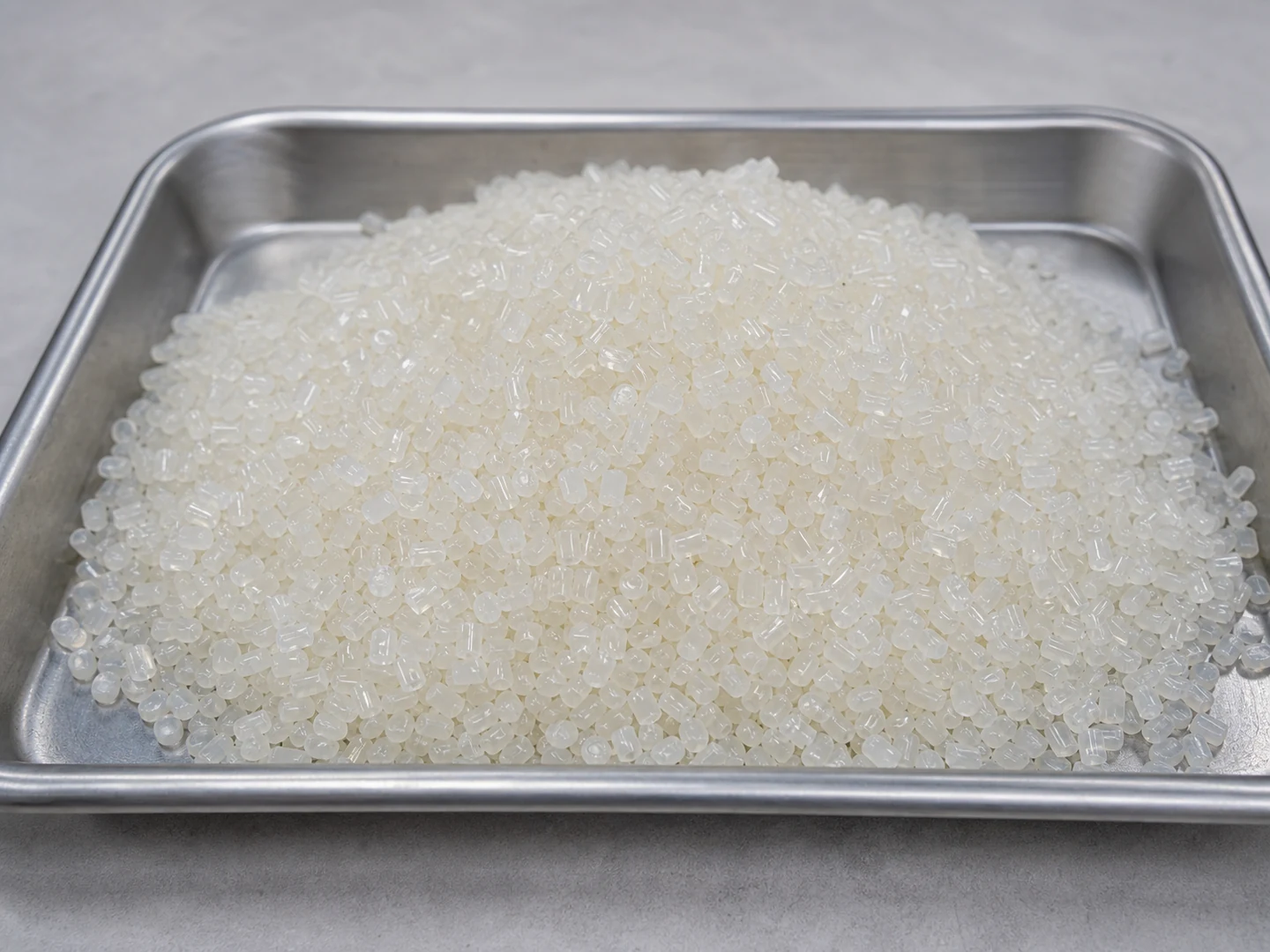
Dry dust is not just harmless powder. It is often abrasive, easily picked up by static, and can pack tightly inside a tube if moisture is present later. Unlike wet or oily residues that lubricate the bristle path, dry dust increases friction and wear on the brush. The wrong bristle material may generate static cling, making dust removal harder rather than easier. Understanding this helps you see why brush selection goes beyond simply matching diameter and length.
Common Types of Feeder Bottle Brushes
For kitchen cleaning examples, the FDA — Food Safety in Your Kitchen supports the distinction between normal cleaning, food handling, and hygiene habits.
For general foodborne-illness prevention language, the CDC — Preventing Food Poisoning is used as the public-health reference.
For the material or regulatory boundary in this section, the supporting reference is eCFR — 21 CFR 177.1500 Nylon Resins.
For the material or regulatory boundary in this section, the supporting reference is eCFR — 21 CFR 177.1630 Polyethylene Phthalate Polymers.
For the safety point in this section, the relevant OSHA reference is OSHA — Machine Guarding.
For the safety point in this section, the relevant OSHA reference is OSHA — Control of Hazardous Energy.
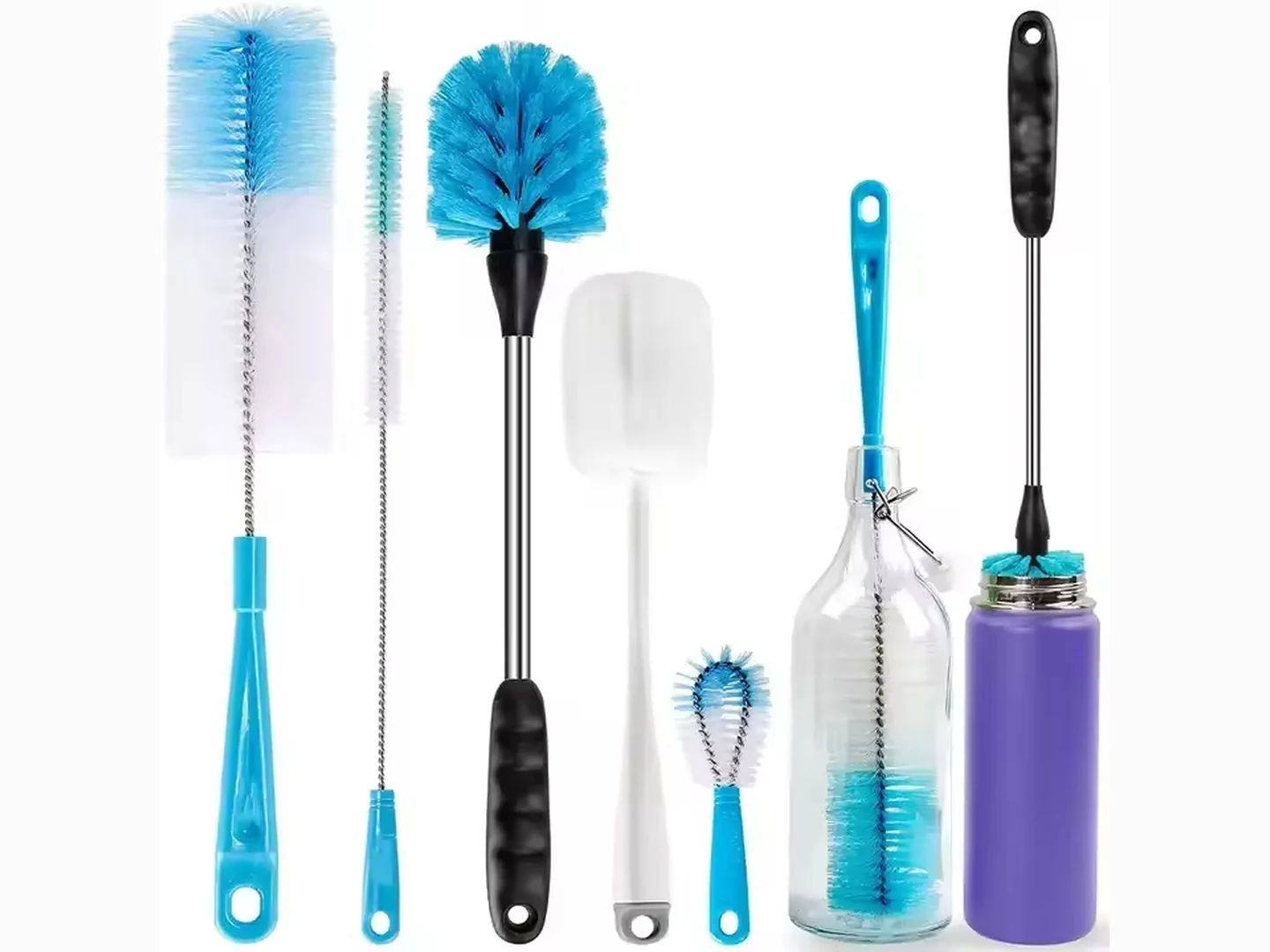
Feeder bottle brushes come in several configurations. Knowing the main categories helps you spot which design fits your dry dust application before you order.
- Twisted-wire brushes – a continuous bristle strip is twisted between two wires. They offer good stiffness and are common for straight tubes.
- Staple-set brushes – bristles are stapled into a handle or core. These can vary widely in fill density and are often used for custom shapes.
- Coil or loop brushes – bristles are wound around a flexible core. They can navigate curved passages better than stiff twisted brushes.
- Tube brushes with full-length handles – a brush tip mounted on a long metal or non-sparking handle, used when reach is critical.
Brush Type Comparison for Dry Dust Environments
| Bristle Material | Static Tendency | Abrasion Resistance | Surface Sensitivity | Typical Dry Dust Fit |
|---|---|---|---|---|
| Nylon (generic) | High | Medium | Can scratch soft metals/plastics | Light dust in metal tubes; avoid for static control unless treated |
| Anti-static nylon | Very low | Medium-high | Safe for most surfaces | Excellent for dry powder, dusty feeds, electronic-safe areas |
| Polyester | Medium | High | Less likely to scratch than nylon | Good all-around choice for dry dust in metal or glass |
| Natural fiber (tampico, horsehair) | Low | Low-medium | Very gentle; may absorb moisture | Light dust on delicate surfaces; avoid if moisture appears |
| Stainless steel | None | Very high | Abrasive to soft plastics, glass | Heavy, caked dust in metal tubes; not for static-sensitive areas |
| Brass | None | Medium | Softer than steel, still may scratch | Stubborn residue in metal; spark-resistant option |
| Abrasive nylon (grit-impregnated) | Varies | High (aggressive) | Will remove material from softer surfaces | Baked-on or hardened dust; only when substrate can handle it |
How to Choose a Feeder Bottle Brush for Dry Dust
Walk through these factors in order. They will push you toward a specific bristle type, diameter, and handle design that actually works in your environment.
- Residue type: Is the dust fine and electrostatic (flour, plastic powder) or coarse and abrasive (mineral powders)? Fine static dust demands anti-static bristles; abrasive dust needs durable material.
- Surface sensitivity: Is the tube interior plastic, glass, coated metal, or uncoated steel? Soft surfaces require non-scratching bristles like polyester or natural fiber.
- Equipment interface: Straight tube, curved tube, or a feeder with internal flights? Curved paths need a flexible brush; long reaches need a sturdy, non-buckling handle.
- Wet or chemical exposure: Will the brush ever see water, sanitizers, or solvents? Natural fibers swell; some plastics degrade. Polyester and stainless hold up better.
- Hygiene expectations: Food-grade or pharmaceutical zones require materials that won’t shed, harbor bacteria, or contaminate. Crimped bristles and sealed handle connections matter here.
- Maintenance frequency: Daily cleaning wears brushes faster. Choose a material and construction that stand up to repeated use without fraying or losing shape.
- Custom size requirements: If off-the-shelf diameters don’t match your tube ID exactly, consider a custom brush. A drawing review with the supplier ensures the brush provides the right fill and contact pressure.
Common Mistakes When Selecting or Using Feeder Bottle Brushes
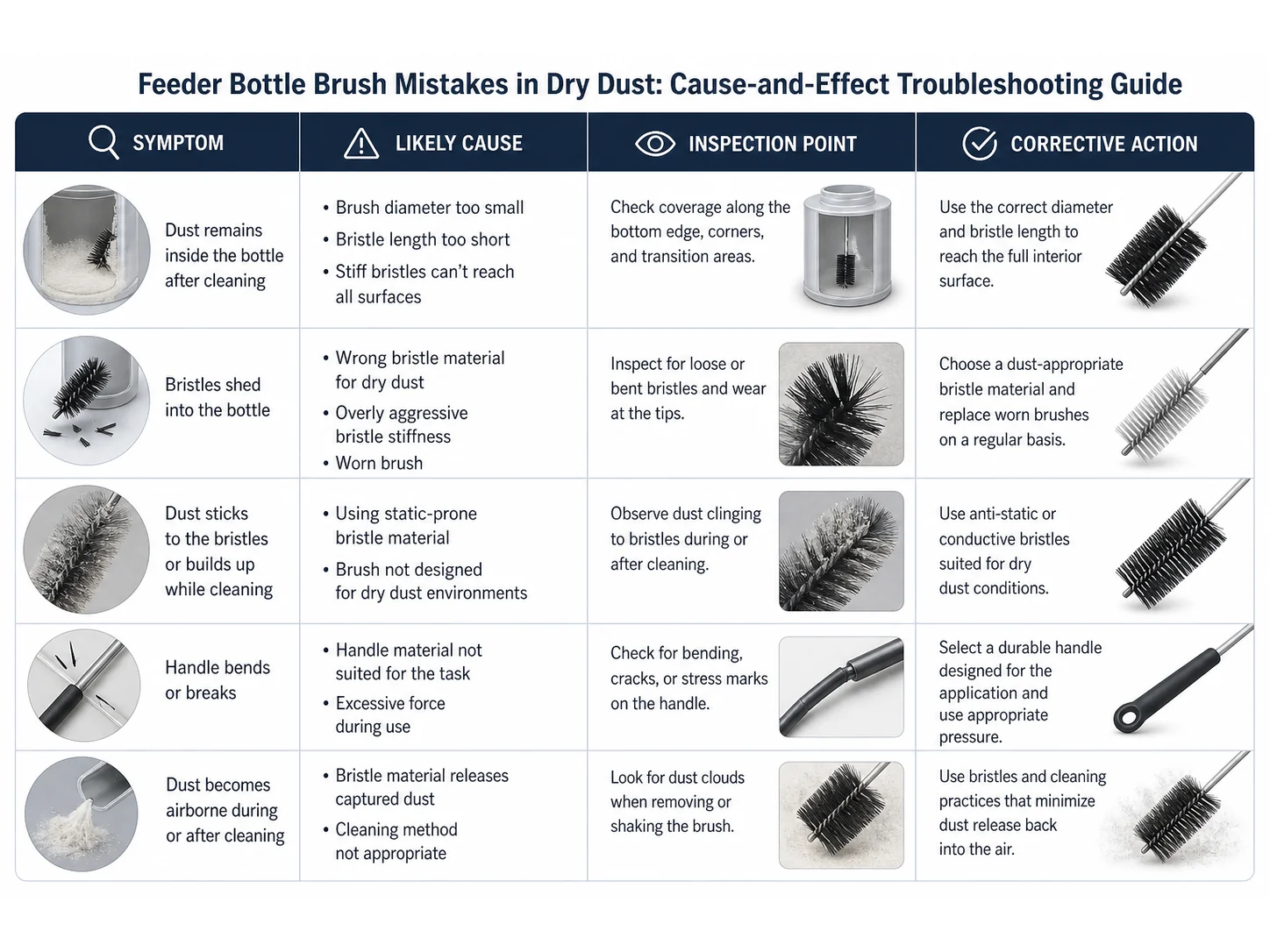
Every mistake here has a direct impact on cleaning effectiveness or safety. Avoid them by planning, not just grabbing the nearest brush.
- Using a “one-size-fits-all” brush: A brush that is too small leaves a layer of dust behind; too large can jam or bend the handle. Measure your smallest inner diameter and choose a brush slightly larger than that dimension so bristles maintain contact without excessive force.
- Ignoring bristle material and static buildup: Standard nylon brushes create static, causing dust to jump back onto the tube wall the moment you pull the brush out. In dry environments, anti-static nylon or natural fibers are often worth the slight cost difference.
- Picking the wrong handle length or material: A handle that is too short forces operators to lean into machinery; too long and flexible may whip or break. Wood handles can absorb moisture and crumble in dry environments, leaving splinters. Wire handles may kink permanently under high torque.
- Overlooking bristle shedding: Twisted brushes with insufficient loop retention can lose bristles inside the feeder. Loose bristles become foreign objects in your product stream. Request a sample and pull firmly on bristles to test retention before bulk ordering.
- Assuming all brushes are food-safe: Adhesives, dyes, or non-FDA compliant bristles can leach into food contact zones. Verify material certificates and ask for a document of compliance if hygiene is critical.
- Skipping a sample test: A brush that works in a bench trial may fail under actual dust load, temperature, or operator force. Run a small pilot with the real residue before committing to a large purchase.
- Forgetting to define a replacement trigger: Worn brushes hide in toolboxes. Set a visual standard: when bristles are bent permanently or exhibit a 20% reduction in diameter, replace them. Waiting until the brush stops cleaning leads to residue buildup and potential hard-to-clean blockages.
When a Feeder Bottle Brush Is Not Enough
A bottle brush resolves many dry dust cleaning issues, but it is not a universal solution. Recognize these boundaries to avoid wasting time or creating a safety hazard.
- Baked-on or hardened deposits: If dust has turned into a hard, cement-like layer due to heat or moisture, a brush alone cannot break it loose. You may need a chemical soak, steam, or a more aggressive abrasive tool.
- Excessive tube length or impossible bends: Once a tube exceeds the maximum effective handle length—typically 6 to 8 feet for a stiff wire brush—control becomes poor, and the brush may not reach the entire surface. In such cases, consider automated brushing systems or clean-in-place fluid methods.
- Hazardous or contained environments: If the dust is toxic, explosive, or requires containment, a manual brush may expose operators or create a spark risk. Evaluate tank-cleaning nozzles, vacuum systems, or clean-out ports instead.
- Delicate coatings or linings: Glass-lined vessels, soft elastomer linings, or thin-walled plastic tubes can be scratched or gouged by bristles that feel “soft” to the hand. A sample test on a spare section of material is mandatory before any purchase decision.
- When cleaning must be validated: If you operate under strict sanitation standards (SQF, BRC, etc.) and need proof of cleanliness, a visual pass with a brush may not be sufficient. Swab tests or ATP monitoring should drive your cleaning protocol, and the brush is just one component.
Final Takeaway
Matching a feeder bottle brush to dry dust is not about finding the lowest-cost or stiffest option. It is about controlling static, protecting tube surfaces, and ensuring the brush remains intact under repeated use. Measure your inner diameters accurately, specify a bristle material that won’t attract dust or scratch the substrate, and always confirm performance with a sample trial. When a standard brush falls short, involve a supplier who can review your drawing and propose a custom design without guessing.
Frequently Asked Questions
What is the best bristle material for dry, dusty feeders?
For most dry dust applications, anti-static nylon or polyester provides the best balance of cleaning power, static control, and surface safety. Stainless steel works for heavy, abrasive dust in metal tubes but is too aggressive for soft substrates. Natural fibers handle light dust on delicate surfaces but can break down if any moisture is present.
Can I use a bottle brush with a wooden handle for dry dust?
Wooden handles can dry out, crack, or splinter in very dry environments, especially if the brush is stored near heat. They may also absorb oils or chemicals if conditions change. A metal or sealed plastic handle often lasts longer and reduces the risk of foreign material contamination.
How do I prevent static when brushing dry powder?
Choose a brush with anti-static properties built into the bristle material, such as carbon-loaded nylon. If that is not possible, consider grounding the operator or using a humidifier in the area, but be cautious: added humidity can turn some powders into paste. An anti-static brush is the cleaner, more reliable fix.
What size brush do I need for my feeder tube?
Measure the smallest inner diameter of the tube along its length. Select a brush with a bristle diameter slightly larger than that measurement—usually ¼ to ½ inch oversize for tubes under 3 inches in diameter—so the bristles flex and maintain contact without excessive force. For tubes with varying diameters, the brush must fit through the tightest restriction.
How often should I replace a feeder bottle brush?
Replace the brush when bristles become permanently bent, when the bristle diameter shrinks by more than 20% from new, or when you see signs of shedding. In a high-frequency daily cleaning operation, a brush might need replacement every 2 to 4 weeks. Keep a few spares on hand and train operators to check brush condition after each use.
How do I know if a brush is food-safe?
Ask the supplier for a material compliance statement that covers FDA 21 CFR for food contact, or similar regional regulations. The brush should use food-grade bristles (often polyester or nylon types specifically approved), a non-absorbent handle, and no adhesives that could leach. A visual certification mark on the packaging is not enough—request documentation.
What should I include in an RFQ for a custom feeder brush?
Provide the tube inner diameter (minimum and nominal), overall length, any bends or turns, the type of residue, operating temperature range, whether the brush contacts food, and the desired bristle material. Include a simple sketch or drawing with dimensions. Request a sample for testing before release of a full order.
Can a feeder bottle brush also handle wet cleaning?
It depends on the bristle material and construction. Polyester and stainless steel can withstand water and some chemicals, but the brush stem and handle must also resist corrosion. If the brush will transition between dry and wet uses, inform the supplier so they can recommend a construction that won’t trap moisture between bristles and rust the core.