What Is a Klean Strip Brush Cleaner?
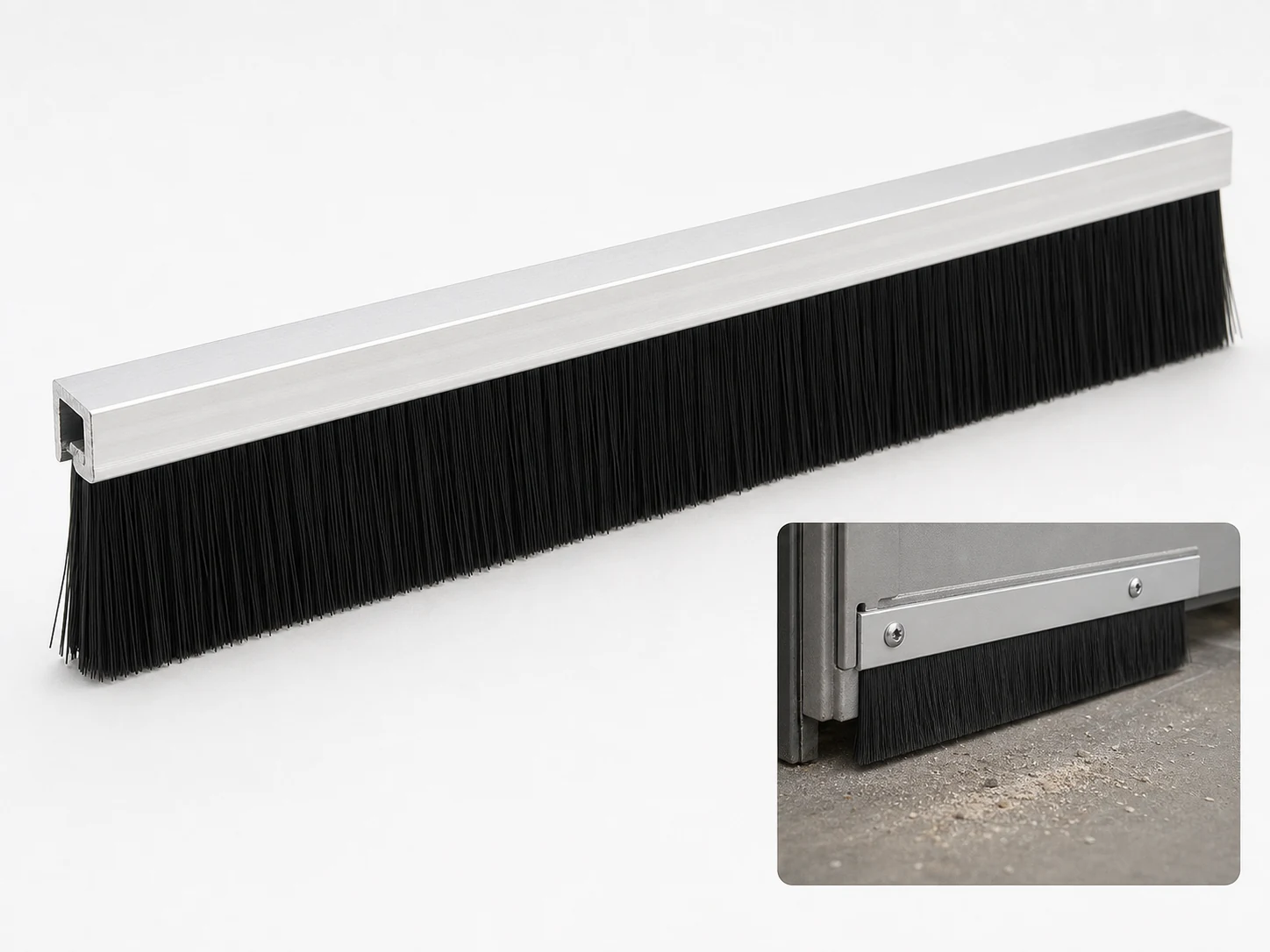
A Klean strip brush cleaner is a hand‑held or mountable brush consisting of a dense row of bristles secured in a rigid or flexible backing strip. It is specifically profiled to slide into door gaps—the space between the door bottom and floor, the hinge side, or the latch side—and dislodge accumulated particles. Unlike a scrub brush or toothbrush, a strip brush cleaner has a low‑profile, uniform bristle height that cleans the full depth of the gap in one pass. It can be used dry for dust, or with cleaning solvents for oily or greasy residues.
Common Types and Materials
For brush terminology and construction language, this section references American Brush Manufacturers Association — Brush Lingo.
For the safety point in this section, the relevant OSHA reference is OSHA — Machine Guarding.
For dimension and measurement language, NIST — Metric SI supports the use of consistent SI/metric specifications.
The performance of a strip brush cleaner depends almost entirely on the bristle material and the backing design. Below are the most common options you will encounter.
- Nylon filament: Soft to medium stiffness, good for dust and light debris on painted or finished surfaces. Retains shape well and resists most solvents.
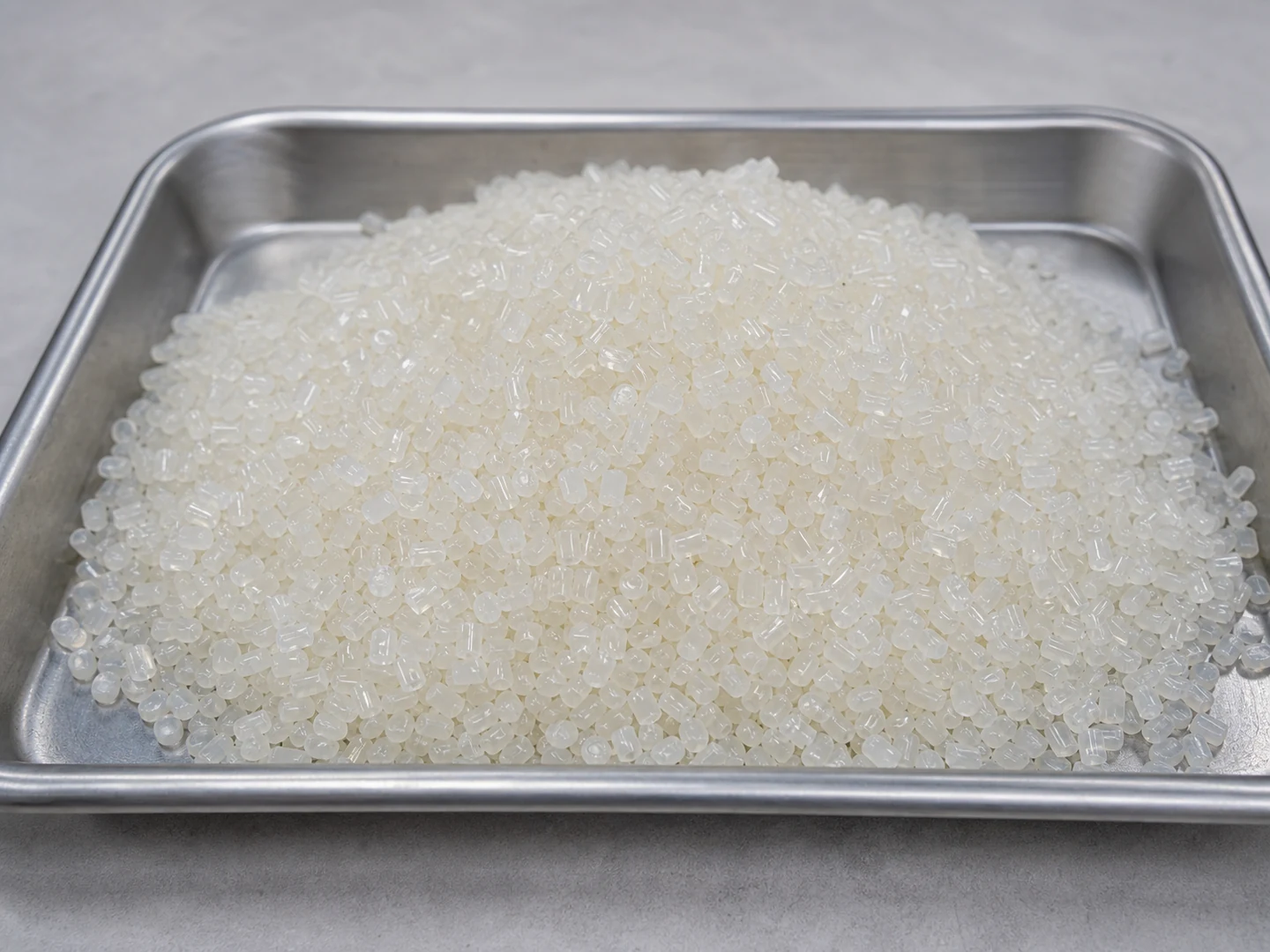
- Polypropylene filament: Stiffer than nylon, excellent chemical resistance, often used where aggressive cleaning is needed on metal or unpainted surfaces.
- Horsehair or tampico: Very soft, natural bristles for delicate wood or antique door frames. Holds fine dust but wears faster.
- Stainless steel or brass wire: For heavy‑duty rust, scale, or baked‑on residues in industrial doors. Too abrasive for painted or finished surfaces.
- Adhesive‑backed backing strip: Peel‑and‑stick foam or rubber backing that mounts directly to a flat surface. Quick to install but less durable for frequent removal.
- Metal or plastic channel backing: Bristles are held in a continuous U‑channel (aluminum, galvanized steel, PVC) that can be screwed or clipped onto a bracket. More rigid and replaceable.
- Hand‑held with gripper core: Single or double‑row bristles crimped into a stainless steel wire core that forms a flexible handle. Common for manual cleaning.
Strip Brush Cleaner Comparison
| Type | Bristle Stiffness | Best For | Limitations |
|---|---|---|---|
| Nylon strip brush | Medium | Dry dust, finished wood, low‑abrasion cleaning | Can melt with high‑heat friction; not for heavy grease |
| Polypropylene strip brush | Firm | Oily residues, solvents, humid areas | May scratch painted surfaces; less flexible |
| Horsehair strip brush | Soft | Antique frames, fine dust, delicate finishes | Wears quickly; not chemical‑resistant |
| Stainless steel wire brush | Very stiff | Rust removal, metal doors, industrial grit | Will scratch and gouge softer materials |
| Adhesive‑mount brush | Varies by bristle | Temporary or low‑traffic door gaps | Adhesive may fail in wet or hot areas |
| Channel‑mount brush | Varies by bristle | Permanent installations, easy bristle replacement | Requires drilling or fasteners |
How to Choose the Right Strip Brush for Door Gaps
Start by answering these five questions. They will narrow your options faster than looking at brands or cost drivers.
- What is the gap width and depth? Measure the clearance between the door and the floor/seal at multiple points. The brush bristle length must be at least equal to the gap depth, and the bristle density must fill the width so that particles are swept, not bypassed.
- What kind of residue are you removing? Dry dust calls for softer, finer bristles. Sticky or oily dirt needs a stiffer filament that won’t mat, and possibly solvent compatibility. Abrasive grit or rust might require wire bristles.
- What is the door and frame surface? Painted, lacquered, or veneer surfaces scratch easily; choose nylon or horsehair. Bare metal or industrial doors can tolerate polypropylene and wire. Glass or polished metal needs non‑abrasive options.
- Will the strip brush contact moisture or chemicals? In food plants, kitchens, or outdoor applications, select polypropylene or stainless steel that resists water and cleaning agents. Nylon absorbs moisture and may degrade over time.
- Will the brush be mounted or hand‑held? For permanent door sweeps or seals, a channel‑mounted brush with replaceable bristle strips makes sense. For periodic manual cleaning, a hand‑held brush with a comfortable grip is easier to control.
Installation and Usage Factors
Even the right brush can underperform if installed or used incorrectly. Keep these points in mind:
- Mounting alignment: The brush must run parallel to the gap and maintain consistent contact pressure. Uneven pressure creates streaks or leaves debris along one edge.
- Wear allowance: Over time, bristles shorten and lose stiffness. Choose a brush where the bristle length exceeds the gap depth by at least 3–5 mm to allow for wear before replacement.
- Cleaning the brush: Strip brush cleaners themselves need periodic cleaning—dry brushing, solvent rinse, or compressed air—to prevent redepositing dirt. Match the cleaning method to the bristle material.
- Static generation: Synthetic bristles like nylon can generate static, attracting dust. In electronics or cleanroom settings, use conductive or natural bristle alternatives.
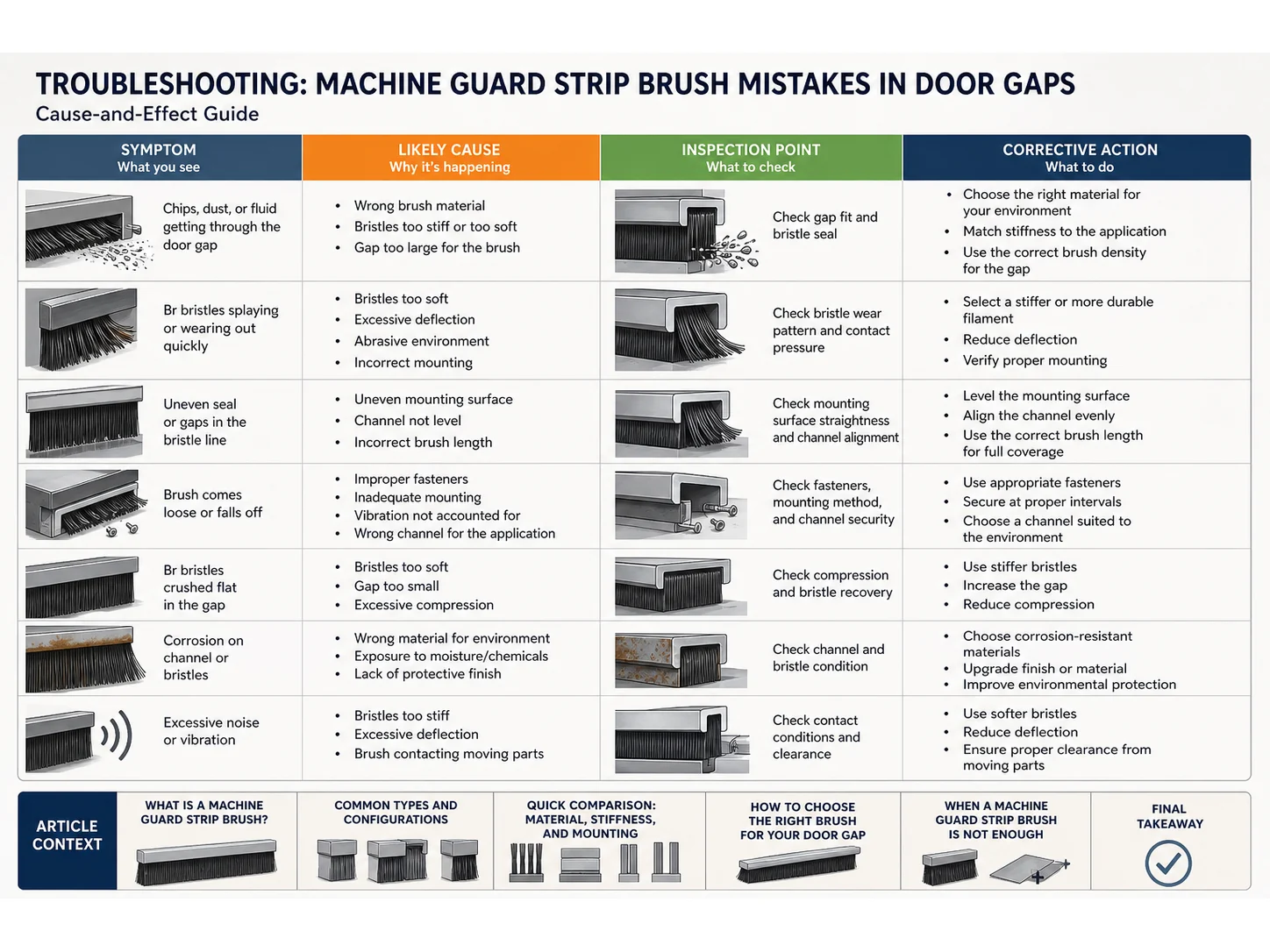
Common Mistakes to Avoid
- Choosing by bristle stiffness alone: A stiffer brush cleans faster but can ruin a fine finish. Always test on an inconspicuous section first.
- Ignoring chemical compatibility: Using a strong solvent with nylon bristles can cause swelling, softening, or early failure. Check the material resistance chart if you plan to use cleaning agents.
- Using the wrong backing for the door type: An adhesive strip may peel off a textured or porous surface. A screw‑mounted channel might crack a hollow‑core door. Match the fastener to the door substrate.
- Skipping the sample test: Especially for custom or large quantities, request a short sample and run it through the entire cleaning cycle in the actual operating environment.
- Assuming one brush fits all gaps: A door that swings over a rough concrete floor may need a thicker, more flexible brush than a sliding door on a smooth track.
When a Strip Brush Cleaner Is Not Enough
A strip brush is excellent for removing loose debris from door gaps, but it has limits. If you are dealing with:
- Deeply embedded grime or biofilm: A brush alone may not sanitize. You may need a steam cleaner, high‑pressure wash, or chemical disinfectant in addition to mechanical scrubbing.
- Damaged or corroded gaps: If the door bottom is bent, rusted, or missing chunks, a brush cleaner cannot restore the surface. Address the structural damage first.
- Air infiltration or sealing requirements: A strip brush cleaner is a cleaning tool, not a weather seal. If the primary goal is to block drafts, dust, or sound, use a purpose‑built door seal brush strip with a matching retainer.
- Automated or high‑speed operations: For conveyor doors or rapid‑cycle openings, a hand‑held strip brush is impractical. Look for motorized or continuously fed brush systems integrated into the door assembly.
In these cases, treat the strip brush as one part of a broader maintenance procedure, not the sole solution.
Final Takeaway
Choosing a Klean strip brush cleaner for door gaps starts with the gap dimensions and the residue you need to remove. Prioritize bristle material and backing type over brand names. Soft, moisture‑resistant bristles with a replaceable channel mount cover most commercial and residential door cleaning tasks. Always test on an inconspicuous area and plan for brush maintenance. If the brush can’t do the job alone, combine it with appropriate cleaning agents or a sealing system to get the result you need.
Frequently Asked Questions
Can I cut a strip brush cleaner to fit my door gap length?
Yes. Most strip brush products with a metal or plastic channel can be cut with a hacksaw, tin snips, or a utility knife. Adhesive‑backed brushes can be cut with scissors. Always cut from the non‑bristle side and wear safety glasses. After cutting, smooth any sharp edges on the channel.
How do I clean the strip brush cleaner after use?
The method depends on the bristle material. For dry dust, tap the brush against a surface or use compressed air. For oily residue, soak the bristles in a compatible solvent (e.g., mineral spirits for nylon, but check the material resistance chart). Rinse thoroughly and let air‑dry before storing. Do not use wire brushes or metal scrapers on the bristles themselves.
What is the difference between a strip brush cleaner and a door brush seal?
A strip brush cleaner is designed for manual or mounted cleaning of door gaps, usually with a focus on bristle material that captures and removes debris. A door brush seal is meant to block air, dust, or pests and is typically a continuous nylon or polypropylene brush strip mounted permanently in an aluminum or plastic retainer. While they look similar, the seal emphasizes barrier performance, while the cleaner emphasizes scrubbing and residue pickup.
How do I know if the bristles are too stiff for my door frame?
Test on a hidden area first—inside a closet door or an inconspicuous corner. Run the brush back and forth several times under normal pressure. If you see scuff marks, scratches, or paint transfer, the bristles are too aggressive. Switch to a softer material like horsehair or fine nylon. When in doubt, ask the supplier for a sample kit with different bristle types.
Can I use the same brush cleaner on metal and wood doors?
It is not recommended unless the bristles are soft enough for both. Typically, a nylon bristle strip is safe for painted metal and most wood finishes. But if the metal door has rust or heavy grease, you may need a stiffer brush, which would damage wood. Keep separate brushes for different surface types or use a brush with a dual‑side stiffness profile if available.
Do I need to worry about static electricity with these brushes?
Yes, especially with synthetic bristles in dry environments. Static can attract dust and cause problems in electronics areas or near sensitive instruments. Options include using natural bristles (horsehair), anti‑static treatment on synthetic bristles, or grounding the brush core in industrial settings. Always discuss static requirements if your cleaning application is near computer equipment or flammable vapors.
What if the door gap varies in width along the length?
Measure the maximum and minimum gap width. A brush with a flexible backing and slightly longer bristles can accommodate variations. In extreme cases, you may need to use a multi‑row brush or adjust the mounting surface to create a uniform gap. A crooked floor may require a floor sweep or threshold adjustment before a strip brush can work effectively.
Can I use a strip brush cleaner with water or cleaning solutions?
Yes, but verify chemical compatibility first. Nylon can swell in some solvent blends; polypropylene handles most water‑based cleaners and mild acids. Stainless steel bristles will not rust. Always rinse and dry the brush after wet cleaning to prevent bristle deformation or backing corrosion. Never use bleach or strong oxidizers on nylon or natural bristles without confirming resistance.