What Is a Strip Brush for Dust Sealing?
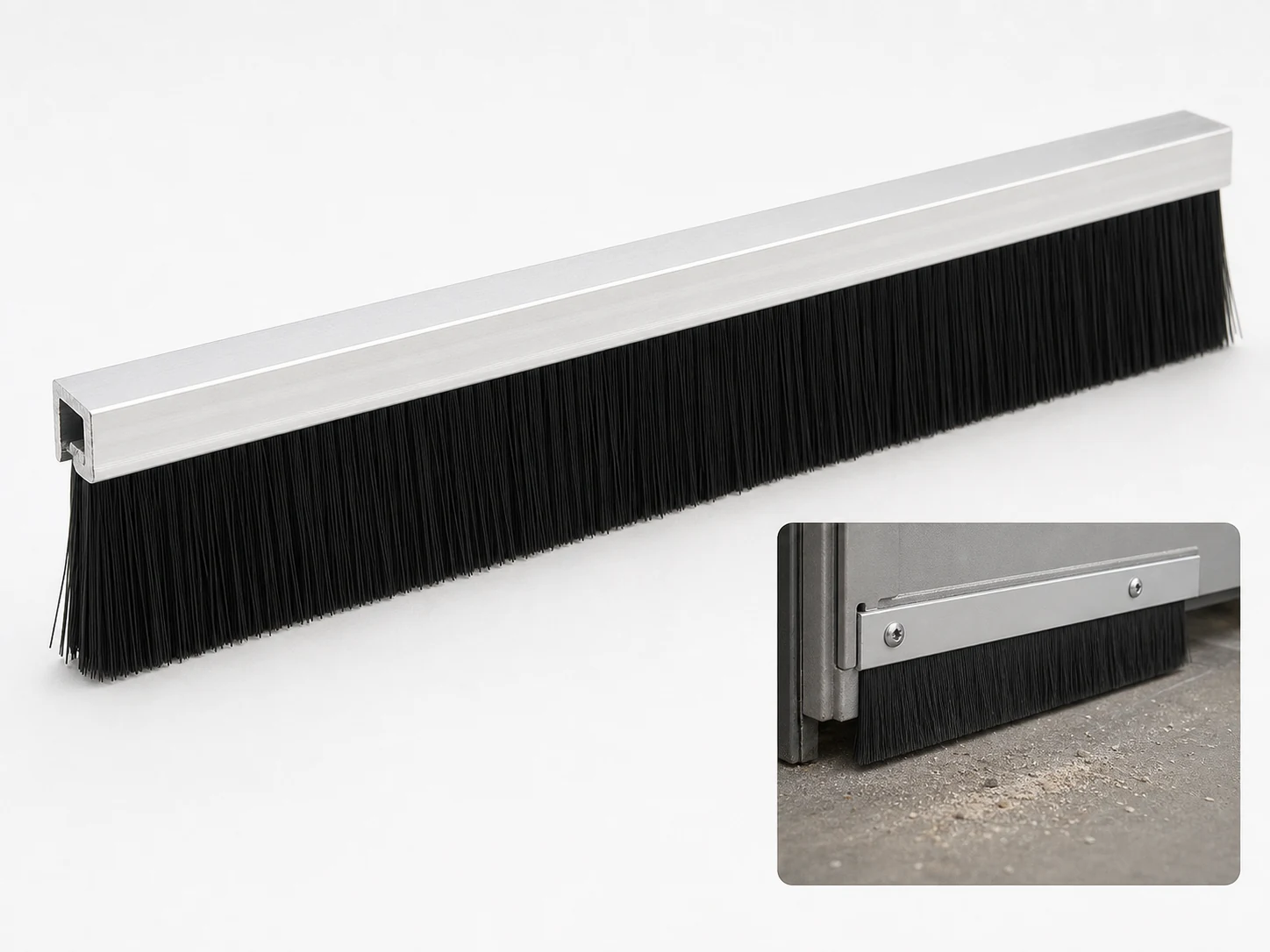
A strip brush for dust sealing is a flexible, linear barrier made of densely packed bristles fixed into a metal or plastic channel. When mounted along the edge of a door, panel, or moving component, the bristle tips maintain light contact with a surface, blocking airborne dust, light debris, and drafts without creating a rigid seal. Unlike rubber or foam gaskets, strip brushes tolerate misalignment, reduce friction, and can be customized to long continuous lengths. The term “dust sealing” here covers any application where preventing particulate ingress across a moving interface is the main goal—conveyor belts, cleanroom door sweeps, elevator edges, or automated machine guards.
Common Types of Strip Brushes for Dust Sealing
For the safety point in this section, the relevant OSHA reference is OSHA — Combustible Dust.
For the environmental or chemical-safety point in this section, the supporting reference is EPA — Particulate Matter Basics.
For brush terminology and construction language, this section references American Brush Manufacturers Association — Brush Lingo.
For the safety point in this section, the relevant OSHA reference is OSHA — Machine Guarding.
Most dust sealing strip brushes fall into a few practical categories. Understanding the basic types helps you communicate with suppliers and avoid under- or over-specifying.
- Standard metal‑back strip brushes: Galvanized steel or stainless steel channel holds bristles. Used where mechanical fastening and durability are needed, especially in metal enclosures.
- Aluminum‑holder strip brushes: Lightweight, corrosion‑resistant channel often used in food processing or wet environments.
- Plastic‑back strip brushes: PVC or other polymer channels offer chemical resistance and are common in cleanrooms or electronics manufacturing.
- Flexible strip brushes: The backing can bend around curves, making them suitable for circular doors or non‑linear sealing paths.
- Multi‑row or extra‑dense strip brushes: Two or three rows of bristles in one holder for higher dust‑blocking performance or where a single row would leave gaps.
Strip Brush Material, Diameter, Stiffness and Mounting Compared
Three decisions have the biggest impact: bristle material, bristle diameter, and how the brush mounts. The table below compares common combos for dust sealing.
| Bristle Material | Typical Use | Bristle Diameter (Typical Range) | Stiffness | Best Mounting Style | Notes |
|---|---|---|---|---|---|
| Polypropylene (PP) | General dust sealing, indoor, dry | 0.3–0.7 mm | Medium‑soft | Flexible clip or metal channel | Good chemical resistance, low cost; not for high heat. |
| Nylon 6/6 | Abrasive dust, moderate heat | 0.4–1.0 mm | Medium‑firm | Metal channel preferred | Better wear resistance and temperature range up to ~120°C dry. |
| Polyester (PBT) | Food contact, washdown, hygienic | 0.3–0.6 mm | Soft‑medium | Stainless steel or plastic channel | FDA‑compliant options available; low moisture absorption. |
| Horsehair or Tampico | Fine dust, antique finishes, very sensitive surfaces | 0.1–0.3 mm (fine) | Very soft | Wood or metal channel | Best for polishing or delicate surfaces; not for wet environments. |
| Stainless steel wire | High‑temperature, metal‑to‑metal dust seal | 0.1–0.3 mm | Firm–stiff | Metal channel only | For oven doors, foundry equipment; can scratch softer surfaces. |
Bristle length (trim length) is chosen based on the gap, overlap, and required contact pressure. A common rule: bristle length = gap + 20–30% overlap for light dust sealing, more if the surface is uneven.
How to Choose the Right Strip Brush for Your Dust Sealing Problem
Start with the actual sealing condition, not a catalog dimension. Answer these questions in order:
- What is the dust or particle type? Fine, abrasive, sticky, dry, or oily? Fine dust needs dense, soft bristles; abrasive dust demands wear‑resistant nylon; oily residue may require a material that won’t degrade.
- Is the surface sensitive? Polished metal, painted surfaces, or glass can be scratched by stiff or metallic bristles. Choose softer materials like polypropylene or natural fiber.
- Will the brush contact a moving part? If the brush drags on a conveyor belt, bristle stiffness and wear matter. A light touch with a durable material extends life.
- Is there chemical or wet exposure? Washdowns, cleaning agents, or coolants limit material choices. Polyester or nylon with stainless steel backing often works; avoid natural fibers.
- What are the hygiene requirements? In food or pharma settings, bristles must be FDA‑compliant, easily cleanable, and mounted without crevices that trap bacteria.
- What is the mounting surface and method? Flat metal edge, curved plastic frame, or slotted aluminum extrusion? Match the backing profile and fastening style (bolt‑on, clip‑on, snap‑in).
- What is the expected maintenance frequency? If downtime is costly, choose materials and mounting that allow quick brush replacement without removing the whole machine guard.
Once you have answers, you can request a sample or drawing from the supplier that includes bristle material, density, total trim length, backing dimensions, and recommended mounting gap.
Setup and Installation Factors That Affect Performance
Even the best‑specified strip brush fails if installed incorrectly. Consider these practical points:
- Contact overlap: Too little overlap leaves gaps; too much causes excessive wear and motor drag.
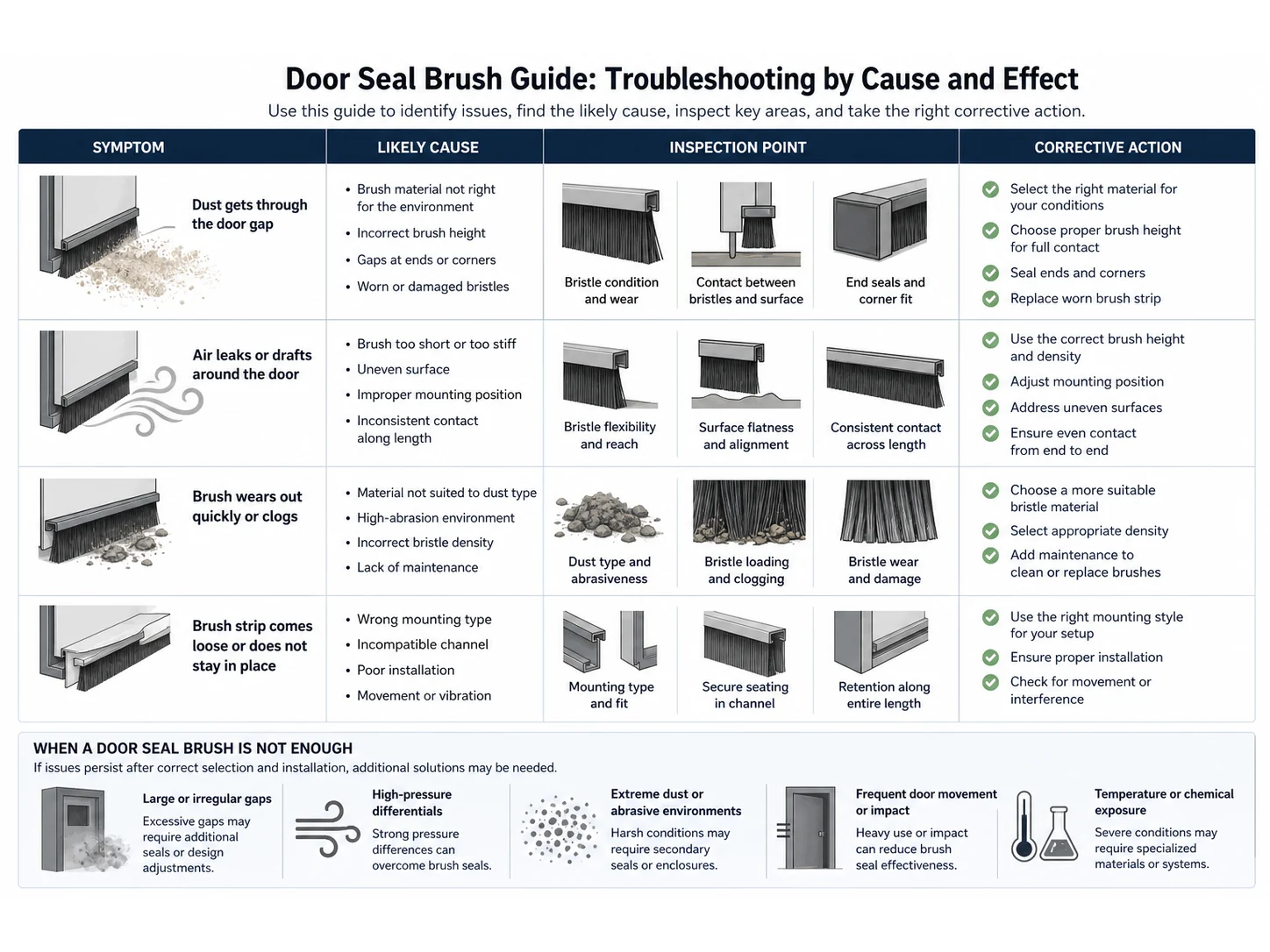
- Alignment with the moving surface: The brush should contact the surface evenly across its length. Irregular mounting creates uneven wear and dust leaks.
- Butt joints and corners: Where two lengths meet, plan miter joints or overlapping ends to avoid an open gap.
- Fastener interference: Bolt heads or rivets should not touch the sealing surface if they could cause scratching or snagging.
- Temperature expansion: In wide temperature swings, metal backings expand differently than plastic frames—leave a small expansion gap or use flexible clips.
Common Mistakes When Choosing a Strip Brush
- Choosing by gap size alone: Ignoring bristle stiffness, density, and material leads to poor seal and rapid wear.
- Using the lowest-cost polypropylene for abrasive dust: Short brush life, frequent replacement, and contamination from bristle fragments.
- Installing a stiff nylon brush against a soft painted door: Scratches and cosmetic damage that create customer complaints.
- Skipping a sample test: What works on paper often needs real‑world adjustment. A short sample piece can validate wear, dust hold‑back, and drag.
- Ignoring chemical cleaners: Some strip brush materials swell or degrade when exposed to certain solvents. Always check compatibility. For routine cleaning of strip brushes after paint or adhesive buildup, a product like Klean Strip brush cleaner can restore bristle flexibility if the material is compatible, but always verify with a test piece.
When a Strip Brush Is Not Enough
A strip brush works well for light to moderate dust sealing where some airflow or minimal contact pressure is acceptable. It is not the right solution when:
- Positive pressure differentials exist: If air is actively pushed outward, a brush alone will leak. Pair it with a flexible lip or air‑wipe system.
- Complete liquid or gas tightness is required: Brushes cannot replace an O‑ring, gasket, or hermetic seal.
- The motion is very fast or vibrates heavily: Bristle bouncing can create gaps and generate static. Consider a stabilized brush design or an alternative seal.
- The dust is conductive or explosive: Static‑dissipative brushes or full enclosure may be needed; a standard strip brush could be a hazard.
- Regulatory standards demand a certified clean break: In aseptic processing, even a brush that touches the product zone may not be acceptable. Check FDA/USDA equipment guidelines.
If any of these conditions exist, talk to the equipment manufacturer instructions and the brush supplier about a custom solution, and request a drawing review before ordering.
Final Takeaway
Choosing a strip brush for dust sealing starts with the dust, the surface, and the environment—not just the gap dimension. Match bristle material and stiffness to the actual wear and chemical conditions, plan the mounting to maintain even contact, and always validate with a sample when possible. The right strip brush makes the difference between a reliable, low‑maintenance seal and a constant source of dust leaks and unplanned downtime.
Frequently Asked Questions
Can I cut a strip brush to length myself?
Yes, metal‑backed strip brushes can be cut with a hacksaw or bandsaw, but burrs must be filed smooth. Plastic‑backed brushes can be cut with a fine‑tooth saw. Leave a few millimeters extra if mounting requires end caps.
How do I know the right bristle density for my dust?
Fine, light dust (e.g., cardboard fibers) requires a denser pack to block entry. Coarse chips or pellets can seal with a lower density. Ask the supplier for a density specification (e.g., bristles per cm) and request a sample for testing.
What does “trim length” mean on a strip brush drawing?
Trim length is the free bristle length from the holder to the tip. It is not the same as overall brush height, which includes the channel. Always confirm which dimension is shown.
Can strip brushes be used in outdoor dust sealing applications?
Yes, but UV‑resistant materials like black polypropylene or polyester hold up better. The backing should be galvanized steel or aluminum. Avoid natural fibers outdoors.
How often should I replace a strip brush used for dust sealing?
There is no set interval. Monitor bristle wear, loss of contact, or visible dust leakage. In abrasive applications, check monthly. With properly specified brushes, replacement may be annual or longer.
Is a custom strip brush expensive compared to standard stock?
Custom brushes have a one‑time setup cost for the profile and bristle fill, but for long runs or unique mounting, they can be cost‑effective compared to retrofitting standard parts. Ask for a quotation early in the equipment design phase.
What safety gear should I wear when handling strip brushes?
Steel wire and stiff nylon bristles can puncture skin. Wear cut‑resistant gloves and safety glasses when cutting or handling long pieces. Also, watch for sharp edges on freshly cut metal channels.