What Is a Mining Conveyor Belt Brush?
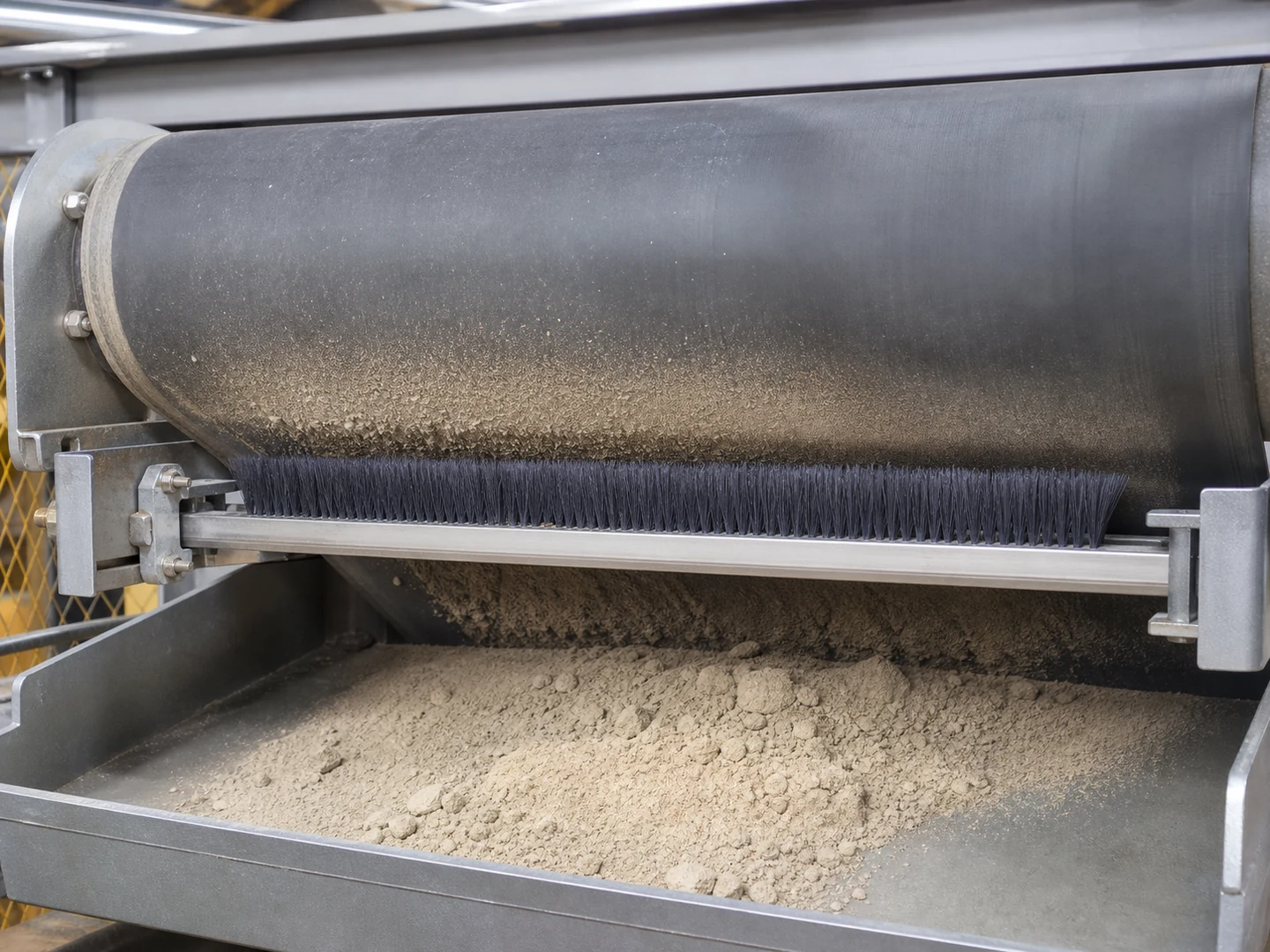
A mining conveyor belt brush is a rotary or stationary cleaning device engineered with aggressive filament materials and robust construction to remove stubborn material from conveyor belts running 24/7. It typically features high-density filament packing, heavy-gauge wire or abrasive-impregnated nylon, and a reinforced core (often a steel tube with industrial flanges) that withstands the vibration, impact, and harsh conditions common in mining. These brushes are mounted near the head pulley or at carryback-prone zones and are tensioned against the belt to dislodge material without damaging the belt cover, reducing cleanup, downtime, and belt mistracking.
Common Types of Conveyor Belt Cleaning Brushes
For the safety point in this section, the relevant OSHA reference is OSHA — Machine Guarding.
For the safety point in this section, the relevant OSHA reference is OSHA — Control of Hazardous Energy.
For the safety point in this section, the relevant OSHA reference is OSHA — Combustible Dust.
For the environmental or chemical-safety point in this section, the supporting reference is EPA — Particulate Matter Basics.
For brush terminology and construction language, this section references American Brush Manufacturers Association — Brush Lingo.
Conveyor belt cleaning brushes come in several configurations, but the term “mining conveyor belt brush” typically refers to an industrial-grade subset built for heavy-duty service. Common options include:
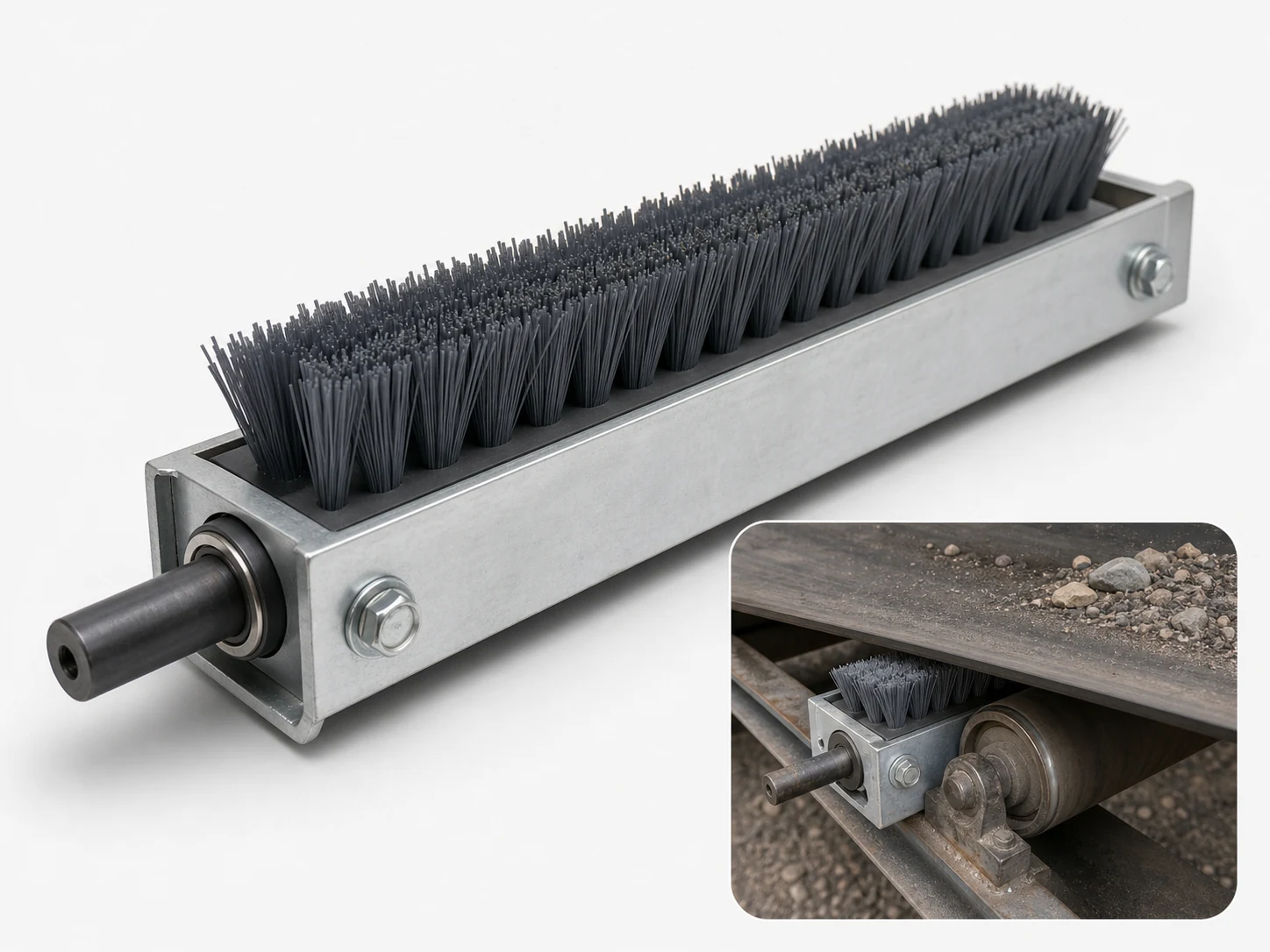
- Strip Brushes – Linear bristle strips held in a channel or metal retainer, often used in static wiper or seal applications.
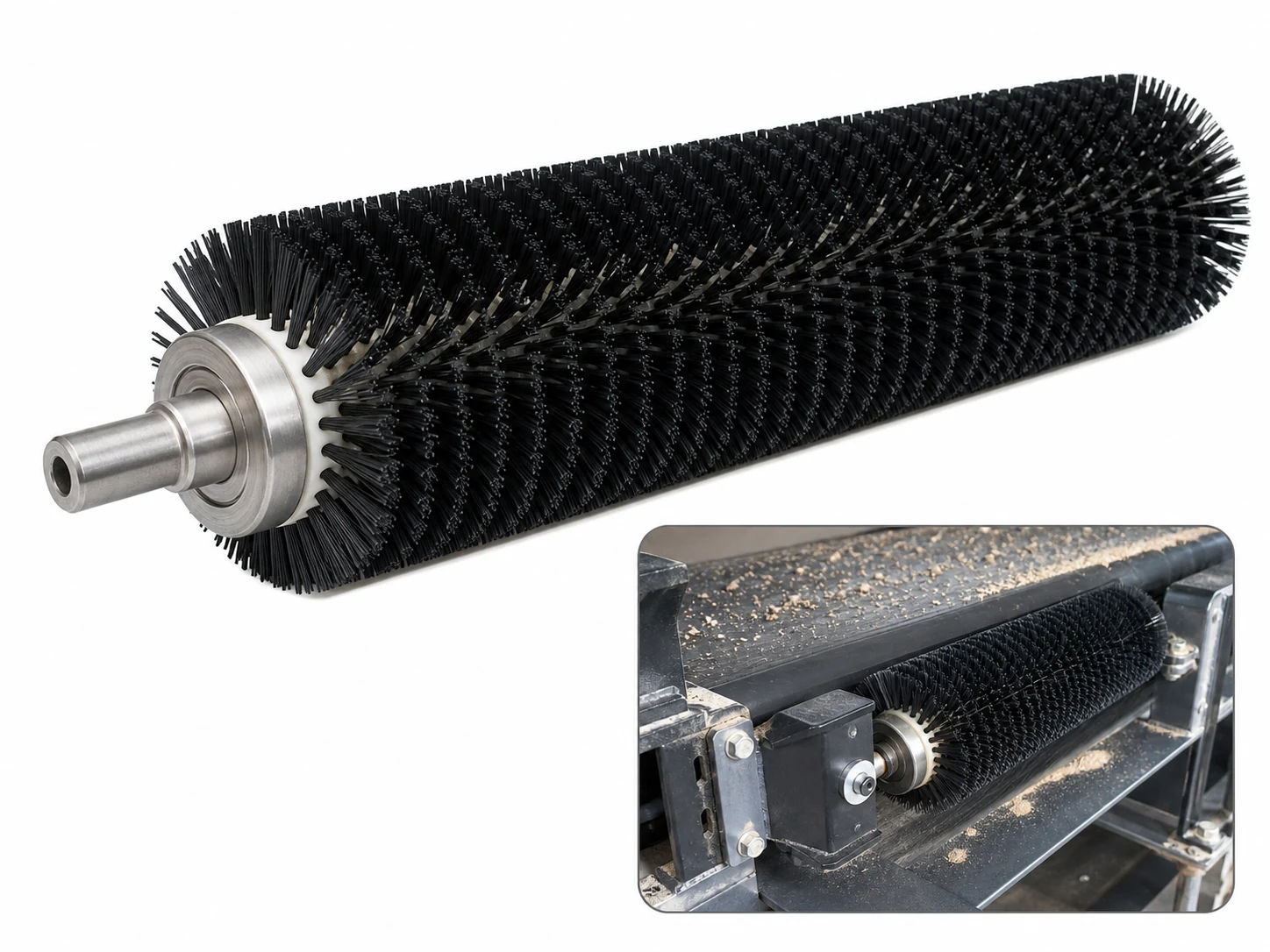
- Roller Brushes – Cylindrical brushes that rotate against the belt, driven by the belt itself or an external motor. These provide even wear and are common for wide belts.
- Spiral Brushes – Bristles wound in a helical pattern around a core, offering a combination of cleaning and material movement. Suitable for extremely sticky materials.
- Block Brushes – Individual brush segments mounted on a common shaft, allowing easy replacement of worn sections without removing the entire assembly.
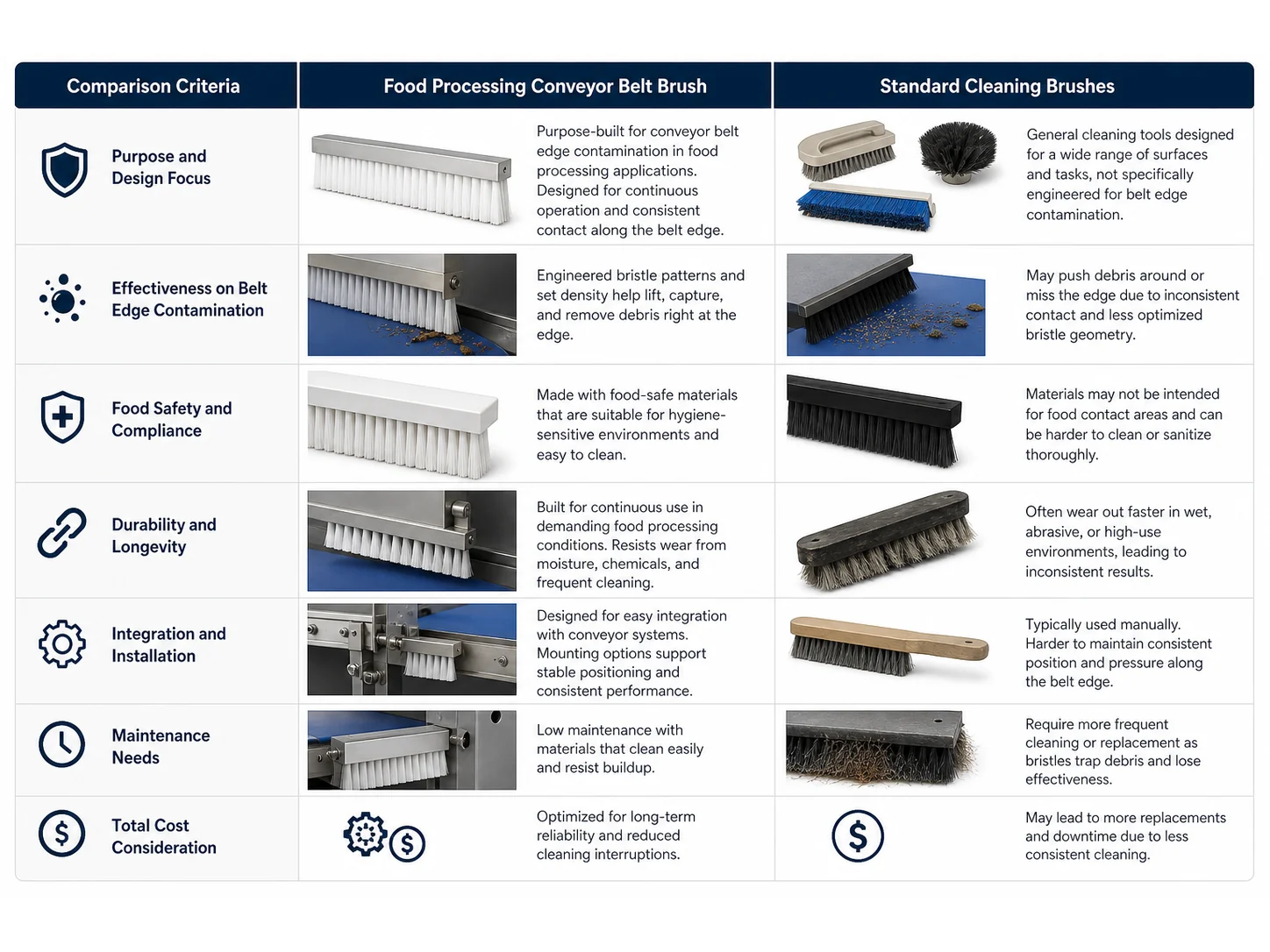
Mining-grade versions of these types use enhanced materials, larger diameters, and heavy-duty mounts. Standard cleaning brushes, by contrast, employ lighter construction, smaller diameters, and lower-density filaments intended for food processing, packaging lines, or light manufacturing.
Mining Conveyor Belt Brush vs Standard Cleaning Brushes: Key Differences
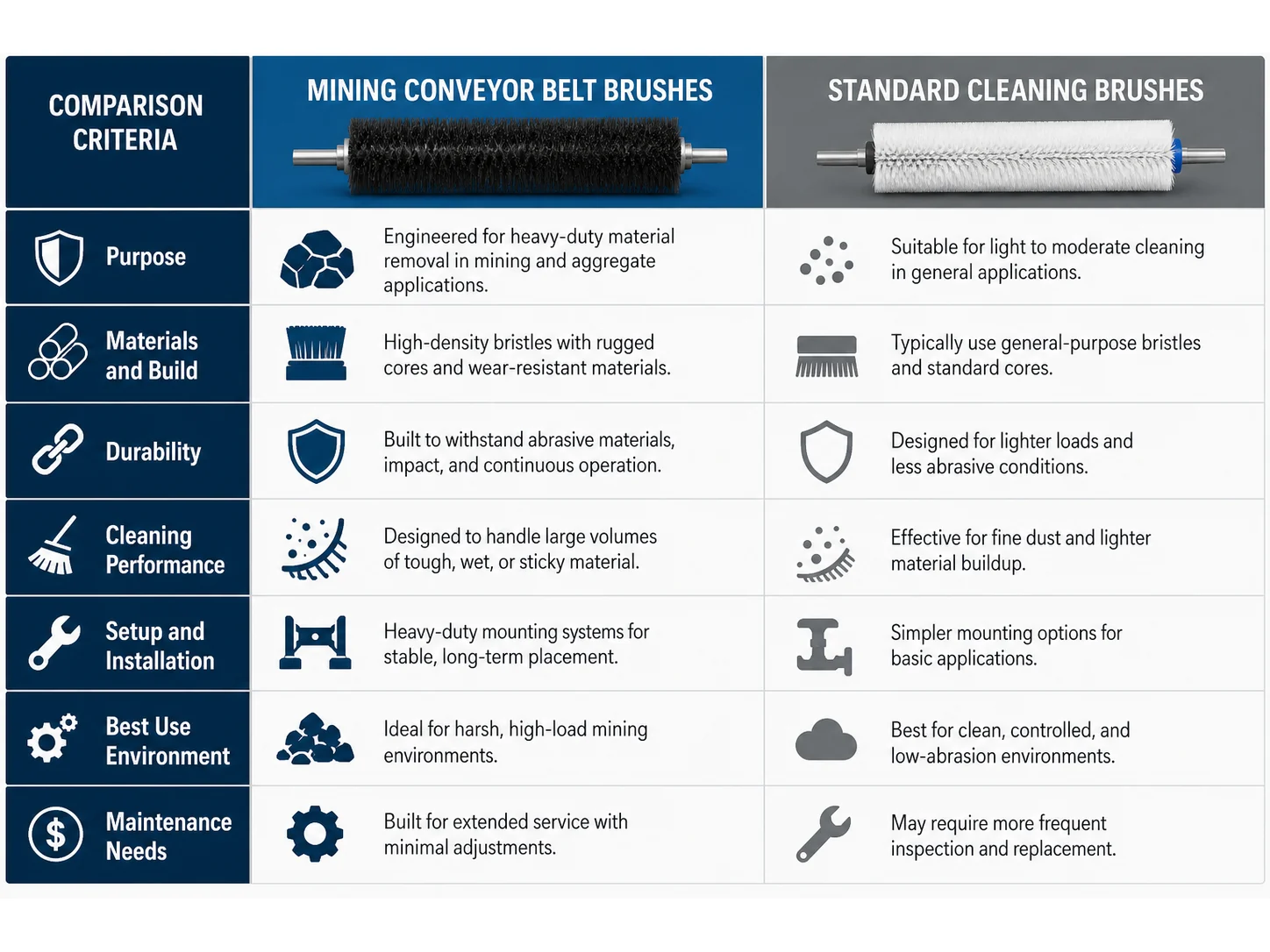
The table below highlights the practical differences that affect performance, lifespan, and total cost of ownership in challenging environments.
| Feature | Mining Conveyor Belt Brush | Standard Cleaning Brush |
|---|---|---|
| Filament Material | High-tensile nylon, abrasive-filled nylon, steel wire, or stainless steel wire; often with grit impregnation | General-purpose nylon, polypropylene, natural fiber, or light wire |
| Core / Handle | Heavy-walled steel tube, welded end flanges, shafts designed for high torque | Plastic, aluminum, or light-gauge steel with simple set-screw hubs |
| Brush Diameter | Typically 8–14 inches (200–350 mm) for deeper cleaning and longer filament life | 3–6 inches (75–150 mm); shorter bristles wear faster under heavy loads |
| Mounting & Tensioning | Industrial brackets with adjustable spring, pneumatic, or dead-weight tensioners; often bolted to conveyor stringers | Bolt-on plates or simple slot adjustments; manual tensioning may be required |
| Durability | Engineered for 24/7 operation in abrasive dust, wet slurry, and high-belt speeds (up to 800 ft/min) | Intended for intermittent or moderate-duty cycles in relatively clean environments |
| Typical Use | Coal, copper, gold, iron ore, and aggregate conveyors; port terminals; steel mills | Light manufacturing, assembly lines, packaging, food-grade conveyors |
How to Choose the Right Brush for Your Production Line
Selection should be driven by the specific operating conditions, not just a label. Evaluate these factors:
- Residue Type: Wet, sticky clay or ore demands a larger diameter brush with high-density, abrasive filaments. Dry dust may be handled by a simpler spiral brush.
- Surface Sensitivity: If the belt cover is thin or easily scored (e.g., soft rubber), avoid steel wire and choose a filled nylon that is aggressive on material but gentle on the belt.
- Equipment Interface: Confirm available mounting holes, shaft diameter, and clearance. Mining brushes often need custom shaft lengths or additional support bearings.
- Wet or Chemical Exposure: Ask about corrosion-resistant hardware (stainless steel core and fasteners) when water, acid mine drainage, or chemical cleaning agents are present.
- Maintenance Frequency: Hard-to-reach locations may justify a brush with a longer replacement cycle, such as an externally adjustable, motorized roller brush.
- Custom Size Requirements: Off-the-shelf brushes rarely fit perfectly. Production-ready mining brushes are often made to order—supply belt width, pulley diameter, and available space when requesting a quote.
Setup, Usage, and Placement Factors
Correct placement and setup dramatically affect cleaning efficiency. For continuous production lines:
- Position After the Head Pulley: Place the brush where the belt is still supported but begins its return path. This captures the majority of loose carryback before it drops along the structure.
- Brush Rotation Direction: A motor-driven brush typically rotates against the belt travel for maximum cleaning action. A belt-driven brush should be set with a small amount of lag or counter-rotation if possible.
- Tensioning: Too little pressure leaves material behind; too much increases brush wear and belt drag. Use a consistent tensioning mechanism and check it weekly during initial operation.
- Wash Boxes: In muddy operations, a water spray bar ahead of the brush can loosen compacted material, reducing filament breakage.
Common Mistakes When Selecting Conveyor Cleaning Brushes
- Sizing by Belt Width Alone: A brush that matches the belt width may not account for edge crowning, belt wander, or mounting bracket offset, resulting in incomplete cleaning at the edges.
- Ignoring Filament Memory: Certain nylons can take a permanent set when compressed for long periods. A stalled brush under constant pressure may lose its shape, reducing cleaning efficiency.
- Overlooking Drive Interface: Belt-driven brushes rely on consistent belt contact and tension. If the belt slips or splices cause bumps, the brush may stall or wear unevenly. Consider a motorized option for critical cleanings.
- Underestimating Carryback Moisture: Wet fines can pack into the brush core, unbalance the roller, and cause vibration. Select an open-wound design or add a shield to prevent buildup.
- Skipping Sample Testing: Even the best specification sheets cannot predict how a brush will perform with your exact material. Always test a sample brush on a section of the conveyor before ordering a full set.
When a Mining Conveyor Belt Brush Is Not Enough
A mining conveyor belt brush, no matter how heavy-duty, has limits. Extremely adhesive or clay-like materials may require a combination system that pairs a brush with a primary belt scraper, a water wash box, or a dual-cleaning system. If plant hygiene standards are high (e.g., FDA or EU food contact regulations), a standard brush with approved filaments may be mandated, and incorporating a mining-grade brush would introduce unnecessary contamination risks. Additionally, very high belt speeds (over 1,000 ft/min) or belts with irregular surfaces may cause brush bounce; in such cases, contact a supplier for a detailed engineering review and possibly a custom brush design with dynamic balancing.
Final Takeaway
Choosing between a mining conveyor belt brush and a standard cleaning brush is a matter of matching the brush’s construction to the production line’s real-world challenges. For continuous, high-load mining and aggregate operations, the investment in a purpose-built mining brush with aggressive filaments, large diameter, and adjustable tensioning typically pays back rapidly through reduced carryback, less belt wear, and lower manual cleanup costs. Standard brushes remain a cost-effective choice for intermittent or light-duty lines. In all cases, test a sample under your operating conditions before committing to a full-scale solution.
Frequently Asked Questions
Can a standard cleaning brush be used temporarily in a mining application?
A standard brush may work for a short time in a relatively clean, dry zone, but it will wear quickly if exposed to abrasive minerals, heavy loads, or continuous duty. Plan to upgrade to a mining-grade brush to avoid frequent replacements and potential belt damage.
How do I know when to replace a mining conveyor belt brush?
Monitor carryback levels and visually inspect the brush tip-to-belt contact. If the bristles are worn more than 30% of their original length, become matted, or the core is exposed, replacement is overdue. Also check for increased vibration or uneven cleaning across the belt width.
What filament material works best for highly abrasive ores?
Abrasive-impregnated nylon (e.g., silicon carbide-filled 6.12 nylon) or stainless steel wire is commonly used. For the most aggressive cleaning on rugged belts, a mix of wire and filled nylon in a spiral pattern can provide both aggressive scraping and sweeping action.
Does a larger brush diameter always provide better cleaning?
A larger diameter allows longer bristles, which increases the contact area and extends brush life. However, it also requires more space and may need a more powerful drive. Size should be chosen based on the carryback thickness and the mechanical constraints of the conveyor frame.
Can I retrofit a mining brush onto my existing conveyor without major modifications?
Many mining brushes can be engineered to fit standard conveyor stringer patterns. Provide a detailed drawing of the existing mounting points and clearances to a brush manufacturer. Often, simple adapter brackets and a revised tensioner are all that’s needed. A site survey is recommended.
Is one brush sufficient for both wet and dry carryback?
A single brush can handle both if the filament material is compatible with moisture and the brush core is resistant to corrosion. However, extremely wet or muddy conditions may benefit from a two-stage system: a scraper or spray bar to remove the bulk, followed by a brush for the remaining film.
What’s the difference between a conveyor belt brush and a belt scraper?
Brushes use flexible filaments to sweep material away with light contact, ideal for delicate belt surfaces and fine particles. Scrapers use a rigid blade to shear off thicker, more compact buildup. Brushes are often used after a scraper to achieve a cleaner belt surface without excessive pressure.
Should I request a sample test before ordering a custom brush?
Yes. A sample brush, even a short segment on a trial shaft, provides the most reliable data on cleaning efficiency, filament wear, and impact on belt life under your specific material conditions. Most reputable brush manufacturers offer trial programs or can produce a one-off test brush.