
What Is a Milk Frother Cleaning Brush?
A milk frother cleaning brush is a small-diameter brush with bristles engineered to scrub the internal surfaces of frothing wands, steam tips, and milk lines. Unlike generic tube brushes, it is often made from materials that resist degradation from hot water, dairy residues, and mild detergents. The brush must reach into tight bends and small orifices while providing enough scrubbing action to break down oily deposits without scratching sensitive metal or plastic surfaces.
Why Coffee Oils Demand a Specific Cleaning Approach
Coffee oils are not water-soluble. When they combine with heated milk proteins, they polymerize into a tenacious layer that clings to stainless steel, plastic, and silicone. Incomplete removal leads to off-flavors, reduced steam pressure, and potential bacterial growth. A brush that is too soft will not cut through the oil film; a brush that is too abrasive can scratch surfaces, creating microscopic grooves where future residues accumulate even faster. The right brush material and stiffness balance cleaning effectiveness with surface safety.
Common Types of Milk Frother Cleaning Brushes
Understanding the available options prevents mismatched purchases. The main types include:
- Nylon Bristle Brushes: Soft, flexible, and non-scratching. Best for daily light cleaning on sensitive plastic parts, but may struggle with baked-on coffee oils.
- Stainless Steel Wire Brushes: Highly effective for heavy oil and carbon buildup on durable stainless steel components. They must be used with caution to avoid scratching inner linings.
- Brass or Bronze Wire Brushes: Softer than steel but harder than nylon. Suitable for moderate oil removal on metal surfaces without severe abrasion.
- Combination Brushes: Dual-ended or mixed bristle types that offer both gentle and aggressive cleaning in one tool.
- Specialty Mini Brushes: Extra-small diameters or angled heads for specific frother models like those with intricate steam tip holes.
Comparison Table: Brush Options for Milk Frother Cleaning
| Brush Type | Material | Bristle Stiffness | Best For | Limitations |
|---|---|---|---|---|
| Soft Nylon Brush | Nylon | Low | Daily wipe-down of fresh milk residue; plastic parts | Ineffective on dried coffee oils; may deform in high heat |
| Stiff Nylon Brush | Reinforced nylon | Medium | Weekly cleaning of moderate buildup; mixed materials | Can still leave thin oil films; bristles may splay over time |
| Stainless Steel Brush | Stainless steel wire | High | Heavy coffee oil and carbon removal on stainless steel wands | Risk of scratching if used on softer metals or plastics; not for daily use on delicate coatings |
| Brass Wire Brush | Brass wire | Medium-High | Moderate oil buildup on metal surfaces; less aggressive than steel | Can leave brass traces; not suitable for aluminum components due to galvanic corrosion risk |
| Micro-Brush / Detail Brush | Nylon or soft metal | Low to Medium | Pinpoint cleaning of steam tip holes and tiny orifices | Fragile; may need frequent replacement; limited reach for long wands |
How to Choose the Right Milk Frother Cleaning Brush
Several practical factors should guide your selection beyond cost drivers or generic “frother brush” labels:
- Residue Type and Age: Fresh milk rinses away easily with soft nylon. Dried, baked-on coffee oils require medium to high stiffness and possibly metal bristles. Evaluate the typical cleaning interval.
- Surface Sensitivity: Identify every material the brush will contact. Plastic frother bodies, chrome-plated steam wands, and Teflon®-coated parts need non-abrasive nylon or brass at most. Stainless steel parts can tolerate stainless steel brushes but only with controlled pressure.
- Equipment Interface: Measure the inner diameter of steam wands, the hole size of steam tips, and the overall length of the path. A brush that jams or fails to reach the entire surface leaves dead spots for oil buildup.
- Wet or Chemical Exposure: If your cleaning protocol uses detergents, descaling solutions, or sanitizers, ensure the brush handle and bristles are chemically resistant. Nylon generally handles mild chemicals; metal brushes may corrode if not dried promptly.
- Hygiene Expectations: In high-volume coffee environments, brush hygiene is critical. Brushes with solid handles and dense bristle packing can trap milk residues themselves. Look for designs that can be easily rinsed and air-dried without retaining moisture.
- Maintenance Frequency: Heavy-use shops may need durable, heat-resistant brushes that withstand daily harsh use. Lighter use can tolerate finer, less durable brushes that are replaced more often.
- Custom Size Requirements: Off-the-shelf brushes may not fit unique frother designs. Custom brush lengths, diameters, or bristle patterns can be ordered from brush manufacturers. Always provide a drawing or sample frother part when requesting custom brushes to ensure fit and material compatibility.
Common Mistakes When Selecting or Using a Milk Frother Cleaning Brush
Even experienced operators fall into these traps. Avoid them to maintain equipment lifespan and beverage quality.
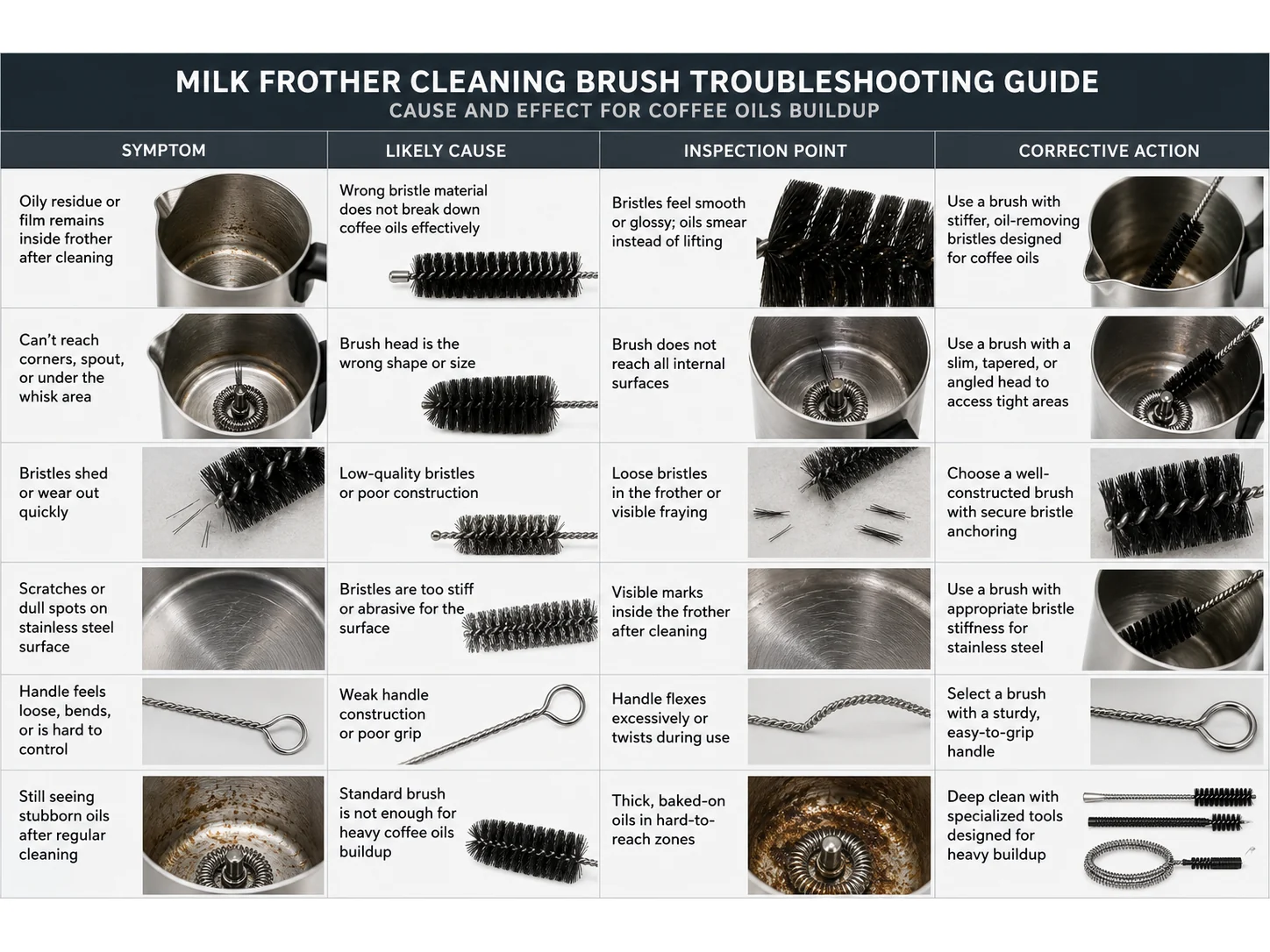
- Using the same brush for all parts. A brush that fits the steam wand may be too wide for the tip holes, or vice versa. Use separate brushes sized for each component.
- Choosing stiffness without considering surface material. A stainless steel brush on a chrome-plated wand will eventually wear away the plating, leading to rust and contamination.
- Ignoring handle and core durability. Twisted wire handles can snap after repeated bending, especially when clearing clogged steam tips. A solid plastic or reinforced handle lasts longer in commercial settings.
- Assuming “one size fits all” for frother brands. Milk frother designs vary widely. Always check your equipment manual for recommended brush dimensions or bring the part to a supplier for fitting.
- Neglecting brush hygiene. A milk-soaked brush becomes a breeding ground for bacteria. Rinse and sanitize the brush after each use and replace it when bristles become deformed or discolored.
- Overlooking custom brush options. When standard brushes fail, procurement teams sometimes keep buying the same unsuitable size. Requesting a custom brush based on a drawing or sample can solve persistent cleaning problems and reduce long-term costs.
When a Standard Milk Frother Cleaning Brush Is the Wrong Choice
A milk frother cleaning brush is only one part of an effective cleaning protocol. It cannot replace:
- Chemical Cleaning and Soaking: Polymerized coffee oils often require soaking in a food-safe degreaser or a warm detergent solution to soften before mechanical brushing is effective.
- Ultrasonic Cleaning: For disassembled steam tips and small parts with intricate internal channels, an ultrasonic bath can remove oil from areas no brush can reach.
- Regular Descaling: Mineral scale mixes with coffee oils to form an even harder deposit. A brush alone cannot remove scale; chemical descaling is necessary.
- Expert Review for Persistent Off-Flavors: If sour or rancid notes persist after thorough cleaning, a technician should inspect for oil accumulation in internal boiler lines or gaskets that a brush cannot access.
If your current brush fails to clean effectively after adjusting chemical use and frequency, it may be time to consider a custom brush design. Work with a brush manufacturer to specify exact length, diameter, bristle material, and density. Always provide a technical drawing or a sample of the frother component to ensure the brush conforms to tight tolerances and avoids damaging delicate surfaces.
Final Takeaway
Selecting the right milk frother cleaning brush means matching bristle material and stiffness to the specific coffee oil challenge, surface material, and equipment geometry. Avoid the common mistake of buying a generic “coffee cleaning brush” without checking dimensions and material compatibility. When standard options fall short, a custom brush made from a drawing or sample can dramatically improve cleaning efficiency and protect your investment in coffee equipment.
Frequently Asked Questions
How often should I replace a milk frother cleaning brush?
Replace the brush when bristles become permanently bent, frayed, or discolored, or if the handle shows signs of cracking. In a busy café, this may be every 1–3 months; in light home use, a brush can last 6–12 months with proper care.
Can I use a standard bottle brush to clean a milk frother?
Bottle brushes are typically too wide and have soft, sparse bristles that cannot remove coffee oils effectively. They also risk getting stuck in narrow steam wand passages. A purpose-made milk frother brush is sized correctly and has the right bristle density.
Is it safe to use a metal brush on all steam wands?
No. Only use metal brushes on stainless steel wands that are not coated or plated. For chrome-plated, aluminum, or plastic components, use nylon or brass brushes to avoid scratching and corrosion.
What diameter brush do I need for my specific frother model?
Check your equipment manual for the internal diameter of steam wands and tip holes. If no specification is available, measure the inner diameter with calipers and choose a brush 1–2 mm smaller to allow easy insertion while still making contact.
How do I clean the brush itself?
Rinse the brush thoroughly under hot water immediately after use to remove milk and loose oils. Periodically soak it in a food-safe sanitizer solution, then rinse and allow to air dry completely. Avoid leaving it in a damp environment.
Can a milk frother cleaning brush remove hard water scale?
No. Scale is a mineral deposit that requires chemical descaling. A brush may physically break some scale loose, but it will not dissolve the buildup and can damage surfaces if excessive force is used. Always descale according to manufacturer recommendations before mechanical cleaning.
Why does my cleaning brush leave behind a slimy film?
This usually indicates that the brush itself is contaminated with old milk residue or that its bristles are too soft to fully emulsify the coffee oils. Try a stiffer brush and ensure you are using a warm detergent solution. Also, inspect the brush for bacterial growth and replace if necessary.
What should I include when requesting a custom milk frother cleaning brush?
Provide a detailed drawing showing the overall length, bristle diameter, bristle length, handle type, and the exact materials for bristles and core. If possible, send a sample of the frother part to the brush manufacturer to ensure precise fit and material compatibility.
Technical References
- CDC — Preventing Food Poisoning
- eCFR — 21 CFR 177.1500 Nylon Resins
- eCFR — 21 CFR Part 117 Human Food CGMP and Preventive Controls
- FDA — Food Safety in Your Kitchen
Which bristle material fits this job — Nylon PA, AISI 304 Stainless Steel Wire or Brass Wire?
| Material | Continuous temperature (°C) | Peak temperature (°C) | Water absorption | Hardness |
|---|---|---|---|---|
| Nylon PA | 93 | 121 | 0.3–9% by PA grade and conditioning | Medium to firm; filament diameter and trim length control bending force. |
| AISI 304 Stainless Steel Wire | 400 | 500 | 0% | Rockwell B 70–95 depending on temper and cold work |
| Brass Wire | 150–200 | 250–300 | 0% | Rockwell B 40–90 |
| Abrasive Nylon | 120 | 150 | 0.1–1.0% | Abrasive filament; stiffness and cutting level is controlled by PA base, grit type, grit size, filament diameter and trim height. |
Figures as published by Brushtec / DuPont; Alleima; Perlon. Confirm the exact grade against the supplier datasheet before ordering.
What should replace Nylon PA when it stops working?
- Nylon PA — Compare Nylon PA with PP, PBT, PET. Change material when wet stiffness, temperature, chemical resistance, conductivity, particle shedding, or surface marking becomes the limiting factor.
- AISI 304 Stainless Steel Wire — Use AISI 316 stainless steel wire for chloride, marine, dairy, beverage, chemical washdown, or higher pitting-resistance requirements. Use carbon steel for dry aggressive cutting and brass or abrasive nylon for lower marking risk.
- Brass Wire — Compare Brass Wire with Steel wire, stainless wire, nylon. Change material when wet stiffness, temperature, chemical resistance, conductivity, particle shedding, or surface marking becomes the limiting factor.
- Abrasive Nylon — Compare Abrasive Nylon with PP, PBT, PET. Change material when wet stiffness, temperature, chemical resistance, conductivity, particle shedding, or surface marking becomes the limiting factor.