
Custom Cleaning Brush
Bathtub Brush
Nylon PA6/PA66 fill anchored with 316 stainless staples, so it breaks soap scum and body oil in permanently wet bathroom use without corroding.
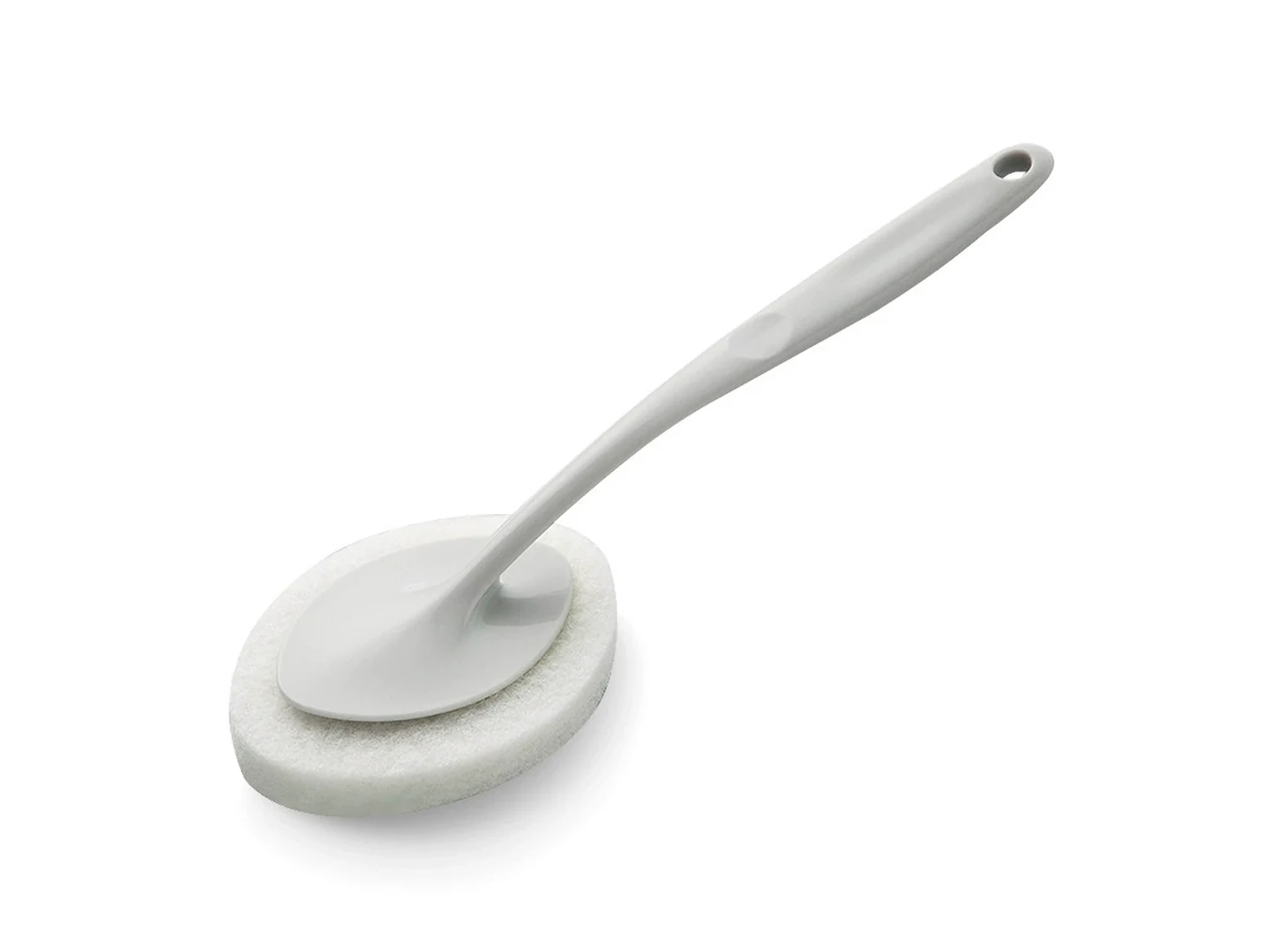
Small brush
500 pcs
Minimum order
Held in one hand: tube, bottle, detail and swab brushes — including long-handled ones with a small head.
Production lead time, once the specification is confirmed
- Up to 500 pcsWithin 7 days
- 501–50,000 pcsWithin 14 days
- Over 50,000 pcsWithin 21 days
Peak season can extend these times; the shipping date is confirmed in writing with your quotation. Sampling and shipping are quoted separately.
A hand-guided nylon-filament scrub brush built for bathtub walls, tub floors, surrounding panels, and tile-and-grout lines. It removes soap scum, body oils, light limescale, and mildew while using a 316 stainless staple-anchored fill that stays corrosion-free in wet bathroom use.
What can this brush do for you?
Breaks soap scum and body oil without scratching the surface
The nylon PA6/PA66 filament is stiff enough to break up the soap-fat film but softer than gel coat, glaze, and acrylic finish, so it lifts attached residue instead of cutting into fiberglass, cultured marble, or glazed porcelain. This keeps the tub surface smooth and glossy through repeated cleaning cycles.
Follows tub curves and reaches corners, ledges, and grout joints
The head can be molded with an angled front face and a contoured tuft layout, so outer rows contact the base radius while a narrower tip row works into the corner and along the tile line. This removes the dead zones a flat rectangular block leaves behind.
Holds up to bathroom cleaning chemicals and hot water
The polypropylene head and handle and the nylon fill tolerate diluted bleach, acidic descalers, alkaline bathroom cleaners, and short contact with water up to about 100°C. The brush will not soften, warp, or shed when used with standard tub-and-tile products.
Dries fast and does not hold mildew
PP and nylon are non-porous, and the 316 stainless steel staples will not rust. After rinsing, the brush releases water quickly and does not give mildew a fibrous place to grow, which matters for a tool that lives in the shower, tub caddy, or housekeeping cart.
Comfortable vertical scrubbing with a secure grip
An oval or contoured grip with a non-slip texture reduces hand fatigue when walls and surrounds are scrubbed. The handle can be angled to keep the operator’s wrist neutral, which helps during long turnover and sanitation shifts.
What is a Bathtub Brush?
A Bathtub Brush is a manual scrub brush designed for finished bathroom surfaces. It combines a molded polypropylene head and handle with nylon PA filament tufts stapled in place with 316 stainless steel wire. The operator applies a tub-and-tile cleaner, scrubs the surface with short overlapping strokes, then rinses the brush and the surface.
The product is intended for soap scum, body oil, light mineral film, and early mildew on bathtub walls and floors. It is not a wire brush and is not designed to remove thick hard-water scale, rust stains, or baked-on deposits. It works by mechanical agitation of the residue combined with the cleaning chemical, not by abrasion of the substrate.
The brush can be produced as a single molded unit or as a replaceable-head brush depending on the customer’s product program. The standard build has a one-piece PP body with tufted nylon fill; handle length and head size are adjusted to the tub profile and the operator’s reach.
Technical Specifications
The table shows the standard production configuration. Dimensions, filament stiffness, and handle design can be adjusted for the project.
| Parameter | Standard configuration | Available range / options |
|---|---|---|
| Overall length | 280 mm | 120–450 mm, matched to tub depth or wall reach |
| Head width | 60 mm | 30–100 mm, narrower heads for corners and grout lines |
| Working length (tufted area) | 45 mm | 10–120 mm, set by head shape and contact requirement |
| Trim length (bristle length) | 18 mm | 8–40 mm; shorter trim for grout, longer trim for curved walls |
| Filament diameter | 0.30 mm | 0.10–0.80 mm; selected by surface and residue |
| Head and handle material | Polypropylene (PP) | Optional glass-filled PP, recycled PP, or TPE-overmolded grip |
| Fill material | Nylon PA6 / PA66 | Crimped, straight, or flagged filament ends |
| Tuft anchor | 316 stainless steel wire staples | Staple length, wire gauge, and tuft spacing adjustable |
| Handle diameter / cross section | 28 mm oval grip | 8–35 mm round, oval, or ergonomic profile |
| Use temperature | 5–100°C, short contact with hot water | Material selection matched to continuous process temperature when required |
| Brush type | Custom Handheld Detail Brushes | |
| How it is driven | Hand-guided | |
| Cleaning target | bathtub interior, tub-and-shower surround, and tile and grout cleaning | |
| Surface or part | walls, floors, panels, bathtub walls, corners, tile, fiberglass, and profiles | |
| Residue or debris | soap scum, oil, rust, limescale, scale, and mold | |
| Mounting / connection | Fixed |
Where does this brush work best?
- Bathtub interiors on acrylic, fiberglass, porcelain-enameled steel, and cast iron, including curved base corners and overflow areas.
- Tub-and-shower surrounds, panels, ledges, and soap dishes where flat brushes miss the inside corner.
- Tile and grout around the bath, with a firmer filament option for grout joints.
- Whirlpool and air-tub shells and jet faces, using a soft-medium filament to avoid damaging gaskets and acrylic.
- Hospitality, vacation rental, and janitorial teams that need a consistent, finish-safe scrub brush for daily room turnover or periodic deep cleaning.
- Private-label bathroom cleaning programs for retail, housekeeping, and janitorial distributors.
How do I choose the right one?
Match the head to the tub profile and access needs
For large open tub walls and floors, a 50–80 mm head width covers the area faster. For corner radii, jets, ledges, or narrow grout lines, a 30–40 mm head or an angled tip block works better. A contoured head or stepped trim keeps outer tufts on the wall while inner tufts reach the base curve. Provide the tub’s internal radius or a sample drawing so the head is profiled to the actual shape.
Select filament diameter and stiffness by surface and residue
| Cleaning condition | Suggested starting filament |
|---|---|
| Daily soap film on acrylic / fiberglass | 0.25–0.35 mm soft-medium nylon, 20 mm trim |
| Soap scum and body oil on glazed porcelain | 0.35–0.45 mm medium nylon, 18–20 mm trim |
| Grime in grout lines and textured tile | 0.35–0.50 mm firm nylon, 12–16 mm trim, pointed tufts |
| High-gloss or colored acrylic tubs | 0.20–0.30 mm soft nylon with flagged tips, longer trim |
Always test on an inconspicuous area. Stiffer filaments clean faster on glazed ceramic and tile but can dull glossy acrylic over repeated use; softer filaments protect the finish but may require more passes. Choose the softest filament that still removes the target residue.
Set handle length and grip for the operator
Short handles (250–300 mm) give better control inside the tub; longer handles (350–450 mm) reduce bending when the surround is cleaned. A 25–32 mm oval grip with a non-slip texture reduces fatigue during vertical scrubbing. If staff will use the brush for hours at a time, an angled handle reduces wrist strain.
Confirm chemical and temperature exposure
PP and nylon handle diluted bleach, most acid-based descalers, and alkaline bathroom cleaners at normal use temperatures. Avoid prolonged soaking in concentrated acids and avoid solvents such as acetone or paint stripper. If the process uses steam or continuous hot water above 80°C, share the actual temperature so we can confirm fill retention and handle stability.
When to choose another tool
This brush is for routine bathroom soil. It will not remove heavy hard-water scale, rust stains, or deeply embedded mold. Use a chemical descaler and a separate rinse for thick scale, a fine grout brush or steam for mold in porous grout, and an abrasive pad or pumice only on unglazed surfaces after testing. Do not use steel wire fill on bathtub surfaces.
Can I customize this brush?
Because every tub profile, surface finish, cleaning chemical, and retail program is different, the bathtub brush is configured to the project rather than offered only as one fixed SKU.
- Head geometry: width, length, thickness, angled front, contour radius, pointed tip, multi-row tuft pattern, or single-piece design.
- Filament: material (PA6, PA66, blends), diameter, trim length, crimp or flag, color, stiffness, or abrasive-impregnated fill when the surface allows.
- Handle: length, shape (straight, angled, D-grip), grip material (PP, TPE overmold), hanging hole, or non-slip texture.
- Anchor system: 316 stainless steel staples, epoxy-set tufts, or a replaceable-head design for refill programs.
- Color and branding: custom color, molded logo, pad print, laser marking, or retail identification.
- Packaging: bulk cartons, individual hang-tab bags, retail display boxes, or private-label cartons.
To define the custom configuration, provide the tub material and surface finish, residue type, cleaning chemical and concentration, water temperature, handle preference, and target retail or professional user. A drawing, reference photo, or sample speeds the process. We can also support project-specific documentation, material declarations, inspection plans, and third-party testing where the project requires it.
Which filament survives the cleaning and still lasts on a bathtub brush?
How do I know a nylon bathtub brush won’t scratch my acrylic tub?
Choose a filament diameter of 0.25–0.35 mm with flagged or rounded tips, and test on an inconspicuous area first. Nylon is softer than glazed porcelain and acrylic coatings; stiff natural fiber or metal would scratch. Use medium pressure with cleaning solution and avoid dry scrubbing. If scratches appear, reduce the filament diameter or select a softer fill.
Can I use this brush with bleach or acidic cleaners?
Yes, diluted bleach solutions and common acidic descalers are compatible with nylon PA and polypropylene at typical bathroom use temperatures. Rinse the brush thoroughly after each use, because dried chemical residues can degrade filaments over time and transfer to other surfaces. Avoid strong solvents such as acetone or paint thinners, which attack PP and nylon.
What is the best way to store the brush between uses?
Rinse off soap residue and cleaner, shake out excess water, and hang the brush with the bristles facing downward. PP and nylon do not absorb water, but standing water in the tuft pockets can promote mildew. Let the brush air-dry and do not store it on a wet tub ledge or in a closed caddy while damp.
How do I check whether the brush is actually reaching the tub’s curved corners and grout lines?
After scrubbing, run a light-colored cloth or paper towel along the corner radius and the grout joint. If you pick up visible residue, the head profile or trim length is not matching the contour. A contoured or angled head with shorter outer tufts often improves contact on the base radius; a narrow head or a row of pointed tufts improves grout contact.
When should I replace the bathtub brush?
Inspect the brush every few uses. Look for flattened or matted tufts, snapped or shedding filaments, a bent or cracked head, rust stains near the staple line, or a handle that no longer feels rigid. If the bristles do not spring back after flexing, or if the brush leaves streaks instead of lifting film, replacement is overdue.
When should I use a different cleaning tool instead of this brush?
Use a chemical descaler, not harder scrubbing, for thick hard-water scale or rust stains. Use a steam cleaner or fine grout brush for mold deeply set in porous grout. Use an abrasive pad or pumice only on unglazed surfaces and only after testing. This brush is designed for routine bathroom soil on finished tub and tile surfaces.
Guides that go deeper on this
We have not written a guide specific to this one yet. The material that covers selection, filament, dimensions, maintenance and sourcing is collected in the technical resources library.
Custom Manufacturing RFQ
Describe Your Application
Please share the brush dimensions, working area, residue type, material direction, quantity, and a drawing or photo for quotation.
Drawing or photo optional — it speeds things up, it does not gate the enquiry.
Custom Brush RFQ
Send Your Brush Project
Upload a drawing, product photo, or sample photo and provide the core dimensions and cleaning conditions.
“We need a brush to remove wet residue from a stainless steel conveyor, about 800mm wide. The current brush wears quickly. We can send photos.”
“We sell drinkware and need a cleaning brush to include with the product. Quantity around 5,000 pieces.”