
Custom Cleaning Brush
Dishwasher Filter Cleaning Brush
Custom dishwasher filter cleaning brush with nylon PA, PBT, or polypropylene bristles for mesh screens and sump areas.
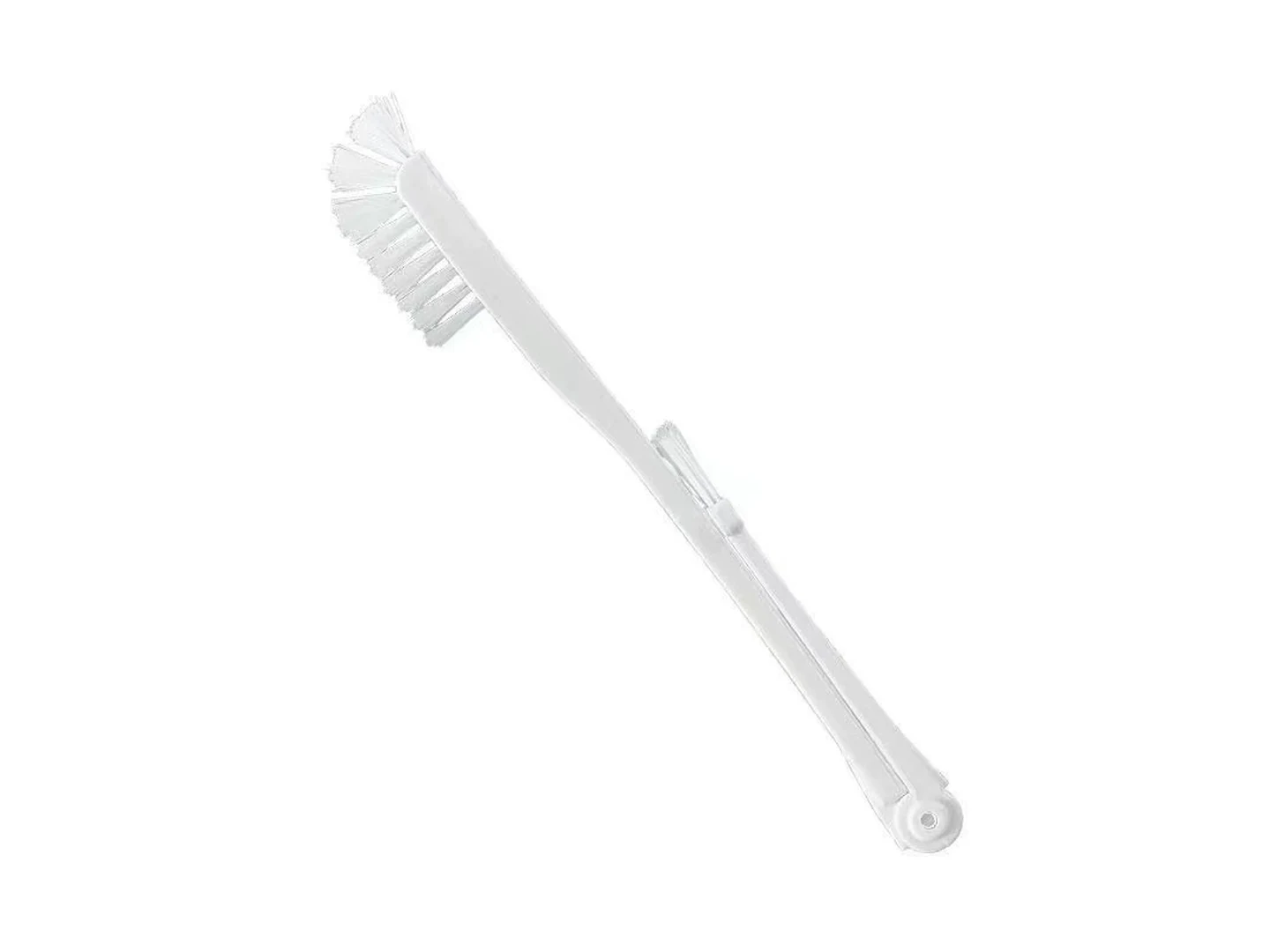
Small brush
500 pcs
Minimum order
Held in one hand: tube, bottle, detail and swab brushes — including long-handled ones with a small head.
Production lead time, once the specification is confirmed
- Up to 500 pcsWithin 7 days
- 501–50,000 pcsWithin 14 days
- Over 50,000 pcsWithin 21 days
Peak season can extend these times; the shipping date is confirmed in writing with your quotation. Sampling and shipping are quoted separately.
A narrow-profile maintenance brush engineered to clean removable dishwasher filters, mesh screens, and sump recesses where food particles and grease film collect. Nylon PA, PBT, or polypropylene bristles clear trapped debris from filter pleats and fine mesh without scratching plastic housings or distorting screen openings.
What can this brush do for you?
Reach Into Filter Pleats and Fine Mesh Openings
The working head is trimmed to a width of 10–30 mm with tapered bristle tips, so it enters narrow gaps between mesh wires and follows the folds of multi-layer filter screens. A standard flat brush rides over these surfaces; this head profile lets the bristles sink into the openings and pull out food particles that screen wiping misses.
Dislodge Dried Food Without Tearing the Screen
PBT and nylon PA filaments are selected in diameters that have enough tip stiffness to break loose dried food and greasy film while still flexing before they can deform fine stainless mesh or score plastic filter frames. The result is a filter that drains freely after cleaning and does not need premature replacement because the brush damaged the media.
Get Into the Sump Well and Drain Recess
An overall reach of 120–280 mm and a tapered or angled head allow the operator to scrub the sump floor, the area under the lower spray arm, and the inlet recess without removing every surrounding component. Food particles settle in these low points; clearing them restores drainage speed and helps prevent odors from standing water.
Rinse Clean Between Maintenance Cycles
Polypropylene and PBT bristle surfaces shed water quickly and do not trap food residue inside the tuft. After use, the brush rinses clean under warm water and dries fast, which reduces the chance of mold or bacterial growth on the tool itself between weekly or monthly filter cleanings.
Hold Up Under Hot Water and Detergents
The filament and handle materials are chosen for repeated exposure to typical dishwasher wash water and alkaline detergents. Nylon PA and PBT retain their stiffness and shape through warm-to-hot cleaning cycles, while polypropylene suits lower-temperature wash programs and lighter-duty maintenance schedules.
What is a Dishwasher Filter Cleaning Brush?
A Dishwasher Filter Cleaning Brush is a hand-guided maintenance tool built specifically for the screens, strainers, and sump wells inside household and commercial dishwashers. It is not a general-purpose dish brush: the head width, bristle density, and trim pattern are sized to enter the small openings in filter media and follow the curved shape of filter screens.
In use, the operator either removes the filter and scrubs both sides by hand, or reaches into the sump area with the filter in place when access permits. Bristle tips work between mesh wires and into pleat folds, releasing trapped food particles, film, and soft deposits. The handle provides enough reach to direct the head without forcing fingers into narrow openings or around spray-arm linkages.
The brush is intended for routine filter maintenance that keeps pump flow and drainage working. It removes food residue and soft grease film. It is not meant to replace descaling agents for hard mineral deposits, and it should not be used as a scraping tool on brittle or already damaged filter media.
Technical Specifications
The dimensions and materials below represent the standard configuration range for this brush. We adjust each parameter to the specific filter and sump geometry of your project.
| Parameter | Value / Options |
|---|---|
| Head width / diameter | 10–30 mm, matched to the narrowest mesh slot or pleat gap |
| Working head length | 20–60 mm, sized to the screen depth or sump recess |
| Overall length | 120–280 mm, set for removed-filter scrubbing or in-place sump reach |
| Grip / handle diameter | 8–25 mm, selected for operator grip and access clearance |
| Primary bristle materials | Nylon PA, PBT, or Polypropylene PP, chosen by stiffness and chemical exposure |
| Bristle diameter | 0.15–0.40 mm typical; finer for ultra-fine mesh, coarser for heavy food debris |
| Bristle stiffness | Soft to medium-firm, configured to protect the filter media while clearing the residue |
| Head profile | Flat, tapered, angled offset, pointed detail tip, notched edge, or cylindrical brush-on-stem |
| Stem / core | Molded polypropylene, nylon, or stainless steel core; flexible or rigid depending on access angle |
| Operating environment | Material grade selected for wash water temperature, detergent type, and sanitizer exposure |
| Color and marking | Custom colors, pad printing, laser marking, or molded-in identification |
| Brush type | Custom Handheld Detail Brushes |
| How it is driven | Hand-guided |
| Cleaning target | removable mesh and micro-filter, sump well and drain recess, and commercial kitchen dishwasher cleaning |
| Surface or part | filters, screens, sumps, recesses, pleats, plastic, housings, and tubes |
| Residue or debris | particles, food particles, grease film, trapped debris, carbonized deposits, limescale, food residue, and mineral deposits |
| Mounting / connection | Fixed |
Where does this brush work best?
This brush is designed for appliance filter maintenance in residential and commercial dishwashing equipment. Typical use points include:
- Removable mesh and micro-filters in undercounter residential dishwashers, where pleated or multi-layer screens trap food particles.
- Sump wells and drain recesses under the lower spray arm, where debris settles before the pump removes it.
- Commercial kitchen dishwashers with strainer baskets and fine-mesh filters that require daily cleaning to maintain water flow and prevent slow drainage.
- Appliance service and maintenance kits where a compact, dedicated filter brush is included for routine customer or technician upkeep.
- Inlet screens and filter housings on dishwasher water connections, where small particles collect and restrict flow.
For heavy limescale, carbonized deposits, or very narrow internal tubes, a different cleaning tool or chemical descaling step is usually more effective.
How do I choose the right one?
Start With the Filter Geometry
Measure the smallest mesh opening, pleat spacing, or slot the brush needs to enter. The head width should be slightly narrower than that gap so bristles can penetrate without bending or binding. A head that is too wide will scrub only the outer surface; a head that is too narrow will slow the job and wear faster.
Match the Bristle Material to the Residue and Filter Media
PBT offers high stiffness and good chemical resistance, making it a strong choice for fine screens with dried food film. Nylon PA is durable and flex-resistant across wet and dry cycles, suitable for plastic filter frames and mixed residues. Polypropylene is softer and lower-cost, best for fine stainless mesh where you want lighter contact and the wash water stays below higher temperatures. If the filter mesh is already delicate, choose finer filament diameters and softer trim.
Set the Reach for How the Filter Is Cleaned
If the operator removes the filter for cleaning, a shorter overall length of 120–200 mm gives more precise control. If the operator reaches into the sump with the lower spray arm still installed, a longer handle of 200–280 mm with an angled or offset head is easier to direct into the recess.
Account for the Cleaning Environment
Confirm the maximum wash water temperature, detergent alkalinity, and whether rinse aids or sanitizers are used. Nylon and PBT handle typical hot wash cycles well; polypropylene is limited at elevated temperatures. For chlorine or strong acid exposure, specify the chemistry so we can select a compatible grade.
When a Different Brush or Method Is the Better Choice
If the filter is covered with hard mineral scale, brushing alone will not restore it; use a descaling soak first and then brush away the loosened residue. If you need to clean a very narrow internal tube or nozzle passage, a twisted-wire tube brush reaches where a flat filter brush cannot. If the filter mesh is already brittle, cracked, or distorted, replacing the filter is safer than aggressive scrubbing.
Can I customize this brush?
This brush is configurable by design. The variables that matter for a dishwasher filter brush are head geometry, bristle material and stiffness, handle reach, and stem construction.
- Head geometry — width, working length, flat or tapered profile, angled offset, pointed tip for corners, notched edge for screen ribs, or a cylindrical brush for sump tube interiors.
- Bristle options — material (nylon PA, PBT, PP), diameter from 0.15 to 0.40 mm, stiffness, crimped or flagged tips for finer mesh, tuft density, or mixed stiffness zones on one head.
- Handle — overall length, grip diameter, straight or ergonomic contour, TPE overmold, hanging hole, non-slip texture, or integrated scraper edge.
- Stem / core — one-piece molded plastic, stainless steel core for added rigidity, or a flexible neck for awkward sump angles.
- Color and marking — custom color matching, pad printing, laser marking, or molded-in logo for brand or part-number identification.
- Packaging — bulk cartons, individual polybags, retail hang cards, or kits combined with other appliance cleaning brushes.
To define a custom configuration, provide the filter brand or model, mesh opening dimensions, pleat depth, sump access distance, residue type, water temperature and detergent chemistry, and the preferred handle form. A sample filter, photo, or dimensional drawing helps us match the brush to your exact cleaning situation. If your project requires material documentation, inspection support, or third-party testing, we can assist with those requirements during customization.
How do you confirm a dishwasher filter cleaning brush has actually cleaned the surface?
Can I use this brush while the filter is still installed in the dishwasher?
In many machines you can clean the accessible side of the filter and the sump floor with the filter in place. However, pleated or multi-layer filters trap debris on both sides, so for a thorough cleaning remove the filter and scrub the underside as well. Do not force the brush into a position that bends the handle past its normal range.
How do I know if the bristles are too stiff for my filter mesh?
Before full use, scrub a small inconspicuous area and inspect the mesh for distortion or visible scratch marks under good light. If the screen wires bend or the plastic surface shows wear, switch to a finer filament diameter, softer material, or crimped bristle ends. Fine stainless mesh generally tolerates 0.15–0.25 mm nylon or PP filaments without damage.
What should I check before each cleaning session?
Remove large food chunks from the filter and sump area first. Inspect the filter for cracks or existing damage, and check that the brush head is clean and bristles are not permanently splayed. Never use a metal-bristle brush on plastic filter frames or fine screens.
How can I verify the filter is actually clean?
Hold the filter up to a light source after brushing. If food particles remain in the mesh or some sections appear dark, those areas need another pass. For sump cleaning, run water through the drain path and confirm it flows without pooling. If water still stands, debris remains in the recess.
Will this brush remove limescale or hard-water deposits?
Mechanical brushing alone will not remove hardened mineral scale. Soak the filter in a descaling solution or citric acid bath first to soften the scale, then use the brush to remove the loosened residue and flush the screen. Expecting the brush to grind away scale will damage the filter media before the scale is gone.
How should the brush be maintained between uses?
Rinse the bristles and handle in warm water after each use, shake off excess water, and store the brush upright or hanging so the tufts dry completely. Do not leave it submerged in detergent solution. Replace the brush when bristles become permanently bent, splayed, or lose their ability to enter the mesh openings.
Guides that go deeper on this
Custom Manufacturing RFQ
Describe Your Application
For a custom quote, we need the key dimensions, surface or part, residue, material preference, quantity, and reference image or drawing.
Drawing or photo optional — it speeds things up, it does not gate the enquiry.
Custom Brush RFQ
Send Your Brush Project
Upload a drawing, product photo, or sample photo and provide the core dimensions and cleaning conditions.
“We need a brush to remove wet residue from a stainless steel conveyor, about 800mm wide. The current brush wears quickly. We can send photos.”
“We sell drinkware and need a cleaning brush to include with the product. Quantity around 5,000 pieces.”