
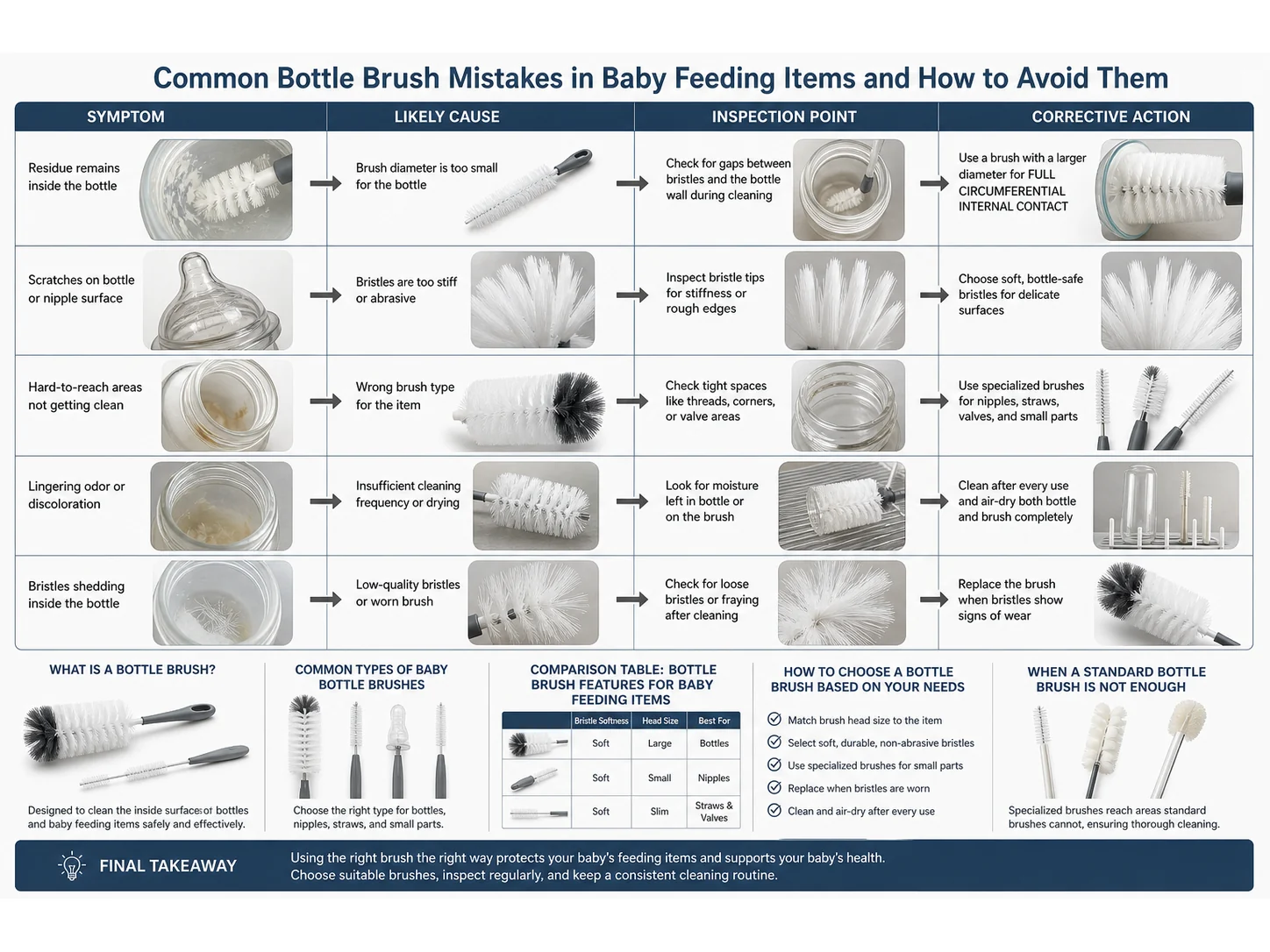
What Is a Bottle Brush?
A bottle brush is a cleaning tool specifically made to scrub the interior surfaces of narrow-necked containers. It typically has a central wire or plastic core with bristles attached radially. For baby feeding, you’ll find models with nylon bristles, silicone bristles, sponge tips, or fully silicone designs. The handle length and brush diameter determine how well it reaches the bottom and curves of bottles, nipples, and pump parts. The right brush removes milk fats and formula residues that water alone cannot dissolve, but the wrong one can leave scratches or miss critical areas.
Common Types of Baby Bottle Brushes
There isn’t one universal brush. Understanding the main categories helps you match the tool to your feeding items:
- Silicone bristle brushes: Flexible, heat-resistant, and non-scratch; great for plastic bottles and delicate surfaces. Less aggressive on dried milk but hygienic and dishwasher-safe.
- Nylon bristle brushes: Stiffer bristles with better scrubbing power for stubborn residue. Can potentially scratch soft plastics over time; safer on glass.
- Sponge-tip brushes: A soft, absorbent sponge head on a long handle. Excellent for a foaming wash but cannot always reach deep corners and take longer to dry.
- Fully silicone bottle brushes: The entire brush, including handle, is made of silicone. Extremely hygienic, easy to sterilize, but may lack sufficient stiffness for heavy protein buildup.
- Angled brushes and combination sets: Brushes with bent handles or integrated nipple brushes for reaching threads and small parts.
Comparison Table: Bottle Brush Features for Baby Feeding Items
| Feature | Silicone Bristle Brush | Nylon Bristle Brush | Sponge-Tip Brush | Full Silicone Brush |
|---|---|---|---|---|
| Common Diameter | 1.5–2.5 in | 1.5–3.0 in | 1.5–2.5 in | 1.5–2.0 in |
| Bristle Stiffness | Medium-soft | Medium-hard | Soft (sponge) | Soft-medium |
| Handle/Core Material | Plastic or wire with silicone bristles | Plastic or wire with nylon bristles | Plastic core with sponge | Solid silicone |
| Mounting Options | Suction cup, loop, or stand | Suction cup, loop, or stand | Usually loop | Suction cup or loop |
| Best For | Plastic bottles, pump parts, sensitive surfaces | Glass bottles, heavy residue, deep scrubbing | Foaming wash, light residue | Plastic or glass, ultra-hygienic environments |
| Cautions | Less scrubbing power on dried formula | May scratch polycarbonate or low-cost plastics | Harder to dry completely; can retain odors | May not remove tough, baked-on protein biofilm |
How to Choose a Bottle Brush Based on Your Needs
Don’t grab the first brush you see. Start by analyzing your feeding setup:
- Residue type: Formula and breast milk leave a fatty film. If you primarily feed breast milk, a medium-soft silicone brush often suffices. For formula, which can form a more stubborn protein layer, a nylon brush may work better, especially if you soak bottles first.
- Surface sensitivity: Plastic bottles (polypropylene, PPSU) scratch more easily than glass. A scratch is a perfect hiding spot for biofilm. Choose silicone or ultra-soft nylon for plastics. Glass can handle stiffer bristles.
- Equipment interface: Wide-mouth bottles need a wider brush head; narrow-neck bottles need a slim core. Angled handles help scrub the shoulder curve. If you also clean breast pump parts, select a kit with a tiny nipple brush.
- Wet or chemical exposure: If you use bleach solutions or high-heat steam sterilizers, verify the brush materials can tolerate them. Silicone and stainless steel cores withstand sterilization; some nylon bristles can degrade over time.
- Hygiene expectations: For the highest hygiene standard (e.g., newborns or immunocompromised infants), a fully silicone brush that can be boiled or steam-sterilized daily is ideal. Replaceable heads or single-material designs reduce bacterial harbourage.
- Maintenance frequency: How often you clean and replace the brush itself matters. A dishwasher-safe brush simplifies your routine. Even the best brush needs replacement every 2–4 months.
- Custom size requirements: If you use non-standard bottles (tall, narrow, or uniquely shaped), measure the internal diameter and depth. A brush with a flexible wire handle might bend to reach, but a custom diameter may be necessary for a perfect fit. In that case, consult a supplier about custom brush specifications.
Common Mistakes When Using Bottle Brushes for Baby Items
Even well-intentioned cleaning can go wrong. Here are the most frequent errors and how to prevent them:
- Using the wrong brush diameter: A brush too small won’t contact the walls effectively; too large can jam and splash dirty water. Always match diameter to your bottle’s inner size.
- Choosing overly stiff bristles for plastic: Micro-scratches from hard nylon can create biofilm hideouts. Use silicone or soft nylon brushes for plastic and reserve stiff brushes for glass only.
- Neglecting to clean the brush itself: After each use, rinse the brush thoroughly and let it dry completely. A damp brush sitting in a holder breeds mold and bacteria. Periodically clean it with soap and hot water, or run through the dishwasher.
- Using a worn-out brush: Bristles splay, fray, and lose shape. A deformed brush misses spots and can even scratch surfaces. Replace bristle brushes every 2–3 months; silicone brushes may last a bit longer but check for cracks.
- Ignoring bottle threads and crevices: Milk residue hides in the threads of bottles and nipple collars. A dedicated small brush (often included in sets) or a brush with an angled tip is necessary to scrub these grooves.
- Using the same brush for multiple purposes without sanitizing: If you clean a bottle, then use the same brush on a pump part, you risk cross-contamination. Ideally, have separate brushes for bottles and pump parts, or sanitize the brush between uses.
- Applying excessive force: Pushing too hard can bend the internal wire, break a plastic handle, or even tear thin-walled bottles. Let the bristles do the work—gentle, consistent pressure is more effective.
- Not soaking bottles with dried residue: Hardened formula or milk requires a soak before brushing. Forcing a brush on dry, thick residue damages bristles and can scratch the bottle interior. Fill the bottle with warm soapy water and let it sit for 15–30 minutes before scrubbing.
When a Standard Bottle Brush Is the Wrong Choice
Sometimes even the best consumer brush can’t manage a situation safely. Recognize these boundaries:
- Extremely narrow or convoluted vessels: Some specialized feeding systems, narrow-necked glass storage bottles, or custom-shaped containers may require a brush with a very small diameter or a flexible wire core that standard bottle brushes don’t have. In such cases, a feeding-tube brush or a custom-sized brush is needed.
- Delicate silicone parts: Thin silicone nipples, duckbill valves, or membranes can be damaged by even soft bristles if not designed for that exact purpose. A dedicated silicone-safe brush or a microfiber wand may be safer.
- Validated cleaning in healthcare or commercial settings: Hospital-grade infant feeding involves strict cleaning and sterility standards. Standard consumer brushes may not be designed for repeated high-heat sterilization or validated cleaning protocols. In these environments, consult your infection control team and consider brushes with documented material certifications.
- When residue is heavy mineral buildup: Hard water can leave mineral scale that bristles can’t remove. A soak with white vinegar followed by brushing may work, but persistent scaling might damage the bottle’s clarity or harbor bacteria. At that point, it’s safer to replace the bottle.
- Custom or proprietary bottle designs: If you use bottles with unique internal ridges, measurement markings that are etched, or special coatings, a generic brush could cause damage. Ask the bottle manufacturer for recommended cleaning tools, or consider a sample test with a new brush type before committing to a large order.
- Supplier drawing review for high-volume use: For daycare centers, hospitals, or commercial baby-food prep that orders cleaning tools in bulk, a standard off-the-shelf brush might not meet efficiency or longevity needs. Request a technical drawing from the brush supplier, specify diameter, bristle material, handle length, and core type, and test samples against your worst-case residues and sterilization cycles before finalizing.
Final Takeaway
Effective bottle brush use for baby feeding items is not about finding the “best” brush but matching the brush to your specific bottles, residues, and hygiene routines while avoiding the common mistakes outlined here. Start by identifying whether your bottles are plastic or glass, what milk type you use most, and how you clean. Then pick a bristle type, diameter, and handle design that fits your workflow. Maintain and replace the brush regularly, and don’t ignore threads and small parts. When your cleaning demands exceed consumer brush capabilities—whether due to size, sensitivity, or validation requirements—explore custom solutions or alternative cleaning methods. Making these informed choices keeps your baby’s feeding gear safe and extends the life of your equipment.
Frequently Asked Questions
Can I use a bottle brush for glass baby bottles?
Yes, glass bottles pair well with nylon or silicone bristle brushes. Glass is more scratch-resistant than plastic, so stiffer nylon bristles are usually safe. However, avoid metal-core brushes that can chip the glass rim if handled roughly.
How often should I replace my baby’s bottle brush?
Replace nylon bristle brushes every 2–3 months, and silicone or sponge brushes every 3–4 months, or sooner if bristles look deformed, splayed, or discolored. Frequent sterilization may shorten lifespan.
Can I put my bottle brush in the dishwasher?
Check the manufacturer’s instructions. Many silicone and plastic-handled brushes are dishwasher-safe on the top rack, but wire-core brushes can rust or warp over time. Even dishwasher-safe brushes need occasional hand inspection.
What size bottle brush should I use for standard baby bottles?
Measure the bottle opening and internal diameter. Most standard baby bottles work with a brush head 1.5–2.5 inches wide. Wide-mouth bottles may need a 3-inch head. The brush should fill the bottle without jamming; about 80% of the internal diameter is a good rule.
Is silicone better than nylon bristles for cleaning baby bottles?
It depends on your priorities. Silicone is more hygienic, scratch-free, and heat-tolerant, making it ideal for plastic bottles and frequent sterilization. Nylon removes stubborn residue faster but can micro-scratch plastic. Many caregivers keep one of each for different tasks.
Can I use the same brush for bottle and breast pump parts?
It’s safer to use separate brushes. Milk residues can transfer pathogens. If you must share, sanitize the brush between uses (e.g., boiling or steaming). Better yet, dedicate a small brush for valves and nipples.
What if I don’t have a bottle brush right now?
In a pinch, you can add a handful of uncooked rice and warm soapy water to the bottle, shake vigorously, then rinse thoroughly. This creates a scrubbing action. But this doesn’t replace regular brushing, especially for threads and crevices.
How do I clean a bottle brush thoroughly?
Rinse the brush under hot running water after each use to remove milk particles. Once a week, soak it in a solution of warm water and white vinegar (1:1) for 10 minutes, or run through the dishwasher. Always store it bristle-side up in a dry, airy place.
Technical References
- CDC — Preventing Food Poisoning
- eCFR — 21 CFR 177.1500 Nylon Resins
- eCFR — 21 CFR 177.1520 Olefin Polymers
- CDC — Preventing Cronobacter in Infants
- FDA — Food Safety in Your Kitchen
Which bristle material fits this job — Silicone, Nylon PA or AISI 304 Stainless Steel Wire?
| Material | Continuous temperature (°C) | Peak temperature (°C) | Water absorption | Hardness |
|---|---|---|---|---|
| Silicone | 200–250 | 280–300 | 0.1–1.0% | Shore A 20–80 |
| Nylon PA | 93 | 121 | 0.3–9% by PA grade and conditioning | Medium to firm; filament diameter and trim length control bending force. |
| AISI 304 Stainless Steel Wire | 400 | 500 | 0% | Rockwell B 70–95 depending on temper and cold work |
| Microfiber | 80–120 | 140–170 | 0.2–1.0%Material Itself ; Structure Can Absorb 3–7 Times Its Own Weight | — |
| Polypropylene PP | 80–100 | 120–140 | ≤0.03% | Shore D 65–75 |
Figures as published by Brushtec / DuPont; Alleima; Perlon. Confirm the exact grade against the supplier datasheet before ordering.
What should replace Bottle & Container Brushes for bottle brush?
- Bottle & Container Brushes — Bottle and container brushes are selected around an opening plus a larger vessel body and bottom geometry; tube and bore brushes are selected mainly around a long diameter-controlled passage. Closest alternative: Tube & Pipe Bore Brushes.
- Silicone — Compare Silicone with PP, TPE, Nylon. Change material when wet stiffness, temperature, chemical resistance, conductivity, particle shedding, or surface marking becomes the limiting factor.
- Nylon PA — Compare Nylon PA with PP, PBT, PET. Change material when wet stiffness, temperature, chemical resistance, conductivity, particle shedding, or surface marking becomes the limiting factor.
- AISI 304 Stainless Steel Wire — Use AISI 316 stainless steel wire for chloride, marine, dairy, beverage, chemical washdown, or higher pitting-resistance requirements. Use carbon steel for dry aggressive cutting and brass or abrasive nylon for lower marking risk.