
Custom Cleaning Brush
Motorized/Power Brush
Custom motorized brush rolls, discs, and cups for scrubbers, carpet extractors, and vehicle washers. Nylon/PP fill, configurable mount, speed and trim.
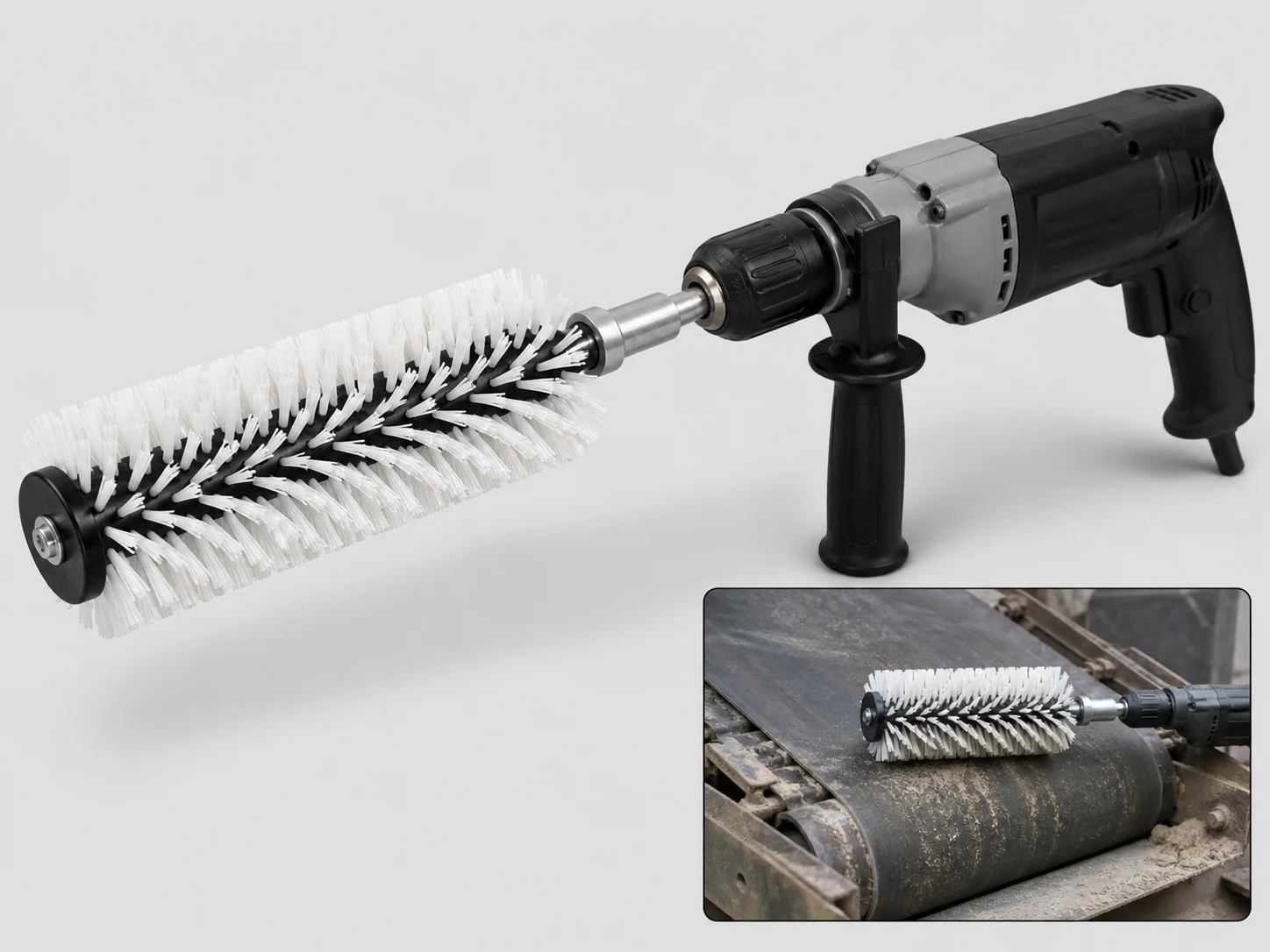
Medium brush
100 pcs
Minimum order
Worked with two hands or on a pole: chimney, gutter and pond-filter brushes, discs, cups and tank brushes.
Production lead time, once the specification is confirmed
- Up to 100 pcsWithin 7 days
- 101–5,000 pcsWithin 14 days
- 5,001–50,000 pcsWithin 21 days
- Over 50,000 pcsConfirmed with your quotation
Peak season can extend these times; the shipping date is confirmed in writing with your quotation. Sampling and shipping are quoted separately.
A motor-driven nylon or polypropylene brush for powered cleaning on floors, carpets, upholstery, and vehicle surfaces — built as a roller, disc, or cup that matches your scrubber, extractor, or rotary drive and lifts embedded hair, lint, and dust without hand pressure.
What can this brush do for you?
Breaks the bond between debris and the surface instead of sweeping over it
The rotating or oscillating filament rows make hundreds of contact strikes per minute across the cleaning path. That repeated agitation loosens matted hair, string, lint, and dust that a mop, squeegee, or fixed broom blade cannot lift from floor gaps, carpet pile, or textured panels.
Keeps its stiffness in wet and detergent-filled cleaning
Nylon PA and polypropylene absorb very little water, so the filaments do not go limp when the machine runs with water, floor cleaner, or extraction solution. The brush keeps the same working pressure on the last pass as it had on the first pass of the shift.
Mounts directly to the machine drive instead of relying on operator force
The core is machined or molded around your arbor, shaft, flange, or quick-release interface. The motor supplies the torque and speed; the brush supplies consistent contact across the full working width. Operators do not have to press harder to get the same result in the middle of the path.
Runs true at machine speed without shake or wobble
Tuft distribution, core balance, and end-cap alignment are controlled so the brush spins evenly at its rated RPM. A balanced brush reduces vibration that would otherwise cause uneven wear, machine bearing load, and streaky cleaning results.
Can be tuned to the surface rather than forcing one brush onto every job
Filament diameter, trim length, density, and tip finish change how the brush talks to the floor or fabric. Softer flagged polypropylene protects polished tile or clear coat, while shorter and stiffer nylon works into grout lines, textured concrete, or matted carpet pile.
What is a Motorized/Power Brush?
A Motorized/Power Brush is a brush head that mounts to a powered cleaner — a floor scrubber, carpet extractor, vacuum power nozzle, vehicle wash unit, or portable rotary tool — and uses motor-driven rotation or oscillation to agitate a surface. Unlike a hand brush, its contact speed, dwell time, and working width come from the machine rather than the operator’s arm.
This product is normally built around nylon PA6/PA6.6 or polypropylene filaments anchored in a plastic, aluminum, or stainless core. The core carries the drive interface and keeps the tufts in the cleaning path. The filament face can be a cylindrical roller, a flat disc, a cup, or a custom profile, depending on the machine deck and the shape of the area that must be reached.
During operation the brush spins or oscillates over the surface, driving filament tips into floor joints, carpet fibers, upholstery weave, or panel texture. The tips lift attached hair, string, lint, and dust so the machine’s vacuum, squeegee, or rinse flow can carry it away. The brush is not the debris collection system; it is the agitation stage in the cleaning process.
The most important operating limits are the drive interface, maximum RPM, and the environment. A brush rated for dry indoor dusting should not be run in an acid wash at high speed, and a core bored for one machine will not fit another machine’s shaft. These variables are set during specification, not discovered at the job site.
Technical Specifications
The table below shows the parameters we set for each powered brush. Ranges are starting points; the final values follow the machine and the surface.
| Parameter | Value / Options |
|---|---|
| Brush form | Cylindrical roller, disc, cup, or end brush, selected from the access geometry and contact path |
| Filament material | Nylon PA6 / PA6.6 or polypropylene PP; blended and mixed-fill rows available |
| Filament diameter | 0.15–1.20 mm for nylon/PP; 0.10–0.50 mm when a wire fill is required for metal surfaces |
| Trim length | 10–40 mm, set by surface profile and required scrubbing pressure |
| Core / backing | PP block, nylon block, aluminum hub, or stainless steel tube, chosen for wet or dry duty |
| Brush diameter | 40–200 mm typical, matched to machine housing clearance and path width |
| Face length / width | 50–600 mm typical, configurable to the machine deck or tool |
| Mount / interface | Arbor bore with keyway, hex or round shaft, threaded hub, quick-release flange, or customer-specific stub shaft |
| Fill pattern | Straight, spiral, herringbone, chevron, clustered tufts, or custom layout |
| Max operating speed | Set to the brush design and machine rating; speed and balance checked for the delivery RPM |
| Operating environment | Wet, dry, detergent, or wash-down; material grade selected for temperature and chemical exposure |
| Brush type | Custom Floor Scrubber Sweeper Brushes |
| How it is driven | Machine-driven, mounted in the equipment |
| Cleaning target | automatic floor scrubber and walk-behind rotary machine, carpet extractor and vacuum power head, and upholstery and stair tool cleaning |
| Surface or part | floors, roller, panels, strings, joints, carpet pile, tile, and concrete |
| Residue or debris | hair, lint, dust, fiber, paint, and rust |
| Mounting / connection | Arbor bore with keyway, hex or round shaft, threaded hub, quick-release flange, or customer-specific stub shaft |
Where does this brush work best?
- Automatic floor scrubbers and walk-behind rotary machines on tile, vinyl, sealed concrete, and epoxy floors where hair, lint, and film collect in joints and low spots.
- Carpet extractors and vacuum power heads that need a motorized agitator roll to work pet hair and string out of carpet pile before extraction.
- Upholstery and stair tools with narrow cylindrical brushes that reach into fabric weave and stitching without hand scrubbing.
- Vehicle wash arches and portable rotary scrubbers on body panels, trim, wheels, and tires, using flagged or softer fill for painted surfaces.
- Conveyor, panel, and web cleaning stations where a powered brush removes lint and dust from a continuously moving surface.
How do I choose the right one?
Start with the machine, not the brush
Record the motor RPM or gearbox output speed, shaft or arbor diameter, keyway or drive pin details, and the free space around the brush. If the mount is wrong, the brush will not spin safely; if the diameter is too large, it will hit the housing; if the brush is rated below the machine speed, it will throw filaments.
Select the form from the contact path
A cylindrical roller is the right choice for wide scrubber decks, car wash arches, and carpet extractors. A disc or cup works where the brush must reach into a corner, edge, or curved panel. An end brush fits spot cleaning and hard-to-reach areas.
Match the filament to the surface and residue
| Surface / residue | Recommended fill | Reason |
|---|---|---|
| Polished tile, vinyl, coated floors | Dense polypropylene | Soft enough to avoid visible scuffing, stable in water and detergent |
| Grouted tile, textured concrete | Nylon PA6 / PA6.6 | Stiffer filament tips work into joints and surface texture |
| Carpet, upholstery | Flagged nylon or polypropylene | Split tips catch hair and string without tearing fibers |
| Painted vehicle panels, chrome | Flagged polypropylene or closed-cell foam | Solid nylon tips can mark clear coat or brightwork |
| Rust, scale, paint on metal | Steel, stainless, or brass wire | Only when a metal-preparation brush is intentionally specified |
Set trim length and density for the working pressure
Longer trim follows uneven floors and deep carpet pile. Shorter trim concentrates pressure and scrubs harder on smooth hard floors. Higher density gives more contact points and a smoother finish; lower density lets hair and string release from the brush instead of wrapping around the core.
Confirm the environment before finalizing material
Wet scrubber decks, extractor tanks, and vehicle wash lines need water-resistant cores and corrosion-resistant hubs. If the process includes hot water, solvent, or strong detergent, tell us the chemical and temperature so we can specify the right filament, core, and adhesive.
When to use something else
If the surface is delicate painted sheet metal or polished clear coat, choose flagged tips or foam media rather than solid nylon. If the job is rust removal, weld spatter, or paint stripping, specify a wire cup, wheel, or power wire brush instead of this nylon/PP cleaning brush. If the contamination is heavy caked grease or cured oil, chemical pre-treatment or hot-water extraction should come before mechanical brushing. And if the access gap is narrower than the roller diameter, use a tube brush or detail brush for that area.
Can I customize this brush?
Yes. Every powered brush should be built to the machine and the cleaning job, not purchased off a shelf. To get a working sample or production drawing, send the machine make and model, output RPM, shaft or arbor dimensions, brush space, surface material, residue type, chemical exposure, and any photo or drawing of the current brush.
We can adjust:
- Brush form and dimensions — roller, disc, cup, end brush, or custom profile; diameter, face length, and end cap shape
- Filament system — nylon PA or PP, diameter, solid or flagged tips, crimped or straight, trim length, density, color, and mixed rows
- Core and hub — PP block, nylon block, aluminum hub, or stainless steel tube, with arbor bore, keyway, hex, spline, thread, or quick-release interface
- Fill pattern — straight, spiral, herringbone, chevron, clustered tufts, or a layout that feeds debris toward the vacuum or squeegee path
- Mounting — standard arbor, threaded drive, flange, drive pins, or a customer-specific stub shaft
- Identification — custom color, molded or pad-printed marking, laser marking, or color-coded end caps
- Packaging — bulk cartons, individual sleeves, or set packing for replacement programs
If your project requires material declarations, inspection records, or third-party testing for a specific cleaning environment, we can arrange that support during the customization process.
How do you check that a motorized/power brush is the right size for the opening?
How do I check the brush fit before starting the motor?
Slide the brush onto the shaft or arbor without forcing it. The bore and keyway should register positively, and the brush should spin by hand without hitting the housing, squeegee, or splash guard. Compare the machine output RPM with the brush rating; if the brush is marked below that speed, do not run it.
Why does hair keep wrapping around the core?
Wrapping usually means the trim is too long, the density is too low, or the filament tips are too smooth for the residue. Switching to shorter trim, higher density, or flagged filaments gives the hair more contact points and less room to wind around the core. In heavy pet-hair applications, we can also add a release pattern to the fill layout.
Do I need a different brush for hard floors and carpet?
In most cases, yes. A hard-floor brush tends to use shorter, denser fill for scrubbing pressure, while carpet needs longer, flagged or flexible fill that reaches into pile. One brush tuned for both will underperform on one of the two surfaces and may damage the other.
What should I check between shifts?
Remove wrapped hair, string, and debris from the core and between tufts. Look for flattened or broken filament, cracked end caps, loose tufts, and a bent or worn mount. Rinse and dry brushes used in wet cleaning, and replace any brush that no longer stands straight or spins without wobble.
How can I tell if the brush is too aggressive for the surface?
Run the machine briefly on a low-visibility test area and inspect the surface under angled light. Scratches, burnish marks, or hazing mean the filament is too stiff, the trim is too short, or the density is too high. A softer, flagged, or lower-density fill is the next step.
Does the brush collect the debris it loosens?
No. The brush agitates and lifts hair, lint, and dust, but the machine’s vacuum, squeegee, rinse flow, or extraction system still has to remove it. A brush that fills with debris and stops releasing it is the sign of the wrong density or pattern for that residue.
Guides that go deeper on this
Custom Manufacturing RFQ
Describe Your Application
To quote this brush accurately, send the size, material, cleaning target, residue, quantity, and any available drawing or sample photo.
Drawing or photo optional — it speeds things up, it does not gate the enquiry.
Custom Brush RFQ
Send Your Brush Project
Upload a drawing, product photo, or sample photo and provide the core dimensions and cleaning conditions.
“We need a brush to remove wet residue from a stainless steel conveyor, about 800mm wide. The current brush wears quickly. We can send photos.”
“We sell drinkware and need a cleaning brush to include with the product. Quantity around 5,000 pieces.”