
Custom Cleaning Brush
Steam Wand Cleaning Brush
Custom steam wand cleaning brush with nylon PA bristles for espresso machine steam wand tips and milk paths.
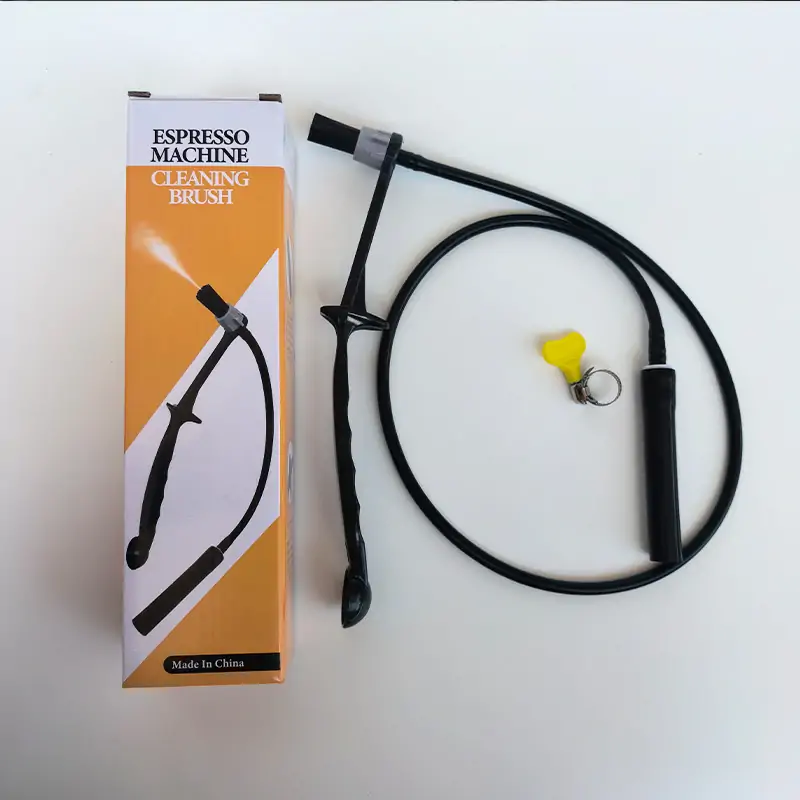
Small brush
500 pcs
Minimum order
Held in one hand: tube, bottle, detail and swab brushes — including long-handled ones with a small head.
Production lead time, once the specification is confirmed
- Up to 500 pcsWithin 7 days
- 501–50,000 pcsWithin 14 days
- Over 50,000 pcsWithin 21 days
Peak season can extend these times; the shipping date is confirmed in writing with your quotation. Sampling and shipping are quoted separately.
A narrow-profile cleaning brush made for daily espresso machine steam wand maintenance, sized to reach inside steam tip holes and milk passages while removing dried milk proteins and mineral scale without scratching chrome or stainless surfaces.
What can this brush do for you?
Reaches Steam Tip Holes and Narrow Milk Passages
The 6–7.5 mm head diameter is small enough to enter most commercial steam wand tip holes from the outside and to slide into the wand’s internal channel when the tip is removed. That means you can physically remove residue from the areas where milk film hardens fastest — not just wipe around them.
Removes Dried Milk and Calcium Without Metal-to-Metal Contact
Nylon PA bristles are firm enough to break up dried milk proteins and light calcium deposits, but they are much softer than stainless steel and chrome. Daily scrubbing can be done with confidence that the wand’s polished finish won’t be scratched or dulled by the brush.
Survives the Wet, Hot, Chemical Environment of a Coffee Bar
Nylon PA and PBT bristles resist water, typical espresso machine cleaners, and short-term heat up to about 90°C. The brush can sit in the service area, get used during the cleaning shift, and rinsed off without degrading after the first week.
Long Handle Keeps Your Hand Away from the Wand
The 175–200 mm overall length gives you a stable grip while cleaning a steam wand that has just been purged and is still warm. You don’t need to hold your fingers directly at the tip to get enough control.
What is a Steam Wand Cleaning Brush?
A Steam Wand Cleaning Brush is a hand tool developed specifically for espresso machine steam wands. It has a slim body with a short brush head at one end. The head consists of a central core and radially arranged nylon bristles that scrub the surface of the steam wand and the inside of its orifices. The brush is used as part of the daily milk-system cleaning routine: after steam wand use, the operator purges the wand, allows it to cool slightly, then uses the brush with a push-pull and rotating motion to release attached milk film and mineral deposits. It can be used dry or with a small amount of cleaning solution.
It does not replace chemical milk cleaners or descaling products; it mechanically removes the layer that chemicals may soften or miss. For commercial espresso equipment, the brush is a consumable maintenance item that should be inspected and replaced on a schedule based on usage.
Technical Specifications
| Parameter | Value / Options |
|---|---|
| Head diameter | 6–7.5 mm, adjustable to match steam tip hole or internal channel |
| Working head length | 25–70 mm |
| Overall length | 175–200 mm including handle |
| Bristle material | Nylon PA (standard), PBT (stiffer option) |
| Core material | Flexible stainless steel wire or rigid nylon rod |
| Handle material | PP, ABS, or heat-resistant plastic; TPE overmold optional; hanging loop available |
| Bristle trim | Crimped, straight, or flagged |
| Operating temperature | Up to 90°C intermittent contact |
| Chemical resistance | Compatible with mild detergents, milk cleaners, and citric/lactic acid descaling solutions; avoid strong acids, solvents, and prolonged alkaline soaks |
| Color | Natural, black, white, or custom |
| Brush type | Custom Tube & Pipe Bore Brushes |
| How it is driven | Hand-guided |
| Cleaning target | commercial espresso machine, machine service and maintenance, and coffee equipment distributor and oem cleaning |
| Surface or part | holes, channel, passages, tubes, and pipes |
| Residue or debris | milk, scale, milk protein, coffee, milk film, mineral scale, milk residue, and mineral deposits |
| Mounting / connection | Fixed / Twisted-Wire Stem |
All dimensions can be adjusted for your steam wand model. Let us know the tip hole diameters and internal channel size when you order.
Where does this brush work best?
- Commercial espresso machines in cafes and restaurants: daily cleaning of steam wand tips and steam holes after each milk beverage preparation.
- Machine service and maintenance: for technicians who need to remove accumulated milk residue from steam wand interiors during preventive maintenance.
- Coffee equipment distributors and OEMs: as a replacement or accessory item bundled with espresso machines or milk systems.
- Other narrow-diameter tubes on coffee equipment: hot water outlet pipes, group head rinse channels, and milk line fittings where the head diameter matches.
How do I choose the right one?
Start with the smallest opening. Measure the diameter of the steam tip holes if cleaning externally, or the inner diameter of the steam wand tube if cleaning internally after tip removal. Choose a head diameter that allows the bristles to enter without excessive force, but still make contact with the walls. Too small a head will just spin without scrubbing; too large will jam and break bristles.
Match bristle stiffness to the residue and surface. Nylon PA is flexible and suitable for routine milk film on chrome or stainless. PBT is stiffer and better for heavier deposits or scale, but on delicate chrome plating you may want to stay with PA. If the wand has heavy scale, descale chemically first, then brush.
Consider handle length and core flexibility. Longer handles give more distance from hot surfaces; flexible stainless cores follow curved wands but may feel less precise for straight wands. Rigid cores offer more push force for straight internal channels.
When to choose another tool. If steam tip holes are extremely small (under 2 mm diameter), a needle-style cleaner may be needed for the holes, though this brush can still clean the outside. If you need aggressive scale removal, a chemical descaling soak is more effective; brass brushes can remove heavy scale but risk leaving metal marks on stainless. This nylon brush is the right choice for daily maintenance and surface-safe cleaning.
Can I customize this brush?
We adjust the brush to match your steam wand geometry and service requirements. Provide the steam wand model, tip hole diameters, internal channel diameter, wand length, and preferred handle style. Photos or drawings help. Customization options include:
- Head: diameter, bristle length, bristle density, trim style (straight, crimped, flagged), head shape.
- Bristle material: Nylon PA, PBT, or other filament depending on chemical and temperature needs.
- Core: flexible stainless steel wire or rigid nylon rod; core can be straight or pre-bent.
- Handle: length, shape, grip texture, material (PP, ABS, TPE overmold), hanging loop, branding (molded, pad printed, laser marked).
- Color: standard or custom.
- Packaging: bulk cartons, individual polybags, retail blister cards, or project-specific packing.
- Documentation and testing: material declarations, food contact statements, chemical resistance test reports, and third-party inspection can be arranged for your project.
Which filament survives the cleaning and still lasts on a steam wand cleaning brush?
Will nylon bristles scratch a chrome-plated steam wand?
Nylon PA is softer than chrome and stainless steel, so it will not scratch under normal use. Ensure bristle tips are rounded or flagged, and avoid forcing the head through holes that are too small. Inspect the brush regularly; if bristles become bent or flattened with sharp ends, replace the brush.
How do I clean the steam wand brush itself?
After each use, rinse the head under hot water to remove loosened milk residue. Periodically soak the head in a mild detergent or espresso machine cleaner for a few minutes, then rinse thoroughly and air dry. Avoid strong acids, solvents, and prolonged alkaline soaks, as these can degrade the nylon filaments.
How often should the brush be replaced in a busy cafe?
Inspect weekly. Replace when the bristles no longer spring back to shape, the core becomes permanently bent, or residue cannot be rinsed out. With heavy daily use, typical replacement is every 2–4 months, but follow your equipment maintenance schedule.
Can the brush clear a completely blocked steam tip hole?
The brush works well for light to moderate residue, but a hole fully blocked with hardened scale should first be soaked in a descaling solution or cleared with a dedicated steam tip needle tool. Forcing the brush into a blocked hole can bend the core or break bristles.
Is the brush safe to use on a hot steam wand?
The bristle and handle materials tolerate brief contact with warm surfaces up to about 90°C. For safety and best results, purge the wand and allow it to cool to a comfortable handling temperature before brushing. Do not hold the brush against a live steam jet or in direct steam flow.
Can I get a brush sized for a specific espresso machine brand or model?
Yes. Send us the brand, model, and key measurements (tip hole diameter, internal channel diameter, wand length). We can match the head diameter and overall length to the equipment, including custom colors or branding if required.
Guides that go deeper on this
Custom Manufacturing RFQ
Describe Your Application
For a custom quote, we need the key dimensions, surface or part, residue, material preference, quantity, and reference image or drawing.
Drawing or photo optional — it speeds things up, it does not gate the enquiry.
Custom Brush RFQ
Send Your Brush Project
Upload a drawing, product photo, or sample photo and provide the core dimensions and cleaning conditions.
“We need a brush to remove wet residue from a stainless steel conveyor, about 800mm wide. The current brush wears quickly. We can send photos.”
“We sell drinkware and need a cleaning brush to include with the product. Quantity around 5,000 pieces.”