
Custom Cleaning Brush
Teapot Cleaning Brush
Custom teapot cleaning brush and spout brush for curved spouts, strainer holes, lids, and teapot interiors.
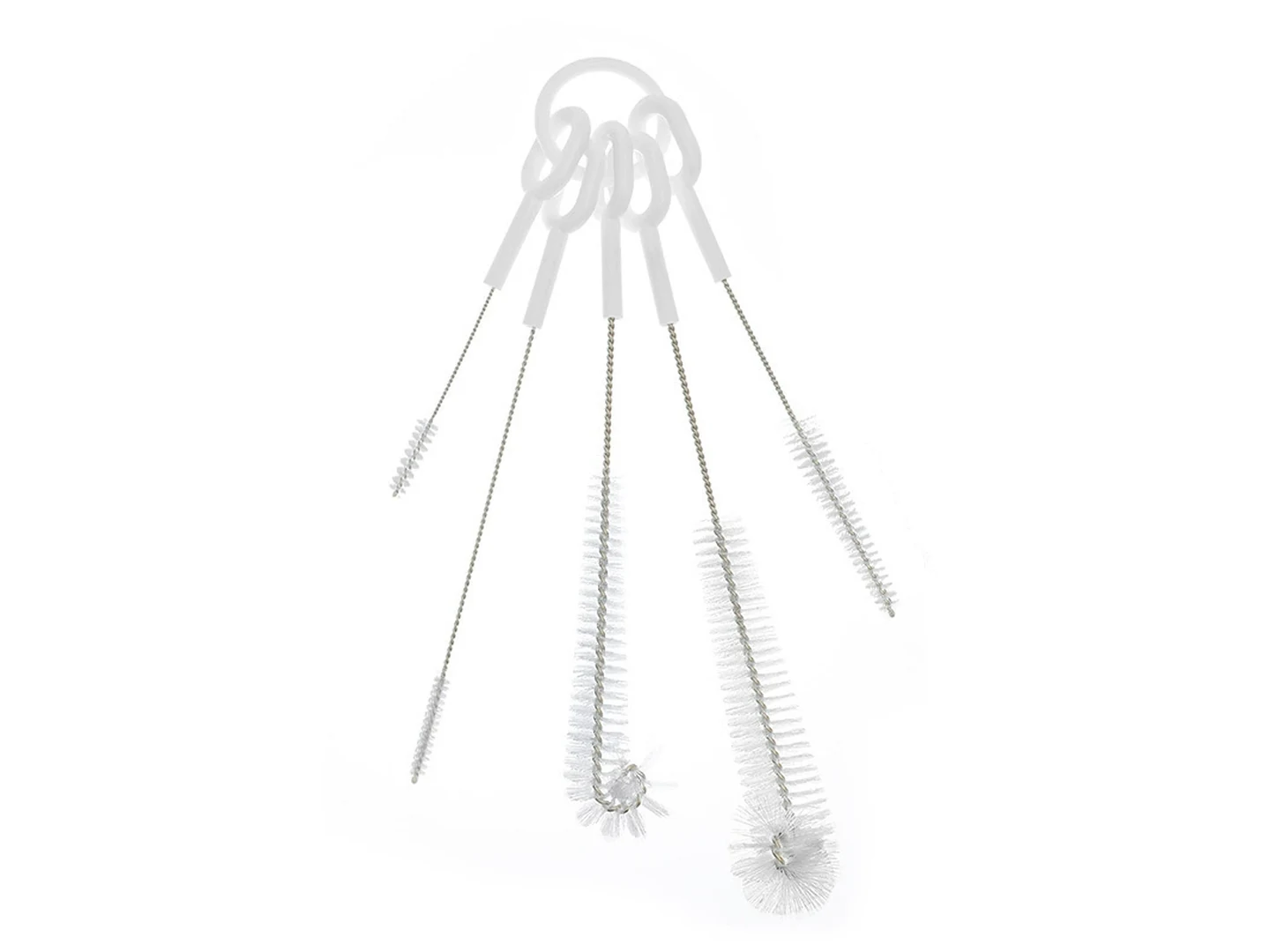
Small brush
500 pcs
Minimum order
Held in one hand: tube, bottle, detail and swab brushes — including long-handled ones with a small head.
Production lead time, once the specification is confirmed
- Up to 500 pcsWithin 7 days
- 501–50,000 pcsWithin 14 days
- Over 50,000 pcsWithin 21 days
Peak season can extend these times; the shipping date is confirmed in writing with your quotation. Sampling and shipping are quoted separately.
Built for the narrowest passages of a teapot, this flexible teapot cleaning brush follows curved spouts, reaches through built-in strainer holes, and lifts tea film from lids, rims, and tight interior walls without scratching glazed porcelain, glass, or unglazed clay.
What can this brush do for you?
Bends through curved spouts instead of stopping at the first turn
The head is built on a flexible 304 stainless twisted-wire core, with short radial filaments that keep the brush centered in the passage. The head outside diameter is matched to the narrowest spout ID, so the bristles compress through the neck and recover inside the curve. A straight, stiff shaft would jam in a gooseneck or S-shaped spout; this one follows the bend and keeps working.
Cleans the holes and gaps that cloths and sponge tips miss
A tapered or pointed tufted end enters the holes in built-in strainers, lid vents, and the spout-to-body junction where tea particles collect. These perforations hold tannin film and leaf fragments; a broad brush head cannot register there. The tip reaches into each opening and lifts the deposit as you withdraw and rotate.
Leaves glazed and unglazed surfaces intact
The wire core stays covered by filament along the entire cleaning zone. Nylon PA and PBT filament ends are rounded enough for porcelain and glass, while natural horsehair is available for unglazed Yixing and antique clay teapots. You get contact pressure at the bristle tips, not exposed metal scraping the sidewall.
Stays serviceable in hot, wet, repeated use
PBT and 304 stainless resist hot water and mild tea cleaners better than plain carbon-steel handles or absorbent cores. The brush drains and dries quickly, so a café can use it across daily shifts without the handle swelling, wire rusting, or bristles softening after a few cycles.
Can be tuned to a café or production line’s daily rhythm
Filament diameter, density, and handle form can be selected for the number of teapots cleaned per shift. Dense PBT trim with a hang-hole handle suits high-volume teahouses; a finer, softer trim suits low-volume care of fragile stoneware. The design follows the cleaning volume as much as the teapot shape.
What is a Teapot Cleaning Brush?
A teapot cleaning brush is a hand-guided cleaning tool with a narrow, flexible shaft and a small radial or tufted filament head. It is used by inserting the head through the spout opening, along the spout channel, or into a lid gap or strainer area, then working the surface with short push, pull, and twist motions.
In a teapot, the main work happens in three zones: the spout wall and the curve where it joins the body, the strainer perforations at the base of the spout, and the recessed rims or vent holes on the lid. The brush is usually sized for the spout first, because that is the narrowest and hardest part to clean by hand. The body interior, when needed, is handled by a larger head configuration rather than by increasing the spout-head size.
This is a scrubbing tool for attached tea film, loose leaf debris, and soft deposits. It is not an abrasive rust remover, and it does not dissolve hard mineral scale. The cleaning action is mechanical and gentle; stubborn scale or burnt-on residue should be softened with a soak or descaler before brushing.
Technical Specifications
| Parameter | Typical range / options |
|---|---|
| Head outside diameter | 4–40 mm, selected to the narrowest spout or opening ID |
| Working section length | 40–160 mm, matched to the spout or insertion depth |
| Overall length | 150–450 mm from handle end to tip |
| Filament diameter | 0.10–0.50 mm, finer for delicate surfaces, heavier for tannin film |
| Filament material | Nylon PA, PBT, or natural horsehair blend |
| Core / shaft | 304 stainless twisted wire, flexible and corrosion-resistant |
| Handle | PP, ABS, wood, or stainless steel in straight or loop form |
| Tip profile | Radial bristle, tapered tuft, pointed tuft, silicone fin, or sponge pad |
| Mounting | Hand grip standard; hanging hole or loop optional |
| Operating environment | Hot water and mild tea cleaners; PBT preferred for frequent chemical exposure |
| Brush type | Custom Bottle & Container Brushes |
| How it is driven | Hand-guided |
| Cleaning target | ceramic and porcelain teapot, tea house, and narrow-mouth beverage vessel and bottle mouth cleaning |
| Surface or part | spouts, holes, glass, rims, walls, vents, passages, and ceramic |
| Residue or debris | tea film, clay, rust, leaves, scale, mineral scale, leaf debris, and soft deposits |
| Mounting / connection | Hand grip standard; hanging hole or loop optional |
Dimensions are confirmed against the teapot sample or drawing before production. A short pilot batch is standard for first-time spout geometry.
Where does this brush work best?
- Ceramic and porcelain teapots with curved spouts and built-in strainer holes at the spout base, where tannin film and loose leaf fragments collect.
- Cast iron teapots where tea film must be removed without scraping the interior; soft nylon or horsehair contact is used, while rust treatment is handled separately.
- Yixing and other unglazed clay teapots, where horsehair filament lifts spent leaves and film while leaving the interior patina undisturbed.
- Glass and stoneware teapots with narrow infuser baskets, lid vents, and recessed rims that need light scrubbing without scratching.
- Tea houses, cafés, and tea-preparation lines where spout hygiene is part of a daily closing or opening checklist.
- Narrow-mouth beverage vessels and bottle mouths with a similar restricted opening and curved flow path.
How do I choose the right one?
Start with the narrowest passage, not the teapot’s overall size. Measure the minimum spout inner diameter, the tightest bend radius, and the distance from the spout opening to the bottom of the passage. The head outside diameter should be slightly larger than the narrowest ID so the filament compresses and contacts the walls, while the core must remain narrower than the opening for free travel.
Match the filament to the surface and cleaning cycle
| Surface / use condition | Recommended contact material |
|---|---|
| Glazed ceramic, porcelain, glass | Nylon PA or PBT, fine to medium filament |
| Unglazed Yixing, antique clay, fragile interiors | Natural horsehair, low scrub pressure |
| High-volume café, hot water plus detergent, daily cycles | PBT, dense trim, medium filament |
| Cast iron teapot body and spout | Soft nylon or horsehair, no abrasive filler |
Pick the tip profile for the task
Radial bristle heads clean the spout wall. A tapered or pointed tuft reaches strainer holes and lid vents. A silicone fin or sponge pad wipes smooth interiors when the goal is film removal more than hole cleaning. If the job includes both spout and sidewall work, use a combination head rather than forcing one profile to do both.
Set overall length for control
The handle should let the operator hold the brush near the spout opening without over-flexing the shaft. A very long reach on a thin shaft reduces control and can bind in tight curves. For deep teapot interiors, a larger, stiffer body brush is usually a better second tool than extending the spout brush.
When this brush is not the right choice
If the spout passage is under about 3 mm in diameter, no radial filament head will pass consistently; use a thin flexible pipe cleaner or let a soaking solution do the work. If the main problem is hard mineral scale, burnt-on residue, or rust, choose a chemical descaler or a dedicated abrasive treatment before brushing. For cleaning the entire teapot interior quickly, pair the spout brush with a larger bottle brush or cup-head brush sized to the body.
Can I customize this brush?
Yes. Teapot spouts vary by maker, firing shrinkage, and strainer design, so we treat head diameter, filament material, shaft length, and handle form as project variables rather than fixed stock dimensions. To define the configuration, provide the following:
- Minimum spout inner diameter and tightest bend radius
- Distance from spout opening to the deepest point to be cleaned
- Teapot material, including glaze and any unglazed interior
- Type of residue and cleaning chemical or detergent
- Wash temperature, daily cleaning volume, and whether the brush is used by hand only
- A sample teapot, drawing, or clear photos of the spout and strainer
We can adjust the following elements:
- Head geometry: outer diameter, working length, taper, pointed tuft, rounded tip, silicone fin, or sponge pad
- Filament: Nylon PA, PBT, horsehair blend, diameter from 0.10 mm to 0.50 mm, density, trim length, and color
- Core: 304 stainless twisted wire, coated wire, stiffness, and overall reach
- Handle: PP, ABS, wood, or stainless steel, straight or loop, with hanging hole, grip texture, or custom branding
- Assembly and packaging: bulk, polybag, retail card, color coding, private label, or project-specific packing
If your project requires material documentation, food-contact declarations, inspection reports, or third-party testing, we can support those requirements as part of the customization process.
How do you confirm a teapot cleaning brush has actually cleaned the surface?
How do I know if the head diameter fits my teapot spout?
Measure the narrowest inside diameter of the spout. The filament head should pass through with light resistance and the bristle ends should stay in contact with the walls through the curve. If the brush jams, folds over, or forces the shaft into a sharp kink, the head is too large. If it slides through with no wall contact, the head is too small for useful scrubbing.
Can the same brush clean the spout and the teapot body?
This brush is optimized for spouts, strainer holes, lid gaps, and other narrow passages. The main body is easier to clean with a larger cup-head or bottle brush matched to the body diameter. When a single tool is required, we can combine a small spout head with a larger interior head on one shaft, but the two cleaning zones still need separate sizing.
Will brushing remove hard water scale or burnt-on tea residue?
No. Brushing loosens attached tea film and leaf debris, but it does not dissolve mineral scale or remove burnt-on residue. Use a product-appropriate descaler, citric acid soak, or hot wash first, then brush to remove the loosened layer. Do not use a wire brush on ceramic or glazed surfaces.
How can I verify the spout is clean after brushing?
Run clean water through the spout and watch the flow. Then wipe the inside with a white lint-free swab or pipe cleaner at the spout curve and strainer perforations. Any brown streak or leaf fragment means the head profile, reach, or motion needs adjustment. Check the spout-to-body junction under light before drying.
What should I check before each shift in a café or tea house?
Inspect the shaft for permanent bends or cracks, the filaments for flattening or shedding, and the handle for cracks or loose assembly. Rinse the brush in hot water after use and hang it to dry. Replace the brush when the bristles no longer spring back or the core will not return to straight after bending.
Is the metal core safe to use inside a ceramic or unglazed teapot?
The wire core is covered by filament along the entire cleaning zone, and tufted ends cover the folded wire tip. No exposed metal should contact the teapot. For very fragile unglazed clay, specify a longer tip cover, softer horsehair filament, or a fully covered head so metal never reaches the surface.
Guides that go deeper on this
We have not written a guide specific to this one yet. The material that covers selection, filament, dimensions, maintenance and sourcing is collected in the technical resources library.
Custom Manufacturing RFQ
Describe Your Application
To quote this brush accurately, send the size, material, cleaning target, residue, quantity, and any available drawing or sample photo.
Drawing or photo optional — it speeds things up, it does not gate the enquiry.
Custom Brush RFQ
Send Your Brush Project
Upload a drawing, product photo, or sample photo and provide the core dimensions and cleaning conditions.
“We need a brush to remove wet residue from a stainless steel conveyor, about 800mm wide. The current brush wears quickly. We can send photos.”
“We sell drinkware and need a cleaning brush to include with the product. Quantity around 5,000 pieces.”