
Custom Cleaning Brush
Boar Bristle Cleaning Brush Printing
Boar bristle cleaning brush for pressroom dust and lint control. Hand, strip, and roller configurations for plates, blankets, feed paths, and web cleaning.
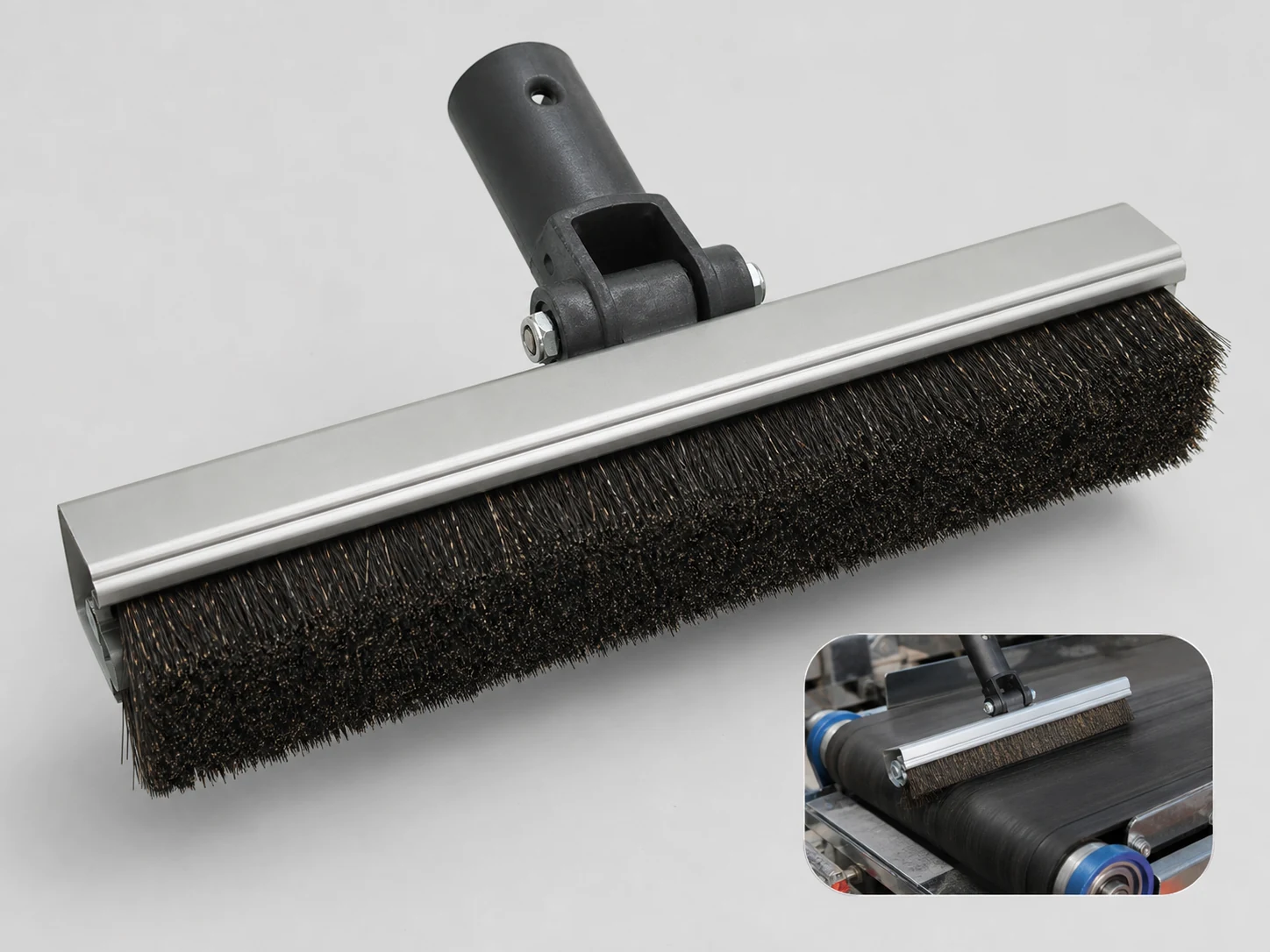
Large-format brush
100 pcs
Minimum order
Built one at a time on a core or channel: full-width rollers, sweeper brooms and long strip.
Production lead time, once the specification is confirmed
- Up to 100 pcsWithin 20 days
- 101–1,000 pcsWithin 30 days
- Over 1,000 pcsConfirmed with your quotation
Peak season can extend these times; the shipping date is confirmed in writing with your quotation. Sampling and shipping are quoted separately.
A soft natural-filament cleaning brush for printing equipment that lifts paper dust, lint, and loose spray powder from plates, blankets, feed paths, and sheet or web surfaces without scratching the contact face or leaving bristle shedding behind. Built in hand, strip, or roller form to match manual touch-up, fixed-position web wiping, or rotating machine positions.
What can this brush do for you?
Flagged natural tips gather fine particles rather than scattering them
Boar bristle naturally splits into fine flagged ends that sweep light dust and lint onto the filament face and hold it during the stroke. Because the tips capture the debris instead of flicking it away, less paper dust and spray powder gets pushed back onto the next printed sheet.
Soft contact protects printing surfaces
The natural filament tip pressure stays low and conforms around curved rollers, delicate photopolymer plates, and coated paper or film webs. This is the key reason press teams use boar instead of a stiffer synthetic or metal brush on light-contact surfaces that would show scratches or dulling after repeated passes.
Same fill, three mounting forms
A hand brush handles operator spot cleaning of plates, blankets, and feed areas. A channel strip mounts along a web or sheet path for continuous surface wiping. A spiral-wound roller fits rotating positions where the brush must turn with a cylinder or web. The filament contact stays soft and dust-gathering in each form.
Bristle blends add backbone where edges wear faster
When a strip brush runs continuously against fast-moving paper edges, 100% boar can pack down too quickly. Mixing a controlled percentage of nylon PA or PBT into the fill keeps the soft outer flagged contact while giving the inner rows more spring and longer shape retention.
Constructed to limit its own shedding
Loose fiber from a badly made brush ends up on the printed sheet. For printing applications we control staple depth, trim, and end finishing so the brush releases collected particles instead of its own filaments, and we can run a pre-shipment shed check on the specified fill density.
What is a Boar Bristle Cleaning Brush Printing?
A Boar Bristle Cleaning Brush Printing is a dry or lightly-lubricated cleaning brush filled with natural boar bristle and intended for pressroom use. It contacts the paper or film web, printed sheets, feed rails, cylinders, plates, and blankets to lift loose paper dust, lint, and fine powder before those particles settle into ink, coating, or drive components.
The hand version is a conventional brush with a handle. The strip version is a channel-backed fill installed along the web path. The roller version is a spiral-wound fill on a core for rotating contact. In each form, the working contact is the bristle tip, which should deflect only enough to sweep the surface; it is not pressed hard.
Natural boar bristle is a protein fiber. It works well for dry particle pickup because the flagged tips provide a large fine-contact surface, but the same nature limits it: strong solvents, high pH wash chemicals, steam, and temperatures above about 100°C will embrittle, curl, or degrade the filament. This brush belongs in dry dust-control and light cleanup steps, not in solvent stripping or abrasive scrub duty.
Technical Specifications
Representative specifications for a standard configuration. Dimensions, mounting, and fill are adjusted to the press position and web width on order.
| Parameter | Value / Options |
|---|---|
| Brush form | Hand brush, channel strip brush, or spiral roller brush |
| Fill material | 100% natural boar bristle; blends with nylon PA, PBT, or horsehair |
| Bristle trim length | 20–50 mm standard; raw flag length 50–108 mm available for deep-tuft or long-reach designs |
| Overall length | 150–250 mm for standard hand configurations; strip length cut to machine width; roller length matched to shaft |
| Brush diameter | 10–30 mm for hand-held round or handle-mounted heads; roller outside diameter follows core and trim |
| Mounting / backing | Wood, polypropylene, or aluminum handle; galvanized steel or aluminum channel strip; steel or stainless shaft core |
| Fill density | Project-specific; rows per 25 mm and staple spacing set for light dust load or heavier continuous-wiping duty |
| Operating temperature | Dry intermittent exposure up to 100°C; continuous service recommended below 80°C |
| Chemical exposure | Mild detergent or water only; not for pH below 3 or above 11, strong solvents, steam, or prolonged immersion |
| Stiffness control | Straight, crimped, or flagged boar filament; synthetic blend ratio adjusts tip pressure and recovery |
| Brush type | Custom Roller and Conveyor Brushes |
| How it is driven | Machine-driven, mounted in the equipment |
| Cleaning target | sheet-fed offset, web printing line, and plate and blanket care cleaning |
| Surface or part | webs, roller, sheets, plates, bars, cylinders, guides, and rolls |
| Residue or debris | powder, dust, lint, particles, fiber, loose fibers, fine powder, and protein |
| Mounting / connection | Wood, polypropylene, or aluminum handle; galvanized steel or aluminum channel strip; steel or stainless shaft core |
The raw natural length varies by animal fiber lot. Trim length, not raw length, controls final working height and deflection. Provide a drawing or OEM brush sample when the mounting must match an existing holder.
Where does this brush work best?
- Sheet-fed offset, flexo, and digital presses: wiping paper dust and lint from feed tables, register stops, suction heads, side guides, and delivery stack areas.
- Web printing lines: fixed strip brushes across the moving paper or film web before print units remove loose fibers and anti-set-off powder before they enter the nip.
- Plate and blanket care: light operator dusting of photopolymer plates, rubber blankets, and anilox rolls before clamping or washing, especially on surfaces that scratch under a nylon or wire brush.
- Finishing and bindery equipment: folders, cutters, collators, and gathering machines where trim dust and paper lint accumulate on rollers and guide surfaces.
- Spray powder removal on printed sheets: when powder is loose and static is not strong enough to hold it; pair with a vacuum pickup or ionization bar where static cling is involved.
How do I choose the right one?
Step 1: Match the brush form to the motion
Use a hand brush where an operator visits the surface. Use a strip brush where a moving web or sheet presents the same line of contact continuously. Use a roller brush when the cleaning element must rotate with a cylinder, roll, or web and the driving force already exists.
Step 2: Set trim and density for light tip contact
For sheet and web dusting, the tips should just kiss the surface with the outer 5–10 mm flexing. If the fill shadows or crushes flat against the backing, the trim is too long or the density too high for the gap. If particles pass under without being lifted, the brush is too short, too sparse, or mounted too far from the surface.
Step 3: Select the fill for the residue and contact surface
Choose 100% boar bristle for loose dry particles on delicate surfaces. Add nylon PA or PBT when the brush must hold its shape under continuous edge contact, when the powder is slightly tacky, or when longer replacement intervals matter more than maximum grain-level softness. Horsehair blend is a middle ground with spring recovery close to natural animal fill.
Step 4: Check the environment against the bristle limits
Natural boar bristle is not the right material in high-humidity washdown areas, strong solvent-laden press washes, steam cleaning, or dryer sections above 100°C. In those positions, specify nylon PA, PBT, or another synthetic filament and keep the same brush geometry.
When to move away from this brush
- Hardened ink, dried varnish, or adhesive deposits: use a solvent-compatible stiffer synthetic brush, scraper, or dedicated wash system.
- Continuous solvent immersion or aggressive caustic/acid cleaning: boar bristle will degrade; choose chemical-resistant filament.
- Static-clung powder: brushing alone may not remove it; combine the brush with an ionizing bar or antistatic device, or use a conductive filament configuration.
- High-temperature dryer or oven paths: use a heat-resistant synthetic or metal-free high-temperature filament.
Can I customize this brush?
Each printing position has different access, width, and contact-force needs. We build the brush to the press, not from a fixed catalog. When you send a drawing, OEM sample, or simple marked photo, include: mounting type, working width or handle length, trim length needed, web speed if continuous, surface material, particle type, wash chemicals, and operating temperature.
Typical adjustable parameters:
- Geometry: hand shape, angled or bent head, curved saddle, double-sided strip, full-width extruded channel, or spiral roller pattern.
- Fill: 100% boar, boar/nylon blend, boar/PBT blend, boar/horsehair blend, crimped or flagged filament, density, trim length, and color.
- Mounting and interface: wood, PP, or aluminum handle; aluminum, galvanized steel, or stainless channel; mounting holes, brackets, keyways, set-screw hubs, or shaft ends.
- Marking and finish: pad print, laser marking on handle or backing, colored filament stripe for identification, or plain natural finish.
- Packaging: bulk cartons, individual polybags, branded headercards, or line-side replacement kits.
For printer OEM or press-maintenance programs, we can also support project-specific material documentation, shed testing, dimensional inspection, and third-party verification if the requirement is defined up front.
When is a boar bristle cleaning brush printing worn out rather than just dirty?
How can I check whether the brush is too stiff for my printing surface?
Run the brush over a clean proof sheet or the actual plate/blanket under normal hand pressure, then inspect under oblique light. Fine scratches or polished lines indicate too much tip pressure; lower the density, shorten the trim slightly, or move to a higher percentage of natural boar instead of synthetic blend.
How do I test whether the brush will shed fibers onto printed sheets?
Wipe a clean white lint-free cloth or a fresh proof sheet with the brush in short back-and-forth strokes and inspect for released filament under bright light. Repeat after flexing the fill side to side. A properly set brush should not leave visible bristle fragments; if it does, the trim or staple depth needs adjustment before line use.
Can I clean the brush after it loads up with dust and powder?
Yes, but keep the cleaning method within the natural filament limits. Tap or vacuum the loaded side, then wash in lukewarm water with mild detergent and rinse. Do not use strong alkaline press wash, solvent, boiling water, or steam. Always dry the brush completely before returning it to service, because damp boar bristle softens and loses sweep recovery.
Does this brush remove static-clung paper dust?
No. A brush lifts loose particles, but it does not neutralize the static charge that holds them on the web or sheet. If dust remains stuck after brushing, add an ionizing bar, antistatic tinsel, or other static-control device upstream; otherwise the particles will simply reattach after the bristle passes.
How often should printing-position brushes be replaced or inspected?
Inspect strip and roller brushes at every press wash or maintenance interval. Look for matted fill, flattened tips, fiber breakage at the staple line, and backing corrosion. Replace when the tips no longer recover after deflection, when dust pickup drops, or when the bristle begins shedding. Heavy web-speed edge contact may shorten intervals compared with light manual use.
What if my cleaning step also uses a solvent or wash solution?
If the solvent is part of the routine, the boar-fill version is not the right fit. Use a chemically resistant synthetic filament brush in the same geometry, or use the boar brush only for the dry pre-clean step before solvent washing. Repeated solvent exposure will embrittle and curl natural bristle and create the shedding risk you are trying to avoid.
Guides that go deeper on this
Custom Manufacturing RFQ
Describe Your Application
To quote this brush accurately, send the size, material, cleaning target, residue, quantity, and any available drawing or sample photo.
Drawing or photo optional — it speeds things up, it does not gate the enquiry.
Custom Brush RFQ
Send Your Brush Project
Upload a drawing, product photo, or sample photo and provide the core dimensions and cleaning conditions.
“We need a brush to remove wet residue from a stainless steel conveyor, about 800mm wide. The current brush wears quickly. We can send photos.”
“We sell drinkware and need a cleaning brush to include with the product. Quantity around 5,000 pieces.”