
Custom Cleaning Brush
Power Scrubber Brush
Rotary head for cordless scrubbers: tuft pattern and trim depth let the tips reach into grout joints rather than skating across the tile face.
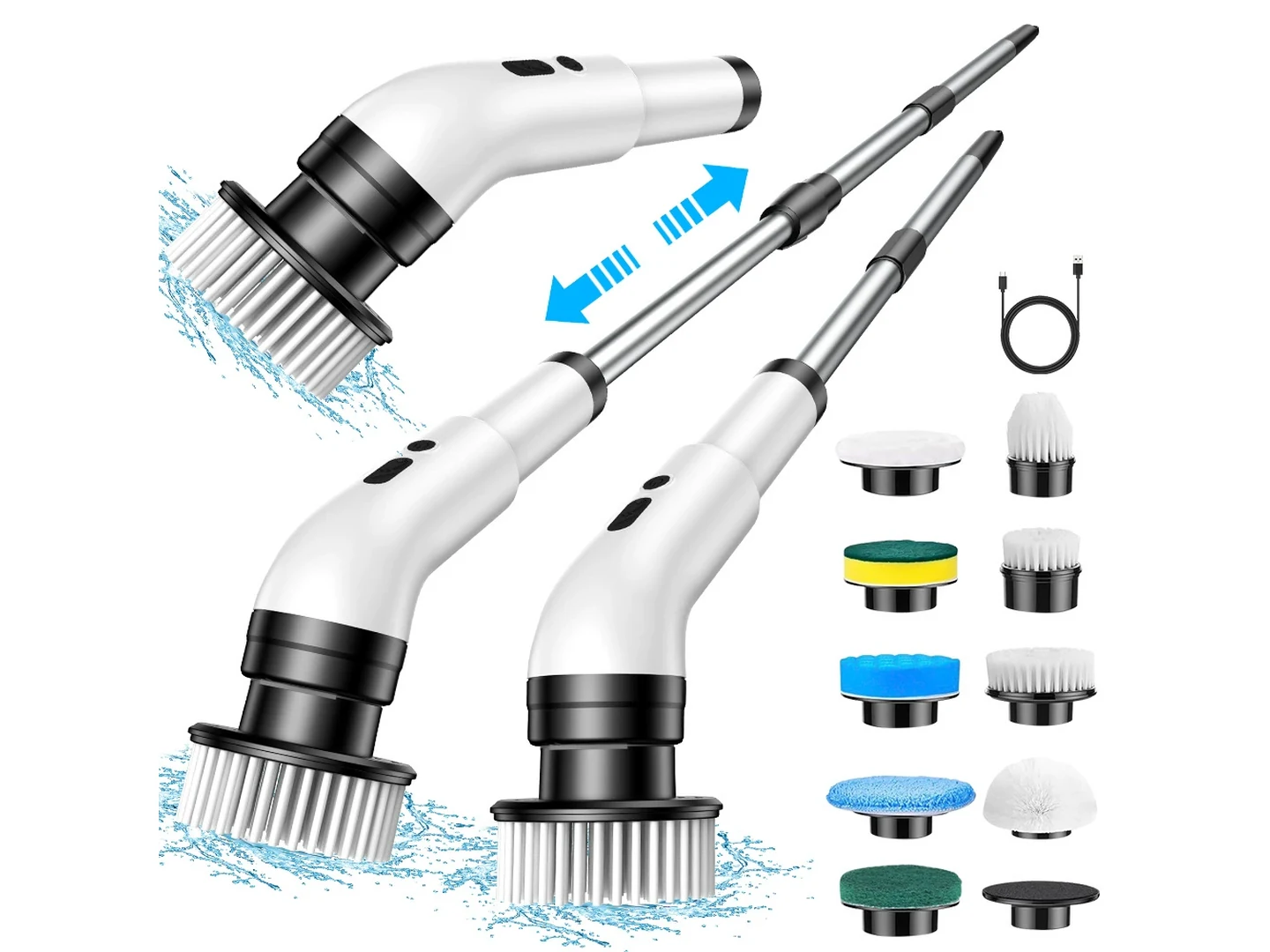
Small brush
500 pcs
Minimum order
Held in one hand: tube, bottle, detail and swab brushes — including long-handled ones with a small head.
Production lead time, once the specification is confirmed
- Up to 500 pcsWithin 7 days
- 501–50,000 pcsWithin 14 days
- Over 50,000 pcsWithin 21 days
Peak season can extend these times; the shipping date is confirmed in writing with your quotation. Sampling and shipping are quoted separately.
A rotary brush head for cordless and electric power scrubbers, built with nylon PA and polypropylene filaments to remove soap scum, grime, and grease from tile, grout, tubs, sinks, and shower surfaces.
The drive interface, face diameter, trim length, and filament stiffness are configurable to your scrubber model and cleaning program.
What can this brush do for you?
Bristle tips work the grout lines, not just the tile face
The tuft pattern and trim depth let filament ends reach into recessed grout joints and around surface relief while the backing stays clear of the surface. Instead of hand-scrubbing each grout line, the motorized head works the joint at speed with less operator effort.
Drive interface matched to the scrubber
The hub bore, spline, or thread is built around your tool’s drive dimensions. A matched interface keeps rotation centered, reduces wobble and vibration, and prevents the hub from stripping under load.
Nylon PA holds its stiffness in wet conditions
Nylon PA absorbs very little water, so the bristles do not soften and splay after repeated wet use. The brush keeps a consistent scrubbing feel in detergent-laden cleaning, which matters for soap scum and grease that need sustained tip pressure.
Open tuft construction lets water and soil flow through
Loosened soap film and grit pass out through the tuft gaps instead of packing into the bristle base. The brush rinses faster between sections and does not hold onto the residue it just removed.
Balanced head for higher-speed hand tools
The backing and tuft pattern are built with rotational balance in mind, so the scrubber tool does not shake in the operator’s hand at motor speed. Less vibration means better control along grout lines and edges.
What is a Power Scrubber Brush?
A Power Scrubber Brush is a rotary brush component designed to mount onto a motorized hand-held scrubbing tool. It is not a standalone scrubber and not a universal floor-machine pad. The brush combines a rigid backing or hub, a tufted fill of nylon PA or polypropylene filaments, and a tool-specific drive interface. The tool drives the backing while the user guides the contact pressure and direction.
During normal use, the brush runs wet or with a cleaning solution. The filament tips sweep across the surface and do the mechanical work; water acts as the carrier for loosened soap film, grease, and mineral haze. The right tip contact depends on keeping the bristles upright and working at the tips. Pressing hard enough to flatten the trim reduces cleaning action and transfers load into the backing.
The brush is intended for routine maintenance cleaning of accessible hard surfaces: shower tile, grout, tubs, sinks, and countertops. It is not a stripping tool for cured scale, paint, coatings, or heavy bonded deposits.
Technical Specifications
| Parameter | Value / Options |
|---|---|
| Brush face diameter | 50–150 mm, matched to cleaning area and tool clearance |
| Working width | 50–150 mm, defined by the active tuft circle |
| Trim length | 20–80 mm; shorter for firm contact, longer for flexible reach into recesses |
| Filament diameter | 0.25–1.20 mm; finer for light film, heavier for grime and soap scum |
| Fill material | Nylon PA, polypropylene PP, or mixed PA/PP by project |
| Hub / spline | Machine-specific bore, clutch, spline, or thread configuration |
| Backing / hub material | PP or PA, with or without a metal insert for reinforced drive engagement |
| Face profile | Flat, domed, tapered, or contoured to surface geometry |
| Wet environment | Designed for wet use with common household detergents and cleaners |
| Operating note | Run on bristle tips at the tool’s rated speed; avoid crushing the full trim |
| Brush type | Custom Handheld Detail Brushes |
| How it is driven | Machine-driven, mounted in the equipment |
| Cleaning target | shower tile and grout joint, tub and shower pan, and bathroom sink cleaning |
| Surface or part | tile, pads, joints, shower tiles, hubs, fiberglass, fixtures, and thread |
| Residue or debris | grease, soap scum, soap film, paint, scale, and haze |
| Mounting / connection | Snap-Fit / Quick-Change Coupling |
All dimensions are configurable to the scrubber model and application. We recommend confirming the exact drive interface before ordering.
Where does this brush work best?
- Shower tile and grout joints where soap scum and body film accumulate. The tips follow the joint so the operator does not have to hand-scrub each line.
- Tubs and shower pans in enamel, acrylic, or fiberglass. A softer filament or finer diameter keeps contact gentle enough for glossy finishes.
- Bathroom sinks, counters, and fixture surrounds where a smaller-diameter head reaches around faucets, soap dishes, and narrow ledges.
- Kitchen backsplashes and sink areas where grease and cooking film need a firmer nylon PA fill.
- Turnover cleaning and property-maintenance programs where crews need a repeatable brush head for tile showers and tubs instead of improvised hand pads.
For natural stone or polished surfaces, specify a softer trim and lower aggression; stiff filaments can leave visible hazing.
How do I choose the right one?
Start with the tool, then the surface, then the residue.
1. Confirm the drive interface first
Measure or photograph the scrubber’s shaft diameter, drive shape, and locking feature. A brush with a slightly different spline or thread may appear to fit but will wobble or strip under load. If you have an existing brush head, a sample or dimensioned drawing speeds matching.
2. Match face diameter and profile to the area
Narrow grout lines, edging, and tight corners call for smaller heads around 50–70 mm. Open tile walls and tub decks work better with 100–150 mm heads covering more area per pass. A domed or contoured profile helps curved basins; a flat face suits large planar sections.
3. Match trim and filament diameter to the surface and residue
Glazed tile with light soap film: medium trim and 0.3–0.6 mm filament. Deep grout joints with packed soap scum: shorter trim plus a firmer fill. Fiberglass, acrylic, or polished finishes: longer trim and finer filament to keep pressure low. Greasy kitchen tile: firmer nylon PA.
4. Choose between nylon PA and polypropylene by cleaning environment
| Cleaning condition | Suggested fill material |
|---|---|
| Wet detergent use with long service life | Nylon PA |
| General household bathroom cleaning | Polypropylene PP or mix |
| Grease, body oil, and repeated professional use | Nylon PA, firmer grade |
| Soft or glossy surfaces with light film | PP or fine nylon, longer trim |
When another brush or method is the better choice
Use a floor-machine deck brush or pad for wide floor areas. Use a chemical dwell and a stiff detail brush for hard water scale or cured mineral deposits; powered nylon alone will not cut them. Use a wire brush for rust, paint removal, or weld spatter. This brush is for accessible household hard-surface maintenance, not for aggressive surface preparation.
Can I customize this brush?
Yes. Power scrubber brushes are built around the scrubber model and the cleaning program. We can adjust the following:
- Dimensions: face diameter, working width, overall height, and trim length
- Filament: nylon PA or polypropylene PP, filament diameter, stiffness, color, and tuft density or pattern
- Face profile: flat, domed, tapered, or a contoured shape for a specific basin or fixture
- Hub / interface: bore diameter, spline, slot, thread, snap-lock, or custom drive feature for your scrubber tool
- Backing: PP or PA hub, optional metal insert, reinforced ribs, or vented construction
- Marking and packaging: custom color, molded logo, pad-print identification, bulk pack, retail pack, or private-label configuration
To define the custom configuration, provide the scrubber make and model, the exact drive interface dimensions or a sample brush head, the surfaces and residues in the cleaning program, any chemical or temperature conditions, and your preferred color or packaging requirements. A drawing or photo of the existing brush head helps match the fit quickly.
If your project also needs material declarations, pre-shipment inspection, dimensional reports, or third-party testing documentation, tell us during specification so those requirements can be included in the project scope.
When is a power scrubber brush worn out rather than just dirty?
How do I confirm the brush will lock onto my scrubber?
Check the drive shaft diameter, shape, and locking feature, or send us the existing brush head if your tool came with one. After fitting, pull the brush firmly to confirm it seats, then run the tool dry for two to three seconds and watch for wobble. If the head runs off-center, stop and re-check the interface before cleaning.
What happens if I press too hard during cleaning?
Excess pressure flattens the tufts, reduces tip contact, and can push the backing closer to the surface. Cleaning slows down, motor load increases, and fine filaments may scratch glossy finishes. Keep light, even pressure and let the bristle tips do the work.
Can I run this brush dry on painted or polished surfaces?
Wet use is recommended for tile, grout, tubs, and sinks. Dry operation builds friction and heat, which can leave hazing on polished finishes and shorten filament life. Use water or a compatible cleaning solution unless the surface and tool manufacturer specifically allow dry use.
How do I know when to replace the brush head?
Replace when the trim length is visibly reduced by about half, the tufts stay flattened or splayed after drying, the hub wobbles or has visible cracks, or the brush takes noticeably longer to remove the same film. Bent, brittle, or discolored filaments are signs the material is past its useful wet-cleaning life.
Does this brush remove mold, mildew, or mineral scale on its own?
No. The brush removes surface residue after a cleaner or descaler has done its chemical work. Mold and mildew require a proper treatment with adequate dwell time, and hard water scale needs a suitable descaling product. Brushing without the correct chemical can smear but not eliminate the deposit.
Can the brush be used on wood or vinyl flooring?
Not recommended. Finished wood, laminate, and vinyl are not the intended surface for a hand-held rotary scrubbing brush and can be scratched or gouged by power-driven bristles. Use the floor manufacturer’s approved cleaning tool for those surfaces.
Guides that go deeper on this
Custom Manufacturing RFQ
Describe Your Application
Send the key measurements, cleaning requirement, residue, material direction, mounting method, quantity, and drawing or photo.
Drawing or photo optional — it speeds things up, it does not gate the enquiry.
Custom Brush RFQ
Send Your Brush Project
Upload a drawing, product photo, or sample photo and provide the core dimensions and cleaning conditions.
“We need a brush to remove wet residue from a stainless steel conveyor, about 800mm wide. The current brush wears quickly. We can send photos.”
“We sell drinkware and need a cleaning brush to include with the product. Quantity around 5,000 pieces.”