
Custom Cleaning Brush
PP Eco-Friendly Multi-functional Cleaning Brush
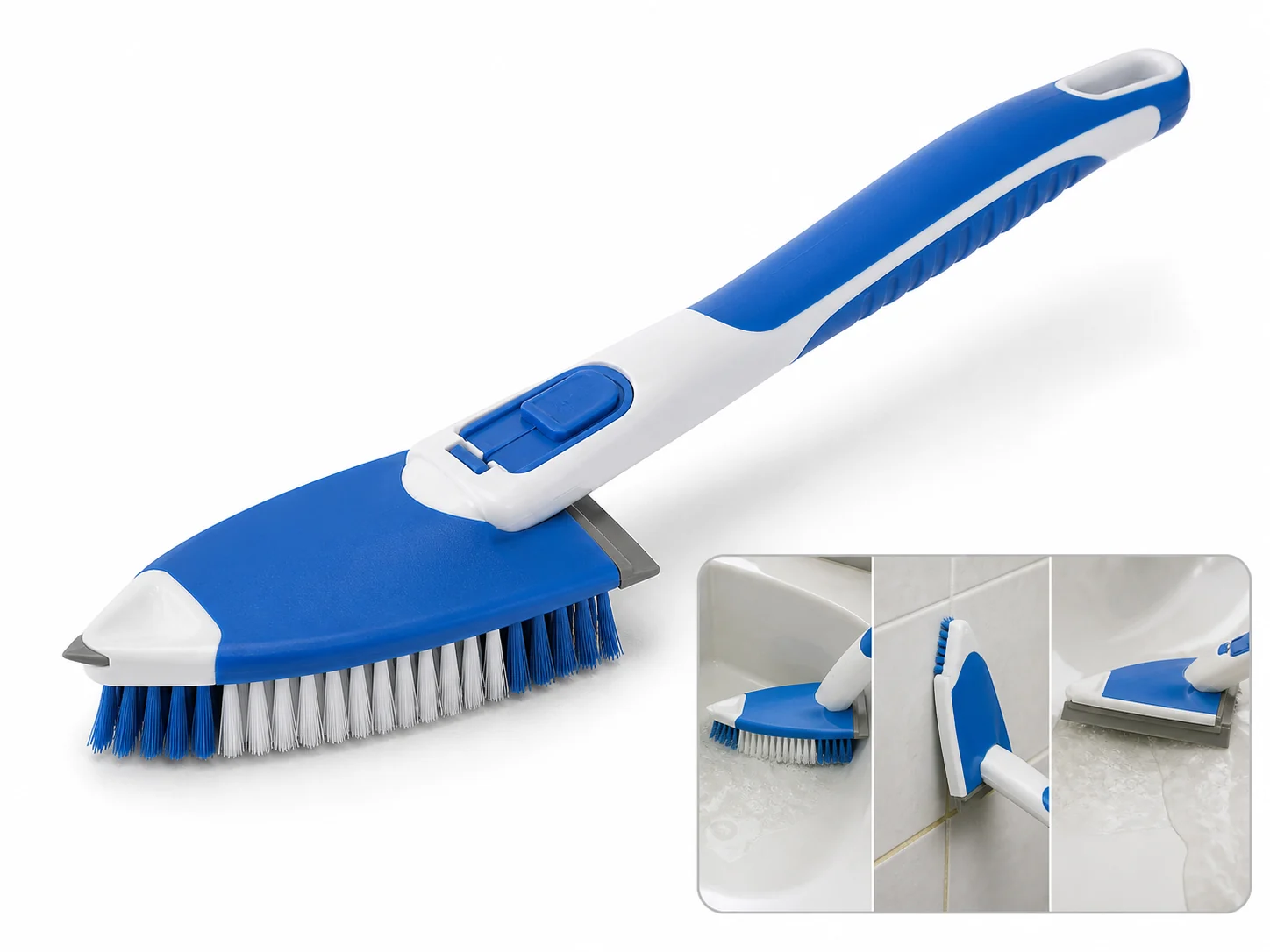
PP eco-friendly multi-functional cleaning brush for appliance gaps, tracks, cookware, seals and tile.
Small brush
500 pcs
Minimum order
Held in one hand: tube, bottle, detail and swab brushes — including long-handled ones with a small head.
Production lead time, once the specification is confirmed
- Up to 500 pcsWithin 7 days
- 501–50,000 pcsWithin 14 days
- Over 50,000 pcsWithin 21 days
Peak season can extend these times; the shipping date is confirmed in writing with your quotation. Sampling and shipping are quoted separately.
This reusable multi-functional cleaning brush pairs a moisture-resistant polypropylene handle with nylon filaments to clean corners, tracks, appliance gaps, seals and cookware with one hand tool. It is configured for detail access and everyday residue removal on household and light equipment surfaces.
What can this brush do for you?
One tool for flat surfaces and tight detail work
The tapered head and trimmed filament profile let the same brush work a broad cookware surface, a refrigerator gasket groove, a window track and a tile grout line without switching tools. Narrow tip geometry reaches corners and recesses that a rectangular scrub brush or sponge misses, which reduces the number of hand tools needed for a routine cleaning pass.
Soft or stiff contact matched to the residue
Nylon filaments are available from 0.10 mm to 0.80 mm in diameter. Fine filaments remove dust, lint and light soap film from coated or polished surfaces, while thicker filaments apply enough pressure for grease, crumbs, scale and dried-on deposits. The result is a brush that can be specified for the actual job instead of one fixed stiffness that does everything poorly.
No metal marks or rust specks on stainless and chrome
The all-polymer cleaning face contains no wire or metal elements, so the brush does not leave gray metal streaks, scratch marks or rust-colored particles on stainless steel, chrome fixtures, enameled cookware or plastic appliance panels. This keeps the cleaning step from creating a second problem the user has to remove.
PP handle that tolerates wet, soapy use
Polypropylene does not absorb water, swell, split or corrode the way wood and some metal handles do in a kitchen or bathroom environment. The handle stays dimensionally stable after repeated wet use and dries quickly, so the brush keeps its grip and does not become the source of odor or rust stains.
Reusable design that replaces disposable wipes and pads
The brush is built for daily reuse over many cleaning cycles rather than single-use wipes or scrub pads. At end of life, the polypropylene body can be separated for recycling where local collection accepts it, and recycled PP grades or a replaceable head design can be specified for programs that need stronger end-of-life handling.
What is a PP Eco-Friendly Multi-functional Cleaning Brush?
A PP Eco-Friendly Multi-functional Cleaning Brush is a hand-guided cleaning tool with a molded polypropylene handle and a tufted nylon filament head. It is used wet or dry, usually with water and household detergent, to remove grease, soap film, dust, hair, crumbs, scale and light baked-on film from surfaces that need both broad contact and tight-access detail work.
The handle gives the operator a controlled grip while the filament head does two jobs at once: the main fill covers flat areas such as pan bottoms, tile and appliance housings, and the shaped end or edge works into grooves, seams, tracks, seals and corners. Because the tool is built from PP and PA, it can be used on plastic, metal, ceramic and coated surfaces without introducing metallic contact or water-sensitive handle materials.
This is a reusable detail and general cleaning brush, not a heavy abrasive or high-temperature industrial tool. It is intended for regular residue removal with detergent and water, and it should not be forced into baked-on carbon, rust scale or solvent-based stripping applications for which a wire, abrasive or chemical pretreatment brush is the correct choice.
Technical Specifications
The values below are production ranges for this brush family. Final dimensions and filament selection are set to the project, target surface and intended cleaning task.
| Parameter | Value / Options |
|---|---|
| Overall length | 120–450 mm, matched to reach and grip preference |
| Head width | 20–80 mm typical; integrated detail tip down to 3 mm |
| Working length | 10–120 mm of tufted fill area |
| Trim length | 8–40 mm |
| Filament diameter | 0.10–0.80 mm |
| Handle diameter | 8–35 mm |
| Handle / body material | Polypropylene (PP), virgin or recycled grade |
| Filament material | Nylon PA (PA6, PA66 or PA612) |
| Operating temperature | 5–100°C |
| Typical chemical exposure | Water, household detergents, diluted acid or alkaline cleaners; avoid strong solvents |
| Brush type | Custom Handheld Detail Brushes |
| How it is driven | Hand-guided |
| Cleaning target | appliance gap and seal, sliding door and window track, and cookware cleaning |
| Surface or part | tracks, seals, gaps, cookware, metal, appliance gaps, corners, and tile |
| Residue or debris | soap film, lint, hair, scale, grease, rust, crumbs, and dust |
| Mounting / connection | Fixed |
Where does this brush work best?
- Appliance gaps and seals: refrigerator door gaskets, dishwasher filters and spray arms, washing machine seals and oven door crevices.
- Sliding door and window tracks where grit, hair, soap film and lint collect in narrow channels.
- Cookware: pot and pan rims, lids, handle rivets, burner grates and non-stick exterior surfaces that need non-metallic contact.
- Tile and grout lines in kitchens and bathrooms where flat sponge contact leaves residue in recessed joints.
- Sinks, faucets, drain areas and chrome fixtures where a metal brush would risk marking or scratching the finish.
- Light equipment maintenance: housing seams, vents, guards, machine seals and control panel edges on appliances or workshop equipment.
How do I choose the right one?
Start with the narrowest opening the brush must enter. Measure the gap, track or groove width first, then confirm the head width and tip geometry can pass into it without wedging. A head that is too wide will not contact the residue; one that is too narrow makes large flat surfaces slower to clean.
Then match filament diameter to the residue and the surface finish. The table below gives a practical starting point.
| Filament diameter | Best for |
|---|---|
| 0.10–0.25 mm | Dust, lint, light film on coated, glossy or painted surfaces |
| 0.30–0.50 mm | Soap film, crumbs, everyday grease on general plastic and metal surfaces |
| 0.60–0.80 mm | Dried grease, scale and baked-on soft deposits on hard unpolished surfaces |
Select overall length for reach and control. Short 120–200 mm configurations give precise handling in sinks, cookware and machine details. Long 300–450 mm configurations reach behind appliances, into deep oven areas or high window tracks, but reduce fine control in very tight detail work.
Check the operating environment before finalizing the specification. The PP handle and PA filaments are stable between 5°C and 100°C with water and normal household cleaners. Strong solvents, prolonged exposure to concentrated acids or alkalis, or temperatures above 100°C can soften, swell or embrittle the material, so those conditions require a different material or cleaning method.
Choose a different cleaning tool when the job involves heavy rust or paint removal, large floor areas, single-use hygiene requirements, or carbonized residues that need aggressive mechanical force. In those cases a wire brush, floor scrubber, disposable applicator or chemical pretreatment is more appropriate.
Can I customize this brush?
Yes. This brush is configured around the cleaning target, not sold only as one fixed stock shape. To define the right custom configuration, provide the gap or track dimensions, surface materials, residue type, cleaning chemical, operating temperature, preferred handle length and any retail or OEM packaging requirements.
We can adjust:
- Handle / body: length, diameter, grip contour, hang hole, finger rest, mold color and recycled PP content.
- Head geometry: width, tapered or chisel profile, number of tuft rows, angled head and integrated detail tip.
- Filament fill: PA type, filament diameter, trim length, stiffness, filament color and dual-stiffness zones combining soft and firm areas in one head.
- Interface options: fixed molded head or replaceable head design for reuse programs.
- Marking and packaging: pad print, heat stamp, label, bulk pack, retail hang tab, carton count or project-specific packing.
If your project requires material declarations, recycled-content documentation, inspection support or third-party testing, we can assist with those requirements during the customization process.
Which filament survives the cleaning and still lasts on a PP eco-friendly multi-functional cleaning brush?
Does this brush scratch stainless steel or plastic surfaces?
Nylon filaments generally will not scratch stainless steel, plastic or chrome at normal hand pressure. For polished or coated surfaces, use filament diameters of 0.30 mm or less and test on a hidden area first. The 0.60–0.80 mm stiff filaments are intended for hard, unpolished surfaces with heavy deposits.
Can it be used with hot water and cleaning products?
The PP handle and nylon filaments work with water and most household detergents between 5°C and 100°C. Let cookware cool below 100°C before brushing, and avoid solvents such as paint thinner or acetone, which can soften or swell the plastics.
What should I check before first use?
Check that all filament tufts are seated, there are no loose bristles in the package, and the handle has no cracks or sharp edges at the mold seam. If the brush will be used on food-contact surfaces, rinse the head once and let it air dry before first use, then rinse the surface again after brushing.
How do I keep the brush clean between uses?
Rinse the head under running water, shake out excess water, and store bristle-side down or hanging so the tufts dry. Pull trapped hair and lint out of the filaments after each use. Avoid soaking the handle for long periods in concentrated disinfectants, which can reduce material life.
Will the brush remove burnt-on residue from a pan?
It removes dried grease, crumbs and light baked-on film. For carbonized or heavily burnt residue, use a dedicated abrasive, wire or chemical pretreatment first. Forcing this brush into hard carbon will wear or permanently deform the nylon filaments.
Is the brush recyclable at the end of its life?
The PP body and PA bristles are different polymers and need to be separated before recycling. If your program requires easier end-of-life handling, we can configure the product with a replaceable head, use recycled PP content, or evaluate a monomaterial construction during the customization phase.
Guides that go deeper on this
We have not written a guide specific to this one yet. The material that covers selection, filament, dimensions, maintenance and sourcing is collected in the technical resources library.
Custom Manufacturing RFQ
Describe Your Application
For a custom quote, we need the key dimensions, surface or part, residue, material preference, quantity, and reference image or drawing.
Drawing or photo optional — it speeds things up, it does not gate the enquiry.
Custom Brush RFQ
Send Your Brush Project
Upload a drawing, product photo, or sample photo and provide the core dimensions and cleaning conditions.
“We need a brush to remove wet residue from a stainless steel conveyor, about 800mm wide. The current brush wears quickly. We can send photos.”
“We sell drinkware and need a cleaning brush to include with the product. Quantity around 5,000 pieces.”