
Custom Cleaning Brush
Sanitary Ware Cleaning Brush
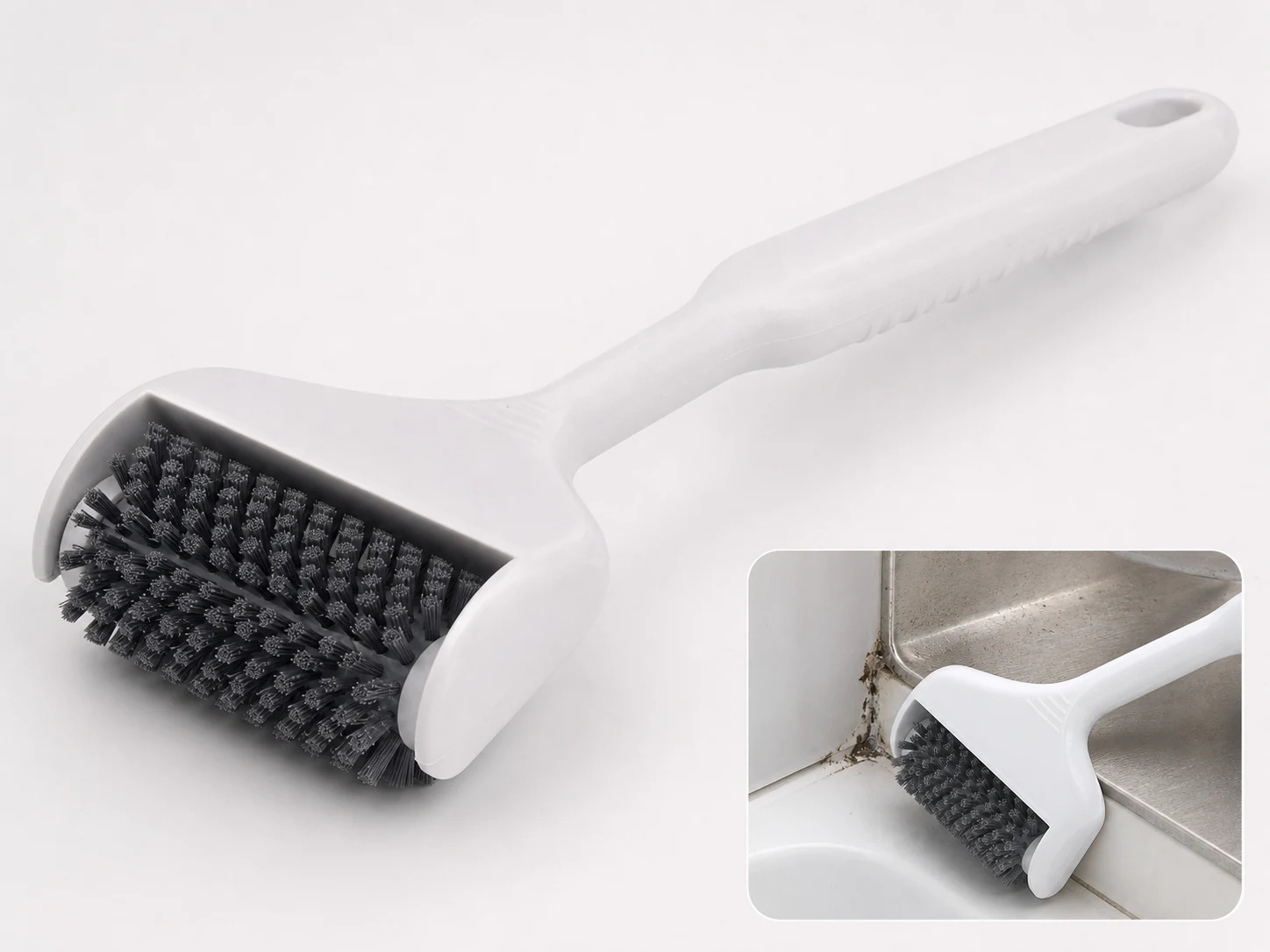
Custom sanitary ware cleaning brush with abrasive nylon tufts and PP handle for toilet rims, grout lines, sink edges and shower tracks.
Small brush
500 pcs
Minimum order
Held in one hand: tube, bottle, detail and swab brushes — including long-handled ones with a small head.
Production lead time, once the specification is confirmed
- Up to 500 pcsWithin 7 days
- 501–50,000 pcsWithin 14 days
- Over 50,000 pcsWithin 21 days
Peak season can extend these times; the shipping date is confirmed in writing with your quotation. Sampling and shipping are quoted separately.
A moisture-resistant, non-metal hand brush with abrasive nylon tufts and a molded polypropylene handle, built to remove soap scum, limescale film, and biofilm from toilet rims, sink edges, grout lines, shower tracks, and other hard-to-reach sanitary surfaces.
For janitorial teams, hotel housekeeping, and facility maintenance crews, it provides the detail contact a round bowl brush cannot reach — without wire bristles that can rust, stain, or scratch porcelain.
What can this brush do for you?
Breaks up limescale and soap film with embedded abrasive, not acid soaking
The working tufts can be filled with silicon carbide (SiC) abrasive nylon. Because the abrasive particles are dispersed through the filament instead of coated on the surface, new cutting edges are exposed as the filament wears. The brush removes mineral film, soap scum, and dried residue at the surface level, so routine cleanings can often shorten or postpone harsh acid descaling steps.
Gets behind and under the rim where a bowl brush cannot hold contact
The angled head and edge-row tufts are shaped to follow the underside of a toilet rim, the waterline ring, siphon jet openings, and recessed base curves. The tip can be narrowed to enter flush-ring holes, overflow slots, and drain recesses, giving one tool coverage of the small transition areas that drive most inspection failures.
No steel wire, no rust, no gray marks on white porcelain
The brush is built from polypropylene and nylon rather than wire or metal-cored construction. It cannot shed rust or leave metal marks on vitreous china, ceramic tile, or grout, and it will not scratch a glazed surface when the correct abrasive grade is selected for that surface.
Handle and tufts shed water instead of holding it
The molded PP handle is closed and smooth, so it does not absorb water or hide biofilm. Nylon absorbs minimal moisture, and the open tuft layout drains quickly after rinsing. When the brush is stored hanging or bristles-up, the head dries fast enough to reduce the conditions mold and odor bacteria need to grow.
One head pattern can cover rims, grout, tracks, and drain details
A single brush can be configured with a combination of edge rows for grout lines, a pointed tip for corners and faucet bases, and a broader face for tile or tub texture. This reduces the number of tools a housekeeping cart or janitorial closet has to carry.
What is a Sanitary Ware Cleaning Brush?
A Sanitary Ware Cleaning Brush is a handheld detail brush designed for the recessed and transition surfaces of toilets, urinals, sinks, bathtubs, bidets, and the surrounding tile and fixtures. It is not a replacement for a full-size bowl brush; it is the companion tool that cleans where the bowl brush cannot keep tuft contact — under the rim, inside the siphon jet area, along overflow slots, base curves, grout lines, and shower door tracks.
In a typical use, the operator wets the surface, applies a neutral cleaner, sanitizer, or diluted descaler, and works the brush in short back-and-forth and rotational strokes along the rim underside, waterline, and seat hinge area. The rowed tufts let water and residue move through the head instead of being trapped, so the brush keeps cutting rather than packing debris back onto the surface.
Material construction matters in this environment. The handle is injection-molded polypropylene, which resists water, bleach, quaternary disinfectants, and the mild acids commonly used to remove hard-water scale. The tufts are nylon — straight, crimped, or abrasive — selected for the surface and the residue. When scale is the main problem, SiC-impregnated nylon turns the tufts into a working abrasive. When polished chrome, acrylic, or plastic trim is involved, a non-abrasive PA6.12 or PBT filament is the safer choice.
This brush is designed for wet service, routine restroom cleaning, and repeated chemical exposure. It is not a substitute for heavy mechanical descaling, steam cleaning, or chemical soaking when mineral buildup is thick and hardened.
Technical Specifications
The table shows a typical production configuration. Head angle, row pattern, filament grade, and handle dimensions can all be adjusted to the customer’s fixture mix and cleaning process.
| Parameter | Typical configuration | Notes |
|---|---|---|
| Overall length | 210 mm (120–450 mm configurable) | Long enough to reach under rim; short option for sink detail |
| Head width | 28 mm (15–100 mm configurable) | Narrow for overflow and tracks; wide for tile and grout |
| Head depth / working face | 15 mm | Matched to recess depth |
| Trim length | 12 mm (8–40 mm configurable) | Shorter trim gives stiffer scrubbing; longer trim for crevices |
| Filament material | SiC abrasive nylon PA6.6 standard; PA6.12 and PBT options | PBT for stiffer tufts and lower water absorption; PA6.12 for chemical and wet stability |
| Filament diameter | 0.30 mm standard (0.10–0.80 mm range) | 0.10–0.25 mm for fine detail; 0.40–0.80 mm for aggressive scale work |
| Tuft layout | 3–5 angled rows with edge row and pointed tip option | Custom pattern for flush holes, corners, and recesses |
| Handle material | Polypropylene (PP); optional TPE overmold | Non-absorbent, chemical-resistant |
| Handle diameter | 22 mm (8–35 mm configurable) | Grip size for wet or gloved use |
| Use temperature | 5–80°C continuous wet use; short rinse to 100°C | Material selected for hot water and steam exposure if required |
| Chemical exposure | Resists diluted bleach, quats, mild acids (citric, sulfamic), alkaline cleaners | Avoid continuous soaking in undiluted strong acids |
| Color | White, blue, gray standard; custom Pantone matching | Color coding by zone or facility |
| Brush type | Custom Handheld Detail Brushes | |
| How it is driven | Hand-guided | |
| Cleaning target | toilet bowl and rim, urinal and commercial restroom fixture, and sink and faucet surrounding cleaning | |
| Surface or part | rims, bowls, grout lines, tracks, edges, tile, fixtures, and holes | |
| Residue or debris | soap scum, limescale, rust, biofilm, and scale | |
| Mounting / connection | Fixed |
Where does this brush work best?
- Toilet bowls and rims: the underside of the rim, flush-ring and jet holes, waterline mineral ring, and siphon jet recess that daily mopping misses.
- Urinals and commercial restroom fixtures: urinal screens, trapway edges, flush splitter areas, and base transitions in high-traffic facilities.
- Sinks and faucet surroundings: overflow openings, pop-up drain recesses, faucet base plates, and handle crevices where soap scum and toothpaste collect.
- Showers, tubs, and surrounding tile: door tracks, drain covers, grout lines, corner joints, tub-to-tile transitions, and anti-slip surfaces.
- Hardware and plumbing details: toilet seat hinges, grab bar mounting zones, exposed trap hardware, and baseboard corners. Non-abrasive filament is recommended for chrome and plated surfaces.
How do I choose the right one?
Start with the surfaces you will contact
Glazed porcelain and vitreous china can tolerate an abrasive nylon tuft well, but acrylic, coated metal, plated chrome, and painted trim cannot. If one brush must touch both, select the non-abrasive filament and accept that heavy mineral scale may need a chemical descaler to soften first.
Match the filament to the residue
| Cleaning situation | Recommended filament |
|---|---|
| Soap scum, light limescale, daily routine on porcelain | Fine-grit SiC abrasive nylon PA6.6, 0.25–0.35 mm |
| Heavy mineral ring or urine scale on vitreous china | Higher grit loading and stiffer 0.40–0.60 mm filament |
| Polished chrome, stainless trim, acrylic, plastic details | Non-abrasive PA6.12 or PBT, crimped for gentle scrubbing |
| General touch-up around tile and grout | Medium nylon PA, no abrasive, or flagged tips for dusting |
Shape the head for the access direction
An angled head follows a toilet rim underside better than a straight head. A narrowed tip reaches faucet bases, corner joints, and overflow slots. A wider face is faster on tile. If the fixture has flush-ring holes, the tip can be tapered to enter them without jamming.
Confirm the chemical and temperature environment
Specify the actual cleaning chemicals and water temperature before order. PP and nylon handle common restroom disinfectants well, but undiluted strong acids or prolonged standing immersion can embrittle filaments over time. PBT may be a better choice where lower water absorption and dimensional stability matter in continuous wet service.
When a brush alone is not enough
Thick, hardened limescale or cementitious buildup should be softened with an appropriate descaler or steam first; brushing afterward removes the loosened residue. Wire brushes, pumice, or metal scrapes can remove scale faster, but they can score porcelain and leave gray metal marks. If the surface is acrylic or antique-glazed and the scale is heavy, choose a chemical-only or spray-and-dwell process before introducing any abrasive brush contact.
Can I customize this brush?
Yes. The brush is built around the customer’s fixture mix, chemical program, and handle preference rather than sold only as a fixed retail item. A drawing, photo, or sample of the worst access point helps define the head geometry. We will normally need to know: surface materials, residue type, cleaning chemical and temperature, handle length, and whether the brush will be color-coded for separate zones.
- Head geometry: head length and width, angle, tip shape, side edge rows, pointed nose, or multi-tuft layout.
- Filament specification: PA6.6, PA6.12, or PBT; straight or crimped; SiC grit loading; filament diameter; trim length; flagged or cut ends; color.
- Tufting pattern: hole spacing, row count, tuft diameter, scalloped or notched trim, and edge-row placement.
- Handle: PP or TPE-overmolded grip, overall length, ergonomic form, hanging hole, thumb rest, or textured grip for wet gloves.
- Color and identification: custom Pantone color, molded-in logo, laser marking, pad printing, or colored head and handle combinations for zone-based cleaning.
- Packaging: bulk carton, polybag, retail hanging card, private-label box, or housekeeping-kit packing.
If your project requires material declarations, inspection reports, or third-party testing support for a specific hygiene or quality program, we can assist with those requirements during the customization process.
Which filament lasts longest on a sanitary ware cleaning brush?
Will the abrasive nylon scratch vitreous china or glazed ceramic?
When the grit grade and filament diameter are selected for the intended porcelain surface, the brush removes surface film without cutting the glaze. Always run a small test patch on an inconspicuous area before full deployment, especially on older or re-glazed fixtures.
Can I use this brush with bleach or acid-based descalers?
Yes for normal diluted concentrations. PP, nylon, and PBT withstand bleach, quaternary disinfectants, citric or sulfamic acid descalers, and common alkaline cleaners. Rinse the brush after each use and do not leave it standing in an undiluted concentrated acid bath.
Does this brush replace a standard toilet bowl brush?
No. A full-size bowl brush still covers the open bowl interior faster. This is the detail and rim tool for flush holes, rim undersides, trapway entries, waterline rings, and fixture edges — the areas a bowl brush cannot hold contact on.
How do I prevent the brush head from holding water and developing mold?
Rinse loose residue from the tufts, then store the brush hanging or bristles-up so water drains out. The PP handle is closed, and the open tuft pattern is designed to dry quickly. Do not store the brush inside a closed container while wet.
How do I know when to replace the brush?
Replace the brush when the tufts flatten and no longer spring back, when the tip shape is lost, when the handle shows cracks or surface damage, or when an abrasive brush no longer removes the same film with the same effort. Flattened tufts mean the brush is polishing instead of cutting.
Should I use the same brush on toilets and sink or chrome details?
For hygiene and scratch protection, separate brushes are usually better. Assign a distinct color to each zone, and use a non-abrasive brush for polished chrome, acrylic, and plated parts. This prevents hard grit or contaminated residue from being carried onto delicate surfaces.
Guides that go deeper on this
We have not written a guide specific to this one yet. The material that covers selection, filament, dimensions, maintenance and sourcing is collected in the technical resources library.
Custom Manufacturing RFQ
Describe Your Application
Please include the main sizes, application, residue, preferred material, interface, quantity, and any drawing or sample available.
Drawing or photo optional — it speeds things up, it does not gate the enquiry.
Custom Brush RFQ
Send Your Brush Project
Upload a drawing, product photo, or sample photo and provide the core dimensions and cleaning conditions.
“We need a brush to remove wet residue from a stainless steel conveyor, about 800mm wide. The current brush wears quickly. We can send photos.”
“We sell drinkware and need a cleaning brush to include with the product. Quantity around 5,000 pieces.”