
Custom Cleaning Brush
Sidewalk Cleaning Brush
Machine-mounted sidewalk cleaning brushes for sweepers and scrubbers. Polypropylene, nylon, or PBT filaments for concrete, asphalt, and pavers.
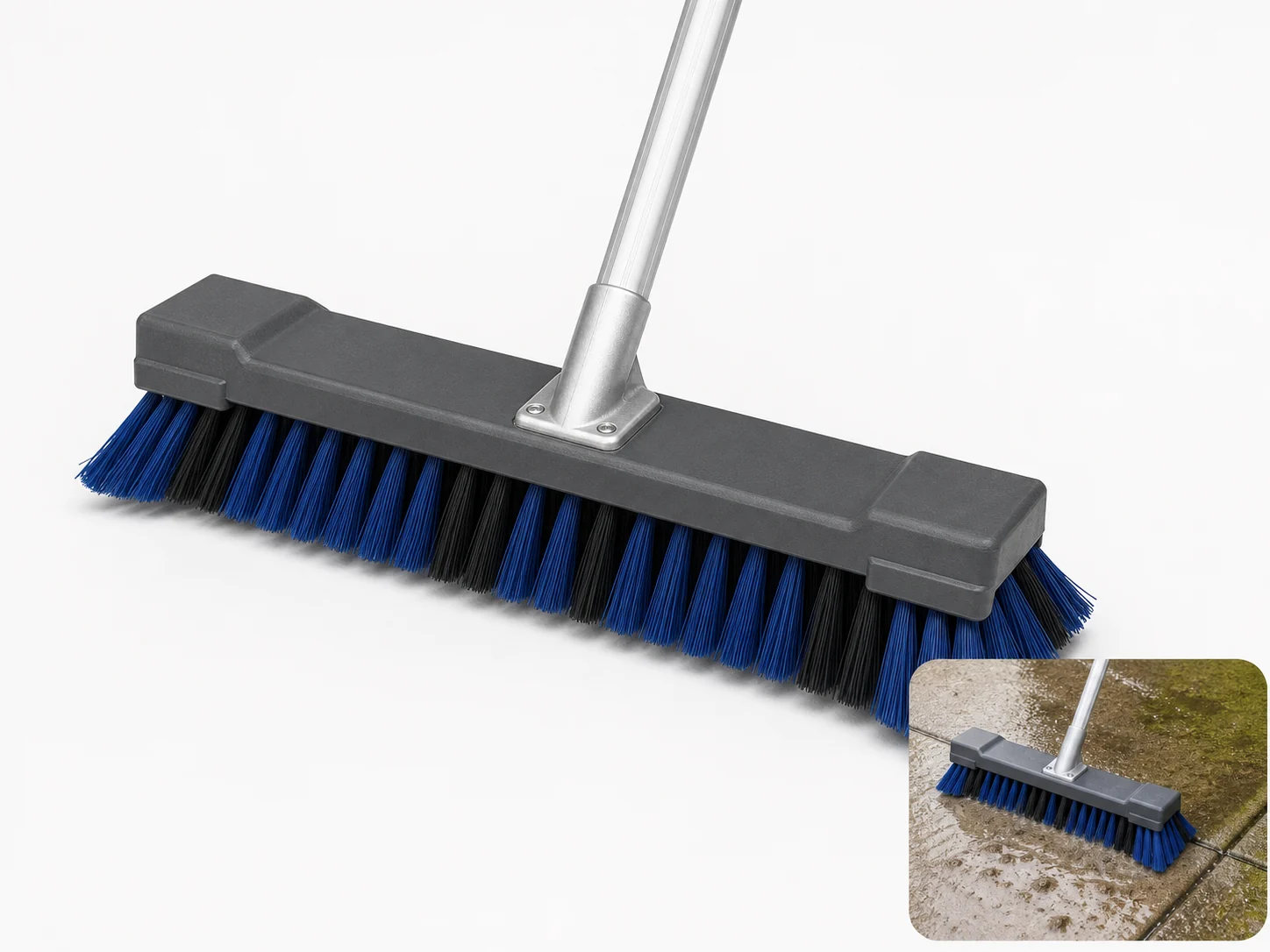
Large-format brush
100 pcs
Minimum order
Built one at a time on a core or channel: full-width rollers, sweeper brooms and long strip.
Production lead time, once the specification is confirmed
- Up to 100 pcsWithin 20 days
- 101–1,000 pcsWithin 30 days
- Over 1,000 pcsConfirmed with your quotation
Peak season can extend these times; the shipping date is confirmed in writing with your quotation. Sampling and shipping are quoted separately.
A machine-mounted sidewalk cleaning brush for walk-behind and ride-on sweepers and scrubbers, engineered to clear dirt, sand, grit, and loose debris from concrete, asphalt, and paver sidewalks without damaging the surface.
What can this brush do for you?
Full Contact on Uneven Concrete Slabs
Sidewalk slabs settle, crack, and create height differences. The brush’s filament trim length and density can be set so bristles flex into low spots and over expansion joints while the core maintains rotation. The result is a brush that removes sand from sunken panels and packed grit from cracks, not just the high points of the slab, so the operator passes fewer times.
Edge-to-Edge Cleaning Along Curbs and Walls
A sidewalk brush is rarely chosen for the open middle of the walk; it’s for the strip where dust, leaves, and cigarette butts collect against the curb or wall. Working width, side-plate position, and bristle trim angle can be configured to sweep close to vertical transitions without forcing the machine off course. The machine stays in the lane, the debris line comes clean.
Consistent Performance in Wet and Dry Conditions
PP and nylon filaments do not absorb water, lose stiffness in wet conditions, or rot like natural fiber. Nylon dampens and resists abrasion; PP holds its shape and tolerates sunlight and weak detergents. An outdoor sidewalk brush that works on a dry Tuesday and a wet Thursday morning without changing feel or performance reduces the number of brush changes across a fleet.
No Metal Marks or Rust Stains on Light Surfaces
Wire brushes can leave rust residue and score the surface, which property managers and municipalities notice immediately. This brush uses only polymer filaments, so the contact is aggressive enough to lift dirt and light gum but incapable of leaving steel stains or metal drag lines on white or colored concrete, stamped pavers, or exposed aggregate.
Direct Drive Fit for Your Sweeper or Scrubber
The hub, spline, bore, and mounting pattern are built to the customer’s machine specification, not an afterthought adapter. Correct drive engagement prevents wobble, premature core wear, and uneven bristle contact. Maintenance crews replace the brush, not the drive system.
What is a Sidewalk Cleaning Brush?
A sidewalk cleaning brush is a powered brush assembly that mounts to the drive deck of a sweeper or scrubber and rotates against the pavement to sweep or scrub loose material from pedestrian hardscapes. It typically appears as either a main cylindrical brush spanning the pickup width or a side disk brush that moves debris from the curb line into the main path. Unlike a push broom, it uses machine rotation speed and bristle flex to contact the surface; unlike a routine maintenance broom, it is an engineered consumable with a defined trim length, filament type, fill density, and hub interface that must match the machine and route.
The brush contacts the upper surface of the sidewalk, the lip of expansion joints, and the edge line along curbs and building walls. Polypropylene, nylon, and PBT filaments provide the cutting and flick action while remaining softer than hardened concrete and pavement, so the brush lifts sand and grit rather than grinding the surface. Deck pressure, rotation direction, and travel speed all affect how much of the filament tip actually works; setting the deck too low crushes the trim and wears the brush prematurely, while setting it too high leaves a visible residue streak.
This is not a substitute for pressure washing or chemical stain removal. It removes loose particulate, light films, and the daily accumulation of outdoor soiling that makes sidewalks look neglected between deep cleanings.
Technical Specifications
The table below lists standard ranges for this product. Actual values are matched to the machine deck, sidewalk surface, and debris type for each order.
| Parameter | Value / Options |
|---|---|
| Brush form | Cylindrical main brush, disk side brush, or conical side brush |
| Brush diameter | 100–610 mm for main or side brushes; larger diameters available for specialty decks |
| Working width | 100–1,200 mm, matched to machine pickup width |
| Trim length | 20–80 mm, selected for debris type, surface roughness, and deck setting |
| Filament diameter | 0.5–1.2 mm; finer for fine dust, coarser for grit and leaves |
| Fill material | Polypropylene (PP), nylon PA (6, 6.6, or 6.12), PBT |
| Fill pattern | Straight, wavy, spiral, clustered, or mixed density |
| Core material | Steel tube, aluminum, or reinforced polymer, depending on machine and environment |
| Hub / drive | Machine-specific bore, clutch plate, spline, keyway, or thread |
| Operating speed | Up to machine deck maximum; filament rated for typical sweeper and scrubber RPM |
| Operating conditions | Wet or dry; compatible with water and mild non-solvent detergents |
| Surface contact | Polymer filament tips; no metal in contact with pavement |
| Brush type | Custom Disc Brushes |
| How it is driven | Machine-driven, mounted in the equipment |
| Cleaning target | municipal sidewalk and pedestrian plaza, commercial parking lot and drive-through lane, and concrete entrance cleaning |
| Surface or part | sidewalks, concrete, hubs, curbs, joints, asphalt, edges, and bores |
| Residue or debris | sand, loose debris, oil, leaves, litter, wood chips, dust, and fine dust |
| Mounting / connection | Machine-specific bore, clutch plate, spline, keyway, or thread |
Where does this brush work best?
- Municipal sidewalks and pedestrian plazas with heavy foot traffic, where sand, grit, litter, and leaf litter accumulate daily.
- Commercial parking lots and drive-through lanes where fine dirt and oil drips mix with foot traffic; the brush removes loose material before staining sets.
- Concrete entrances, patios, and walkways at retail, hospitality, or institutional buildings where appearance matters and rusty wire marks are unacceptable.
- Stamped concrete, pavers, and decorative hardscapes that need aggressive debris removal without scratching the pattern or color.
- Loading docks, ramps, and transfer areas with tracked-in aggregate, wood chips, or packaging debris.
How do I choose the right one?
Start with the machine interface
Confirm the exact bore, hub, spline, clutch plate, or mounting pattern. Without a correct drive fit, no filament or trim choice matters. Provide the sweeper or scrubber manufacturer and model if known, along with any existing brush part number.
Choose the brush form: main, side, or both
Many sidewalk cleaning paths need a side brush to move debris from the curb line into the main sweep path. A single main brush will leave a windrow along the edge. Decide whether you need a main cylindrical brush, a side disk brush, or a matched set.
Match the filament to the debris and surface
For general sidewalk use, polypropylene handles light loose debris and offers the lowest cost per unit. Nylon PA resists abrasion and wet conditions, making it the stronger choice for sandy lots and extended service life. PBT is stiffer and applies more flick force to packed dirt. Filament diameter follows the same logic: 0.5–0.8 mm for fine dust, 0.8–1.2 mm for sand, leaves, and caked soil.
Set trim length and density for the sidewalk condition
Longer trim (50–80 mm) flexes over uneven slabs and into joints, which matters on older sidewalks with settled panels and open expansion joints. Shorter trim (20–40 mm) provides stiffer contact for compacted dirt but requires a flatter surface. Higher fill density sweeps more surface per revolution; lower density allows leaves and coarse debris to escape between tufts and reduces clogging in fall conditions.
Select the core for the environment
Steel cores are standard for dry climates and heavy-duty decks. Aluminum or polymer cores avoid corrosion if the machine is washed down frequently or stored outdoors near salt air. If the route runs beside residences or offices, a damped or filled core can reduce the ringing tone that metal brushes produce at speed.
Confirm water and chemical exposure
All listed filament materials tolerate water and mild non-solvent detergents. Do not use solvent-based cleaners, fuel, or strong acids or alkalis without confirming filament compatibility. For oil-stained concrete, brushing removes loose soiling but not the stain; a degreaser plus a dedicated scrubbing brush may be required.
When another cleaning method is a better fit
This brush removes loose outdoor debris and light surface films. It will not remove cured gum, paint, or deep oil stains; those require steam, chemical pretreatment, or a stiffer dedicated tool. Fine dust on smooth indoor concrete is often better handled by a softer general-purpose floor brush that generates less noise and fewer swirl marks. If the sidewalk has loose paver edges or crumbling joints, an aggressive rotary brush can chip unstable material, so inspect the surface condition before ordering a high-density, short-trim configuration.
Can I customize this brush?
Sidewalk cleaning brushes are almost always built to the machine and route, not sold as a generic part. Customers provide the machine make and model, hub details, working width, surface type, debris description, and desired service life. A drawing or sample photo speeds up the quote.
We can adjust the following:
- Form: cylindrical main brush, disk side brush, conical side brush, or combination set.
- Dimensions: diameter, working width, trim length, overall length, and hub offset.
- Filament: PP, PA6, PA6.6, PA6.12, or PBT; diameter from 0.5 to 1.2 mm standard, with other diameters evaluated per project.
- Fill pattern: straight, wave, spiral, clustered, dual-density, or mixed filament tufts.
- Core: steel, aluminum, or reinforced polymer; solid or tubular; coated when needed.
- Drive interface: bore, spline, keyway, clutch plate, mounting bolt circle, or special adapter.
- Color and marking: filament color coding, core color, laser marking, pad printing for brand or part number.
- Packaging: bulk, individually boxed, master carton, or kit with side brush included.
If your project requires documentation, material declarations, inspection reports, or third-party testing for municipal or corporate procurement, we can assist with those requirements during the customization process.
When is a sidewalk cleaning brush worn out rather than just dirty?
How do I know when a sidewalk cleaning brush needs replacement?
Inspect the trim length. When bristle tips have worn below about 60–70% of the original trim length, or when the brush leaves a visible residue streak on the sidewalk after passes, replace it. Check the core for cracks around the hub and mounting holes. A brush with uneven wear or missing filament clusters will not clean the full working width and should be pulled from service.
Can one brush handle both dry sweeping and wet scrubbing?
Yes, with the right filament. Nylon and polypropylene filaments work in wet and dry conditions. However, a brush set for dry sweeping may need a different density or trim than one for wet scrubbing. If the route changes between seasons, consider whether a separate wet-season set reduces downtime. Always confirm detergent compatibility before using cleaning chemicals.
Does the brush remove chewing gum from concrete?
The brush can dislodge fresh, soft gum and prevent it from hardening, but cured gum typically requires heat, a dedicated gum remover, or a stiff scraper edge. A standard sidewalk brush will press hardened gum into the surface or smear it rather than lift it. Pair brushing with gum pre-treatment for problem areas.
Will the brush scratch stamped concrete or colored pavers?
Polymer filaments are softer than concrete and typically do not scratch or leave metal marks. The main risk to decorative surfaces is not scratching but edge chipping on loose or weak pavers. If the surface has unstable edges or brittle color coats, use lower deck pressure and a longer, softer trim to reduce impact.
What should I check before mounting the brush?
Verify the hub and spline match the machine drive exactly. Check for a bent core, cracked tuft plates, or missing filament clusters. Spin the brush by hand with the deck raised to confirm no wobble or contact with the deck housing. Set deck pressure so bristle tips just contact the pavement with slight flex; crushing the full trim length causes premature wear and poor sweep performance.
How should sidewalk cleaning brushes be stored between seasons?
Store off the pavement in a dry area. Do not leave the brush under machine weight with the deck fully down, as this permanently sets the filaments. Hang or support the core at the hubs. PP and nylon are UV-stable for outdoor use, but long periods in direct sun without rotation can fade color; this is cosmetic, not functional. Inspect for moisture trapped around steel hubs and dry before storage in cold climates.
Guides that go deeper on this
Custom Manufacturing RFQ
Describe Your Application
An accurate custom quote starts with the dimensions, working surface, residue, material choice, connection, quantity, and reference files.
Drawing or photo optional — it speeds things up, it does not gate the enquiry.
Custom Brush RFQ
Send Your Brush Project
Upload a drawing, product photo, or sample photo and provide the core dimensions and cleaning conditions.
“We need a brush to remove wet residue from a stainless steel conveyor, about 800mm wide. The current brush wears quickly. We can send photos.”
“We sell drinkware and need a cleaning brush to include with the product. Quantity around 5,000 pieces.”