
Custom Cleaning Brush
Stair Cleaning Brush
Custom stair cleaning brush for concrete, tile, epoxy, and carpet stairs. Hand or machine heads 100–300 mm wide with nylon/PP fill. Project-matched specs.
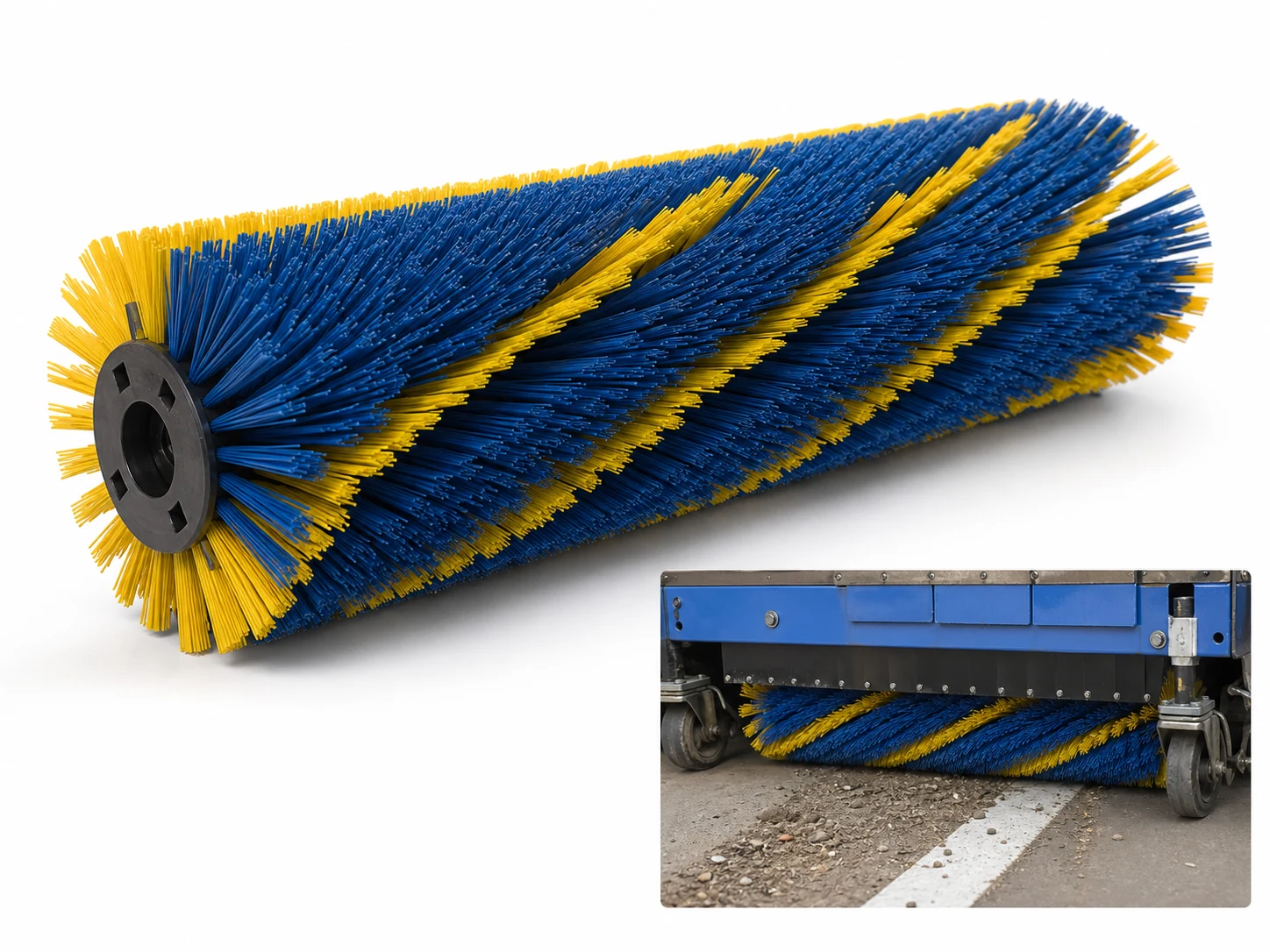
Large-format brush
100 pcs
Minimum order
Built one at a time on a core or channel: full-width rollers, sweeper brooms and long strip.
Production lead time, once the specification is confirmed
- Up to 100 pcsWithin 20 days
- 101–1,000 pcsWithin 30 days
- Over 1,000 pcsConfirmed with your quotation
Peak season can extend these times; the shipping date is confirmed in writing with your quotation. Sampling and shipping are quoted separately.
A stair cleaning brush built for the tread face, nosing edge, and riser of stairs, supplied as a hand tool or a machine-mounted head in working widths from 100 to 300 mm. Nylon and polypropylene fill options are matched to concrete, tile, epoxy, coated, and carpet stair surfaces where standard floor scrubbers and deck brushes leave tracked-in dirt and edge deposits behind.
What can this brush do for you?
Contacts the Whole Stair Profile, Not Just the Flat Tread
Most floor brushes ride on the flat walking surface and skip the 90° junction where dirt, sand, and mud pack against the nosing and riser. This brush uses an offset or angled block, dense edge rows, and a trim pattern set to reach the tread-to-riser corner and nose edge, so one scrubbing motion cleans the actual stair geometry.
Puts Scrubbing Pressure Where Deposits Collect
Short, dense filament along the working edge concentrates pressure on embedded debris. Larger-diameter PP or mixed PP/nylon fill cuts into packed sand, oil film, and scuff deposits on textured concrete and asphalt, while softer nylon options scrub tile and coated surfaces without scratching.
Reduces Operator Fatigue on Stair Runs
Hand versions use a fixed or adjustable angled handle that keeps the operator’s wrist neutral when scrubbing a riser or nosing from a standing position. Powered heads sized to the tread let small floor scrubbers and rotary drivers do the repetitive motion on long staircases, landings, and multi-level routes.
Stays Open in Wet or Dry Scrubbing
Open filament spacing clears mud, sand, and loosened coating residue during use instead of clogging. The polypropylene block and corrosion-resistant inserts tolerate water, detergents, and common floor-cleaning chemicals, so the brush can move from dry sweeping to wet recovery without degrading.
What is a Stair Cleaning Brush?
A Stair Cleaning Brush is a floor scrubbing brush whose head width, block profile, filament layout, and handle or mounting interface are designed around stair treads, risers, and nosings rather than open floors. It is generally supplied in one of two forms: a hand brush with an angled or extended handle, or a powered head that mounts to a rotary pad driver, oscillating plate, or small scrubber machine.
The brush head is typically narrower than general floor scrubber brushes so it can work across the tread without overhanging into the stringer or wall. Edge trim is angled or set slightly proud of the block so the filaments, not the plastic body, make first contact with the nosing and corner. The handle or machine interface is configured so the operator or driver can hold the working face against the tread, the nose, and the base of the riser.
On rough concrete, asphalt, and textured tile, it scrubs loose dirt, embedded sand, dried mud, oil film, and scuff marks. On epoxy, sealed concrete, coated metal, vinyl, or carpet stair coverings, a softer nylon configuration removes visible soiling without abrading the surface. It is a scrubbing tool, not a replacement for sweeping, vacuuming, or extraction: loosened debris still needs to be lifted or rinsed afterward.
Because stair treads differ in depth, nosing profile, riser height, and surface material, production is typically project-configured. The same base design can be adjusted for a hotel’s carpeted stair edges or a parking garage’s open concrete stair towers, with the filament and head geometry changed to match the cleaning problem.
Technical Specifications
The values below are typical working ranges for hand and powered stair cleaning brushes. We adjust head width, trim, filament, handle, and mounting interface to your tread geometry and cleaning equipment.
| Parameter | Standard options / range | What it affects |
|---|---|---|
| Brush form | Hand brush; powered head (rotary, oscillating, or scrubber-dryer mount) | Work speed, operator effort, and machine fit |
| Working face width | 100–300 mm | Coverage across the tread; must stay inside nosing and stringers |
| Trim length | 20–60 mm | Stiffness and reach into tread texture, grout, and edge profiles |
| Filament material | PP, nylon PA6 / PA 6.6, mixed PP/PA, optional abrasive-impregnated nylon | Aggressiveness, scratch resistance, chemical tolerance, wear life |
| Filament diameter | 0.3–1.0 mm hand; 0.5–1.2 mm powered | Penetration vs. surface protection |
| Block / back material | Polypropylene, HDPE, with stainless steel or brass threaded inserts | Water and chemical resistance, handle/mount retention |
| Handle | 150–400 mm reach; 0–45° fixed angle; threaded, molded, or overmolded grip | Operator posture, riser access, and control around nosings |
| Machine interface | Pad driver slot, clutch plate, keyed shaft, bolt pattern, hook-and-loop adaptor | Secure mounting and concentric rotation on the cleaning machine |
| Typical working surfaces | Concrete, asphalt, tile, terrazzo, epoxy, sealed stone, coated wood/metal, vinyl, carpet edge | Filament and trim selection depends on this |
| Brush type | Custom Floor Scrubber Sweeper Brushes | |
| How it is driven | Supplied hand-guided or machine-mounted | |
| Cleaning target | commercial stairwell and public building, parking garage and outdoor stair tower, and industrial and manufacturing mezzanine stair cleaning | |
| Surface or part | stairs, edges, concrete, tile, corners, floors, epoxy, and asphalt | |
| Residue or debris | sand, mud, oil, dust, grease, fiber, oil film, and coating residue | |
| Mounting / connection | Pad driver slot, clutch plate, keyed shaft, bolt pattern, hook-and-loop adaptor |
All dimensions are adjustable. If you already have a scrubber machine model or driver plate drawing, that becomes the primary mounting reference.
Where does this brush work best?
- Commercial stairwells and public buildings — concrete, terrazzo, and tile treads with heavy foot traffic where dirt packs into the nosing, grout lines, and corner where the tread meets the riser.
- Parking garages and outdoor stair towers — exposed concrete and asphalt steps carrying sand, mud, tracked-in oil, and staining at the nose edge, where general deck brushes skip the deposit zone.
- Industrial and manufacturing mezzanine stairs — epoxy-coated or sealed concrete stairways that need scrubbing without abrading the coating, plus grease and dust accumulation on anti-slip nosings.
- Hotels, apartment buildings, and office common areas — carpeted or vinyl-edged stair coverings where soil wicks into the nose transition and must be lifted without pulling carpet fibers or dulling edges.
- Institutional facilities — schools, hospitals, and transit stairs where appearance and slip resistance depend on keeping tread texture and contrast nosing clean.
How do I choose the right one?
The selection starts with the stair geometry, not the brush catalog. Measure the tread depth, riser height, nosing overhang, and the available machine width if you plan to use powered cleaning equipment.
Start with the tread and nosing dimensions
The working face must cover the tread’s soiled band without striking the stringer or wall. For a hand brush, a 150–250 mm face is often the right balance between coverage and control on standard 250–330 mm treads. For a machine head, match the face width to the driver plate or scrubber deck so the brush stays centered under motor torque.
Match the filament to the surface and residue
- Rough concrete, asphalt, embedded sand and mud: larger-diameter PP or mixed PP/nylon, short trim, dense edge rows. This gives cutting pressure without a wire’s surface damage.
- Smooth tile, epoxy, sealed or coated stairs: medium or soft nylon, moderate trim, less dense fill. Removes dust and scuffs while protecting the finish.
- Carpeted stair edges and vinyl nosings: soft or flagged nylon with longer trim so the filament lifts soil out of the nap instead of digging into the backing.
- Grease, oil, and coating residue: medium nylon or optional abrasive-impregnated nylon on a chemical-resistant block, used wet with approved detergent.
| Situation | Recommended configuration |
|---|---|
| Packed sand/mud on exposed concrete | PP or mixed PP/PA, short trim, dense edge fill, hand or powered |
| Dust/scuffs on polished tile or epoxy | Nylon PA6, medium trim, softer diameter, hand |
| Oil/grease on industrial coated stairs | Medium nylon, chemical-resistant block, wet scrubbing, powered preferred |
| Carpeted nosing edges | Soft or flagged nylon, longer trim, angled hand handle |
Decide between hand and powered
Hand brushes fit small corners, low-volume stair runs, and surfaces where the operator needs to feel contact pressure. Powered heads are the better choice on long staircases, repetitive daily routes, or when consistent scrub pressure across hundreds of treads matters more than specialized corner access. Small walk-behind and portable scrubber machines can use a stair-width head where full-size deck brushes would overhang the tread.
Check the handle and mounting interface
For hand use, an angled handle of 20–45° reduces wrist strain when scrubbing the riser or nose while standing upright. If the brush must reach the nosing from a standing or seated position, specify the handle length and angle instead of buying off-the-shelf. For powered use, confirm the driver type, bolt pattern, or pad holder dimensions before production; a mismatch causes wobble and uneven filament wear.
When to choose a different brush or method
If the job is removing hardened paint, thick coating layers, rust scale, or carbonized build-up, a wire brush, abrasive disc, or rotary stripping tool is the better fit. For very narrow side stringers and channel profiles, use a detail or corner brush in addition to the stair brush. If the stair surface is heavily soiled with loose material, sweep, vacuum, or pre-rinse first so the brush scrubs embedded residue rather than relocating loose debris.
Can I customize this brush?
Every stair cleaning brush is configured around the tread geometry, surface material, residue type, and cleaning method. To prepare a project-matched quotation, we need the tread depth, riser height, nosing profile, surface material, dominant residue, whether cleaning is wet or dry, and either photos or a simple sketch of the stair cross-section. For powered versions, provide the scrubber machine brand and model or driver dimensions.
- Head geometry — working width, block shape, offset or angled front plane, side edge profile, dual-face block for tread-plus-riser contact, corner detail sections.
- Filament system — PP, nylon PA6/PA6.6, mixed fill, flagged nylon, abrasive-impregnated nylon; diameter, trim length, density, crimp or straight fiber, edge-dense zones.
- Handle — length, diameter, angle, fixed or threaded, replaceable, overmolded grip, hanging loop, or two-hand version for wide treads.
- Machine interface — pad driver lugs, clutch plate, keyed shaft, bolt circle, quick-disconnect, or custom adapter for your floor scrubber brush driver.
- Block durability details — reinforced corners, moisture seals, stainless steel or brass threaded inserts, chemical-resistant resin selection.
- Marking and packaging — molded identification, pad printing, laser marking, bulk or individual packaging, retail-ready or OEM packing.
If your project requires material declarations, inspection documentation, or third-party testing against your facility’s cleaning standards, we can support those requirements during the customization process.
Which filament survives the cleaning and still lasts on a stair cleaning brush?
Can one brush clean both the tread and the riser in a single pass?
Yes, when the block is built as a dual-plane or forward-angled head with an extended lower trim section. The upper face scrubs the tread while edge filaments contact the lower riser and nosing corner. Full riser height above roughly 100–150 mm generally still requires a second pass or a taller trim section, so verify the riser height against the head profile before ordering.
How do I know the brush is actually reaching the nosing corner instead of riding over it?
Place the brush on the tread with the working edge against the nosing. Look from the side: the filament tips should contact the corner before the block or handle base. If the block rests on the nosing or the brush tilts onto its body, the trim is too short or the offset angle is wrong. A small gap at the corner after scrubbing also indicates the filaments are not entering the corner.
Will this brush hold up on stairs with abrasive anti-slip strips or metal nosings?
Filament wear increases sharply on mineral-grit anti-slip inserts, expanded metal, and sharp nosing profiles. Choose a larger-diameter, short-trim nylon or PP fill for these surfaces and inspect the edge rows more frequently. If the anti-slip material is harder than the filament, expect faster wear and plan replacement accordingly.
How should I clean and store the brush between uses?
Rinse the head with clean water after wet scrubbing to remove detergent residue and loosened particles, then stand or hang it with the filaments clear of the floor so the edge rows do not take a permanent set. For oil and grease applications, use a compatible degreaser on the brush and dry it away from direct heat. Check the inserts and handle threads when drying.
When should I replace the brush or head?
Replace when the shortest edge filaments are worn to less than half the original trim length, when the block starts to contact the tread, or when filament rows are visibly uneven and cause the head to wobble under power. Cracks near inserts, loose handle threads, or deformed blocks are also replacement conditions, not repairable wear.
Can this brush remove paint, heavy coatings, or rust from stairs?
No. A stair cleaning brush is designed for routine scrubbing of dirt, sand, oil, and scuff residue. Paint, epoxy coating removal, and rust scale require a wire brush, abrasive stripping disc, or chemical stripper. Using this brush for those jobs will shred the filament and leave the surface uneven.
Guides that go deeper on this
Custom Manufacturing RFQ
Describe Your Application
Please share the brush dimensions, working area, residue type, material direction, quantity, and a drawing or photo for quotation.
Drawing or photo optional — it speeds things up, it does not gate the enquiry.
Custom Brush RFQ
Send Your Brush Project
Upload a drawing, product photo, or sample photo and provide the core dimensions and cleaning conditions.
“We need a brush to remove wet residue from a stainless steel conveyor, about 800mm wide. The current brush wears quickly. We can send photos.”
“We sell drinkware and need a cleaning brush to include with the product. Quantity around 5,000 pieces.”