
Custom Cleaning Brush
Strip Brush Solar Panel
Custom nylon strip brushes for solar panel cleaning machines. Fine PA filament, 100–3000 mm lengths, low-pressure contact for coated PV glass.
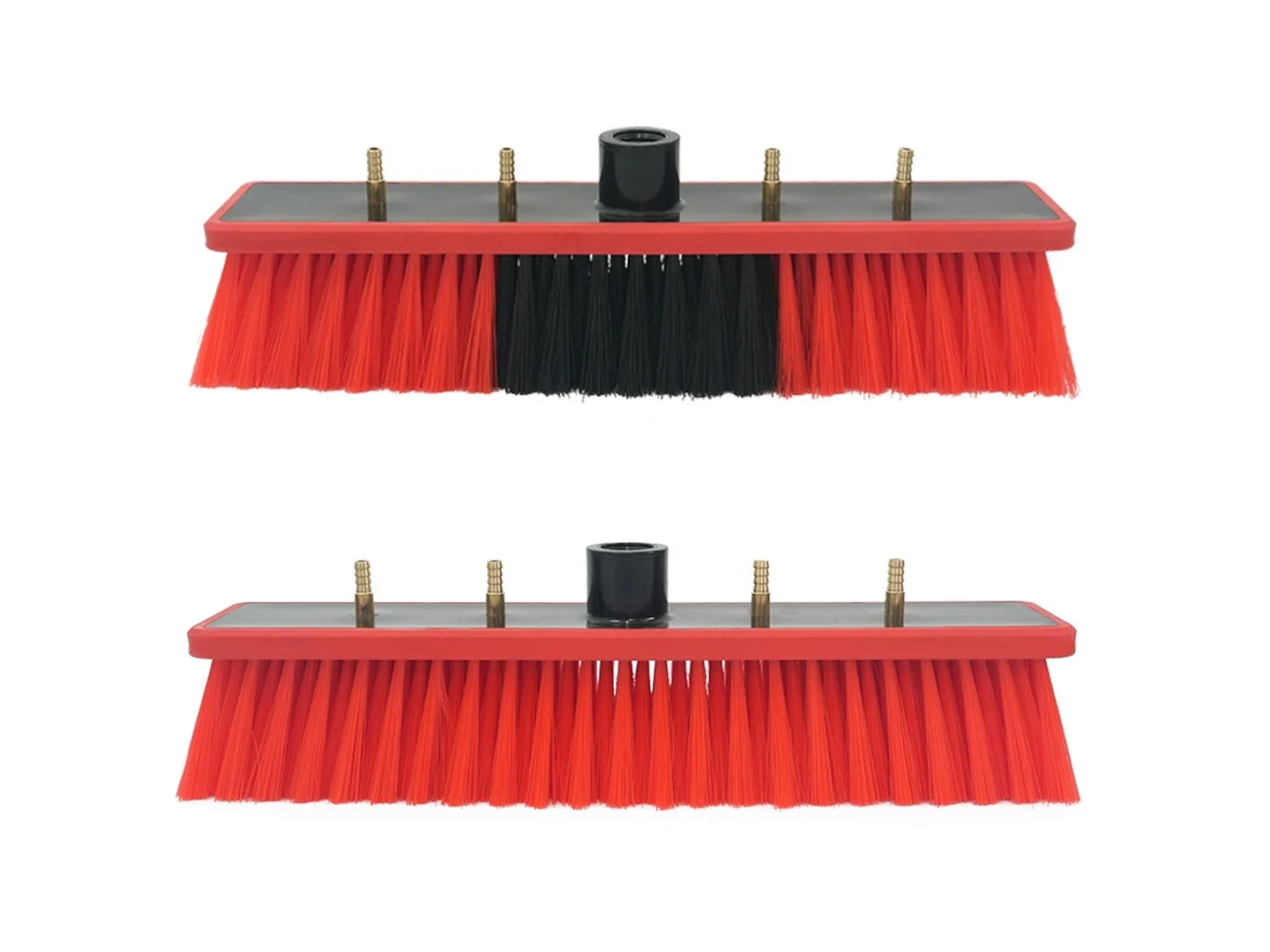
Large-format brush
100 pcs
Minimum order
Built one at a time on a core or channel: full-width rollers, sweeper brooms and long strip.
Production lead time, once the specification is confirmed
- Up to 100 pcsWithin 20 days
- 101–1,000 pcsWithin 30 days
- Over 1,000 pcsConfirmed with your quotation
Peak season can extend these times; the shipping date is confirmed in writing with your quotation. Sampling and shipping are quoted separately.
A linear nylon strip brush built into dry and wet cleaning heads for photovoltaic panel arrays. It sweeps dust, pollen, sand, salt film, and bird residue from tempered glass and coated module faces under controlled low-pressure contact, keeping a continuous wiping edge across the full cleaning row without scratching the glass.
What can this brush do for you?
Soft filament contact for tempered and coated module glass
The fill is available in fine nylon PA filament diameters down to 0.05 mm. At a controlled surface load of 0.5–3 N/cm², the filament tips remove loose particulate without grinding sand across the glass or leaving arc scratches on anti-reflective or hydrophobic coatings.
One continuous wiping edge across long module rows
Custom strip lengths from 100 mm to 3000 mm let the cleaning bar cover a full module or several modules in a single pass. The straight channel or aluminum carrier holds the filament row in place so there are no dead gaps at panel seams.
Stable compression through the entire cleaning pass
The strip is set with 5–25% of trim height in working compression, with 5–15% typical for panel face wiping. The filament length absorbs small glass-height changes and module steps while maintaining contact, so the brush does not lift off in low spots or bind on high points.
Dry dusting and wet washing from the same strip
Nylon PA filament recovers well after wet flexing and tolerates low-flow water and mild detergent exposure. The same brush can handle daily dry dust removal and periodic wash cycles for salt, pollen film, and softened bird residue.
Lightweight, corrosion-tolerant construction for field machines
Aluminum, stainless, or coated channel options keep the cleaning head light while standing up to coastal salt air, dusty desert yards, and wash-down environments. Less carrier weight means lower drive load for robotic, gantry, and cart-style cleaners.
What is a Strip Brush Solar Panel?
A Strip Brush Solar Panel is a straight strip brush profile that retains nylon PA filaments in a continuous metal or rigid polymer channel. The channel mounts to the wiper bar, roller carrier, or gantry of an automated or semi-automated panel cleaning system, and the filament row rides directly on the module face during travel.
Unlike a hand brush, this tool is set by installed gap and compression rather than operator force. As the cleaning head moves, the filament tips work in a flicking and wiping motion: dry dust, sand, and loose pollen are lifted away from the glass, while atmospheric film and salt residue are removed with a low-flow water or detergent-assisted pass. Dried bird droppings generally need a pre-soak or wet dwell before the brush releases them.
Because the contact pressure is distributed across the strip and controlled by trim height, the brush can also pass over frame edges, seams, and module-to-module transitions without losing contact. The result is a complete cleaning line across the row rather than isolated scrubbing spots.
Technical Specifications
| Parameter | Standard / Available |
|---|---|
| Strip length | 100–3000 mm, cut to cleaning row or roller width |
| Trim height | 12.7–152.4 mm; typical PV face cleaning 25–75 mm depending on mounting clearance |
| Channel width | 3.2–14.3 mm |
| Filament material | Nylon PA: PA6, PA66, or PA612 |
| Filament diameter | 0.05–0.15 mm for PA612 fine-face wiping; 0.10–1.27 mm for general nylon |
| Working compression | 5–25% of trim height; 5–15% recommended for panel face dust and film removal |
| Surface load | 0.5–3 N/cm² for controlled low-pressure contact |
| Holder / backing | Straight channel, aluminum carrier, angle holder, or custom machine profile |
| Wet / dry service | Dry dusting and low-flow water or mild detergent washing; not for high-pressure blasting or abrasives |
| Mounting interface | T-slot, pre-punched holes, clamp, snap-in, or equipment-specific fixture |
| Brush type | Custom Strip Seal Brushes |
| How it is driven | Fixed in place, no drive of its own |
| Cleaning target | utility-scale ground-mounted array, commercial rooftop installation, and coastal solar plant cleaning |
| Surface or part | glass, panels, channel, edges, seams, roller, bars, and frames |
| Residue or debris | dust, pollen, salt, sand, bird residue, atmospheric film, and bird droppings |
| Mounting / connection | T-slot, pre-punched holes, clamp, snap-in, or equipment-specific fixture |
Trim height, channel dimensions, filament diameter, and mounting geometry are adjusted to the cleaning head and panel row. The installed gap determines the final compression and contact load.
Where does this brush work best?
- Utility-scale ground-mounted arrays in dry, dusty climates. Robotic, tractor-mounted, and gantry cleaners use long strip lengths to remove daily sand and dust loading before soiling losses accumulate.
- Commercial rooftop installations with pollen or bird activity. Fine PA filament lifts pollen film and softened bird residue from AR-coated module faces, frames, and panel seams.
- Coastal solar plants. Wet or detergent-assisted passes with the strip brush clear salt film and atmospheric deposits before they harden on the glass.
- Rotating brush rollers and fixed wiper bars. The straight channel and angle-holder options integrate into roller-type cleaners and slide-type wiper assemblies.
- Water-limited high-soiling projects. The brush supports dry interval cleaning between full water washes, reducing water consumption and cleaning frequency.
How do I choose the right one?
Start with the module face and coating
Most panel glass is tempered and may carry an anti-reflective or hydrophobic coating. Use fine filament diameters, typically 0.05–0.15 mm PA612, with the recommended 5–15% compression. If the strip also contacts raw frame edges or tougher seams, a slightly heavier 0.20–0.50 mm nylon fill can be used outside the glass contact zone.
Size the strip to the actual cleaning width
Measure the working width of the wiper bar or roller, not just the module nameplate width. Long rows can be built from multiple segments with end joining or a continuous channel. Match the channel base to the rail slot or mounting face so the strip seats flat without rocking.
Set compression from the installed gap
The fixed gap between the filament tips and the glass controls how much the filament bends. For a 50 mm trim height at 10% compression, set the mounting height to 45 mm above the glass. Use 5–15% for dust and film removal. Going higher increases drag and coating wear without improving cleaning; going lower leaves dust trails.
Choose the channel and holder for the operating site
Straight aluminum channel works well for dry-field and low-corrosion installations. Stainless or coated channel is the better choice for salt-heavy coastal sites or frequent wet washing. An angle holder or custom profile is used when the brush must approach the panel at a fixed attack angle or shed debris to one side.
Match the filament to the cleaning process
PA6 and PA66 cover general dry and light wet service. PA612 is preferred for fine-diameter fills, higher humidity, and better dimensional stability in wet cleaning. If the site has heavy bird residue, plan a wet pre-soak pass first; a harder filament will not safely remove baked-on deposits from coated glass.
When a strip brush is not the right tool
If the panels carry cured cement, calcified scale, heavy lichen, or deposits that require scraping, this brush alone will not do the job. Use an approved PV cleaning chemical and low-pressure wash step first, and keep the mechanical contact soft. Never use wire fill, abrasive-impregnated nylon, or high compression on coated module glass.
Can I customize this brush?
Yes. The strip is configured to the cleaning machine rather than sold only as a fixed standard part. To define it, provide the cleaning row or roller width, module surface and coating, wet or dry process, available rail clearance, holder drawing or machine fixture, and any edge, seam, or step conditions along the travel path.
We can adjust:
- Strip geometry: length, trim height, channel width, single or double filament row, straight or angled filament set, fill density, and segmented lengths with joining connectors.
- Filament: nylon PA6, PA66, or PA612; diameter from 0.05 mm to 1.27 mm; natural or custom color, including end-wear indication colors.
- Channel and holder: aluminum, stainless steel, galvanized steel, or rigid polymer backing; straight channel, angle holder, or custom profile for T-slot and bolt-on machine interfaces.
- Mounting features: pre-punched hole patterns, snap-in rails, clamp plates, roller end adapters, and alignment features.
- End treatment: capped or closed ends that prevent filament movement at the strip ends.
- Packaging: cut lengths, replacement coils, machine-specific kits, or individually labeled segments for fleet maintenance.
For project-specific requirements, we can also support material documentation, sample testing, coating-abrasion trials, and incoming inspection arrangements during the customization process.
How do you confirm a strip brush solar panel has actually cleaned the surface?
Will the brush remove hardened bird droppings on its own?
Usually not without moisture. A water or mild detergent pre-soak softens the deposit, and the nylon filaments then sweep it away. If the residue has baked on through many cycles, run a dedicated low-pressure wash pass before the brush. Increasing filament stiffness is not the right fix on coated module glass.
How do I know I am running the correct compression?
Measure the installed gap from the filament tips to the glass and subtract it from the trim height, then divide by the trim height. For face cleaning, 5–15% is typical. If the contact band is unusually wide or drag rises sharply, reduce compression. If the brush leaves dust trails, compression is likely too low or uneven across the row.
How should I inspect the strip during panel maintenance?
Check for permanent side-set, flattened or broken filament tips, missing fill, and any dark wear band along the channel. Inspect the backing and fasteners for corrosion, loosening, or bow. Replace the strip segment when the contact line shows gaps or the filament tips feel stiff, brittle, or coated with residue that will not rinse out.
Can the same strip be used for dry and wet cleaning?
Yes. Nylon PA handles dry dusting and wet or detergent-assisted washing. After wet cycles, allow the strip and channel to drain, and inspect any non-stainless metal hardware more frequently. Do not point a high-pressure jet directly at the strip unless the complete assembly has been specified for that exposure.
What if the panel row has height differences or uneven module seams?
The filament length and compression absorb small steps across frames and module edges. If the cleaning head snags at a seam, round the holder ends or change the attack angle, and consider longer trim to distribute the step. Forcing higher compression to overcome a mechanical misalignment will damage the fill and the coating; align the rail first.
Guides that go deeper on this
Anti-Static Strip Brushes: What Sets the Resistance?
Read this guideGuideConveyor Belt Cleaning Brush Design
Read this guideGuideCustom Brush Sampling and Validation Plan
Read this guideGuideIndustrial Brush Wear Patterns and Corrective Actions
Read this guideGuideWhich Strip Brushes Suit a Solar Panel Cleaning System?
Read this guideCustom Manufacturing RFQ
Describe Your Application
To prepare the correct quotation, provide the dimensions, cleaning task, residue, material, mounting details, quantity, and a drawing or photo.
Drawing or photo optional — it speeds things up, it does not gate the enquiry.
Custom Brush RFQ
Send Your Brush Project
Upload a drawing, product photo, or sample photo and provide the core dimensions and cleaning conditions.
“We need a brush to remove wet residue from a stainless steel conveyor, about 800mm wide. The current brush wears quickly. We can send photos.”
“We sell drinkware and need a cleaning brush to include with the product. Quantity around 5,000 pieces.”