
Custom Cleaning Brush
Aluminum Bronze Brush
Non-sparking aluminum bronze brushes for rust and scale removal in hazardous areas. Hand, cup, wheel, and end configurations. No ferrous contamination.
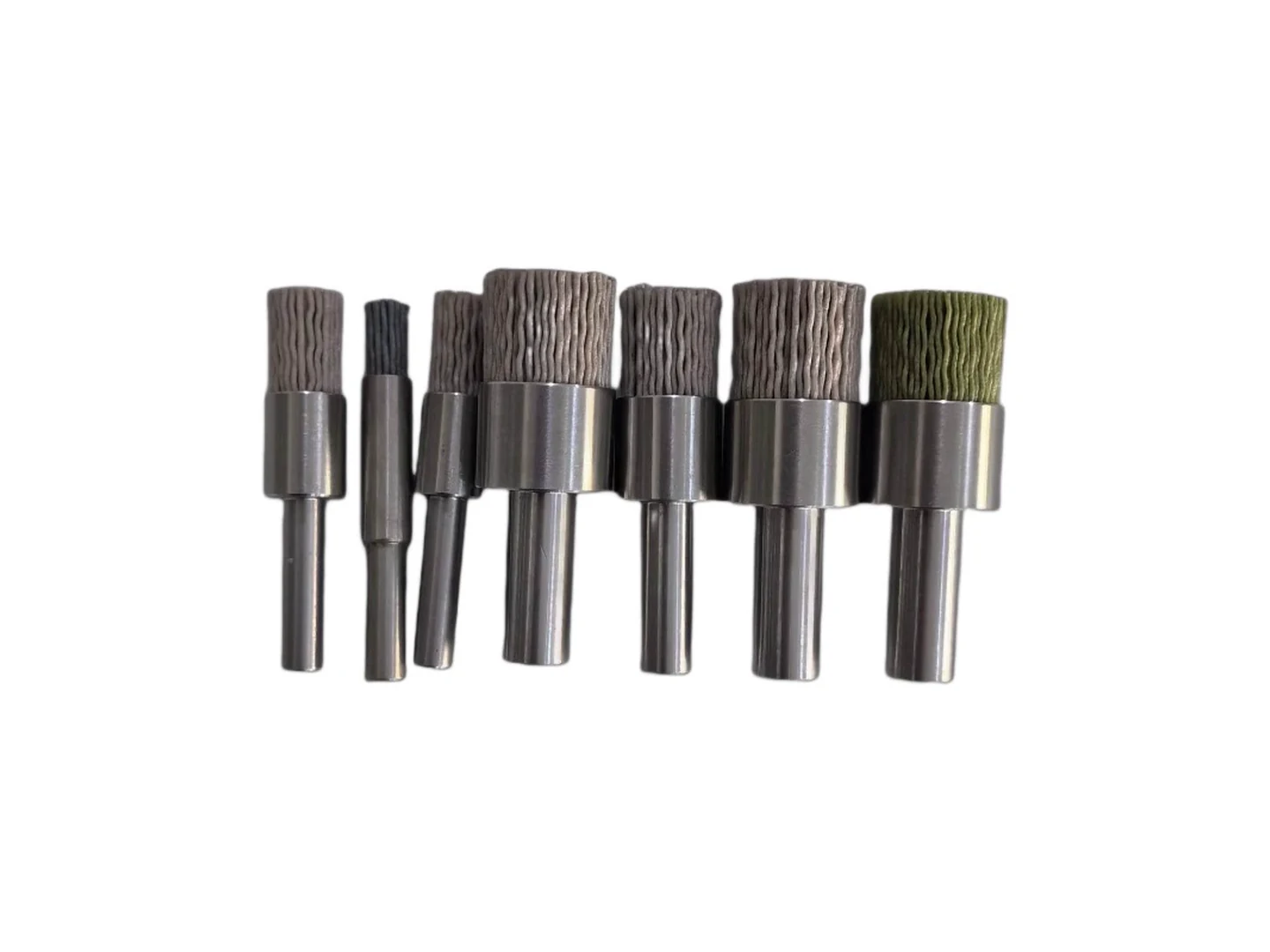
Small brush
500 pcs
Minimum order
Held in one hand: tube, bottle, detail and swab brushes — including long-handled ones with a small head.
Production lead time, once the specification is confirmed
- Up to 500 pcsWithin 7 days
- 501–50,000 pcsWithin 14 days
- Over 50,000 pcsWithin 21 days
Peak season can extend these times; the shipping date is confirmed in writing with your quotation. Sampling and shipping are quoted separately.
A non-sparking aluminum bronze wire brush for removing rust, scale, and coating residues from metal surfaces where spark risk or ferrous contamination must be controlled. Available in hand, cup, wheel, and end configurations, it delivers a softer, non-ferrous cleaning action for stainless steel, aluminum, brass, and coated parts.
What can this brush do for you?
Clean without sparks in hazardous areas
Aluminum bronze is a copper-aluminum alloy that produces no hot, ignitable sparks when struck against steel, concrete, or other metal surfaces. In refineries, gas processing plants, fuel storage, grain elevators, and chemical facilities, using this brush on flanges, pumps, valves, and work surfaces keeps maintenance work moving without introducing an ignition source. Steel wire brushes, by contrast, can generate sparks that may ignite flammable vapor or dust.
Leave no ferrous residue on critical surfaces
Steel wire brushes shed tiny iron particles that become embedded in the workpiece surface. On stainless steel, those particles rust and create surface discoloration known as free iron contamination. On aluminum, they can cause galvanic corrosion. Aluminum bronze fill contains no iron, so it does not promote rust bloom or cross-contamination. This is why food plants, pharmaceutical facilities, marine maintenance, and clean manufacturing often specify non-ferrous brushes.
Remove rust and scale without gouging softer metals
The aluminum bronze wire is softer than hardened steel but still stiff enough to scrape away oxidation, light mill scale, paint, and corrosion products. On aluminum castings, brass fittings, copper tubing, and plated parts, it cleans the contamination without cutting deep into the base material. For maintenance crews that need to preserve dimensional tolerances or surface finish, this balance matters.
Resist corrosion during storage and use
Aluminum bronze resists attack from moisture, salt spray, and many industrial chemicals. The brush does not rust while sitting in a tool crib, and it continues to perform in marine, offshore, and washdown environments without shedding corroded particles onto the workpiece.
Match the brush shape to the job
The same aluminum bronze wire fill can be built into hand scratch brushes, twisted wire brushes, power cup brushes, wheel brushes, and end brushes. Narrow end brushes reach into bores, threads, and corners; cup brushes cover flat flanges and valve faces; wheel brushes follow long seams and edges. Selecting the right form means one material standard can cover an entire plant’s non-sparking maintenance program.
Safe with common power tools when used within rating
Powered cup and wheel versions are designed to mount on angle grinders, die grinders, and drills. Each brush carries a maximum safe free speed marking; staying within that speed and using a guard prevents wire shedding and keeps the operator safe. Hand versions require no speed considerations and suit spot cleaning, touch-up, and confined work.
What is an Aluminum Bronze Brush?
An aluminum bronze brush uses wire fill made from an aluminum bronze alloy—typically copper with 5–11% aluminum, sometimes with small additions of nickel, iron, or manganese for strength. The alloy is non-magnetic, non-sparking, and corrosion-resistant, which makes it fundamentally different from a carbon steel or stainless steel wire brush. The wire is cut, formed, and secured into a handle, cup, wheel, or stem, then used by hand or on a power tool to scrape rust, oxide, scale, old coating, and other surface contaminants from metal.
During use, the operator presses the wire tips against the workpiece and moves the brush in short strokes or sweeping passes. The wire ends act like thousands of small scrapers, breaking the bond between the contamination and the base metal. Because aluminum bronze is softer than steel, it removes less base material per pass, which is often an advantage when the base metal is aluminum, copper, brass, or thin-gauge stainless.
The brush is not a substitute for grinding, sandblasting, or chemical stripping when the contamination is heavy or tightly adhered. It works best on light to moderate rust, loose scale, oxidation, and soft coatings. For thick, hard deposits, a more aggressive tool may be needed first.
Four main configurations are common: hand scratch brush (flat or curved handle with a block of wire), twisted wire brush (for narrow grooves and threads), end brush (small circular brush on a stem for die grinders), and cup or wheel brush (large powered brushes for angle grinders and bench tools). The same material rules apply regardless of configuration.
Technical Specifications
The following table lists common standard parameters; final dimensions are configured per tool and application. All values are typical ranges unless otherwise noted.
| Parameter | Typical Options / Values |
|---|---|
| Brush form | Hand scratch, twisted wire, end brush, cup brush, wheel brush |
| Fill material | Aluminum bronze (CuAl alloy, typically C61000/C61400 or equivalent) |
| Wire diameter | 0.15–0.35 mm for finishing; 0.36–0.50 mm for heavier cleaning |
| Trim length | 15–30 mm hand; 20–40 mm powered |
| Face width | Hand: 15–50 mm; Cup/wheel: 15–100 mm |
| Brush diameter | End: 10–50 mm; Cup/wheel: 50–150 mm |
| Arbor / mounting | Cup/wheel: 5/8″-11 thread, M10/M14, or 6–13 mm center hole; End: 1/4″ or 6 mm stem |
| Handle / body | Hand: hardwood, plastic, or metal with hanging hole; Power: steel cup/wheel back or stem |
| Maximum safe speed | Powered forms: typically 4,500–6,500 RPM depending on diameter; marked on brush |
| Operating environment | Dry, wet, marine, chemical splash; non-sparking for hazardous areas; temperature up to ~150°C (302°F) continuous |
Wire diameter, trim length, and mounting are selected to match the workpiece and the tool. Contact us with your part drawing or application for a dedicated specification.
Where does this brush work best?
- Oil, gas, and petrochemical plants: cleaning flange faces, gasket surfaces, valve bodies, pump casings, and threaded connections before reassembly. The non-sparking fill allows use in classified areas without a hot-work permit in many cases (always follow site procedures).
- Marine and offshore: removing rust and scale from deck hardware, thru-hull fittings, chain plates, and steel plate edges. The corrosion-resistant wire does not leave iron residue that would accelerate pitting.
- Stainless steel fabrication: removing heat tint, weld discoloration, and light rust from welds and surrounding zones. Unlike carbon steel brushes, aluminum bronze will not cause free-iron contamination or rust blooms.
- Aluminum and non-ferrous shops: cleaning aluminum castings, extrusions, weldments, brass fittings, and copper pipe before welding, brazing, or painting. Softer wire removes oxide without gouging.
- Food, beverage, and pharmaceutical maintenance: removing light product buildup, corrosion, and coating residue from equipment where ferrous contamination is prohibited. Brushing is followed by approved sanitizing procedures.
- Powder coating and paint preparation: light surface roughening, removal of loose oxidation and old coating, and edge profiling before coating where abrasive blasting is not permitted.
- Grain handling, mills, mining, and combustible dust environments: cleaning chutes, spouts, conveyors, and machine surfaces where sparks could ignite dust. Hand brushes are most common here.
How do I choose the right one?
Assess the spark and contamination risk first
If the work area contains flammable gases, vapors, or combustible dust, or if the workpiece and finished product must be free of iron particles, choose aluminum bronze. If neither risk exists, a carbon steel wire brush is less expensive and more aggressive, but may contaminate the surface.
Match the brush form to the access and geometry
For open flat areas, a cup brush on an angle grinder gives fast coverage. For long seams, edges, and large plates, a wheel brush is efficient. For internal bores, threads, and holes, an end brush reaches where cups cannot. For touch-up, irregular shapes, and confined spaces, a hand scratch brush offers control. Some jobs require two forms: a hand brush for initial loosening and an end brush for detail.
Choose the wire diameter based on aggressiveness
Thin wire (0.15–0.25 mm) produces a fine finish and is gentle on soft metals and coated surfaces. Medium wire (0.26–0.35 mm) balances cleaning speed and finish, suitable for general rust and scale. Thick wire (0.36–0.50 mm) is more aggressive and removes heavier deposits faster, but may leave deeper scratches and wear out the brush more slowly. For thin sheet metal or polished surfaces, use thin wire. For thick castings or heavily rusted steel, use thicker wire.
Verify the power tool speed and mounting
Read the maximum safe speed printed on the brush or its packaging. Compare it with your angle grinder or die grinder’s no-load speed. The tool speed must never exceed the brush rating. Also confirm the mounting: cup brushes commonly use 5/8″-11 thread; wheel brushes may have arbor holes or threaded hubs; end brushes use a 1/4″ or 6 mm stem. An adapter may be needed, but it must not offset the brush.
Consider the operating environment
Aluminum bronze is suitable for wet and marine conditions, but for highly acidic or alkaline chemical environments, confirm alloy compatibility with the specific chemical concentration and temperature. For high-temperature applications above 150°C, check the alloy’s mechanical properties; the wire may anneal and lose stiffness.
When to use something else
If you need to remove heavy mill scale, thick paint, weld spatter, or deeply pitted rust at high speed, an aluminum bronze brush will wear quickly and may not be effective. Use a hardened steel or stainless steel brush (if no spark/contamination risk) or an abrasive product like a non-woven disc or flap wheel. If the surface is very delicate—polished, plated, or anodized—use a nylon abrasive or hand pad instead. For precision deburring of small features, a carbide burr or file may be better.
Can I customize this brush?
We build aluminum bronze brushes to your specific configuration. The following variables can be adjusted:
- Brush form: hand scratch, twisted wire, end brush, cup brush, wheel brush, or custom bent/stem designs.
- Dimensions: handle length, brush face width, trim length, cup diameter, wheel diameter, end brush diameter and stem length.
- Fill: wire diameter, wire alloy grade, fill density (number of wire tufts or knots), wire type (straight, crimped, twisted, knotted) for different aggressiveness.
- Mounting: arbor hole size, threaded hub, quick-change adapter, stem diameter and length, or special backplate design.
- Handle: material (wood, plastic, composite, metal), shape, color, hanging hole, branding, and ergonomic grip.
- Marking: laser marking, pad printing, embossing, or color coding for tool identification.
- Packaging: bulk, individual box, shelf-ready display, or project-specific labeling.
To define the brush, provide the workpiece material, residue type, access geometry, tool interface, and operating speed. A drawing, photo, or sample of the existing brush accelerates the process. If your project requires material certificates, spark-test documentation, inspection reports, or third-party testing to verify non-sparking properties, we can assist with those requirements during customization.
Which filament survives the cleaning and still lasts on an aluminum bronze brush?
How can I verify that the brush fill is genuinely aluminum bronze and not plated steel?
Aluminum bronze is denser and has a distinct golden color. Visual inspection alone is not reliable because steel can be brass-plated. Request a material certificate or conduct a Positive Material Identification (PMI) test with a handheld analyzer. You can also perform a spark test on a sample: aluminum bronze produces no bright sparks when touched to a grinder, but this test can damage the brush. The most reliable method is supplier documentation and batch traceability.
Will an aluminum bronze brush rust?
No. The alloy contains no iron, so it will not form red rust. In marine or humid environments, it may develop a thin green patina over time, which is normal surface oxidation and does not affect performance. Rinsing and drying after use slows patina formation.
What is the maximum safe operating speed for powered brushes?
It depends on the brush diameter and design. Typical cup and wheel brushes are rated for 4,500–6,500 RPM free speed, but you must use the speed stamped on the specific brush. Exceeding that speed can cause wire breakage, rapid brush wear, and risk of injury. Always use a guard and proper PPE.
Can I use this brush on aluminum or stainless steel without scratching?
It will remove surface oxide and light contamination but will leave a brushed or matte finish unless you use a very fine wire and light pressure. For a polished or mirror finish, use a non-woven abrasive or hand pad instead. The brush is less aggressive than steel, but any wire brushing changes the surface texture.
How do I know when to replace the brush?
Replace when the wire tips become worn down so that the trim length is significantly reduced, when wires are bent flat or broken, or when the brush no longer cleans effectively and you have to apply excessive pressure. Also inspect the cup or wheel backing for cracks or heat damage. For hand brushes, replace when the wire block starts shedding wires or the handle is cracked.
Does brushing replace chemical cleaning or passivation?
No. Brushing removes loose rust, scale, and coating mechanically. It does not dissolve deep corrosion or provide passivation. After brushing, you should rinse the surface to remove loosened particles. If passivation or chemical treatment is required by your process, perform it after brushing as a separate step.
Guides that go deeper on this
We have not written a guide specific to this one yet. The material that covers selection, filament, dimensions, maintenance and sourcing is collected in the technical resources library.
Custom Manufacturing RFQ
Describe Your Application
For an accurate quotation, please provide the main dimensions, material preference, working surface, residue, quantity, and a drawing or photo.
Drawing or photo optional — it speeds things up, it does not gate the enquiry.
Custom Brush RFQ
Send Your Brush Project
Upload a drawing, product photo, or sample photo and provide the core dimensions and cleaning conditions.
“We need a brush to remove wet residue from a stainless steel conveyor, about 800mm wide. The current brush wears quickly. We can send photos.”
“We sell drinkware and need a cleaning brush to include with the product. Quantity around 5,000 pieces.”