
Custom Cleaning Brush
Banknote Counter Brush
Custom nylon PA banknote counter brush for cleaning feed rollers, CIS sensors, and note paths.
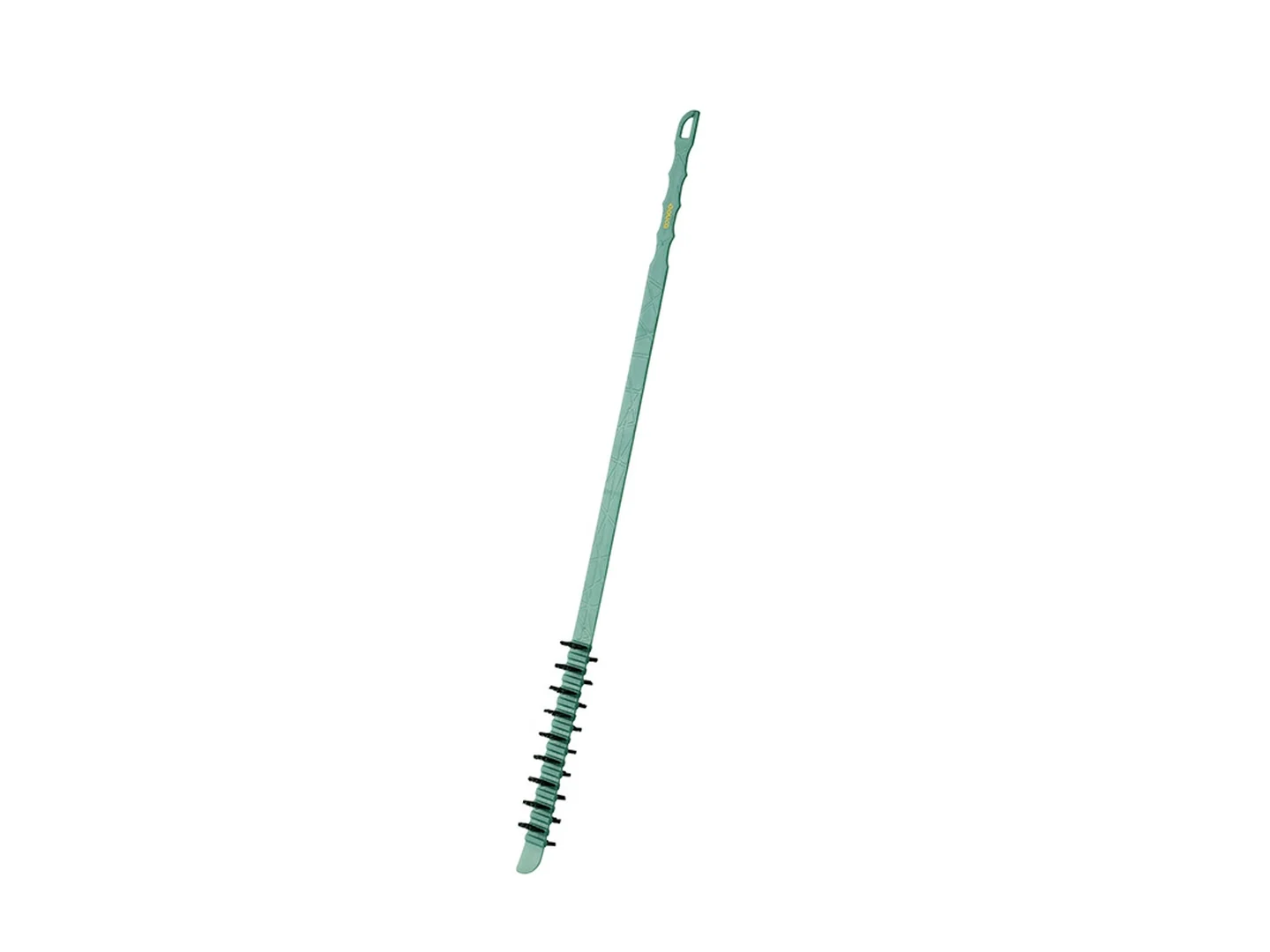
Small brush
500 pcs
Minimum order
Held in one hand: tube, bottle, detail and swab brushes — including long-handled ones with a small head.
Production lead time, once the specification is confirmed
- Up to 500 pcsWithin 7 days
- 501–50,000 pcsWithin 14 days
- Over 50,000 pcsWithin 21 days
Peak season can extend these times; the shipping date is confirmed in writing with your quotation. Sampling and shipping are quoted separately.
A nylon PA maintenance brush engineered for clearing paper dust, lint, and fine particulate from feed rollers, sensors, and note channels in banknote counters and cash-handling machines. Its precision filament layout removes debris without scratching sensitive optical surfaces or damaging rubber rollers.
What can this brush do for you?
Restore roller grip without reconditioning
Paper dust and lint build up on feed rollers and separator rollers, reducing friction and causing double feeds or miscounts. The nylon PA filaments dislodge bonded lint from the roller surface, restoring grip so the machine returns to consistent note separation. Because the filaments are softer than the roller rubber, they scrub cleanly without micro-abrasion or surface glazing.
Clean optical sensors without leaving scratches
Many cash machines use CIS sensors, UV detectors, and magnetic heads that sit directly in the note path. A stiff metal brush or abrasive pad can haze the sensor window and cause false rejects. The banknote counter brush can be built with feathered, fine-diameter nylon tips that lift dust off sensor glass without mechanical marking, so calibration and detection accuracy remain stable.
Reach between rollers and into guide channels
The head can be profiled to match the exact roller gap width and paper-path geometry of your machine. A narrow, tapered head slips between feed rollers and stacker wheels, while side-set bristles sweep dust from vertical guide plates and trap areas that compressed air alone cannot clear.
Minimize bristle shedding during use
Loose bristles inside a banknote path can jam sensors or get mixed into counted notes. Crimped, flagged, or tightly anchored nylon PA filaments stay in place during scrubbing, and the brush head is built so filament loss is negligible over its service life. This matters when a single stray fiber can trigger a false jam error.
One brush, multiple cleaning stations
A dual-end design can put a stiffer roller-cleaning section on one end and a soft sensor-safe section on the other. Maintenance staff then need one tool for daily preventive cleaning, reducing the chance someone grabs a generic paintbrush or metal scraper that damages the machine.
What is a Banknote Counter Brush?
A Banknote Counter Brush is a hand-held maintenance tool used by cash room technicians, service providers, and machine operators to clean the internal paper path of banknote counting, sorting, and recycling machines. It is not a general-purpose brush. Every dimension, filament, and profile is chosen for the specific task of removing fine paper contamination from tight mechanical channels without harming the equipment.
The brush typically has a slim handle that lets the operator reach deep into the note transport with the covers open or through access panels. The working end carries nylon PA filaments arranged in a narrow row, angled row, or cupped pattern. During use, the technician makes short back-and-forth strokes along feed rollers, separator gaps, stacker guides, and sensor windows, then removes the loosened dust with a vacuum or a dry wipe.
Because the brush contacts moving mechanical parts and static-sensitive sensors, it must be selected for the machine model and the specific contaminant. A brush that is too stiff will scratch a sensor or wear a roller. One that is too soft will not lift bonded lint from a friction surface. This brush is designed to be configured for that balance.
Technical Specifications
Dimensions and filament details are adjustable per machine model and cleaning task. The following table shows the typical specification range and the parameters we confirm before production.
| Parameter | Value / Options |
|---|---|
| Overall length | 150–300 mm, matched to access depth and operator grip |
| Head length | 25–90 mm, based on roller width or sensor area to be cleaned |
| Head width | 8–35 mm, set to fit the narrowest gap between rollers or guides |
| Filament material | Nylon PA (PA6 or PA66), anti-static nylon, or conductive nylon on request |
| Filament diameter | 0.05–0.15 mm for sensor-safe cleaning; 0.20–0.35 mm for roller scrubbing |
| Filament tip treatment | Feathered, flagged, or standard cut ends depending on surface sensitivity |
| Filament pattern | Straight row, angled row, V-groove, or custom dense pack for gap cleaning |
| Handle material | PP, nylon, or anti-static plastic; optional ESD-safe grip for electronics work |
| Dual-end option | One end for rollers, opposite end for sensor windows or guide channels |
| Operating environment | Dry indoor use in cash processing areas; chemical exposure limited to mild detergents |
| Brush type | Custom Handheld Detail Brushes |
| How it is driven | Machine-driven, mounted in the equipment |
| Cleaning target | banknote counter and sorter, cash recycling and deposit machine, and optical sensor maintenance cleaning |
| Surface or part | roller, feed rollers, channel, gaps, belts, pads, guides, and profiles |
| Residue or debris | dust, and lint |
| Mounting / connection | Shaft-Mounted / Flange |
The filament diameter is the main trade-off: finer filaments are safe for CIS glass and optical sensors but remove less bonded material from rubber rollers. We recommend confirming the machine manual’s cleaning guidance for sensor units before finalizing the brush specification.
Where does this brush work best?
- Banknote counters and sorters: Daily or weekly cleaning of feed rollers, separator rollers, and friction pads to prevent double feeds and counting errors.
- Cash recycling and deposit machines: Removal of paper dust from stacker wheels, note diverters, and transport belts where lint reduces throughput.
- Optical sensor maintenance: Safe dust removal from CIS units, UV sensors, and magnetic heads when the manual permits a soft non-metallic brush.
- Currency processing centers: High-volume operations where paper dust builds quickly and scheduled cleaning keeps machine uptime high.
- Retail back offices and bank branches: Regular preventive maintenance by staff who need a single, non-damaging tool for routine cleaning.
How do I choose the right one?
Measure the narrowest gap first. Use a feeler gauge or caliper to measure the distance between adjacent rollers where the brush must pass. The head width and bristle length must allow the brush to enter without forcing the rollers apart or bending the shaft. A head that is too wide will not clean the center of the roller surface; one that is too narrow will take extra strokes and may still miss the edges.
Match filament stiffness to the surface you clean. For rubber rollers and metal guides, a filament diameter of 0.20–0.35 mm provides enough column strength to dislodge bonded lint. For CIS windows, UV sensors, and other optical components, use 0.05–0.15 mm filaments with feathered or flagged tips. Never use a stiffer brush on a sensor unless the machine manual explicitly allows it. If the manual specifies a particular cleaning method, follow that method; the brush can be built to match it.
Consider static buildup if the environment is sensitive. Standard nylon PA can generate a static charge while brushing. In most cash machines this is harmless, but if you are working near static-sensitive controllers or in a low-humidity room, choose an anti-static or conductive nylon filament option. This prevents dust being re-attracted to surfaces immediately after cleaning.
Decide if you need a dual-end brush. If your maintenance routine covers both rollers and sensors, a dual-end brush with different filament diameters on each end eliminates the need to switch tools. This also reduces the risk that a technician uses the wrong end on a sensor.
When this brush is not the right tool. Do not use a banknote counter brush for heavy adhesive residue, oil spills, or liquid contamination. Those require a lint-free wipe and an approved solvent, followed by drying. Do not use a metal wire brush on any sensor window or rubber roller. If the machine has an automated cleaning cycle with built-in cleaning cards or belts, use those in addition to — not instead of — manual brushing. The brush removes dust; it does not replace periodic roller replacement or mechanical service.
Can I customize this brush?
Yes. Every banknote counter has different roller gaps, sensor positions, and note path widths. We build the brush to fit the machine, not the other way around. When you contact us, provide the machine make and model, a photo or drawing of the area to be cleaned, the narrowest access dimension, and the type of contaminant you see on the rollers and sensors.
We can adjust:
- Head geometry — length, width, taper, nose profile, or a shaped head that matches a specific roller gap
- Filament configuration — diameter, length, material (standard nylon PA, anti-static nylon, conductive nylon), tip treatment, and packing density
- Filament pattern — straight row, angled, radial, V-groove, or a combination for multi-surface cleaning
- Handle — length, diameter, ergonomic shape, anti-static material, hanging hole, or dual-end construction
- Color and marking — color coding for different machine lines, pad-printed part numbers, or custom branding
- Packaging — bulk cartons for service kits, individual protective sleeves, or retail-ready blister packs
If your project requires material documentation, inspection reports, or third-party testing for the filament or finished brush, we can support those requirements during the customization process.
Which filament survives the cleaning and still lasts on a banknote counter brush?
How do I know if the brush is safe for the CIS sensor window?
Check the machine service manual first. If the manual allows brushing, it will often specify a filament type or stiffness. As a rule, use a brush with filament diameter 0.10 mm or finer and feathered tips. Apply no downward pressure — the weight of the brush head alone should be enough. After cleaning, inspect the sensor window with a bright light at a low angle. Any new haze, scratches, or clouding means the brush is too aggressive and the filament must be changed.
How often should banknote counter rollers be brushed?
High-volume machines that process more than 10,000 notes per day should be brushed daily. Standard bank branch counters are usually fine with weekly cleaning. The best indicator is the machine itself: increased double feeds, false rejects, or visible dust rings on rollers are signs that cleaning is overdue.
Can this brush be washed and reused?
Yes. Nylon PA filaments can be rinsed with warm water and a mild detergent, then air-dried completely before the brush goes back into the machine. Do not soak the handle if it contains adhesive bonds. For daily use, a quick blast of dry compressed air or a tap against a hard surface removes most loose dust and keeps the brush ready for the next cycle.
Will the brush shed bristles into the note path?
A properly manufactured brush with crimped or flagged filament anchoring will shed little to none during normal use. We test filament retention on every batch. If you find loose bristles after the first few uses, stop using the brush and check the filament anchoring method. Loose bristles can trip optical sensors and should never be left inside the machine.
Can I use the same brush on different machine brands?
Only if the roller gaps and sensor positions are similar. A brush sized for one machine may be too wide to enter another machine’s roller gap, forcing the bristles to fold and reducing cleaning effectiveness. If you service multiple brands, we can build a dual-end or multi-profile brush that covers two specific machine families without switching tools.
What is the difference between this brush and a standard paintbrush?
A paintbrush has cut filament ends, a wide head, and no filament anchoring designed for mechanical scrubbing. It sheds fibers easily and can smear dust rather than lift it from roller grooves. A banknote counter brush uses nylon PA filaments with controlled stiffness, flagged or feathered tips, and a head shaped for the note path, so it removes fine paper dust without leaving fibers or abrasion marks behind.
Guides that go deeper on this
Custom Manufacturing RFQ
Describe Your Application
Please share the brush dimensions, working area, residue type, material direction, quantity, and a drawing or photo for quotation.
Drawing or photo optional — it speeds things up, it does not gate the enquiry.
Custom Brush RFQ
Send Your Brush Project
Upload a drawing, product photo, or sample photo and provide the core dimensions and cleaning conditions.
“We need a brush to remove wet residue from a stainless steel conveyor, about 800mm wide. The current brush wears quickly. We can send photos.”
“We sell drinkware and need a cleaning brush to include with the product. Quantity around 5,000 pieces.”