
Custom Cleaning Brush
Electric Scrubber Brush
Custom electric scrubber brushes with nylon PA/PP fill for floor scrubbers, deck machines, and powered rotary tools.
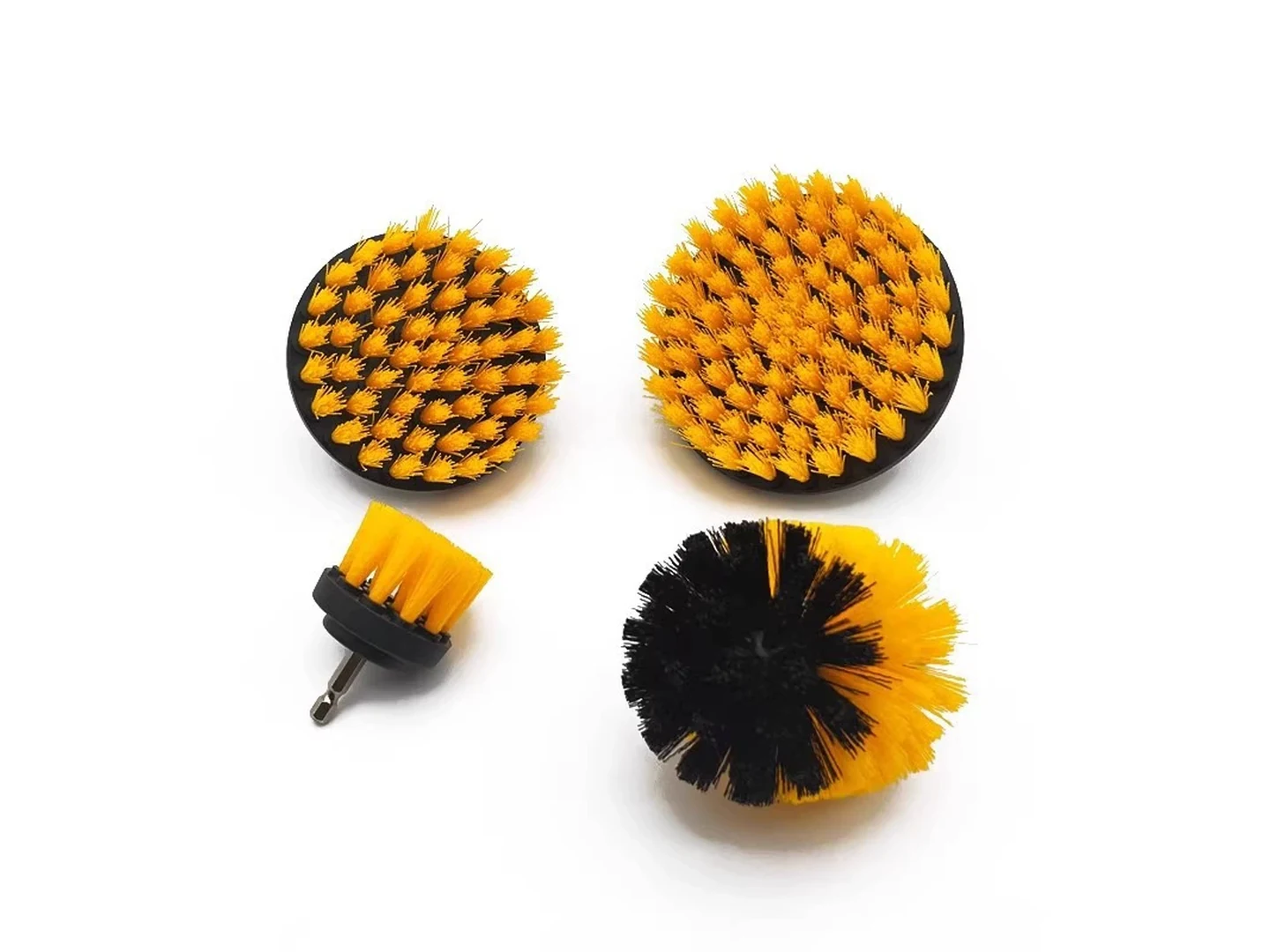
Large-format brush
100 pcs
Minimum order
Built one at a time on a core or channel: full-width rollers, sweeper brooms and long strip.
Production lead time, once the specification is confirmed
- Up to 100 pcsWithin 20 days
- 101–1,000 pcsWithin 30 days
- Over 1,000 pcsConfirmed with your quotation
Peak season can extend these times; the shipping date is confirmed in writing with your quotation. Sampling and shipping are quoted separately.
Machine-driven scrubber brushes built around nylon PA and polypropylene filament, fitted with a machine-specific hub, spline, bore, or thread so they mount directly to electric floor scrubbers, deck scrubbers, and powered rotary tools. The fill, trim length, and density are configured for your machine so the bristles scrub at full contact instead of slipping at the drive or wearing flat against the deck.
What can this brush do for you?
Motor torque moves into the bristle tips, not into a loose mount
A bore, spline, clutch, or threaded hub machined to the machine’s drive connects the brush without the slip that shows up as polished hubs, chattering, and uneven wear. When the interface fits, the operator can run the deck at the machine’s intended pressure and speed instead of fighting a wobbling plate.
Filament choice that matches the wet chemistry, not just the surface
The two fill materials solve different wet-scrub problems. Polypropylene absorbs essentially no water, so it holds stiffness in constant wet service and resists most commercial detergents. Nylon PA handles the repeated flexing of a powered scrub cycle better, making it the usual choice for dry or light-wet use where fatigue life matters. Mixed fills and different PA grades can be assigned to specific zones when one material is not enough.
Contact pressure stays on the working tips
Trim length and fill density are set so the deck rides on the bristle tips, not on the full trim. A brush that is trimmed too long or packed too densely ends up running on the sides of the filaments, which overheats the fill, drives up motor load, and shortens the brush. Correct trim lets the tip flex under load and snap back on every revolution.
Repeatable cleaning from the first replacement brush to the last
Because the hub, fill, trim, and filament diameter are controlled on each production run, a replacement brush performs like the one that was validated on the machine. For operators running multiple scrubbers, that removes the most common source of variability after detergent and water flow.
Non-metallic contact for daily hard-floor cleaning
Nylon PA and PP scrubbing action lifts film, water marks, light grease, and tracked-in soil from tile, concrete, VCT, epoxy, and similar hard floors without the sparking or scratching risk of wire fills. The brush is designed for routine mechanical agitation, not for coating removal or heavy-scale work.
What is an Electric Scrubber Brush?
An electric scrubber brush is a replaceable brush assembly that spins, oscillates, or rotates under motor drive to perform the scrubbing that would otherwise be done by hand or by a non-powered deck brush. In a floor scrubber it mounts below or ahead of the squeegee; in a cylindrical scrub deck it rides on a keyed or splined shaft; in a handheld power scrubber it attaches through a threaded or quick-change hub.
A block, disc, cup, or roller core holds the bristle fill in a controlled density. As the drive rotates the brush, the bristle tips press into the surface, bend slightly, and release, agitating film and soil so the following water or vacuum can carry it away. The scrub result depends on four variables the brush can be engineered around: filament diameter, trim length, fill density, and the way the brush is mounted to the drive.
These brushes are consumable items. The point of a fitted electric scrubber brush is to make the consumable predictable: it mounts without adaptation, wears evenly, and can be reordered to the same specification when the first one is spent. It is not a stripping brush; it does not replace chemical dwell time for heavy buildup or abrasive methods for coating removal.
Technical Specifications
| Parameter | Specification / Range |
|---|---|
| Configuration | Disc, cylindrical/roller, strip/block, cup, or custom profile |
| Brush diameter | 30–150 mm for disc and cup configurations; roller and block dimensions matched to deck |
| Working width | 50–200 mm for strip, roller, and deck-mounted configurations |
| Trim length | 20–80 mm, selected for reach, flex, and machine clearance |
| Filament diameter | 0.25–1.20 mm, set by required tip stiffness and flex life |
| Fill materials | Nylon PA and Polypropylene PP; zoned or hybrid fills available by project |
| Hub / spline | Machine-specific bore, clutch, spline, or threaded interface; machined or molded to sample |
| Backing / core | PP or nylon block, disc, cup, or roller core; metal-backed plate available where the clutch requires it |
| Operating environment | Wet or dry scrubbing with commercial detergents; specify chemical type, temperature, and machine RPM |
| Brush type | Custom Floor Scrubber Sweeper Brushes |
| How it is driven | Machine-driven, mounted in the equipment |
| Cleaning target | walk-behind and ride-on floor scrubbers removing daily, cylindrical scrub deck, and powered handheld and cordless scrubber cleaning |
| Surface or part | floors, hubs, roller, bores, thread, concrete, tile, and epoxy |
| Residue or debris | grease, rust, and spatter |
| Mounting / connection | Snap-Fit / Quick-Change Coupling |
A common setup error is running the deck low enough that the full trim lies under the plate instead of the bristle tips. Set deck pressure to the machine range so the tips flex and recover, and keep the backing clear of the floor. That contact setting has more effect on brush life than any other adjustment on the machine.
Where does this brush work best?
- Walk-behind and ride-on floor scrubbers removing daily soil, foot-traffic film, and light grease from tile, concrete, vinyl, epoxy, and polished concrete.
- Cylindrical scrub decks on uneven floors, brick, or grouted tile where the roller turns debris up into the recovery hopper.
- Powered handheld and cordless scrubbers with 30–150 mm brush heads for shower surrounds, sinks, equipment housings, and other small-area scrubbing.
- Dockside, kitchen, and production-floor pre-wash where a floor scrubber brush accompanies detergents to lift particulates before wet vacuum.
How do I choose the right one?
Start with the drive, not the diameter
Record the machine make and model, the hub type (clutch plate, spline, pin, thread, or bolt circle), the bore or shaft size, and rotation/lock direction. This is the only part of the brush that cannot be roughly estimated—if it does not fit, nothing else matters. A sample hub or worn brush is the fastest way to define it.
Match the brush footprint to the deck
Diameter or working width should cover the intended cleaning path without rubbing the shroud, wheels, or side skirts. Too wide, and the outer rows wear against the machine; too narrow, and the machine leaves an uncleaned stripe between passes. For roller brushes, also check the bearing seats and channel clearance.
Choose filament material from the wet environment
Polypropylene for constant wet service, washdown, or long immersion, because it does not absorb water and keeps the set stiffness. Nylon PA for dry or light-wet scrubbing where repeated flex cycles and longer wear are the priority. If the application has both heavy moisture and flex, a zoned or blended fill may be specified. Specify actual chemicals, not just cleaner, so the grade is chosen for the fluid, not the floor.
Set filament diameter and trim from the surface, not habit
Fine-diameter filaments (0.25–0.50 mm) work well on smooth tile, VCT, and coated floors with light film. Thicker filaments (0.70–1.20 mm) provide the tip pressure needed for concrete texture, grout joints, and traffic lanes. Trim length changes the way the filament bends under load; shorter trim steers more pressure into the tip, longer trim reaches into uneven surfaces.
| If your cleaning situation is… | Start with this configuration |
|---|---|
| Wet washdown, frequent chemical exposure | PP fill with a corrosion-resistant core and proper material grade |
| Dry daily floor cleaning on smooth surfaces | Nylon PA fill, fine filament, standard trim |
| Uneven concrete, grout, textured tile | Thicker filament, longer trim, cylindrical or disc form |
| Light rust, weld spatter, baked-on coating | Not this brush—switch to wire or abrasive grit fill |
This brush is for routine mechanical scrubbing. If the job is removing rust scale, weld spatter, or heavy mineral deposits, a wire brush does it faster. If the job is removing epoxy, urethane, or old finish, use a grit-impregnated stripping or sanding brush. If the machine has no adjustable down pressure, choose a shorter trim and lower density so the motor does not stall against the floor.
Can I customize this brush?
Electric scrubber brushes are usually configured to a job, not picked from a catalog. To quote the right construction, provide the machine make/model, hub type, bore/spline/thread details, rotation/lock direction, desired diameter/width, surface material, residue, detergent or chemical, temperature, RPM, and down-pressure range. A photo or sample of the existing brush or drive hub helps.
We can adjust:
- Brush form—disc, roller, strip/block, cup, multi-head, or custom shape
- Dimensions—diameter, working width, trim length, overall height
- Mount—bore, clutch, spline, pin, thread, or drive-plate pattern
- Filament—PA6, PA6.6, PP, zoned blend, diameter, color, density
- Core / backing—PP, nylon, or reinforced/metal plate where needed
- Marking and packaging—color coding, label, bulk pack, or retail-ready packaging
If your facility requires material declarations, inspection records, or third-party testing for the brush used in a hygienic or audited process, we can arrange that support as part of the project definition.
Which filament lasts longest on an electric scrubber brush?
How do I check whether the brush will fit my machine before ordering?
Confirm the complete drive interface: hub type, bore or shaft diameter, thread pitch or spline count, rotation direction, and lock arrangement. If possible, send the old worn brush or a hub sample. Visual diameter and trim are easy to copy, but the mount is the only dimension that cannot be adapted on site.
What does the operator need to check before each shift?
Verify the hub is seated and locked, the deck is clear of debris and wrapper film, and the deck pressure is set so the bristle tips touch the floor without the backing plate running on the trim. Also check for burned or fused filament tips from the previous shift; they indicate excessive pressure or low water flow.
How do I know the brush is wearing normally?
Bristles should shorten gradually and wear evenly across the face. Uneven wear usually means the deck is tilted, the shroud is rubbing, or the hub is not centered. A brush that loses trim in patches or develops a cone shape should be replaced and the machine checked before the next brush is installed.
Do nylon PA and polypropylene bristles scratch floor coatings?
Used clean, neither material leaves the hard scratch pattern of wire. But abrasive debris trapped in the brush—sand, stones, metal chips—will scratch any floor. Rinse the brush after use, and sweep or pre-scrub grit before running the machine. On a delicate coating, test one brush in an inconspicuous area before committing the whole floor.
Can this brush run on a high-speed burnisher or polisher?
No. Scrubber brushes are filled and balanced for scrubber RPM and wet contact. A burnisher spins faster and generates more heat; using a scrubber brush on it can melt the fill, overload the motor, or throw the brush. Specify the actual machine type and RPM when ordering so the fill is chosen for the speed.
When should the brush be replaced?
Replace when the trim length is below the original specification, when filament tips are flattened, fused, or broken, when the hub is cracked or no longer locks, or when the machine requires a second pass to reach the previous result. Continuing with a worn brush increases motor load and skips cleaning; it does not save money.
Guides that go deeper on this
Custom Manufacturing RFQ
Describe Your Application
To prepare the correct quotation, provide the dimensions, cleaning task, residue, material, mounting details, quantity, and a drawing or photo.
Drawing or photo optional — it speeds things up, it does not gate the enquiry.
Custom Brush RFQ
Send Your Brush Project
Upload a drawing, product photo, or sample photo and provide the core dimensions and cleaning conditions.
“We need a brush to remove wet residue from a stainless steel conveyor, about 800mm wide. The current brush wears quickly. We can send photos.”
“We sell drinkware and need a cleaning brush to include with the product. Quantity around 5,000 pieces.”