
Custom Cleaning Brush
Horsehair Cleaning Brush Printing
Soft horsehair printing brushes for removing paper dust, lint, and powder from press webs, sheets, and cylinders. Hand, strip, or roller forms.
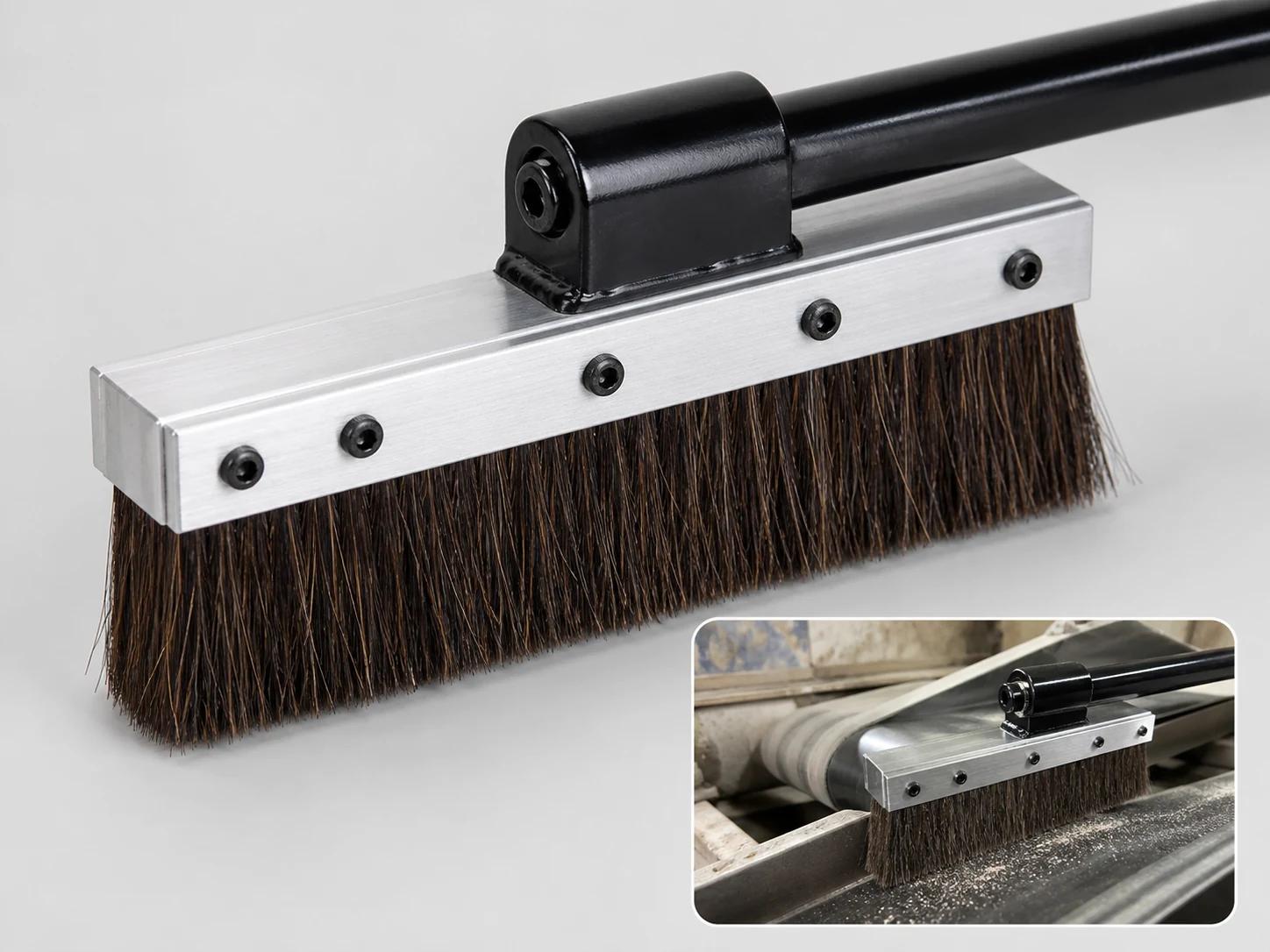
Medium brush
100 pcs
Minimum order
Worked with two hands or on a pole: chimney, gutter and pond-filter brushes, discs, cups and tank brushes.
Production lead time, once the specification is confirmed
- Up to 100 pcsWithin 7 days
- 101–5,000 pcsWithin 14 days
- 5,001–50,000 pcsWithin 21 days
- Over 50,000 pcsConfirmed with your quotation
Peak season can extend these times; the shipping date is confirmed in writing with your quotation. Sampling and shipping are quoted separately.
A soft-contact, natural horsehair cleaning brush for printing presses, converting lines, and finishing equipment that lifts loose paper dust, lint, and fine particles from webs, sheets, and press surfaces without scratching coated stock or film. Built as a hand brush, strip brush, or roller brush for whatever mounting point your machine requires.
What can this brush do for you?
Lifts Paper Dust and Lint Before It Reaches Plates, Blankets, and Imaging Units
Split and tapered horsehair tips make light contact with the moving sheet or web, catching fine fibers and dust particles that would otherwise become print defects. Removing this contamination from feed boards, transport sections, and pre-print web paths reduces hickeys, voids, and washed-out image areas caused by dust sitting between the substrate and the print surface.
Cleans Without Scratching Coated Paper, Film, or Precision Cylinders
Horsehair tips flex under pressure instead of digging into the surface. That is the difference between wiping a gloss-coated sheet or a polished cylinder clean and leaving micro-scratches that show up in the printed result. When surface finish is part of the product, this brush offers the softer contact a nylon or wire cleaning brush cannot.
Traps Fine Particles Instead of Flicking Them Around the Press
The natural flagged ends of horsehair hold small dust particles against the brush face until vacuum, an air knife, or gravity carries them away. This keeps the brush from simply relocating contamination from one press section to another.
Available in the Same Fill as a Hand Tool or an Inline Brush
Choose a hand brush for operator cleaning of feed boards, sensors, plate cylinders, and guide surfaces. For continuous web cleaning, specify the same horsehair fill in a strip or roller configuration that mounts in the press frame and wipes the running substrate. One material fills both maintenance and production-line needs.
Can Be Blended with PA or PBT for Mixed Dust and Light Moisture
For positions that see dry dust plus occasional ink mist, condensation, or more cyclic flexing, we can combine horsehair with PA or PBT filaments. The natural fiber keeps the contact gentle; the synthetic share adds spring-back and wear life in higher-cycle areas.
What is a Horsehair Cleaning Brush Printing?
A Horsehair Cleaning Brush Printing is a dust-control brush built around natural horsehair fill and intended specifically for printing-room and converting-line use. It removes dry, loose contamination — paper dust, slitter dust, lint, anti-setoff spray powder, and fine fiber — from paper or film before printing, between process stations, or from press components during changeover and routine maintenance.
The brush can be supplied as a hand brush with a grip block, a strip brush carried in an aluminum or steel channel for fixed inline wiping, or a roller brush on a cylindrical core for rotating contact against a moving web. In every form, the working element is the same: flexible horsehair whose split, tapered ends follow surface irregularities and sweep particles away without scratching. Hand versions are used with light push-pull strokes on plates, blankets, feed boards, and guide surfaces. Strip and roller versions contact the moving sheet continuously and are usually paired with a vacuum pickup or air knife to collect what the brush releases.
This is a light-contact cleaning tool, not a scrubbing or scraping brush. Horsehair will not remove dried ink, hardened adhesive, heavy grease, or baked-on coatings, and it is not built for prolonged contact with aggressive wash-up solvents, steam, or high heat. In those cases, a synthetic PA/PBT, brass, or stainless steel brush is the better fit.
Technical Specifications
The dimensions listed below are the working ranges we build from; final values are matched to your press or converting line.
| Parameter | Value / Options |
|---|---|
| Fill material | Natural horsehair; optional blend with PA or PBT synthetic filaments |
| Brush form | Hand brush, strip brush, or roller brush, selected for the mounting position |
| Trim length (fiber length) | 20–80 mm, adjusted to the gap and contact pressure |
| Face width | 10–30 mm for strip and hand sizes; roller width built to the web |
| Overall length | 150–400 mm for hand and strip configurations; roller length matched to the printing machine |
| Handle / block | Wood, PP, aluminum, or stainless steel, depending on weight and cleaning environment |
| Mounting | Handle grip, aluminum or steel channel for strip mounting, or core/bearing assembly for roller use |
| Fill density | Adjustable by row pitch, filament bundle size, and number of rows; set to dust load and web speed |
| Operating environment | Dry, room-temperature printing and converting areas; avoid prolonged strong solvents, alkaline cleaners, steam, or high heat |
| Maintenance | Vacuum or dry-air cleaning; mild cool-water wash if needed, with full drying before return to service |
| Brush type | Custom Strip Seal Brushes |
| How it is driven | Supplied hand-guided or machine-mounted |
| Cleaning target | offset and digital press paper path, sheetfed delivery and feeder section, and web-fed printing and converting line cleaning |
| Surface or part | roller, webs, sheets, boards, cylinders, plates, guides, and aluminum |
| Residue or debris | dust, particles, lint, powder, fine particles, fiber, paper debris, and adhesive |
| Mounting / connection | Handle grip, aluminum or steel channel for strip mounting, or core/bearing assembly for roller use |
Where does this brush work best?
- Offset and digital press paper paths: feed boards, transport belts, register guides, and sensor points where paper dust settles on every shift.
- Sheetfed delivery and feeder sections: spray powder, loose coating particles, and slitter dust on grippers, pile guides, and side lays.
- Web-fed printing and converting lines: stationary strip or rotating roller brushes before print units, coaters, or laminators to clean paper or film webs continuously.
- Plate, blanket, and cylinder surface maintenance: hand brushes used dry to lift loose powder, dust, and paper debris from image and non-image areas without scratching.
- Finishing equipment: folders, collators, die-cutters, and inspection tables where accumulated paper dust interferes with sensors and transport rollers.
How do I choose the right one?
Match the brush form to the contact point. A hand brush suits operator maintenance where the stroke is controlled by hand. A strip brush suits a fixed position where the web passes and the brush wipes continuously. A roller brush suits a wide substrate or a position where the brush should rotate with the line direction and maintain even engagement across the full width.
Measure the gap and the working face. Record the available space between the brush holder and the web or cylinder. Trim length, face width, and overall length must allow the tips to touch without being pressed flat. Overly long trim folds over and reduces contact; overly short trim leaves uncovered lanes where dust passes through.
Match the fill to the contamination and surface. Start with pure horsehair for dry paper dust, lint, powder, and light fiber on coated paper, clear film, plates, or polished cylinders. If the same position also sees ink mist, light moisture, or heavy flexing, ask for a horsehair/PA or horsehair/PBT blend. For dried ink, adhesive, or hardened deposits, move to a stiffer synthetic, brass, or stainless steel brush instead.
Check the environment before committing to horsehair. Natural fiber mats and degrades faster around steam, high heat, and strong alkaline or solvent cleaners. If the brush will sit near dryer outlets or be washed with aggressive chemistry, confirm the material choice with us before ordering.
Plan for particle collection. The brush moves dust off the surface; it does not eliminate the particle. On a running web, arrange a vacuum, air knife, or collection tray so dislodged dust leaves the line rather than re-depositing downstream at the next roller or sensor.
Can I customize this brush?
This printing brush is built around your machine, not sold as a single fixed SKU. Tell us where the brush will sit, the available mounting space, web or sheet width, line speed, the residue you need to remove, and whether vacuum or air assist is available. A photo or simple sketch of the mounting point helps us lock the specification faster.
Items we typically adjust include:
- Brush form and mounting — hand block, aluminum or steel channel, roller core, bearing ends, or an existing holder pattern
- Fill material and density — pure horsehair, or a blended face with PA or PBT filaments across part or all of the brush
- Trim length, face width, and overall length — built around the measurable gap and contact arc
- Block, handle, or core material — wood, PP, aluminum, or stainless steel for weight, chemical exposure, and machine fit
- Color and marking — custom block or handle color, company marking, or identification coding
- Packaging — bulk cartons, individually bagged sets, kit packs with replacement strips or rollers, or line-specific labeling
If your project requires material documentation, inspection plans, or third-party testing support, we can arrange those through the customization process.
Which filament and which mounting does a horsehair cleaning brush printing need?
How do I know whether to use pure horsehair or a horsehair/synthetic blend?
If the contact surface is coated paper, clear film, or a polished cylinder and the contamination is dry dust and lint, pure horsehair is usually the best match. Add PA or PBT to the blend when the position also sees light moisture, ink mist, or needs more spring-back after repeated flexing. If the surface sees heavy solvent or baked-on residue, skip horsehair entirely and use a synthetic or metal brush.
Will this brush remove static from the web?
No. The brush mechanically lifts dust and lint from the surface, but it is not a static eliminator. If static causes particles to cling, pair the brush with an ionizing bar or static-control system so removed particles can be collected instead of re-attaching.
What should I check before installing a mounted strip or roller brush?
Check the mounting channel or core fits the available bracket without excessive play, confirm the trim length lets the tips make even contact across the full web width, and make sure the brush cannot catch on splices, flags, or web edges. Run a short test and inspect for fiber shedding, uneven contact, or dust left behind.
How do I clean horsehair brushes used in printing?
Vacuum the face after each shift to remove trapped dust and powder. If deeper cleaning is needed, wash with cool or lukewarm water and a mild soap, rinse thoroughly, and let the natural fiber dry completely before returning the brush to the line. Do not soak the block or use strong solvents, steam, or heat to speed drying.
When should a horsehair brush be replaced during production?
Replace the brush when the fibers are permanently matted, bent, or clumped; when tips are broken off below the required trim length; or when web inspection shows dust streaks remaining after cleaning. If vacuuming and washing no longer restore even tip contact, the fill has reached the end of its useful life.
Can this brush handle damp or wet webs?
It is not designed for wet-web cleaning. Moisture mats natural horsehair, causes clumping, and greatly reduces dust pickup. For damp surfaces or wash-down duty, choose a synthetic PA/PBT brush or another material specified for wet conditions.
Guides that go deeper on this
Custom Manufacturing RFQ
Describe Your Application
To quote this brush accurately, send the size, material, cleaning target, residue, quantity, and any available drawing or sample photo.
Drawing or photo optional — it speeds things up, it does not gate the enquiry.
Custom Brush RFQ
Send Your Brush Project
Upload a drawing, product photo, or sample photo and provide the core dimensions and cleaning conditions.
“We need a brush to remove wet residue from a stainless steel conveyor, about 800mm wide. The current brush wears quickly. We can send photos.”
“We sell drinkware and need a cleaning brush to include with the product. Quantity around 5,000 pieces.”