
Custom Cleaning Brush
Brick and Tile Machine Brush
Industrial brick and tile machine brush for cleaning molds, pallets, guides and transfer surfaces.
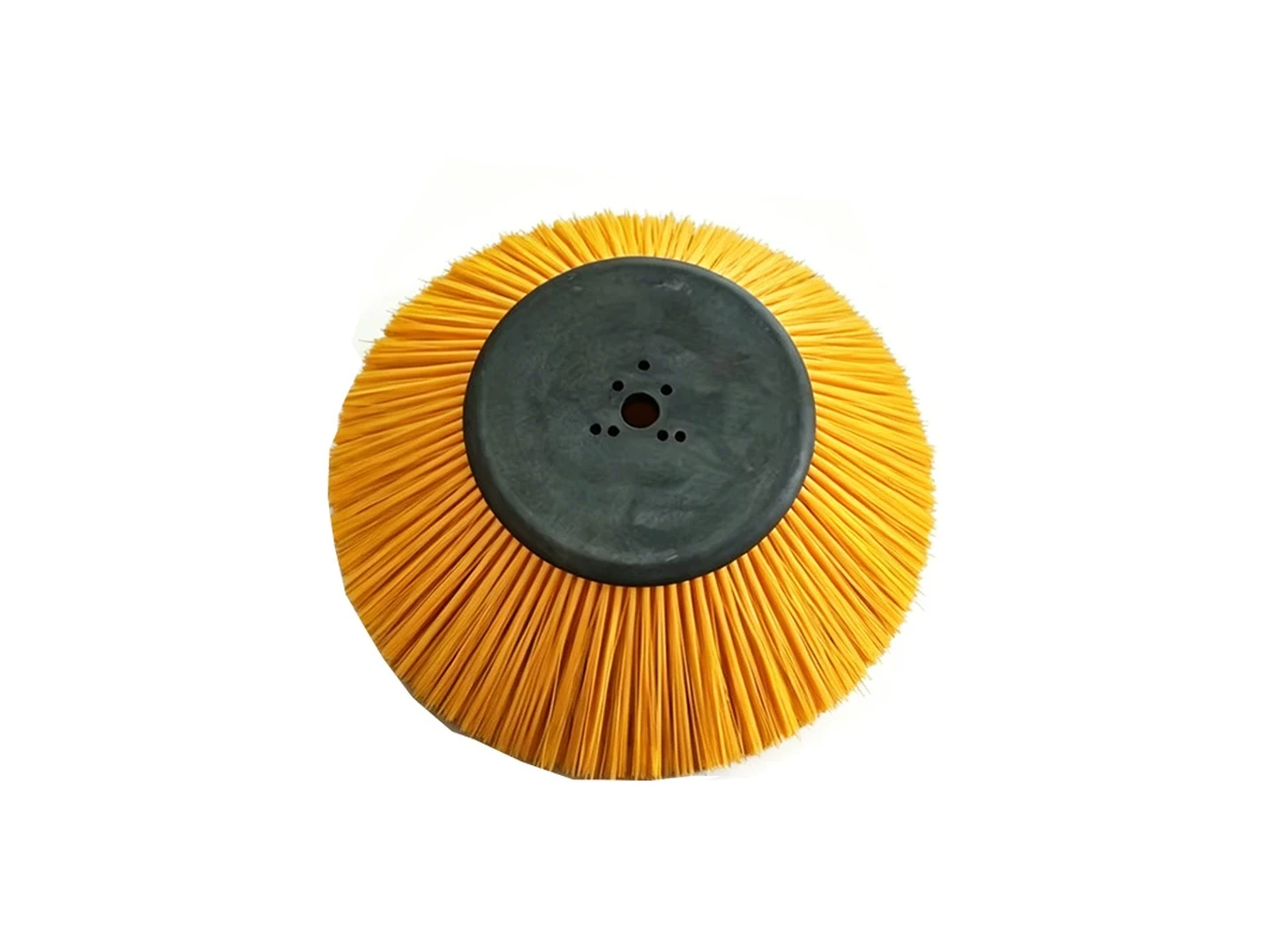
Large-format brush
100 pcs
Minimum order
Built one at a time on a core or channel: full-width rollers, sweeper brooms and long strip.
Production lead time, once the specification is confirmed
- Up to 100 pcsWithin 20 days
- 101–1,000 pcsWithin 30 days
- Over 1,000 pcsConfirmed with your quotation
Peak season can extend these times; the shipping date is confirmed in writing with your quotation. Sampling and shipping are quoted separately.
A machine-mounted cleaning brush for brick, block, and tile production lines that removes clay and cement dust, fines, release residue, and dried slurry from molds, pallets, guides, and transfer surfaces without stopping the line. Built as a roller, strip/lath, or plate form matched to your machine working width, mounting points, and residue type.
What can this brush do for you?
Keeps Mold Faces and Pallets Clean Between Every Cycle
Clay and cement fines smear onto mold faces and pallet boards during pressing, cutting, and stripping. The nylon PA filament tips wipe the moving surface on each pass, so loose particles are removed before they pack into corners or transfer to the next green brick or tile. Cleaner tooling means fewer surface bruises, broken corners, and mold-release problems caused by residue layers.
Continuous Cleaning Without Adding a Separate Line Stop
The brush is mounted at a point where the mold, pallet, or conveyor already travels, so it works as part of the existing cycle. This removes the need for an operator to stop production and clean manually, and it prevents debris from building up during long runs.
Contact Length and Tip Pressure Are Set for the Actual Surface, Not a Catalog Guess
Working width is copied from your machine or conveyor, and bristle length is set so only the filament tips contact the surface. The rigid core and holder stay clear of brick edges, tile corners, and mold features. This protects product geometry and prevents core dents in pallet boards or guide rails.
Material Selection Matches Both Residue and Line Environment
Nylon PA is the default for dry clay and cement dust removal because it flexes, wears slowly, and won’t scratch steel pallets. Polypropylene handles chemical or wet exposure. 316 stainless wire removes dried slurry and release build-up that flattened nylon cannot cut, and it resists corrosion in washdown areas. The fill material should be chosen together with the residue, not separately.
Handles Full Working Width Without Dead Spots
Roller and strip brushes can be built in one continuous width or in aligned segments with staggered joints, so there is no unwiped strip in the middle of a pallet. Segment joints are staggered to prevent a visible line of residue on product bottoms.
What is a Brick and Tile Machine Brush?
A Brick and Tile Machine Brush is a production-line cleaning tool mounted in brick, block, paver, and ceramic tile machinery. It is built in one of three forms — a driven roller brush, a stationary strip/lath brush, or a plate brush — and it uses filament tips to sweep loose particles and surface films from tooling and material-handling surfaces as they move past the brush.
Most installations sit in one of two positions: a roller brush running against a mold or pallet on the return side of the line, or a fixed strip/plate brush mounted above or beside a conveyor, guide rail, or transfer table. The brush’s job is to remove clay and cement dust, fines, release agents, and dried slurry before those materials compress into the tooling or mark the next product.
This is not a finishing brush for fired products and not a manual cleaning tool. It is a maintenance brush designed to run continuously in an abrasive, dusty, often wet production environment. The filament type, diameter, density, and cut length determine how aggressively the brush works and how long it lasts. These variables should be set from the machine drawing and the specific residue, not from a general-purpose brush specification.
Technical Specifications
The values below reflect the most common ordered configuration for a tile-line dust and residue brush. Every dimension can be changed to match your machine drawing and cleaning point.
| Parameter | Standard / Available Options |
|---|---|
| Brush form | Roller, strip/lath, or plate brush matched to the machine position and motion |
| Working width | Copied from your machine, conveyor, mold, or pallet working width; no fixed catalog width |
| Brush diameter | ~410 mm typical for rotary roller installations; set from available envelope and drive |
| Bristle length | ~120 mm nominal; adjusted so filament tips contact the surface while the core stays clear |
| Filament material | Nylon PA for dry clay/cement dust and fines; PP for moisture/chemical exposure; 316 stainless wire for dried release residue and slurry |
| Filament diameter | 3 mm nylon PA as standard for general build-up; finer 0.05–1.2 mm nylon for light dust-only applications; wire diameter selected from residue adhesion |
| Core / shaft / holder | Machine-specific from existing drawing; steel, stainless steel, aluminum, or polymer; bore, keyway, flange, or end-shaft interface |
| Contact condition | Even tip contact across the working width; rigid core and holder remain clear of brick/tile edges and mold features |
| Operating environment | Dry, wet, or chemical-spray conditions; core and filament materials selected to match |
| Mounting / drive | Bearing end blocks, flange plates, shaft clamps, or replaceable segments for long lines |
| Brush type | Custom Roller and Conveyor Brushes |
| How it is driven | Machine-driven, mounted in the equipment |
| Cleaning target | mold box and mold face, steel pallet and wooden board line, and conveyor return run and transfer surface cleaning |
| Surface or part | molds, roller, tile, guides, conveyors, edges, guide rails, and mold faces |
| Residue or debris | clay, mold, fines, dust, slurry, cement dust, particles, and loose particles |
| Mounting / connection | Bearing end blocks, flange plates, shaft clamps, or replaceable segments for long lines |
Where does this brush work best?
Brick and tile machine brushes are used anywhere in the forming and handling process where dust, fines, release residue, or dried slurry accumulates on a moving surface and causes defects, jams, or wear.
- Mold boxes and mold faces on brick, block, and paver machines — removes clay and cement fines between pressing cycles so release agent film stays effective and the next product releases cleanly.
- Steel pallets and wooden board lines — wipes the pallet surface on the return side before a fresh slug of clay is deposited; prevents bottom-surface marks and buildup at pallet edges.
- Conveyor return runs and transfer surfaces — keeps loose particles from being carried back under the forming zone and recompressed into the next product.
- Guide rails, side guides, and width-setting frames — removes edge dust that builds on guides and scuffs or chips product edges during transport.
- Cutting and wire-cutting areas — clears clay fines and slurry from cutter frames, support rollers, and wire tensioning zones where dry build-up causes mis-cut or wire breakage.
How do I choose the right one?
Start with the cleaning point, not the brush. The form, materials, and dimensions follow from where the brush will be mounted and what passes across it.
1. Identify the motion and the mounting position
If the surface moves under a fixed brush, a strip or plate brush is usually enough. If the brush must be driven because the surface is intermittent or the residue needs more force, a roller brush with bearing ends and a shaft or flange drive is required. Copy the mounting hole positions and available envelope from the machine drawing before selecting any dimension.
2. Measure the full dirty width
Include the edges of the pallet, mold, or conveyor — not just the center. The brush working width should cover the full surface with a small overlap at each side, and long lines should be built in segments with staggered joints so there is no unwiped band.
3. Select the filament for the residue and the surface
Nylon PA is the default for dry clay and cement dust and fines: it has enough stiffness to wipe particles while staying flexible enough not to score steel pallets or mold faces. Use polypropylene when the line is wet or has chemical spray, where nylon may absorb water and lose stiffness. Move to 316 stainless wire only when dried slurry or release build-up is hard enough that nylon cannot remove it; wire is more aggressive and will wear or roughen surfaces over time. If your mold face is plated, coated, or polished, validate wire contact on a test section first.
4. Set filament diameter, length, and density together
Thicker 3 mm nylon is for general build-up; fine 0.05–1.2 mm is for light dust removal with minimal marking. Longer bristles flex more and reduce impact force; shorter bristles cut harder but transfer more load to the surface. A denser fill sweeps more but can trap wet clay; a more open fill releases material faster and runs cooler. These three variables work as a set, so change them together with the residue test sample.
5. Check core clearance and contact pressure
The brush should contact with filament tips only. If the core or holder can reach the brick or tile edge or any raised mold feature under normal deflection, the brush is too large, too close, or the bristle length is too short. After installation, check for core contact marks on the first product and reduce engagement if visible.
When this brush is not the right tool
If the accumulation is hard sintered scale, cured cement lumps, or thick dried slurry that requires chipping or grinding, a brush will not remove it alone. Add a scraper, air knife, water spray, or vacuum ahead of the brush, or use a more aggressive mechanical cleaning method. If metal contamination is prohibited near the product, avoid wire fill entirely. If the line produces fired ceramic tile, use a separate finishing brush; this brush is for green and production-handling surfaces.
| Condition | Recommended Configuration |
|---|---|
| Dry clay/cement dust, steel or wood surface | Nylon PA, 0.05–1.2 mm or 3 mm filament, lower fill density, tip-only contact |
| Wet slurry or chemical spray | PP fill, stainless steel core, open fill, corrosion-resistant holder |
| Dried release residue/hard build-up | 316 stainless wire, shorter filament, denser pattern, validate surface wear tolerance |
| Long conveyor with no center support | Segmented strip/plate with staggered joints, aluminum or polymer backing |
Can I customize this brush?
Nearly every dimension and material is open, because the brush must fit a specific machine position. To define the brush, provide the machine drawing or a marked photo, mounting point dimensions, surface material, residue type, line speed, wet/dry condition, and any temperature or chemical exposure.
- Form and interface — roller, strip/lath, or plate; shaft ends, flange plates, bearing blocks, keyways, set screws, or quick-change segments
- Working width and diameter — exact width copied from your machine; diameter adjusted to the available envelope and required tip contact
- Filament — Nylon PA, polypropylene, or 316 stainless wire; diameter 0.05–1.2 mm fine through 3 mm standard or thicker; straight, crimped, flagged, or sanded ends
- Fill pattern and density — straight rows, spiral, cluster, staggered, or variable density across the width for edge-heavy deposits
- Core and holder — steel, stainless steel, aluminum, or polymer; painted, zinc, or powder-coated; split, hinged, or solid back
- Segmentation and mounting — one-piece or segmented for long lines; segment joints staggered for even contact; pre-drilled mounting holes matched to your frame
- Color and marking — custom filament color for position coding, wear-indicator bristles, pad-printed or laser-marked tags, and installation labels
- Packaging — bulk pallet, individual wrap, segmented crate, or project-specific labeling and shipment
If your project requires material documentation, third-party inspection, or test reports against a specific cleaning requirement, we can support those requirements during the customization process.
When is a brick and tile machine brush worn out rather than just dirty?
How do I know if the brush is contacting with enough pressure to remove the residue but not damage the surface?
Check the filament tips after a short run. If the tips show a clean, even wear line across the working width and the residue is gone, contact is correct. If bristles are permanently bent, flattened, or melted, or if the core or holder shows contact marks, engagement is too high. If residue remains and the tips look untouched, increase engagement or move to a stiffer filament.
Can this brush run wet and dry on the same line?
Yes, but the fill material must be chosen for both conditions. Polypropylene is preferred when moisture or chemical spray is present because it absorbs very little water. Nylon PA works well dry but can soften and lose stiffness when saturated. 316 stainless wire handles wet and chemical conditions but is not needed for light dust. Specify the full operating condition when ordering.
How do we prevent the brush from marking green brick or tile edges?
Set the brush so only filament tips contact the product or tooling surface, and keep the core at least the bristle length away from any raised edge under maximum deflection. Use a softer or finer filament for green product contact, and stagger segment joints so there is no rigid joint line. After first installation, inspect a full cycle for core marks or edge chips before releasing the line.
What is the replacement trigger for this brush?
Replace the brush or segment when the bristle length has worn to the minimum engagement length in your drawing, when the core or holder is close enough to contact the surface, or when missing clumps, matting, or permanent set leave unwiped bands. Routine checks should measure bristle length at three points across the width and inspect the core for runout or bearing wear at the same time.
Does this brush replace the washing or scraping station?
No. Brushing removes loose dust, fines, and soft residue films. Hard cemented build-up, thick slurry layers, and large chucks of clay need a scraper, water spray, air blow-off, or a wash station ahead of the brush. The brush is a continuous maintenance step that reduces how often those heavier cleaning methods are needed and keeps the line running between service stops.
What should the maintenance team check during a routine line walk?
Look for missing or broken filament clumps, matted or heat-affected bristles, core/holder contact marks, loose fasteners, shaft runout, and debris packed between fill rows. If the brush has wobble, the contact line will be uneven and the brush will wear quickly. Tighten or replace the mounting before continuing production.
Guides that go deeper on this
Abrasive Nylon Grit and Filament Selection
Read this guideGuideBrush Speed, Engagement, and Heat
Read this guideGuideCapsule Polishing Machine Brushes: Selection and Maintenance
Read this guideGuideCarpet Machine Brush vs Floor Scrubber Brush: Which Fits?
Read this guideGuideConveyor Belt Cleaning Brush Design
Read this guideCustom Manufacturing RFQ
Describe Your Application
Please include the main sizes, application, residue, preferred material, interface, quantity, and any drawing or sample available.
Drawing or photo optional — it speeds things up, it does not gate the enquiry.
Custom Brush RFQ
Send Your Brush Project
Upload a drawing, product photo, or sample photo and provide the core dimensions and cleaning conditions.
“We need a brush to remove wet residue from a stainless steel conveyor, about 800mm wide. The current brush wears quickly. We can send photos.”
“We sell drinkware and need a cleaning brush to include with the product. Quantity around 5,000 pieces.”