
Custom Cleaning Brush
Horsehair Bottle Brush
Soft natural horsehair bottle brush for glass, crystal, stainless steel, and lab containers. Custom diameters, lengths, stems, and handles.
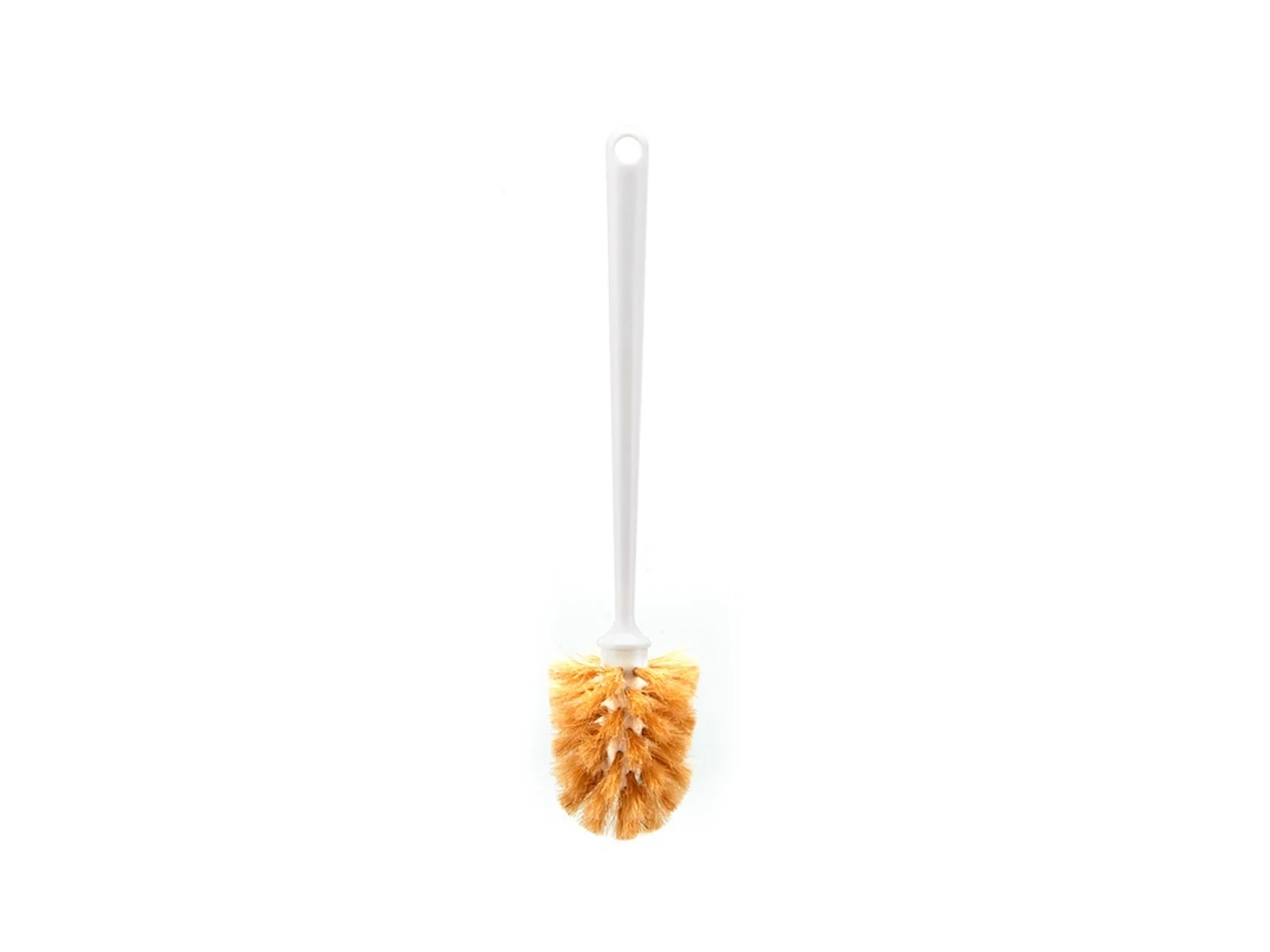
Small brush
500 pcs
Minimum order
Held in one hand: tube, bottle, detail and swab brushes — including long-handled ones with a small head.
Production lead time, once the specification is confirmed
- Up to 500 pcsWithin 7 days
- 501–50,000 pcsWithin 14 days
- Over 50,000 pcsWithin 21 days
Peak season can extend these times; the shipping date is confirmed in writing with your quotation. Sampling and shipping are quoted separately.
A natural-bristle bottle brush for narrow-neck and wide-mouth containers where soft, non-scratching contact matters. Horsehair filaments reach sidewalls, shoulders, bases, and thread areas to lift liquid films, beverage residues, powders, and fine particles without marring glass, crystal, polished metal, or coated interiors.
What can this brush do for you?
Cleans without scratching delicate surfaces
Natural horsehair has tapered, rounded fiber ends and a soft flexural stiffness. It wipes and lifts rather than scrapes, so the brush removes film from drinking glasses, decanters, and polished stainless steel without leaving hairline marks. This is the core reason to choose horsehair over nylon or wire for surface-critical containers.
Reaches curved shoulders and base transitions
The flexible stem—twisted wire or flexible plastic—bends with the bottle profile, letting the tufted head follow the inside shoulder curve and press into the base corner. Straight, stiff brushes often skip these areas. This design keeps the filament tips in contact through the full stroke.
Absorbs wash solution and releases it where you scrub
Horsehair is naturally absorbent. The fibers hold water and detergent within the tufts and re-wet the contact zone as you scrub, which helps loosen dried-on films and sugar-based residues with less hand pressure. A non-absorbent brush would just push the solution around.
Cleans necks, threads, and grooves
A tufted working end plus side tufts reach into cap threads, neck recesses, and small shoulders where residue collects. Because horsehair tufts compress into narrow gaps, the brush removes buildup in features that a flat sponge or cloth cannot touch.
Gentle enough for routine use, durable enough for daily cycles
Horsehair fibers withstand repeated bending without snapping when the brush is used for its intended residue range. With proper rinsing and air-drying after each use, a horsehair bottle brush remains usable through many cleaning cycles.
What is a Horsehair Bottle Brush?
A horsehair bottle brush is a manual cleaning tool whose scrubbing surface is made of natural horsehair fibers mounted on a central stem. The stem—most often a twisted galvanized or stainless steel wire, or a rigid plastic core—positions tufts of horsehair along the working length and ends in a handle for control. It is used to clean the interior of bottles, carafes, flasks, and similar narrow-neck containers by hand.
The brush works by combining the absorbency and softness of horsehair with the reach provided by the stem. During a typical cleaning stroke, the operator inserts the head through the neck, pushes or pulls the brush along the sidewall, and rotates it to scrub the full circumference. The tufts flex to press against curved surfaces, while the natural fiber structure traps and lifts soft residue into the wash solution.
Horsehair is the defining material. It has moderate stiffness—softer than PBT or nylon monofilament—and excellent liquid absorption. The fiber surface naturally holds fine particles and dissolves light films without scratching the substrate. This makes the brush ideal for glass, crystal, polished metal, and coated containers. It is not intended for baked-on carbon, heavy scale, or aggressive chemical stripping, where a stiffer or abrasive brush would be required.
Because horsehair is a natural protein fiber, it has practical operating limits. It should be used with mild detergents and water temperatures up to around 60°C (140°F). Boiling, autoclaving, or exposure to strong acids or alkalis will degrade the fibers and shorten brush life.
Technical Specifications
The table below lists typical specification ranges for a horsehair bottle brush. All dimensions, fill densities, and materials can be adjusted to match your bottle geometry and cleaning process.
| Parameter | Value / Options |
|---|---|
| Head diameter | 20–70 mm, selected to pass the narrowest neck and still contact the sidewall |
| Working length (bristled area) | 120–300 mm |
| Overall length | 200–450 mm (stem + handle) |
| Filament material | Natural horsehair, fiber diameter 0.10–0.50 mm |
| Filament length | 10–30 mm from stem, adjusted to neck clearance and scrubbing depth |
| Stem / core | Twisted galvanized wire, stainless steel wire, or rigid/flexible PP or PBT plastic |
| Handle material | PP, PBT, wood, or overmolded PP/TPU grip |
| Neck clearance | 10–60 mm total (head diameter vs. narrowest neck ID) to prevent binding |
| Head form | Cylindrical, tapered, tufted-end, or custom profile |
| Fill pattern | Spiral tuft, straight rows, or dense double-spiral for longer wear |
| Operating temperature | Up to 60°C (140°F) continuous; brief exposure to 80°C (176°F) acceptable but not for sterilization |
| Chemical compatibility | Mild detergents, neutral cleaners, and alcohol/water solutions; avoid strong acids, alkalis, and chlorinated solvents |
| Brush type | Custom Bottle & Container Brushes |
| How it is driven | Hand-guided |
| Cleaning target | wine bottle, laboratory glassware, and stainless steel drinkware cleaning |
| Surface or part | containers, necks, glass, sidewalls, plastic, bases, shoulders, and metal |
| Residue or debris | fiber, fine particles, beverage residue, powder, liquid film, haze, polish, and carbon |
| Mounting / connection | Fixed |
If your bottle dimensions fall outside these ranges, contact us—the brush can be engineered to larger or smaller specifications.
Where does this brush work best?
- Wine bottles, decanters, and crystal carafes: remove wine residue, tannin films, and mineral haze from interior surfaces without scratching fine glass.
- Laboratory glassware: volumetric flasks, reagent bottles, and sample vials need gentle residue removal followed by thorough rinsing; horsehair’s absorbency helps lift water-soluble residues.
- Stainless steel drinkware: thermoses, water bottles, and travel mugs with curved bases and narrow necks where a stiff brush might polish or dull the interior finish.
- Cosmetic and personal care containers: lotion bottles and pump reservoirs where soft films and emulsified residues must be removed without damaging plastic or coated liners.
- Coated or plated interiors: containers with metallic or polymer coatings that would be damaged by abrasive bristles.
How do I choose the right one?
The right horsehair bottle brush depends on four factors: neck access, interior geometry, residue type, and operating environment.
Check neck access first. Measure the narrowest internal diameter of the bottle opening. The brush head must pass through without excessive force while still allowing tufts to flare out and scrub the sidewall. A head too large binds at the neck; too small leaves the sidewall barely contacted. The neck clearance value in the table is the total diametric gap to work with.
Match filament length and density to the interior. Longer, denser tufts scrub larger internal diameters and hold more wash solution. Shorter, sparser tufts pass through narrower necks and rinse more easily. For wide-mouth jars, a larger head diameter with longer filaments works; for small-neck bottles, use a tapered head.
Choose stem flexibility by bottle shape. A twisted-wire stem bends to follow curved shoulders and reach under the neck. A rigid plastic stem gives better axial pressure for straight-walled bottles but cannot follow sharp curves. If the bottle has a pronounced shoulder or offset base, select a flexible stem and a tapered head.
Consider what you are removing and what you must protect. Horsehair is excellent for soft films, beverage residues, light powders, and odor-causing deposits. If the residue is dry, crusty, baked-on, or mineralized, switch to a stiffer PBT or nylon filament brush, or use an abrasive cleaning method. If the container cannot tolerate any water absorption by the brush itself (for example, in a sterile process or where cross-contamination is critical), a silicone brush may be more appropriate.
Verify environment compatibility. Horsehair tolerates mild detergents and moderate temperatures, but not autoclaving, boiling, harsh acids, alkalis, or solvent-based cleaners. If your cleaning protocol includes steam, high heat, or aggressive chemistry, specify a synthetic filament brush instead.
Can I customize this brush?
Yes. Horsehair bottle brushes are produced to your bottle geometry and cleaning process. To prepare a custom configuration, provide the minimum neck ID, maximum body ID, internal depth, surface material, residue type, cleaning chemical, wash temperature, and preferred handle shape. A sample bottle or drawing accelerates the definition.
- Head dimensions: diameter, working length, taper profile, and tuft density.
- Filament parameters: horsehair length, cut (flagged, unflagged), blend with synthetic fibers for added stiffness if needed.
- Stem: twisted galvanized wire, stainless steel wire, rigid PP or PBT, or flexible polymer core; length and bending flexibility specified.
- Handle: length, grip material (PP, TPU overmold, wood), hanging loop, color, or molded logo.
- Fill pattern: spiral, straight, double-spiral, or tufted-end only.
- Packaging: bulk, individual polybag, retail card, or kit.
- Marking: pad print, laser, or molded identification on handle.
If your project requires material declarations, inspection reports, cleaning validation support, or third-party testing, we can assist with documentation during the customization phase.
Which filament survives the cleaning and still lasts on a horsehair bottle brush?
Will horsehair scratch glass or polished stainless steel?
No. Horsehair fibers are naturally soft with tapered, rounded tips, and their flexural stiffness is well below that of nylon or wire. When the brush is used with a normal cleaning solution and free of embedded grit, it will not scratch glass, crystal, or polished metal. If abrasive particles are present in the wash water, rinse the brush and bottle first to avoid transferring grit.
Can I use this brush with boiling water or in a dishwasher?
No. Horsehair is a natural protein fiber and will degrade under boiling water, steam, or dishwasher heat. The recommended maximum is 60°C (140°F) for routine use. For hot-water sanitization or dishwasher-safe brushes, select a PBT or nylon filament brush instead.
How do I clean and store the horsehair bottle brush itself?
Rinse the head thoroughly after each use to remove detergent and loosened residue. Shake off excess water and hang the brush vertically with the bristles down so the tufts dry fully. Avoid leaving the brush in a closed container or soaking it in cleaning solution for extended periods, which can cause the natural fibers to soften or develop odor.
Does the brush shed hairs into the bottle?
A small number of loose fibers may appear during the first few uses as truly loose hairs release. A well-made horsehair fill is tightly twisted into the stem and should not continue shedding. If you notice consistent hair loss after the break-in period, inspect the stem for damage or a loose fill band and replace the brush.
When should I choose a stiffer brush instead of horsehair?
Choose nylon, PBT, or wire when the residue is dried, baked-on, mineralized, or requires aggressive scrubbing. Horsehair is for soft films, beverage residues, and gentle surface preservation. If you are unsure, describe the residue and we can recommend the correct filament.
Can I use this brush for baby bottles?
Horsehair is safe for glass baby bottles, but because it is a natural fiber that retains moisture, it may not be the best choice for high-hygiene feeding equipment that is routinely boiled or sterilized. For baby bottles that must withstand boiling or chemical sterilization, a PBT or silicone brush with a dedicated drying regimen is more practical.
Guides that go deeper on this
Custom Manufacturing RFQ
Describe Your Application
Please share the brush dimensions, working area, residue type, material direction, quantity, and a drawing or photo for quotation.
Drawing or photo optional — it speeds things up, it does not gate the enquiry.
Custom Brush RFQ
Send Your Brush Project
Upload a drawing, product photo, or sample photo and provide the core dimensions and cleaning conditions.
“We need a brush to remove wet residue from a stainless steel conveyor, about 800mm wide. The current brush wears quickly. We can send photos.”
“We sell drinkware and need a cleaning brush to include with the product. Quantity around 5,000 pieces.”