
Custom Cleaning Brush
Cheese Mold Cleaning Brush
Custom cheese mold cleaning brushes with PP, PBT, or nylon filaments to remove curd, fat, and protein from perforated dairy molds. Hand or machine mounted.
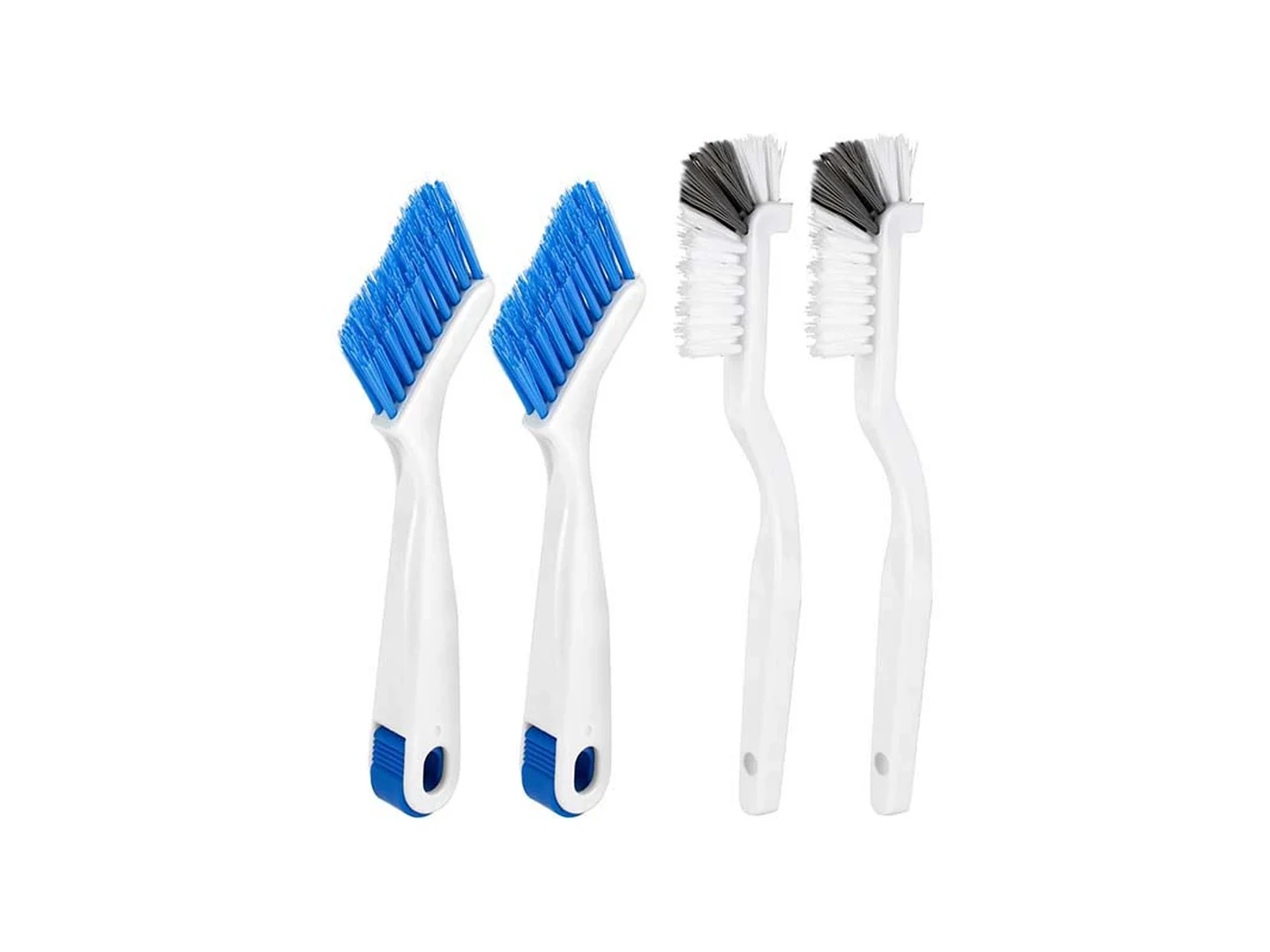
Medium brush
100 pcs
Minimum order
Worked with two hands or on a pole: chimney, gutter and pond-filter brushes, discs, cups and tank brushes.
Production lead time, once the specification is confirmed
- Up to 100 pcsWithin 7 days
- 101–5,000 pcsWithin 14 days
- 5,001–50,000 pcsWithin 21 days
- Over 50,000 pcsConfirmed with your quotation
Peak season can extend these times; the shipping date is confirmed in writing with your quotation. Sampling and shipping are quoted separately.
A food-processing brush designed to remove cheese curd, milk fat, and protein film from perforated cheese molds, sidewalls, drainage surfaces, and rib details in dairy production. Configurable as a hand brush, detail brush, or machine-mounted roller head for manual and in-line mold cleaning.
What can this brush do for you?
Penetrates drainage perforations instead of bridging over them
Curd packs into drainage holes and small cavities on perforated cheese molds. The brush is trimmed so filaments enter the hole pattern rather than bridging across the surface. Filament diameter is matched to the smallest perforation so tips slip into the opening and wipe the sidewall of each hole. After pressing and demolding, one pass can loosen deposits that would otherwise require hand picking or rework.
Cleans mold cavities without gouging the surface
Mold surfaces, especially polypropylene and HDPE forms, can be dulled or scored by hard bristles. PP, PBT, and nylon filaments provide a polymer contact surface with enough backbone to move curd and fat but without the metal edge that can cut into the mold. This helps preserve mold release and consistent cheese shape over repeated cleaning cycles.
Releases dairy soil instead of packing it between bristles
Dairy soil is sticky. If filaments are too long, too soft, or too dense, curd and fat pack into the base and smear across the next mold. An open trim pattern and controlled filament stiffness let the brush release soil during the rinse cycle instead of holding it. The brush itself stays cleaner, and less residue carries over between molds.
Survives hot water, detergents, and constant wet conditions
The brush is built for a washdown environment. PP, PBT, and nylon filaments resist the water absorption common in natural fibers and tolerate typical foam cleaners, acidic or alkaline detergents, and hot-water rinse conditions. Handles and blocks are offered in polypropylene or stainless steel, with no wooden parts that can swell or harbor moisture in a dairy room.
Covers both manual and machine cleaning from one filament specification
A single mold-cleaning program often needs a hand brush at the demolding station, a detail brush for corners and date plugs, and a roller or tank brush in the automated washer. The same filament material, diameter, trim length, and color can be specified across all three forms, so manual touch-up and machine cleaning deliver the same surface treatment.
What is a Cheese Mold Cleaning Brush?
A cheese mold cleaning brush is a food-processing cleaning tool that provides mechanical removal of curd, milk fat, and protein film from cheese molds and forms after pressing, draining, and demolding. It is not a general-purpose scrub brush. The head geometry, filament material, trim length, and interface are selected around the mold’s cavity shape, perforation pattern, rib details, and the cleaning equipment used in the plant.
During use, the brush contacts the mold’s food-contact surfaces: sidewalls, base, drainage holes, leading edges, logo and date details, and the lands between molds when a machine roller is used. The action can be manual scrub strokes, a rotating shaft in a wash tunnel, or a tank-mounted brush running against the mold face. The job is to lift attached soil so the rinse, foam, and sanitizing steps can actually reach the surface. The brush does not replace those steps.
This is a tool for routine dairy soil. It is not intended for mineral scale, rust, or carbonized residue. Hard deposits require a chemical treatment or a different mechanical method suitable for the mold material.
Technical Specifications
| Parameter | Value / Options |
|---|---|
| Brush form | Hand brush, angle-head detail brush, tank/roller brush, or machine-mounted head selected from mold geometry |
| Overall length | 150–400 mm for hand configurations; machine shaft length set to equipment |
| Head width | 50–200 mm, shaped to cavity width, rib spacing, and mold face |
| Filament material | Polypropylene (PP), PBT, or nylon (PA) in food-processing grades; metal-detectable compound available on request |
| Filament diameter / trim length | 0.15–0.40 mm filament diameter; 15–40 mm trim length matched to perforation size and soil type |
| Block / handle material | Polypropylene, 304/316 stainless steel, or hygienic polymer; no wood construction in washdown areas |
| Temperature guidance | -20°C to 121°C depending on selected filament and handle material; verify against actual wash cycle |
| Mounting / interface | Straight handle, loop handle, threaded hub, drive shaft, keyed roller, quick-release bracket, or custom flange |
| Operating environment | Wet washdown, foam cleaning chemicals, hot-water rinse, dairy process rooms; material grade matched to detergent and temperature |
| Brush type | Custom Handheld Detail Brushes |
| How it is driven | Machine-driven, mounted in the equipment |
| Cleaning target | perforated and microperforated cheese mold, mold sidewall, and stainless-steel cheese form cleaning |
| Surface or part | molds, roller, sidewalls, holes, cavities, mold faces, edges, and corners |
| Residue or debris | mold, protein film, fat, milk fat, mineral scale, rust, and carbonized residue |
| Mounting / connection | Straight handle, loop handle, threaded hub, drive shaft, keyed roller, quick-release bracket, or custom flange |
The most decision-relevant variables for cheese mold cleaning are perforation diameter, cavity depth and width, wash temperature, and whether the brush will be used by hand or mounted in a washing line. All listed values can be adjusted to a specific mold.
Where does this brush work best?
- Perforated and microperforated cheese molds after pressing and draining, especially Gouda, Edam, semi-hard, and hard cheese forms where curd collects in drainage holes.
- Mold sidewall, base, and corner transitions that hold protein film after demolding, including tapered cavities and embossed surfaces.
- Plastic, HDPE, polypropylene, aluminum, and stainless-steel cheese forms where polymer filaments are needed to avoid scoring the forming surface.
- Cheese hoops, follower plates, and divider frames with edges, slots, and rib details that flat-headed brushes cannot contact.
- High-volume mold-washing lines using roller or tank-mounted brushes for both mold faces before sanitizing, paired with hand touch-up at demolding stations.
- Artisan and small-batch cheese rooms where daily manual cleaning needs a repeatable brush instead of improvised cleaning tools.
How do I choose the right one?
Start with the mold geometry and perforation pattern
Measure cavity width, depth, sidewall draft, minimum hole diameter, rib spacing, and the gap between embossed details. These measurements determine head width, trim length, filament diameter, and whether a straight or angled head is required. A brush that is too wide will rock on the mold face and miss the base; one that is too narrow will double the labor per mold.
Match filament material to temperature and chemicals
PP is economical, chemically resistant, and suitable for many ambient and warm washdown cycles. PBT retains stiffness and recovery better in hot wash water and is a good choice when the plant runs higher wash temperatures. Nylon offers toughness and flex but absorbs more moisture and may feel softer in continuous wet service. Supply the maximum wash temperature and detergent chemistry so the filament and block materials match the process.
Set stiffness for the soil age and surface sensitivity
Fresh curd and fat film come off with softer or medium PP/nylon. Dried protein film needs stiffer PBT, denser trim, or shorter filaments. Do not move from plastic filaments to wire to solve a soil problem—most cheese molds are plastic or have precision surfaces that wire will damage. Test a sample head on a scrap mold before committing the full line.
Select the right interface for manual or machine use
Hand work at the demolding station is usually a straight or angled handle with a hanging hole. Machine use requires a threaded hub, shaft keyway, or bracket that fits the existing roller or tank system. If the brush head must be replaced on a schedule, specify a replaceable head design from the start.
| Condition on the line | Recommended configuration |
|---|---|
| Fresh curd and soft fat film | PP or nylon, medium trim, open pattern |
| Dried protein film or older soil | PBT, stiffer or denser trim |
| Microperforated mold with small holes | Filament diameter smaller than hole, shorter trim, tapered head |
| High wash temperature | PBT filament with stainless hub or handle; confirm maximum temperature |
| Plastic mold with delicate surface | Softer PP or nylon; run a scratch patch test |
| Roller or tank machine cleaning | Replaceable head with matching shaft, thread, or bracket |
If the deposit is mineral scale, rust, or baked-on carbon, a cheese mold cleaning brush is not the right tool. Hard films need chemical treatment, pressure washing, or an abrasive or mechanical method appropriate for the mold material. If perforations are smaller than the minimum practical filament diameter, use spray-through cleaning or a custom microfilament configuration rather than forcing a brush into the holes.
Can I customize this brush?
Cheese mold cleaning brushes are specified to the mold, not picked from a catalog. We will need the mold drawing or sample, minimum perforation diameter, cavity dimensions, wash temperature and chemicals, and whether the brush is for hand or machine mounting. A photo or sketch of the current brush, if there is one, also helps.
- Head geometry — width, length, straight or angled face, curved or contoured block, multi-face head, corner or detail tip for logos and date plugs.
- Filament system — PP, PBT, or nylon; filament diameter, trim length, density, straight or crimped, flagged tips, color, metal-detectable compound.
- Handle and block — polypropylene, stainless steel, hygienic polymer; length, grip shape, hanging hole, replaceable head design.
- Mounting interface — threaded hub, drive shaft, keyed roller, quick-release bracket, flange, or existing machine adapter.
- Color and marking — zone-coded colors, production line identification, pad print, laser marking, or molded logo.
- Packaging — bulk, individually bagged, case pack, spare-head kit, or project-specific labeling.
If the plant requires material documentation, wash-cycle durability data, or third-party testing for the selected food-contact materials, we can support those requirements during the specification and sampling phase.
What size should a cheese mold cleaning brush be, and how long does it last?
How can I tell whether the brush is actually cleaning the perforations and not just the mold face?
After a timed scrub pass, rinse the mold and inspect the drainage holes under light. Hold the mold at an angle and look for curd or film remaining on the hole walls. If the holes still show residue while the sidewall is clean, the filament diameter, trim length, or hole entry angle is not matching the perforation. Use a smaller filament or a tapered tip configuration.
What should I do before using a new brush on a cheese mold line?
Wash the new brush with the same detergent and hot-water process the plant uses, then rinse and air dry. Check for loose filaments and confirm the handle or mounting fits without sideways play. If plastic molds are involved, run a patch test on a scrap or retired mold to confirm the contact does not leave marks before releasing the brush to production.
How do I know when to replace brush heads in an automated mold washer?
Set a visual inspection point at line start-up: look for matted or flattened filament, missing tufts, cracked blocks, loose hubs, and discoloration that indicates chemical degradation. A practical rule is to replace the head when trim length is visibly shorter than original or when it takes more pressure to achieve the same mold surface result. Keep one new head as the reference sample.
Can the same brush be used on different mold sizes?
Not automatically. A head shaped for one cavity width will rock or miss contact on a different one. If the plant runs multiple mold sizes, separate brushes or a head geometry designed to contact the common features of all molds is safer. Using the wrong size slows cleaning and creates hidden residue zones.
Does the brush need to be dedicated to a production zone or product type?
Many dairy plants do this to prevent cross-contact or allergen carryover between lines. Color-coded handles or marked heads make zone assignment easy to control. Even if the filament spec is identical, separate brushes per zone or product type are a simple control and reduce risk during audits.
When should I use a chemical treatment instead of a brush?
When deposits are mineral scale, burned-on protein, or hardened films that have gone through hot cycles, brushing alone will not fully remove them. Apply the appropriate alkaline or acid foam or soak cycle first, then use the brush for final mechanical loosening, followed by rinse and sanitizing. Forcing a brush against hardened scale mainly wears the brush and may damage the mold.
Guides that go deeper on this
Cheese Mold Brush vs Standard: Conveyor Sanitation
Read this guideGuideCheese Mold Brush: Material and Size for Ingredient Contact
Read this guideGuideCheese Mold Cleaning Brush: Specs for Wet Food Zones
Read this guideGuideBakery Tray and Mold Brushes: Residue and Material Choice
Read this guideGuideTire Mold Cleaning Brush: Which Wire Clears Vents Safely?
Read this guideCustom Manufacturing RFQ
Describe Your Application
Please include the main sizes, application, residue, preferred material, interface, quantity, and any drawing or sample available.
Drawing or photo optional — it speeds things up, it does not gate the enquiry.
Custom Brush RFQ
Send Your Brush Project
Upload a drawing, product photo, or sample photo and provide the core dimensions and cleaning conditions.
“We need a brush to remove wet residue from a stainless steel conveyor, about 800mm wide. The current brush wears quickly. We can send photos.”
“We sell drinkware and need a cleaning brush to include with the product. Quantity around 5,000 pieces.”