
Material
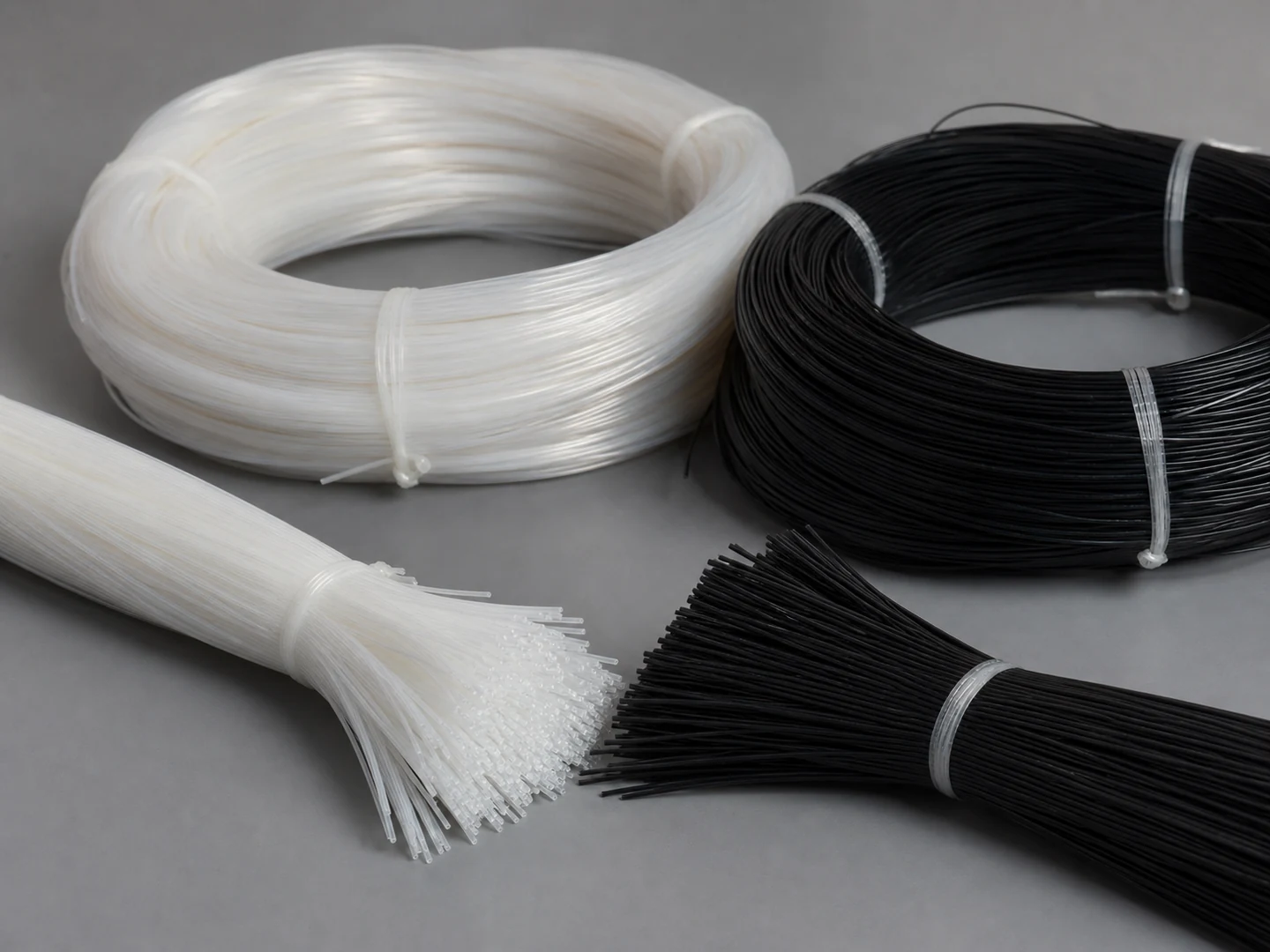
HDPE Filament
Polyolefin filament
Choose HDPE Filament based on its stiffness, recovery, wear, wet-service, chemical, and temperature behavior. The same material can produce different stiffness, so filament diameter, trim length, density, grade, and service conditions must also be defined.
Datasheet values
- Filament diameter
- Set by supplier capability and required brush stiffness
- Hardness
- Grade dependent
- Moisture uptake
- Very low for HDPE; confirm selected grade and test method
- Temperature use
- Grade and load dependent; confirm filament TDS
HDPE Filament is used as brush fill or contact media where its property profile fits the cleaning duty.
What is HDPE Filament, and what makes it different from other brush filaments?
HDPE Filament belongs to the polyolefin group, supplied as filament, strip fill, roller fill and molded blade or foam pad as applicable, drawn in round, rectangular, hollow and star-shaped sections and set in straight rows, helical, staggered, zoned and random fill patterns.
HDPE Filament is a custom brush contact material selected by filament or blade geometry, temperature, moisture, chemicals and surface risk.
Change material when temperature, chemicals, static, shedding or surface marking becomes limiting.
What stiffness and contact pressure can I expect from HDPE Filament?
HDPE Filament is shore D 60–70, which is why brush behavior follows Medium Flexibility flexibility and Shore D 60–70 hardness.
The part people get wrong: stiffness is not a property of the material on its own. A 0.50 mm filament on a 15 mm trim is stiffer than a 0.30 mm filament on a 25 mm trim in the same grade. Fix diameter and trim first, then confirm the material.
How does water affect HDPE Filament performance?
HDPE Filament takes up ≤0.01% (24h, ISO 62/ASTM D570).
HDPE has very low moisture uptake; confirm the selected grade and test method when dimensional stability is critical.
What this means for your application: it barely absorbs water, so dry and wet contact pressure are effectively the same and the brush behaves alike on both duties.
A practical check: soak a sample for an hour and re-measure the trim. If it has moved enough to change the contact band, the grade is wrong for the duty.
What temperature limits apply to HDPE Filament?
HDPE softens well below its melting temperature, and usable temperature varies by grade and load. Confirm the actual filament grade for sustained hot service.
Design to that answer rather than to a raw-material datasheet figure: a brush rating already accounts for filament working under load rather than raw polymer sitting in an oven.
Where it stops working: validate with a sample if the process sits near the top of that band. A permanent bend under load means the answer is a higher-temperature filament family, not a heavier trim.
The usable limit also moves with diameter, trim and contact pressure. A fine filament under light load tolerates more than a thick one under heavy scrubbing.
What chemicals attack HDPE Filament?
HDPE is resistant to many aqueous chemicals, but compatibility is grade and condition dependent; check the exact chemical, concentration, temperature, exposure time and load.
The same cleaner can be harmless or destructive depending on how strong it is, how hot it runs and how long it sits. Quote the concentration and the dwell time, not just the product name.
Before you commit to a quantity: Use resin or alloy grade TDS, ISO/ASTM property method and lot traceability when specified.
What is the practical lower limit for filament diameter?
About 0.10 mm. Below that the filament turns fragile and breaks under ordinary contact pressure, so 0.10–2.50 mm is the working range.
Free trim runs 8–350 mm, and the two interact: a finer filament needs a shorter trim to keep useful stiffness, while a thicker one carries a longer trim and still lands pressure on the tip.
Split the range by duty: roughly 0.10–0.7 mm for light wiping, dusting and surfaces that mark easily, and 0.7–2.50 mm where residue is packed on and point pressure matters more than surface risk.
Tip treatments available on this filament: end rounding, corona treatment, anti-static coating and antibacterial coating.
In practical brush terms: reaching deep into a bore or crevice is a diameter problem before it is a length problem. A thicker filament on a moderate trim pushes further in before the tips fold over.
What applications typically use HDPE Filament?
Custom cleaning brushes requiring HDPE Filament for its mechanical, temperature, moisture or chemical behavior.
The applications that keep coming back to this grade:
- Laboratory Tube Cleaning
- Household Dish, Teapot & Kitchen Detail Cleaning
- Carpet Machine Cleaning
- Beverage Equipment Cleaning
- Industrial Machine Cleaning
- Bakery Tray Cleaning
The constructions that usually carry it:
- Custom Handheld Detail Brushes
- Custom Tube & Pipe Bore Brushes
- Custom Roller and Conveyor Brushes
- Custom Floor Scrubber Sweeper Brushes
- Custom Strip Seal Brushes
If the sample comes back rejected: Final performance depends on grade, filament diameter, trim, density, load, chemical exposure and operating temperature.
How do I specify HDPE Filament for a custom brush?
A usable specification carries the construction, the filament diameter and free trim, the density and contact setting, and the service conditions: wet or dry, temperature, and what the cleaner actually is.
The mistakes that most often send a sample back:
- Selecting only by material name without defining diameter, trim, density, engagement and operating conditions
Reference standards behind the figures on this page: ISO 527-1:2019; ASTM D638; ISO 62:2008; ASTM D570-22; ISO 868:2003; ASTM D2240-15(2021); ISO 4892-3:2024; ASTM G154-23; UL 94.
Source: LyondellBasell — Polyolefin polymer portfolio. HDPE is stiffer and more chemically resistant than the low-density grades, but it still softens well below its melting point. Do not read a service temperature off a processing or melting figure.
What else does the datasheet specify for HDPE Filament?
| Filament cross-section | Round/Rectangular/Hollow/Star-Shaped |
|---|---|
| Electrical behaviour | Insulating; Conductive Carbon-Black Modification Can Reach 10^3–10^8 Ω |
| Continuous service temperature (°C) | 70–90 |
| Peak temperature (°C) | 100–120 |
Questions this page is asked
How should environmental stress cracking be checked in HDPE filament?
Hold representative filaments and their anchor region at the service deflection while exposing them to the exact detergent or wetting agent, concentration, temperature and time through repeated cycles. Inspect crazing and cracks and compare force, elongation, recovery and breakage with unexposed controls, since an unstressed immersion result can miss cleaner-assisted cracking.
What should set the hot-service limit of an HDPE brush?
Cycle the complete brush at the maximum process and cleaning temperatures while applying the intended sustained contact load and recording deflection, creep, force loss, recovery after cooling, anchor movement and surface result. Set the limit below the point where permanent shape or function drifts, rather than using melting temperature as the acceptance value.
Guides that go deeper on this
We have not written a guide specific to this one yet. The material that covers selection, filament, dimensions, maintenance and sourcing is collected in the technical resources library.
Continue Exploring
Recommended Reading & Related Brush Resources
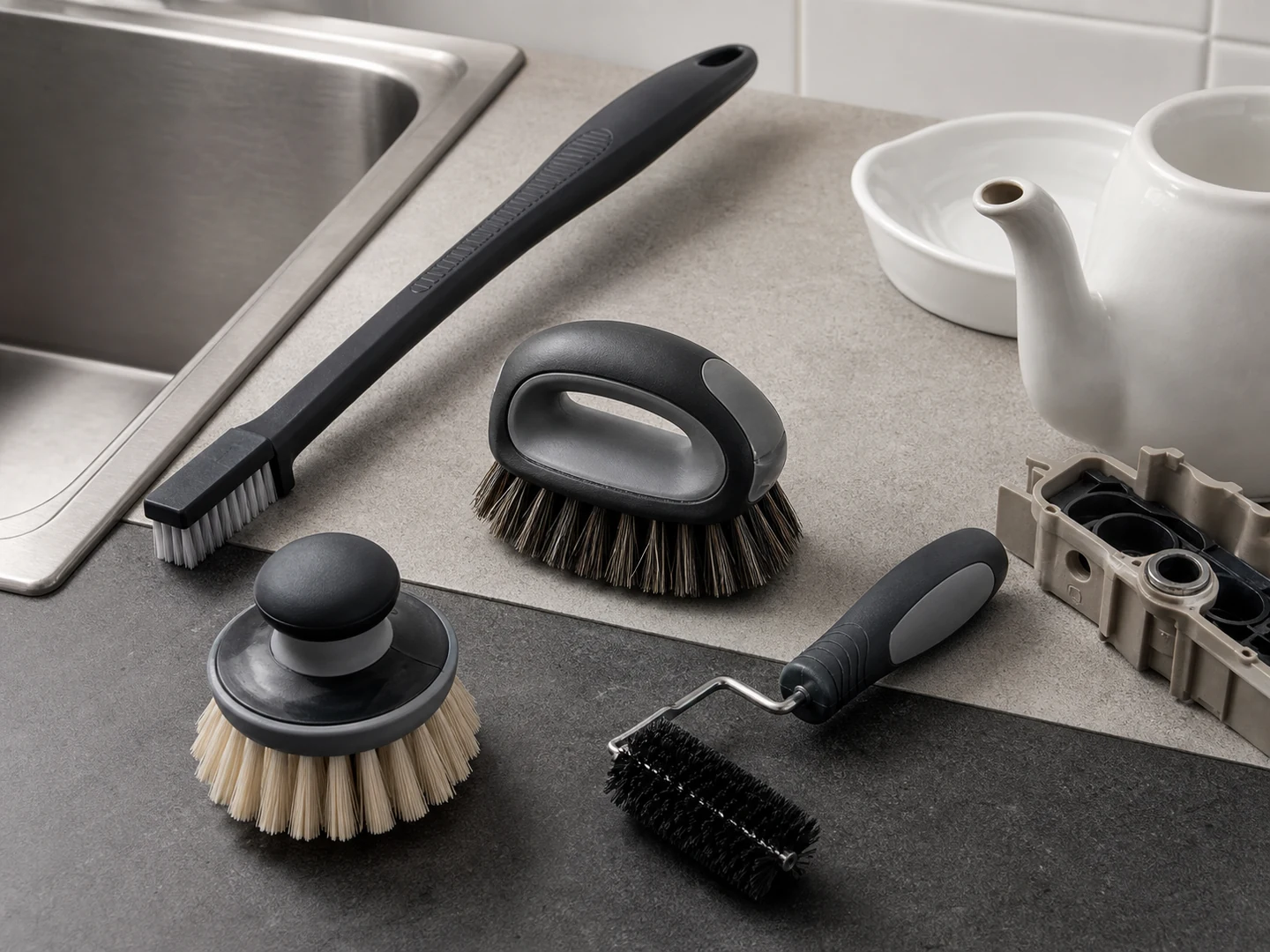
Custom Handheld Detail Brushes
Choose a handheld detail brush when you need direct control in seams, recesses, fittings,…
See how this type is built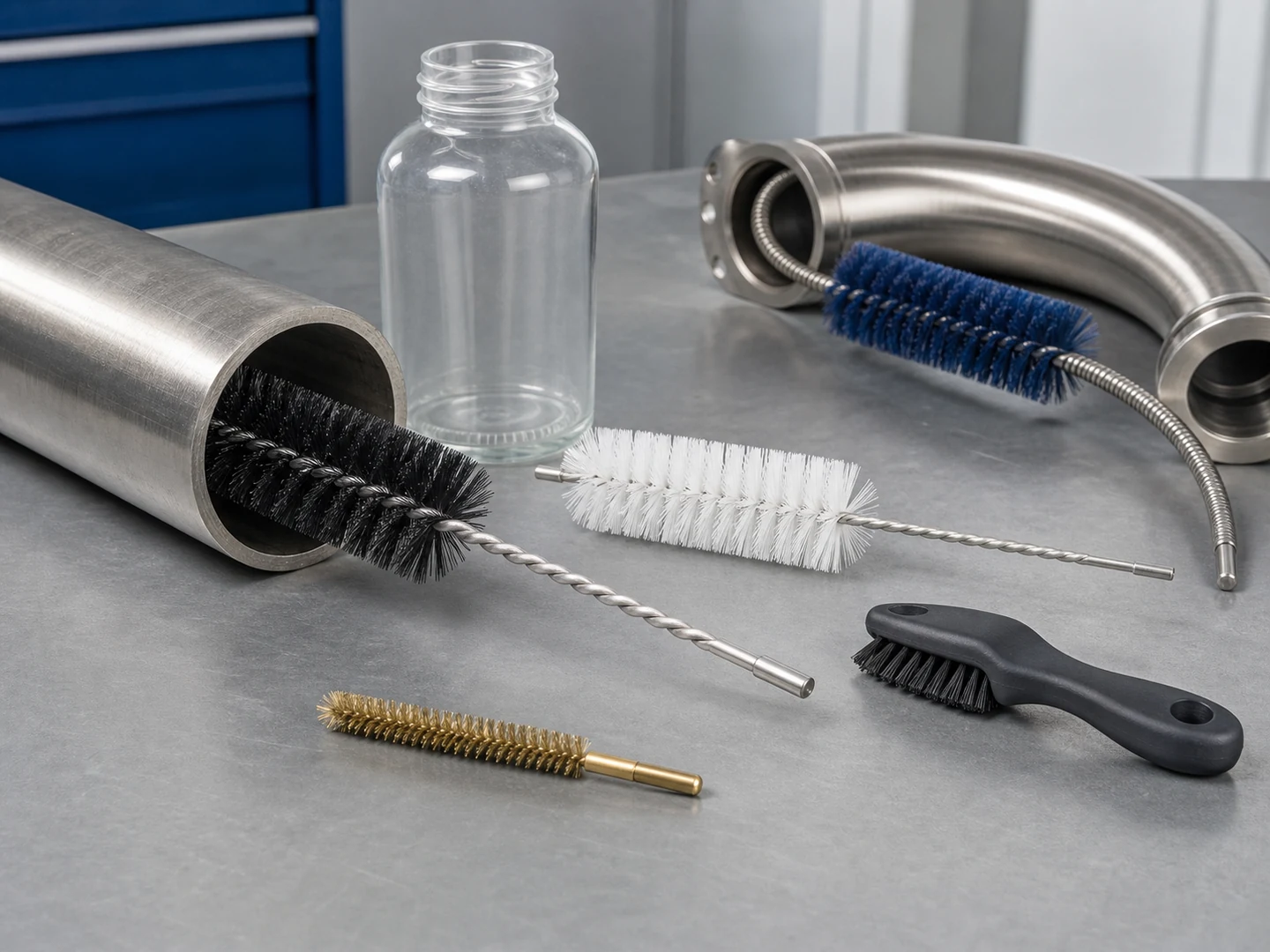
Custom Tube & Pipe Bore Brushes
Choose a tube, pipe, or bore brush when the working surface is inside a…
See how this type is built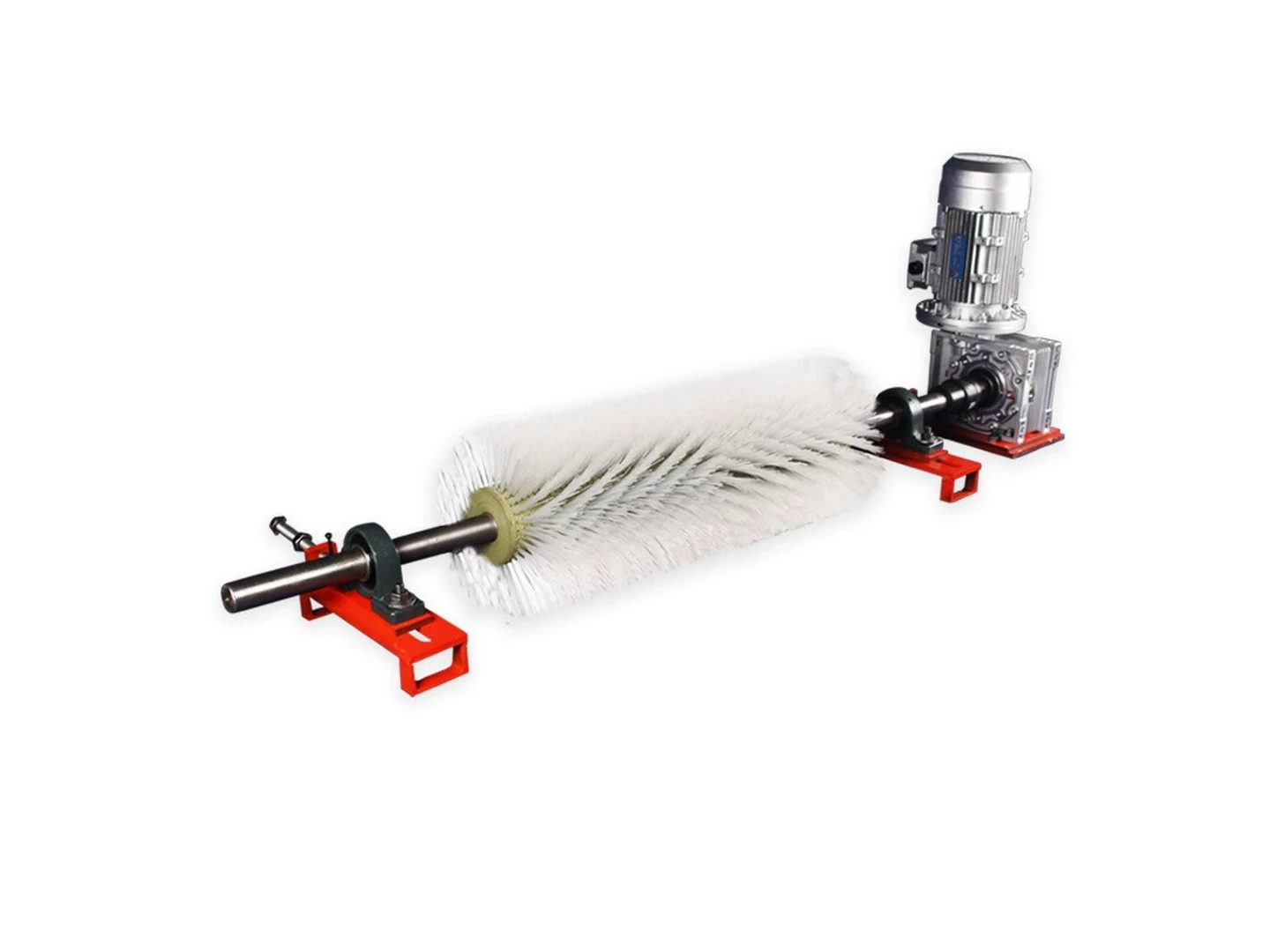
Custom Roller and Conveyor Brushes
Choose a roller or conveyor brush when a cylindrical brush must clean, wipe, guide,…
See how this type is built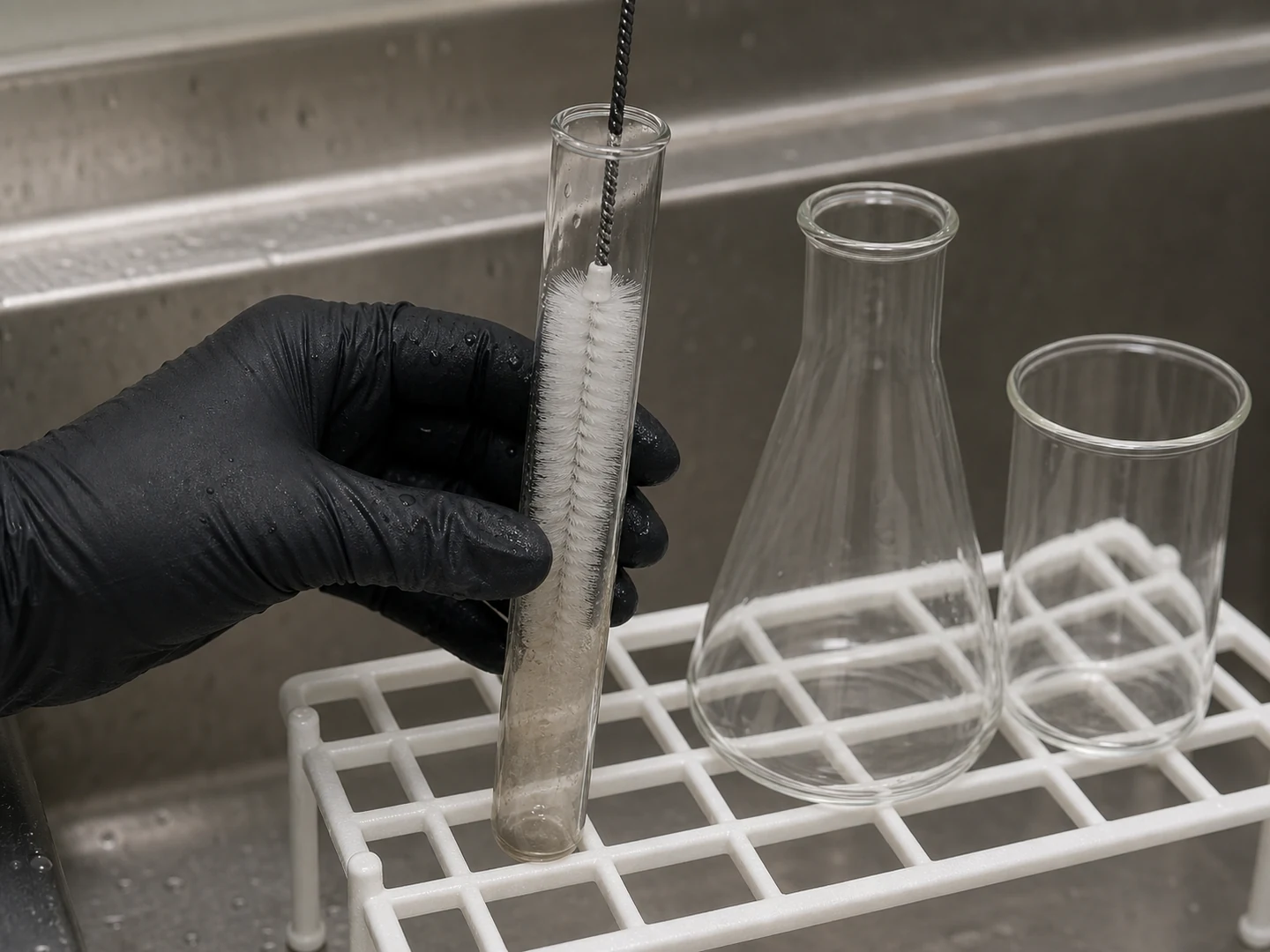
Laboratory Tube Cleaning
For Laboratory Tube Cleaning, the brush must reach the working area, disturb or collect…
See the cleaning jobCustom Manufacturing RFQ
Discuss This Material
Share the working surface, residue, dimensions, material direction, interface, quantity and drawing or sample photo.
Custom Brush RFQ
Request a Custom Cleaning Brush Quote
Upload a drawing, product photo, or sample photo and provide the core dimensions and cleaning conditions.
“We need a brush to remove wet residue from a stainless steel conveyor, about 800mm wide. The current brush wears quickly. We can send photos.”
“We sell drinkware and need a cleaning brush to include with the product. Quantity around 5,000 pieces.”