
Custom Cleaning Brush
Blender Cleaning Brush
Blender cleaning brush with nylon or PBT bristles for jar interiors, blade assemblies and appliance details. Custom head, stiffness and handle options.
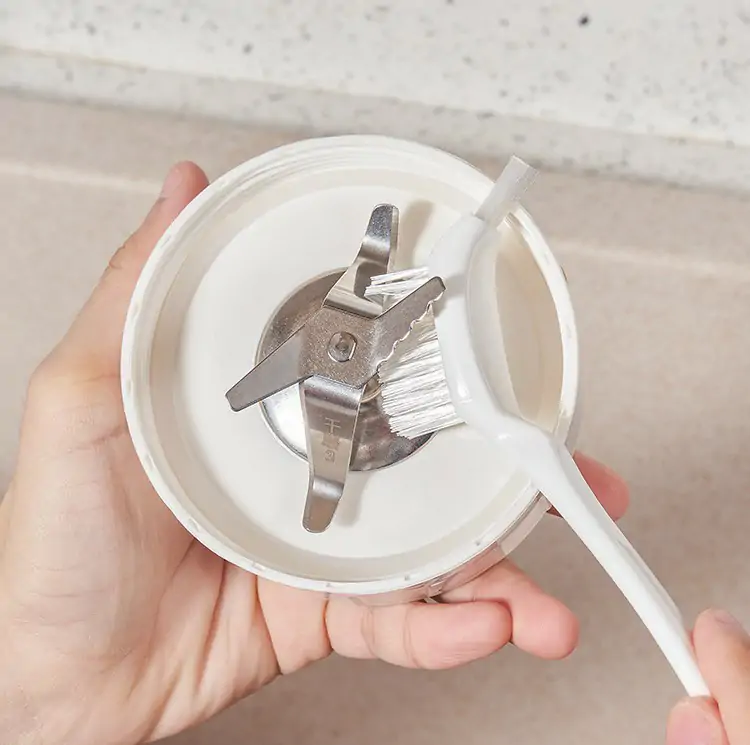
Small brush
500 pcs
Minimum order
Held in one hand: tube, bottle, detail and swab brushes — including long-handled ones with a small head.
Production lead time, once the specification is confirmed
- Up to 500 pcsWithin 7 days
- 501–50,000 pcsWithin 14 days
- Over 50,000 pcsWithin 21 days
Peak season can extend these times; the shipping date is confirmed in writing with your quotation. Sampling and shipping are quoted separately.
A long-reach blender cleaning brush with nylon or PBT bristles that cleans blender jar interiors, blade assemblies, lid threads, and gasket seats. The shaped head reaches under the blade without forcing hands into the jar or scratching glass, Tritan, or polycarbonate surfaces.
What can this brush do for you?
Reaches Under and Around the Blade Assembly
The tapered head and short tip tuft slip into the narrow gap between the blade hub and the jar floor. Smoothie fiber, nut butter, and emulsified dressing that rinse water leaves behind are loosened mechanically instead of being wiped by hand.
Cleans the Full Jar, Not Just the Bottom
A working head diameter of 20–70 mm lets the bristle tips contact the lower sidewall and shoulder transition while the handle stays outside the jar. The same brush scrubs the wall, the bottom corners, and the blade zone without switching tools.
Non-Scratch Contact for Glass and Plastic Jars
Nylon PA and PBT bristle tips are softer than the jar surface, so they remove dried film and pulp without leaving scuff marks on Tritan, polycarbonate, or coated interiors. PBT holds its stiffness in hot water when heavier residue needs more pressure; nylon gives a gentler touch.
Keeps Fingers Clear of Sharp Blades
The 170–420 mm handle length lets the operator hold the brush outside the jar and still reach the blade base. There is no need to push a sponge or cloth under the blade by hand.
Rinses Clean and Hangs Dry
Polypropylene and synthetic bristles resist water absorption and food odor. A molded hanging hole or hook lets the brush air-dry between uses, reducing bacteria growth in the tuft base.
What is a Blender Cleaning Brush?
A blender cleaning brush is a hand-guided tool with a synthetic bristle head mounted on a long polypropylene handle. It is built for the specific geometry of a blender jar: a wide body, a narrow base transition, and a fixed blade assembly that creates a tight gap where residue packs.
The brush is worked with short scrub strokes and rotating motions around the blade hub, followed by a rinse. Unlike a sponge, the bristle tips enter the under-blade gap and gasket channels. Unlike a general bottle brush, the head is shaped to scrub the jar wall and the blade zone without jamming in the blade gap.
It is not an abrasive scouring pad or a chemical treatment. It removes attached food soil mechanically. For sanitizing or sterilizing, the cleaning sequence still needs a separate sanitizing step.
Technical Specifications
We adjust the head, bristles, and handle to match your jar opening, blade gap, and cleaning process. Typical production values are shown below; final values are confirmed per project.
| Parameter | Value / Options |
|---|---|
| Head width / diameter | 20–70 mm, selected to pass the jar opening and contact the sidewall |
| Working head length | 20–140 mm, covering the blade zone and lower jar transition |
| Overall length | 170–420 mm, matched to jar depth and operator reach |
| Grip / body diameter | 10–30 mm, with optional TPE overmold or anti-slip texture |
| Core construction | Twisted stainless steel wire (304 or 316) or molded PP/PBT core, depending on head shape |
| Bristle material | Nylon PA (softer/gentler) or PBT (stiffer/hot-water stable); filament diameter 0.15–0.40 mm |
| Bristle trim length | 8–25 mm; shorter tip tuft available for narrow blade gaps |
| Handle material | Polypropylene (PP), optional TPE overmold, hanging hole or hook |
| Working temperature | Continuous use up to 80°C in water with PBT; nylon PA recommended below 60°C for shape retention |
| Chemical compatibility | Compatible with common dish detergents; avoid prolonged immersion in strong chlorinated solvents or oxidizers that embrittle nylon/PBT |
| Brush type | Custom Bottle & Container Brushes |
| How it is driven | Hand-guided |
| Cleaning target | household countertop blender, single-serve and personal blender cup, and food processor bowl and attachment cleaning |
| Surface or part | glass, blade hubs, gaps, walls, pads, tubes, guards, and thread |
| Residue or debris | pulp, dried residue, dried film, and food soil |
| Mounting / connection | Fixed / Replaceable Head |
Where does this brush work best?
- Household countertop blenders — glass and Tritan jars where smoothie film, soup residue, and fibrous pulp collect at the base and under the blade.
- Single-serve and personal blender cups — narrow cups with removable blade bases; the short working head reaches the blade housing and cup bottom without jamming.
- Commercial smoothie and juice bar blenders — high-volume jars washed many times a day; PBT bristles hold stiffness through hot-water washing and heavier dried residue.
- Food processor bowls and attachments — lid vents, gasket grooves, blade hubs, and feed tube interiors.
- Immersion blender shafts — the bell guard and internal shaft surfaces where food lodges; the brush tip works into the guard while the handle keeps hands clear.
How do I choose the right one?
Start with the opening and the blade gap
Measure the minimum jar opening and the gap between the blade and jar floor. The head diameter must pass the opening and still contact the lower wall. The tip tuft trim length must be equal to or slightly less than the blade gap so the bristles sweep under the blade instead of folding over.
Match the bristle to the surface and residue
For plastic or coated jars, choose nylon PA with a filament diameter around 0.15–0.25 mm for a gentler action. For glass or stainless steel jars, heavier dried film, or hot-water washing, choose PBT at 0.25–0.40 mm. PBT holds its shape better in hot water and does not soften like nylon.
| Jar surface / wash condition | Recommended bristle |
|---|---|
| Plastic, coated, or delicate | Nylon PA, 0.15–0.25 mm |
| Glass / stainless, hot wash, heavy film | PBT, 0.25–0.40 mm |
| Narrow blade gap under 3 mm | Short tip tuft, 6–10 mm trim |
Set the handle for control, not just reach
The handle should allow the operator to hold the brush outside the jar while the tip reaches the blade base. A handle that is too long reduces control at the head; too short forces fingers toward the blade. Choose overall length based on jar depth plus a 50–80 mm comfortable grip zone.
Decide the head shape
A cylindrical head cleans full walls; a tapered head follows the shoulder and bottom transition. For blade-heavy cleaning, specify a shortened tip tuft or an angled tuft row that slides under the blade hub. Some projects use a dual-head brush with a wide wall tuft and a small detail tuft on the same handle.
When a different brush makes more sense
If the residue is carbonized, baked-on, or the jar requires aggressive scouring, a wire brush or abrasive pad may remove it faster but will likely scratch the jar surface. For scale or mineral deposits, descaling chemistry should be used before or after brushing. If the jar opening is very narrow and the blade gap is less than 2 mm, a dedicated thin tube brush or disposable swab may be the better access tool.
Can I customize this brush?
Every blender jar has a different opening, blade stack, and jar floor shape, so this brush is built around your jar. To configure a custom brush, provide the minimum jar opening, internal base diameter, blade gap height, jar depth, jar material, main residue, wash temperature, and whether the brush must survive dishwasher cycles. A sample jar or drawing accelerates the sampling process.
We can adjust:
- Head geometry — diameter, working length, taper, angled profile, tip tuft size, or dual-head configuration
- Bristle system — material (nylon PA, PBT), filament diameter, stiffness, tuft density, trim length, and color
- Core — twisted stainless steel wire (304/316), molded PP or PBT core, or non-metal option
- Handle — length, diameter, ergonomic shape, TPE overmold, hang hole, hook, or anti-roll feature
- Color and marking — custom coloring, pad printing, laser marking, or molded logo
- Packaging — bulk pack, polybag, retail card, sleeve, or multi-pack configuration
For projects in food-contact environments, we can assist with material declarations, documentation, inspection support, and third-party testing coordination as part of the customization process.
Which filament survives the cleaning and still lasts on a blender cleaning brush?
How do I clean under the blade without cutting my fingers?
Keep the blender unplugged and the blade assembly attached to the jar or securely held. Use the brush tip from the top of the jar; do not wrap fingers around the blade. A brush with a dedicated short tip tuft sized to the blade gap lets you sweep the underside without forcing contact.
Will nylon or PBT bristles hold shape after repeated hot wash cycles?
PBT is the more dimensionally stable choice for hot-water washing and dishwasher use. Nylon PA absorbs water and softens at high temperatures, so it is better for warm or cool hand washing on plastic jars. If your wash process exceeds 70–80°C, specify PBT and confirm the handle material at the sample stage.
Can this brush be used in a commercial dishwasher?
PP handles and PBT bristles generally tolerate common commercial dishwasher cycles, but rack placement, detergent chemistry, and dry-cycle heat can affect tuft retention over time. For repeated dishwasher use, request a dishwasher-validation sample before volume production.
How can I tell whether the tip really reaches under the blade?
Measure the gap between the lowest blade edge and the jar floor. Submit this measurement with your order and request a first-article sample. Test the sample with the actual jar: if the tip tufts fold over instead of passing through the gap, shorten the trim or reduce filament diameter.
Does brushing replace soaking or sanitizing?
No. Brushing removes attached residue, but loosened debris still needs to be rinsed away, and sanitizing or sterilizing is a separate process step where required. Brushing shortens the cleaning sequence but does not eliminate the other steps.
When should a blender cleaning brush be replaced?
Replace when bristles are permanently splayed, matted, or missing; when the tuft root feels soft or retains odor after drying; when the handle is cracked; or when the bristle tips no longer spring back after bending. In commercial kitchens, inspect monthly and rotate brushes according to your sanitation schedule.
Guides that go deeper on this
We have not written a guide specific to this one yet. The material that covers selection, filament, dimensions, maintenance and sourcing is collected in the technical resources library.
RELATED BRUSH RESOURCES
Recommended Reading & Related Brush Resources
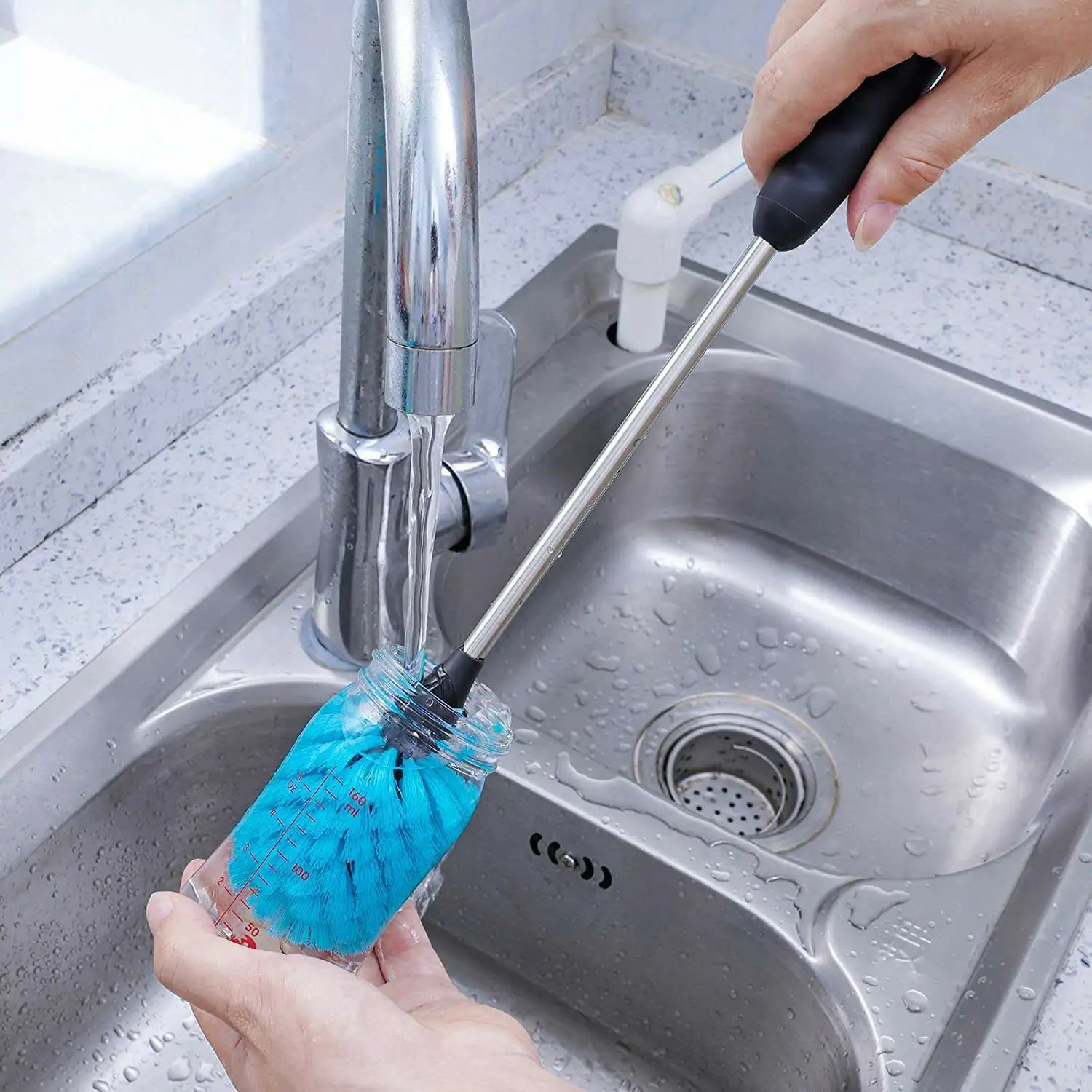
Custom Bottle & Container Brushes
Choose a bottle or container brush when the head must pass through an opening…
See how this type is builtBottle & Container Cleaning
For Bottle & Container Cleaning, the brush must reach the working area, disturb or…
See the cleaning job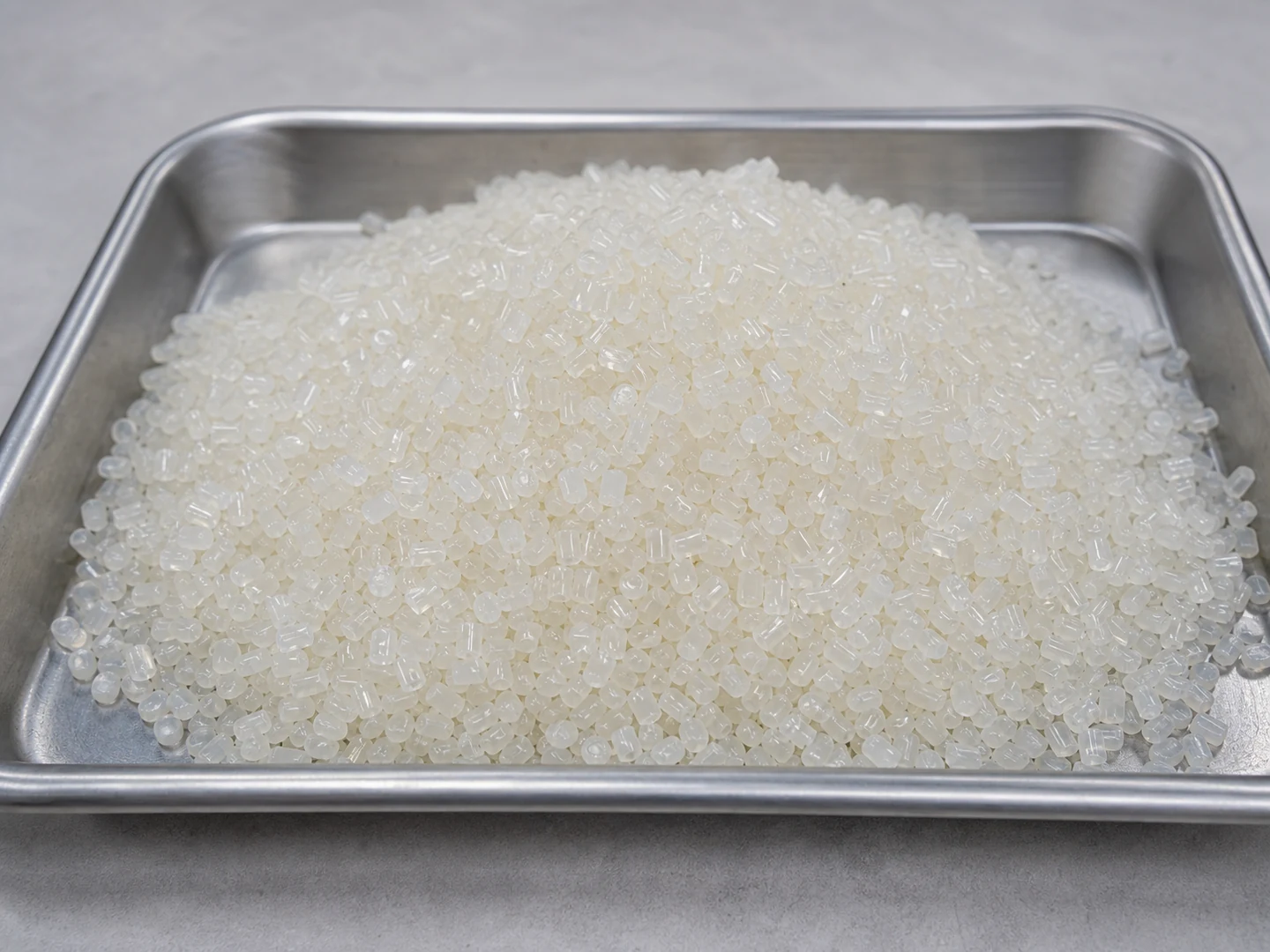
Nylon PA
Choose Nylon PA based on its stiffness, recovery, wear, wet-service, chemical, and temperature behavior.
Compare this material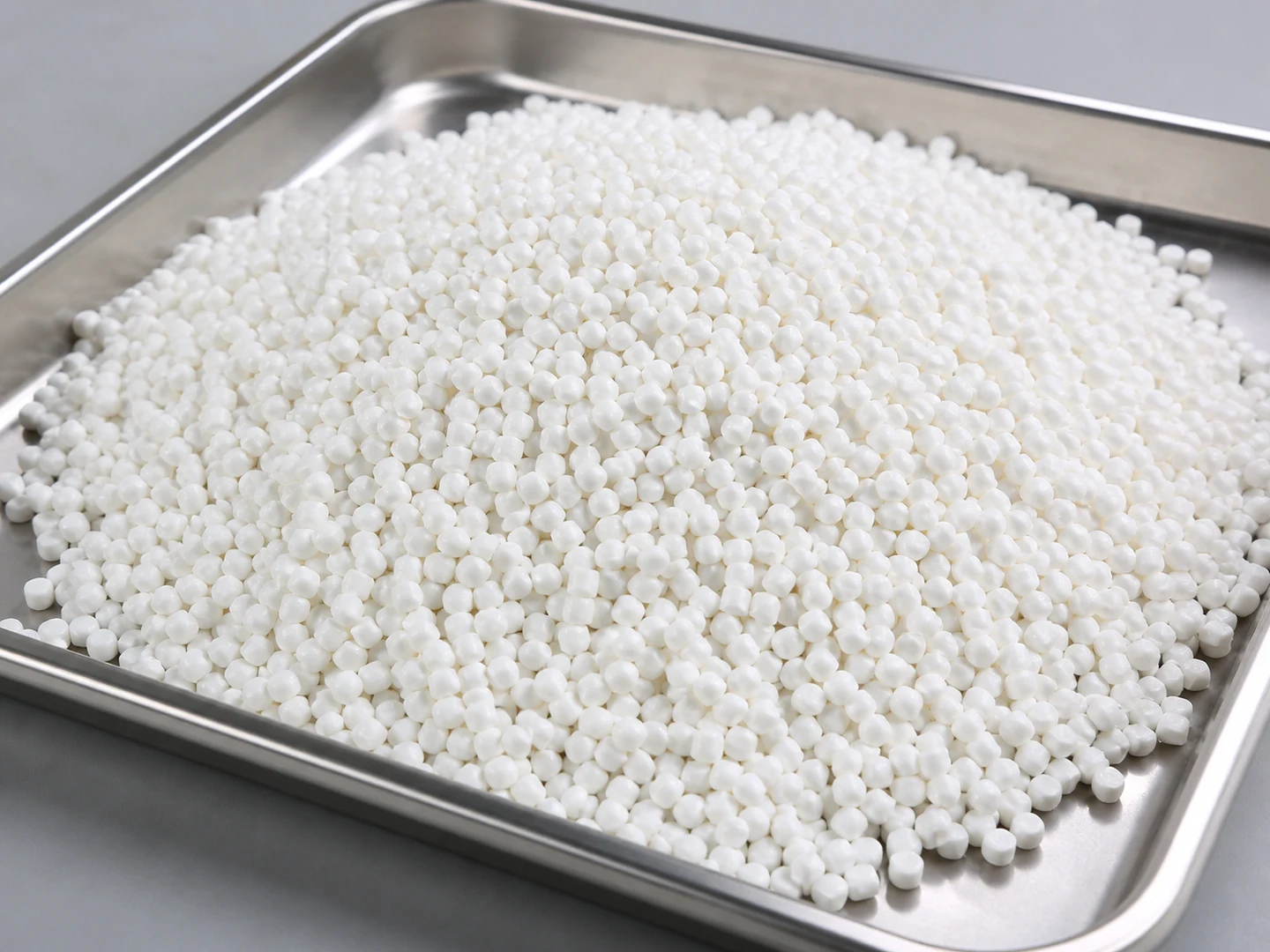
PBT
Choose PBT based on its stiffness, recovery, wear, wet-service, chemical, and temperature behavior. Do…
Compare this materialCustom Manufacturing RFQ
Describe Your Application
Please share the brush dimensions, working area, residue type, material direction, quantity, and a drawing or photo for quotation.
Drawing or photo optional — it speeds things up, it does not gate the enquiry.
Custom Brush RFQ
Send Your Brush Project
Upload a drawing, product photo, or sample photo and provide the core dimensions and cleaning conditions.
“We need a brush to remove wet residue from a stainless steel conveyor, about 800mm wide. The current brush wears quickly. We can send photos.”
“We sell drinkware and need a cleaning brush to include with the product. Quantity around 5,000 pieces.”