
Application
Seafood Processing Line Cleaning
For Seafood Processing Line Cleaning, the brush must reach the working area, disturb or collect salt/protein/grease/scales, and release it without creating unacceptable surface damage or process interference. The suitable brush structure depends on access, the required contact motion, and the cleaning method.
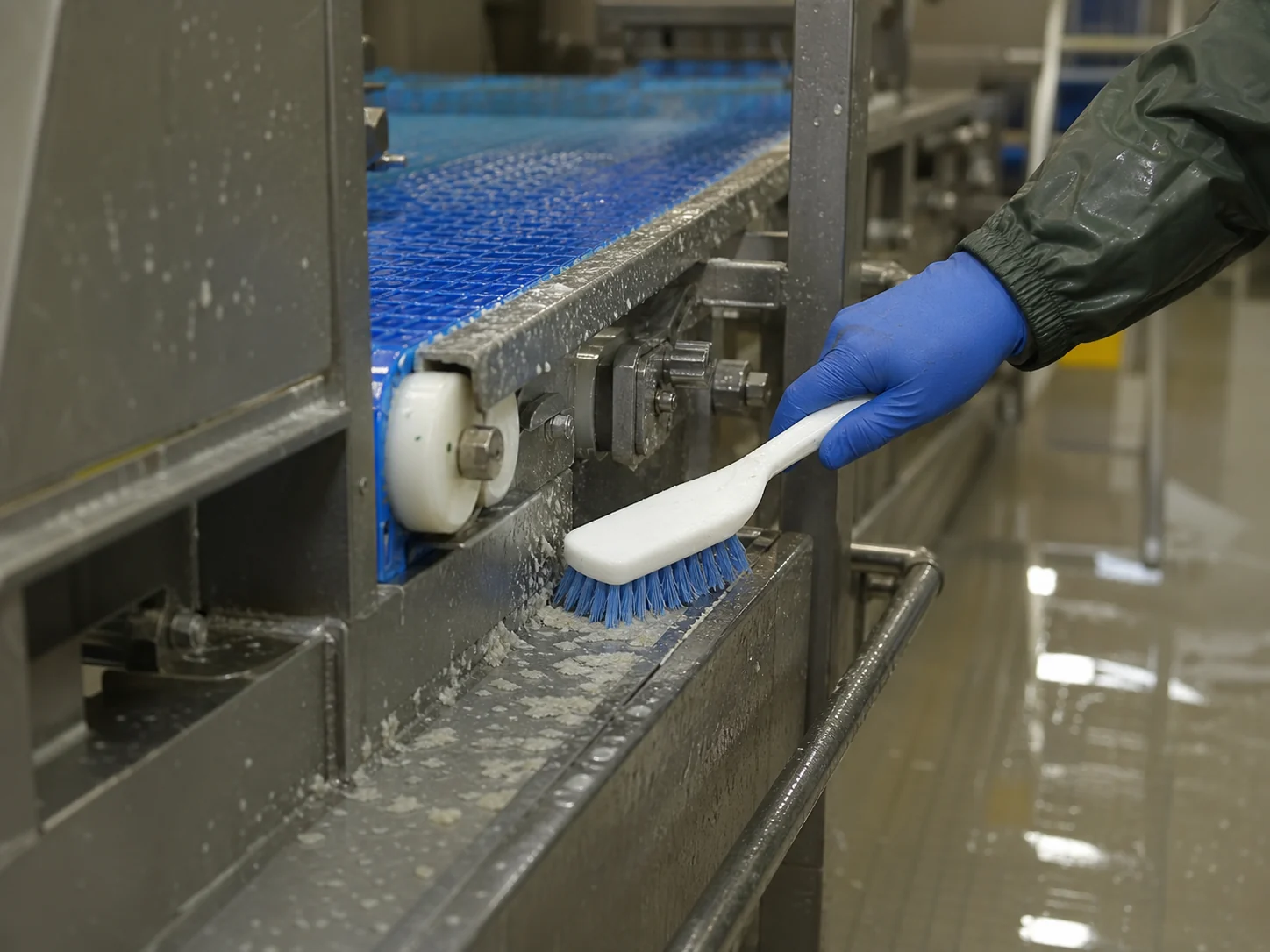
At a glance
- Cleaning target
- Salt/Protein/Grease/Scales
- Working environment
- Wet Indoor Area
- Cleaning method
- Wet Brushing / Soaking / Steam Cleaning
- Requirements to check
- FDA 21 CFR; EU 10/2011; HACCP; Corrosion-Resistant Material Requirements
Seafood plants combine slime, shell fragments and hard-water scale in a chilled wet room, so brushes are specified for corrosion resistance and for draining rather than holding water.
What makes Seafood Processing Line Cleaning different from other food and beverage cleaning?
The task is to remove Salt/Protein/Grease/Scales while controlling surface damage, residue carryover, brush shedding and chemical or temperature degradation.
The work happens in wet indoor area against salt, protein, grease and scales.
The part people get wrong: the surface, the residue and the access opening decide the brush together. Fix on any one of them alone and the geometry comes out wrong.
What are the most common cleaning targets in Seafood Processing Line Cleaning?
The work breaks into 5 targets. They look similar from outside the machine and behave nothing alike at the brush.
| Part or area | Residue type | Cleaning requirement |
|---|---|---|
| Fish Slime and Scale Removal | Fish slime, fish scales, protein, salt, grease | The head must reach the working face and apply even contact without marking the surface. |
| Shellfish Processing | Salt, Protein, Grease, Scales | |
| Conveyor and Table | ||
| Knife and Cutter | ||
| Drain and Waste-Area |
What the equipment leaves you to work inside:
| Parameter | Typical range |
|---|---|
| Contaminant | Salt/Protein/Grease/Scales |
| Required hardness | Medium–Hard |
| Maximum temperature | 100°C |
| Chemical exposure | Alkaline Cleaning Solution pH 9–13; Chlorine-Based/Peracetic-Acid Disinfectant |
| Cleaning method | Wet Brushing/Soaking/Steam Cleaning |
| Environment | Wet Indoor Area |
Which brush types work for each cleaning target?
Select hand, tube, strip, roller, disc or machine-mounted geometry from access and motion.
| Cleaning target | Recommended brush type | Why it fits |
|---|---|---|
| Fish Slime and Scale Removal | Handheld Detail Brushes | Slime is a protein film that redeposits when it is only rinsed, so a hand-guided head shears it off while the detergent is still on the surface. |
| Shellfish Processing | Shell fragments wedge into gaps and corners, so a hand-guided head lifts them out instead of pushing them further into the equipment. | |
| Conveyor and Table | The belt and table are where the product sits, so a full-width hand pass at wash-down is what takes the protein off before sanitiser goes on. | |
| Knife and Cutter | Blades and their holders hold protein right against the edge, so a hand-guided head cleans up to it with the operator setting the stroke direction. | |
| Drain and Waste-Area | Drains and waste chutes carry the heaviest load and are cleaned last, so a hand head is used on the channel and the grate before the shift closes. |
All hand work, on a drained and locked-out line, because the surfaces that hold slime are the ones a fixed brush cannot reach.
In practical brush terms: match the construction to the access before anything else. A geometry that cannot reach the target will not be rescued by a better filament.
What filament materials work best for Seafood Processing Line Cleaning?
Salt is what decides it: PBT and PP for the wet fill, PET where a stiffer face is wanted for scales, and 316 stainless rather than plain steel anywhere wire is used, because chlorinated brine pits everything else.
| If the condition is… | Filament to start with | Why |
|---|---|---|
| Chlorinated brine and salt spray | PBT | no corrosion path and no swelling |
| Scales and adhered protein on a stiff face | PET Polyester | harder fill that holds its edge wet |
| Any wire section | Stainless Steel 316 Wire | the only wire grade that resists brine pitting |
What the duty rules out before you start comparing grades:
| Constraint | Value for this application |
|---|---|
| Filament hardness | Medium–Hard |
| Maximum service temperature | 100°C |
| Chemical exposure | Alkaline Cleaning Solution pH 9–13; Chlorine-Based/Peracetic-Acid Disinfectant |
| Cleaning method | Wet Brushing, Soaking, Steam Cleaning |
How do I choose the right brush for my seafood processing line equipment?
Start with medium-to-hard fill, a 100°C ceiling and an alkaline solution at pH 9–13, then choose corrosion-resistant cores for chilled, chloride-heavy service.
The sequence that gets a usable sample first time:
- Identify the target part and measure the access opening or clearance
- Describe the residue: what it is, how thick it sits, and how strongly it holds
- Choose the construction that can physically reach that target
- Set the filament from surface risk, working temperature and cleaning chemistry
- Fix filament diameter, free trim length and density for the contact pressure you need
- Run one cycle and check the result before committing to a production quantity
Before you commit to a quantity, send the component dimensions, the room temperature, and the chloride and sanitiser exposure.
When is a seafood processing line brush the wrong tool?
Foam cleaning followed by a sanitiser is the sanitation method, with brushing as the mechanical assist. Hard-water scale on stainless comes off in an acid cycle, and no amount of brushing removes it.
What common mistakes should I avoid in Seafood Processing Line Cleaning?
- Omitting the chill-room temperature and chloride exposure the core and fill have to survive
- Changing the filament while leaving excessive engagement, poor alignment or no discharge path unchanged
- Copying a worn brush without first recording its motion, direction, mounting and original working diameter
If the brush is already in service and the result is wrong, work from the symptom:
| Symptom | What to change |
|---|---|
| Residue remains | Increase discharge or relative motion before adding pressure |
| Surface marks | Reduce engagement and use finer/softer fill |
| Rapid wear | Check alignment, temperature and chemical attack |
| Redeposition | Add wash, vacuum or collection path |
Questions this page is asked
How is a seafood-line brush checked for corrosion and foreign-material risk?
Expose the complete qualified construction to the actual salt, cleaner, sanitizer, temperature, time and rinse cycle rather than relying on a filament or metal grade alone. Inspect the anchor, carrier, fasteners and fill for rust, pitting, swelling, cracks, looseness or missing material, and quarantine the tool if any part can enter product or an inaccessible machine feature.
What releases seafood equipment and its brushes after cleaning?
Complete the facility's seafood sanitation procedure for soil removal, washing, rinsing, sanitizing where required, drainage, reassembly and protected tool storage. Inspect both equipment and brush for retained protein, scale, grease, chemical residue and missing material, and apply the HACCP or SSOP verification and corrective-action record before production resumes.
Guides that go deeper on this
We have not written a guide specific to this one yet. The material that covers selection, filament, dimensions, maintenance and sourcing is collected in the technical resources library.
Continue Exploring
Recommended Reading & Related Brush Resources
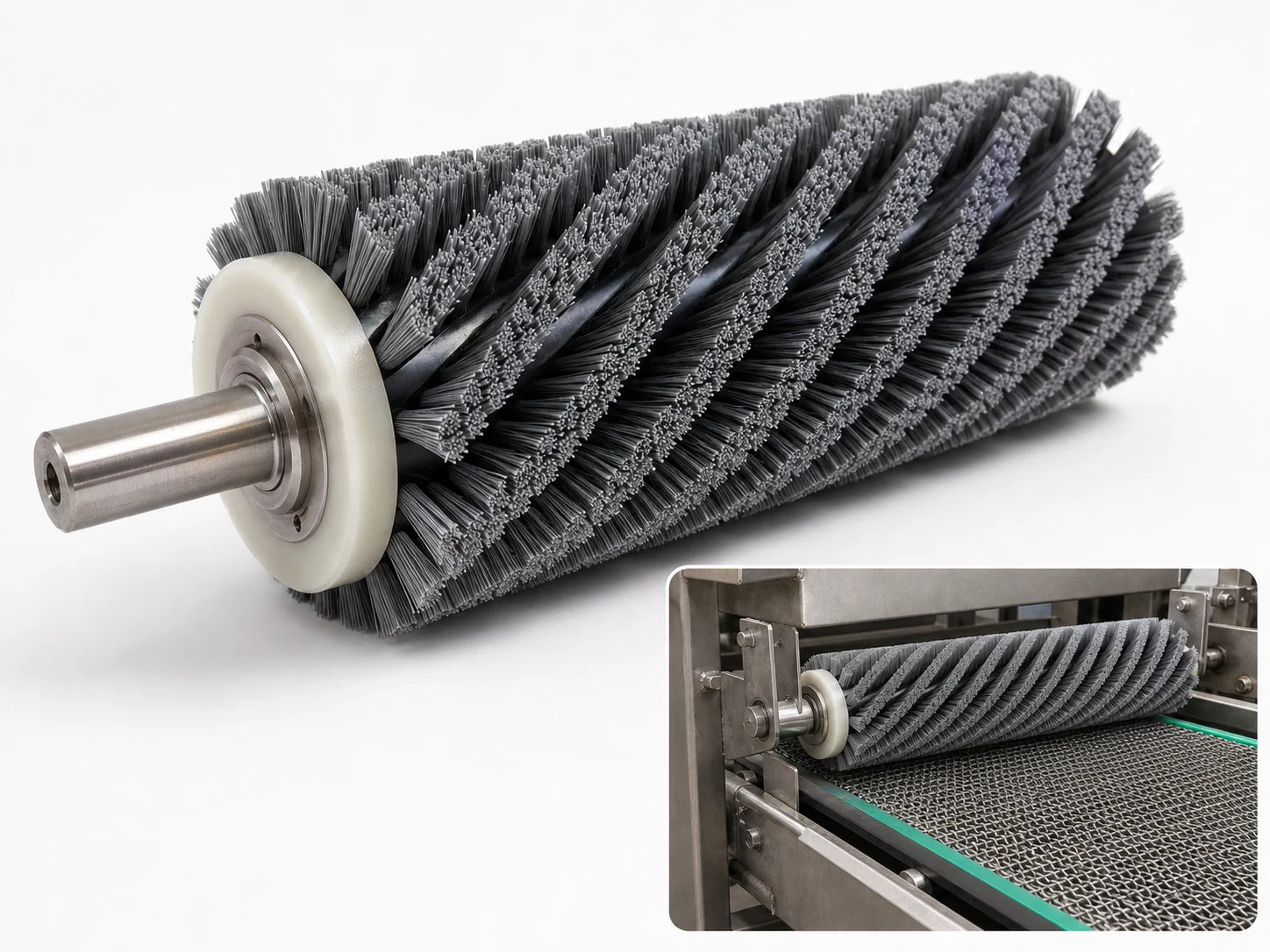
Plating Line Brush Roller
Plating line brush roller for oxide, salt, and sludge removal in pickling and rinse…
See the specification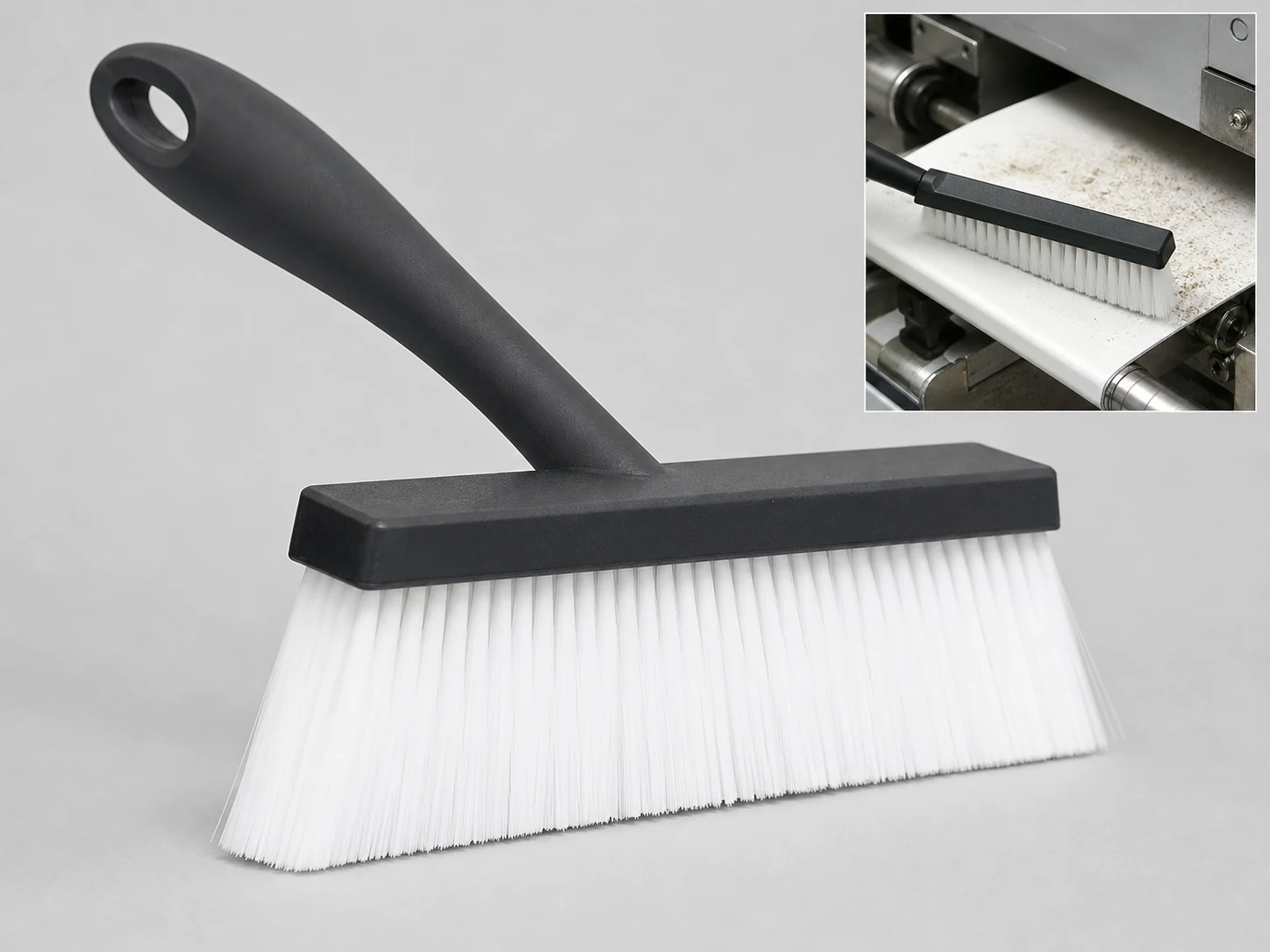
PTFE Brush
Custom PTFE brush for chemical, high-temperature, and non-marking cleaning. Hand, strip, roller, wheel, and…
See the specification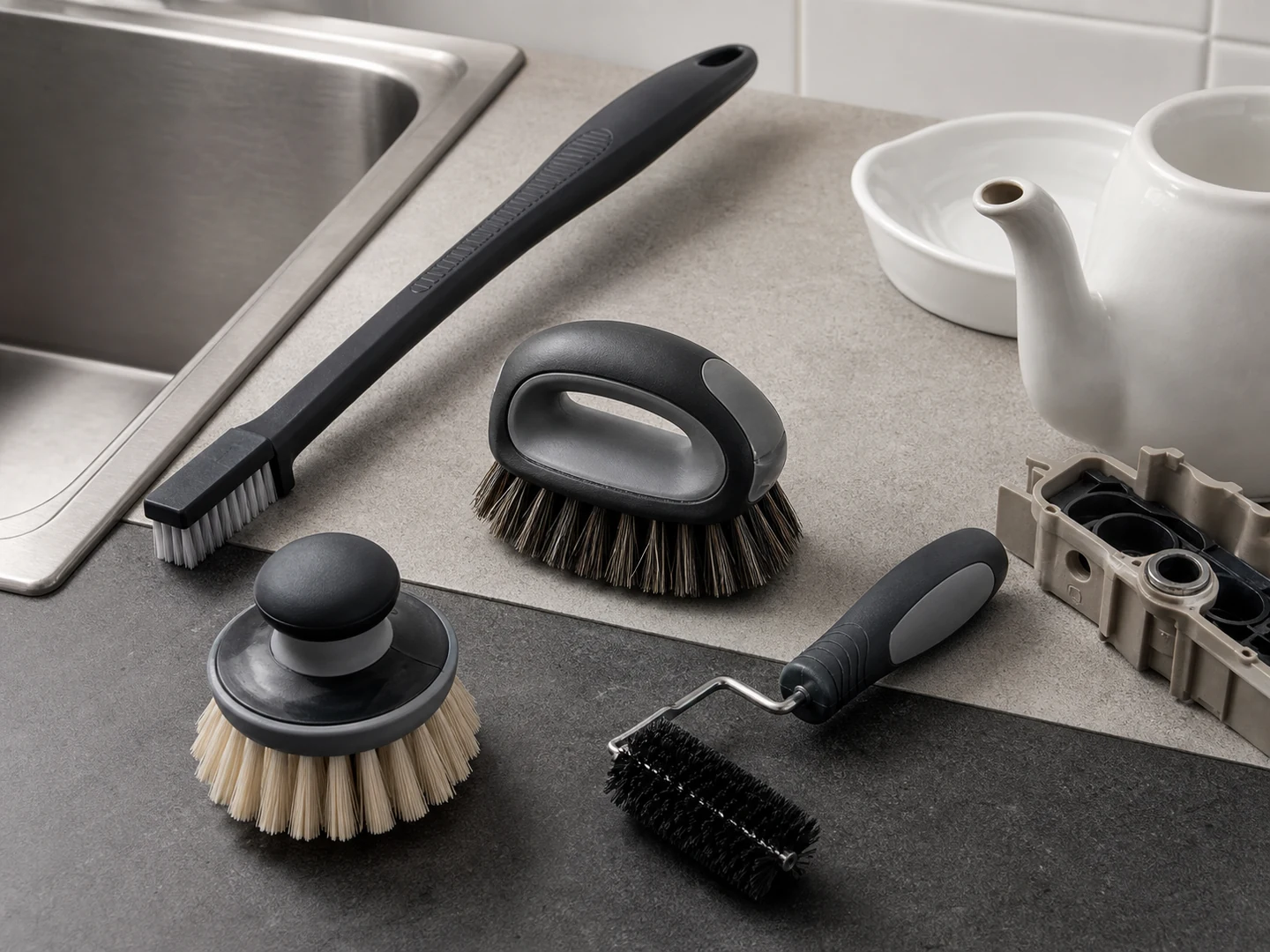
Custom Handheld Detail Brushes
Choose a handheld detail brush when you need direct control in seams, recesses, fittings,…
See how this type is built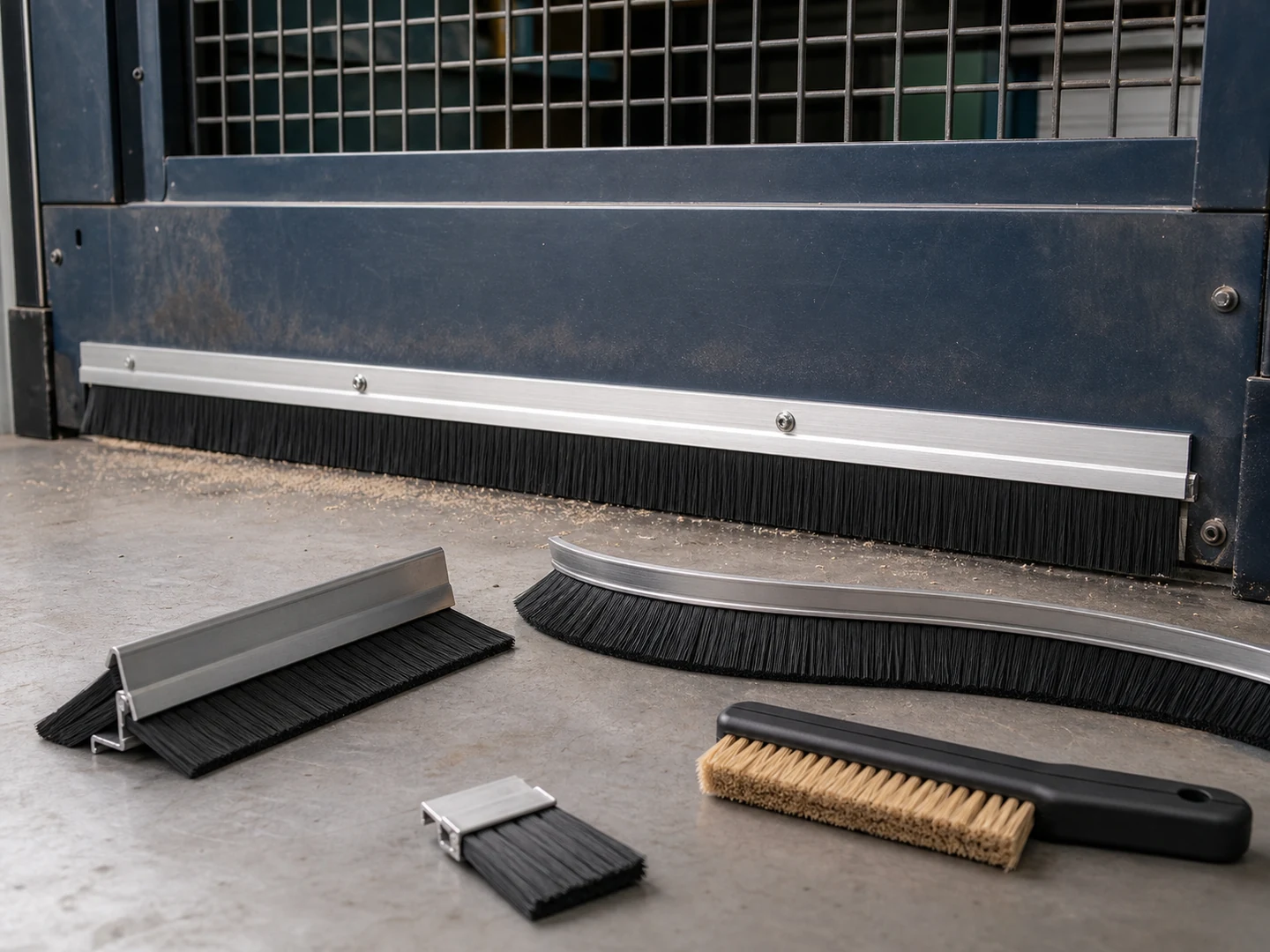
Custom Strip Seal Brushes
Choose a strip seal brush when a continuous line of filament must seal, wipe,…
See how this type is built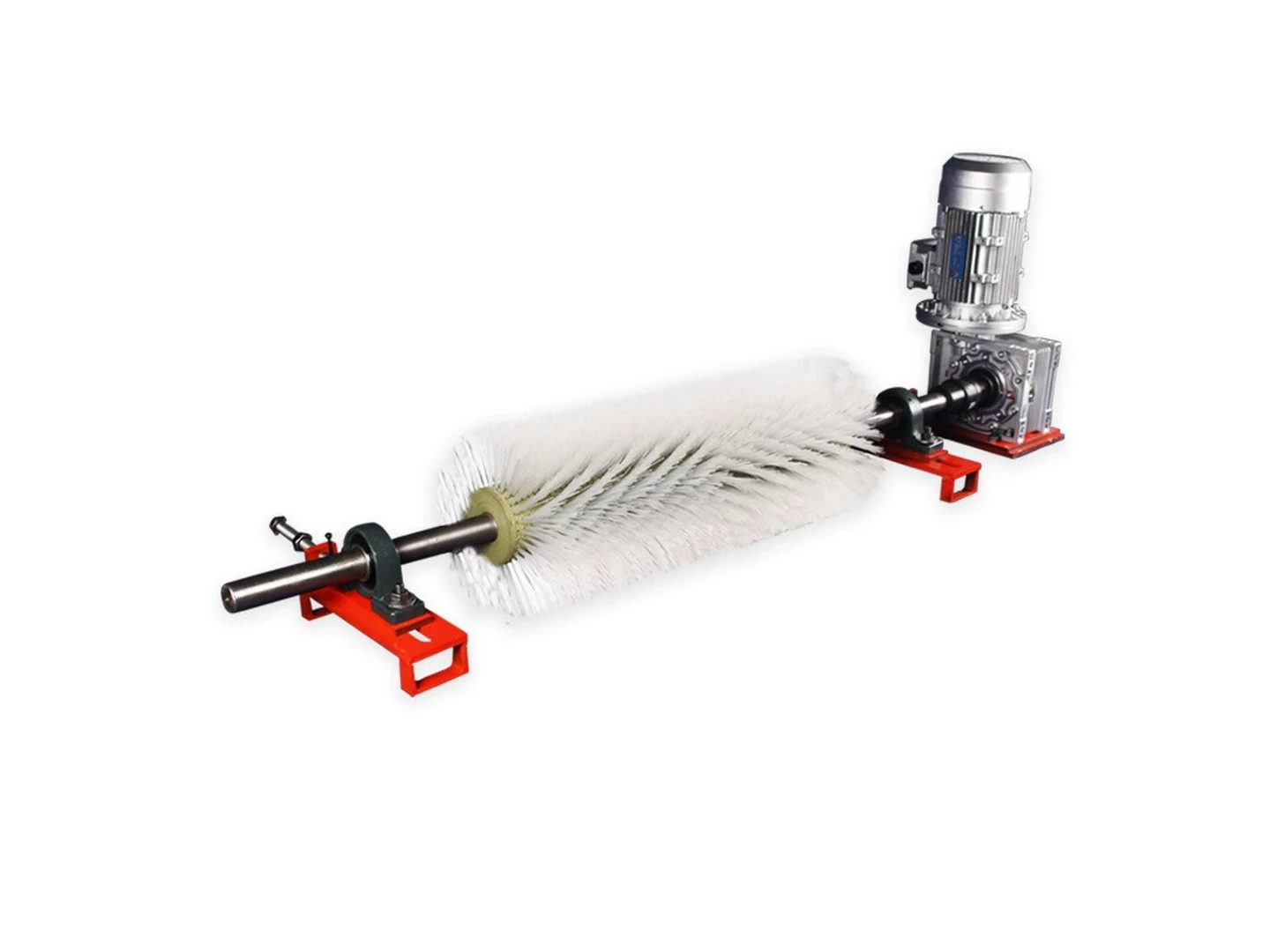
Custom Roller and Conveyor Brushes
Choose a roller or conveyor brush when a cylindrical brush must clean, wipe, guide,…
See how this type is built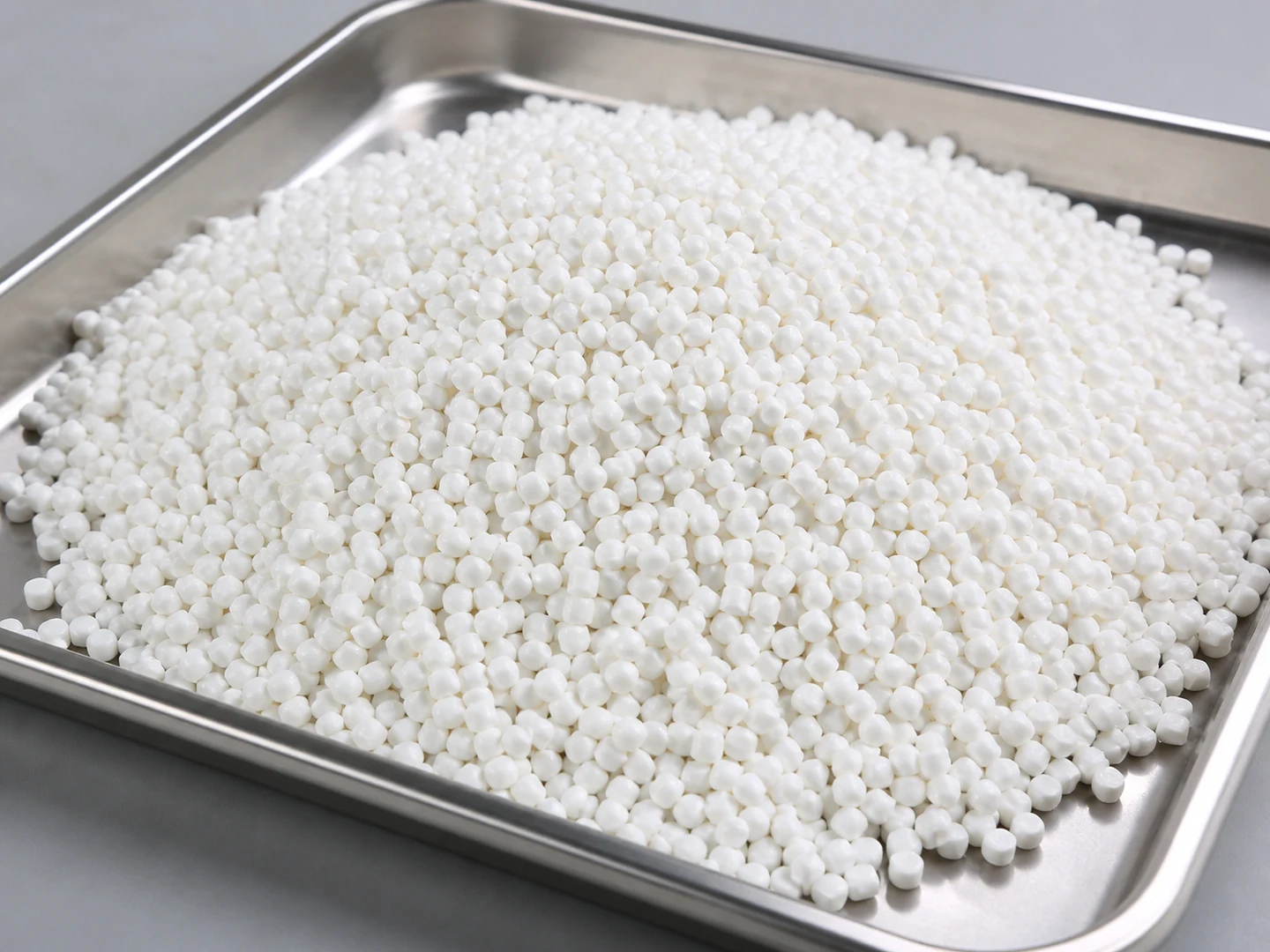
PBT
Choose PBT based on its stiffness, recovery, wear, wet-service, chemical, and temperature behavior. Do…
Compare this material
Polypropylene PP
Choose Polypropylene PP based on its stiffness, recovery, wear, wet-service, chemical, and temperature behavior.…
Compare this material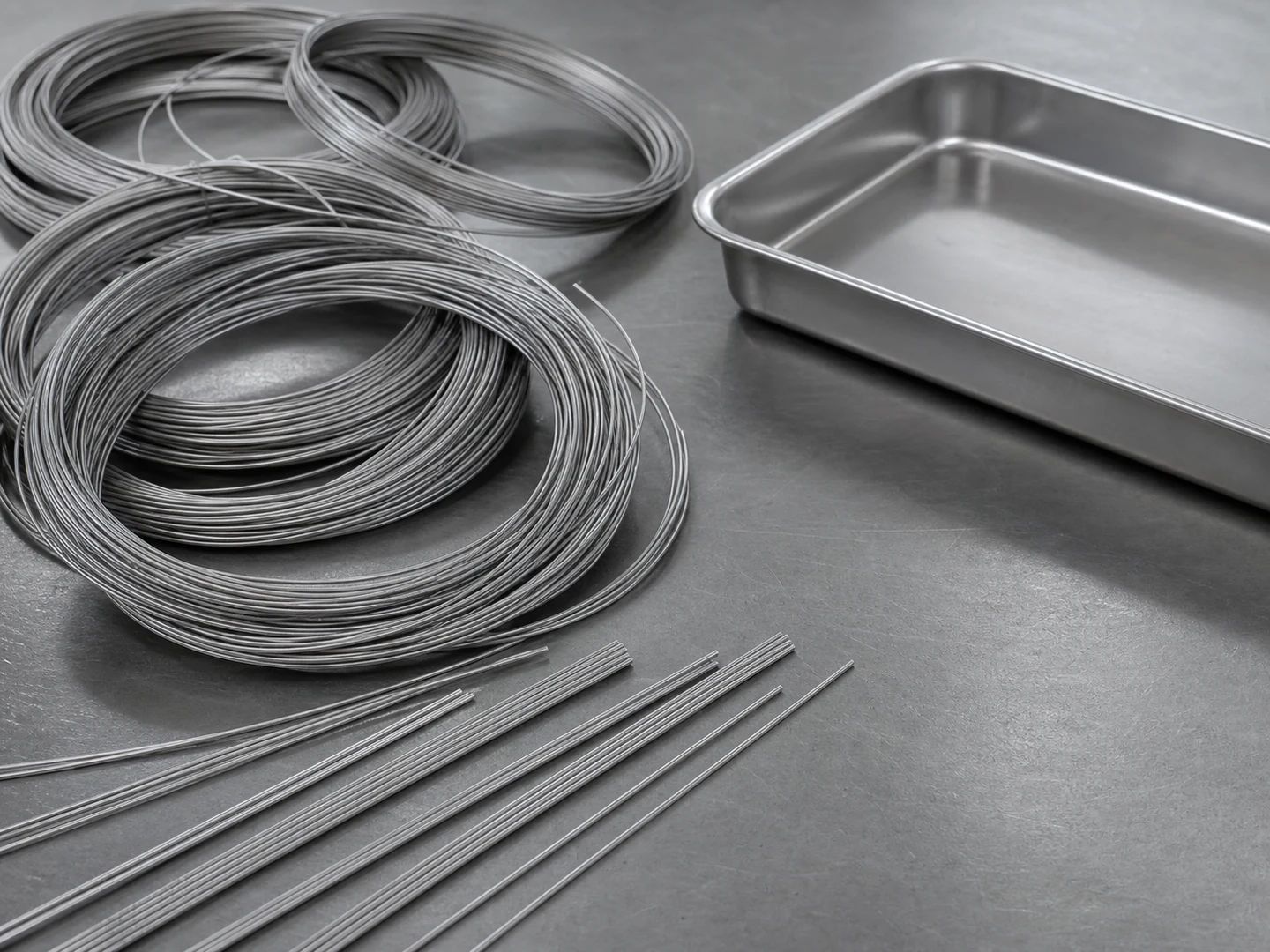
AISI 316 Stainless Steel Wire
Choose AISI 316 Stainless Steel Wire based on its stiffness, recovery, wear, wet-service, chemical,…
Compare this materialCustom Manufacturing RFQ
Discuss This Application
Share the working surface, residue, dimensions, material direction, interface, quantity and drawing or sample photo.
Custom Brush RFQ
Request a Custom Cleaning Brush Quote
Upload a drawing, product photo, or sample photo and provide the core dimensions and cleaning conditions.
“We need a brush to remove wet residue from a stainless steel conveyor, about 800mm wide. The current brush wears quickly. We can send photos.”
“We sell drinkware and need a cleaning brush to include with the product. Quantity around 5,000 pieces.”