What Is an Acid Alkali Cleaning Brush Roller?
An acid alkali cleaning brush roller is a rotating brush fitted across the width of a pickling line. It makes direct contact with the strip surface to mechanically loosen and wipe away residues that rinse water alone cannot remove. These brushes work in wet, corrosive environments where standard industrial brushes would quickly degrade. They are often custom-engineered to match specific line speeds, strip widths, and chemical concentrations.
The brush typically consists of filaments (bristles) secured in a core, mounted on a drive shaft. As the strip passes, the brush rotates against it, applying enough scrubbing force to clean but not score the surface. This component is critical for downstream coating adhesion, surface quality, and avoiding carry-over contamination between acid and rinse stages.
Common Customization Options for Pickling Line Brush Rollers
Because every pickling line differs, most acid alkali cleaning brush rollers are not off-the-shelf items. Buyers must specify several key attributes. Below are the main categories you will address when discussing a custom brush roller with a supplier or engineering team.
- Filament material: Must resist the specific acid or alkali chemistry and operating temperature.
- Filament diameter (gauge): Influences stiffness, scrubbing power, and surface finish.
- Brush outer diameter: Set by the gap between the roller and the strip, often matched to existing equipment.
- Core material and design: Shaft connection, end caps, and structural integrity under wet loads.
- Mounting style: Journal bearings, flange-mounted, or quick-change designs.
- Fill pattern and density: Spiral wound, sectioned, or full face fill for different cleaning patterns.
Material and Stiffness Comparison Table
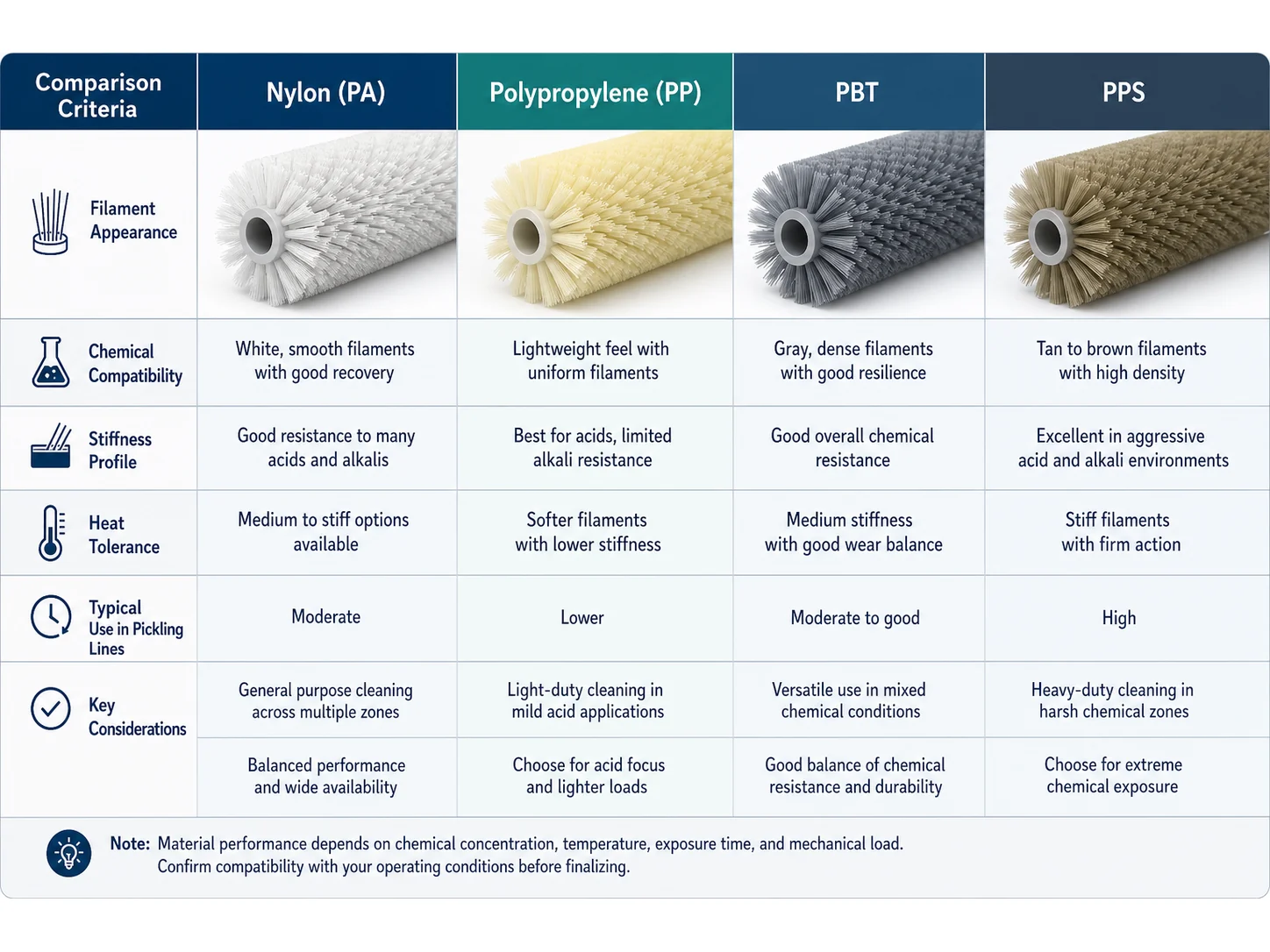
Choosing the right filament material is the single most important decision. The table below compares common options based on chemical resistance, stiffness, and typical use cases in pickling lines. Use it as a starting point for discussions with brush manufacturers.
| Filament Material | Typical Stiffness | Acid Resistance | Alkali Resistance | Max. Temperature | Best Use Case |
|---|---|---|---|---|---|
| Polypropylene (PP) | Medium | Excellent (except strong oxidizers) | Excellent | ~80°C (176°F) | General acid/alkali cleaning, cost-effective for moderate temperatures |
| Nylon (PA 6/6.12) | Medium-High | Poor (absorbs moisture, degrades) | Good | ~120°C (248°F) | Alkaline cleaning only; good wear life in non-acidic environments |
| Abrasive Nylon (impregnated with grit) | High | Poor | Good | ~120°C (248°F) | Heavy scale removal in alkaline stages; may scratch sensitive surfaces |
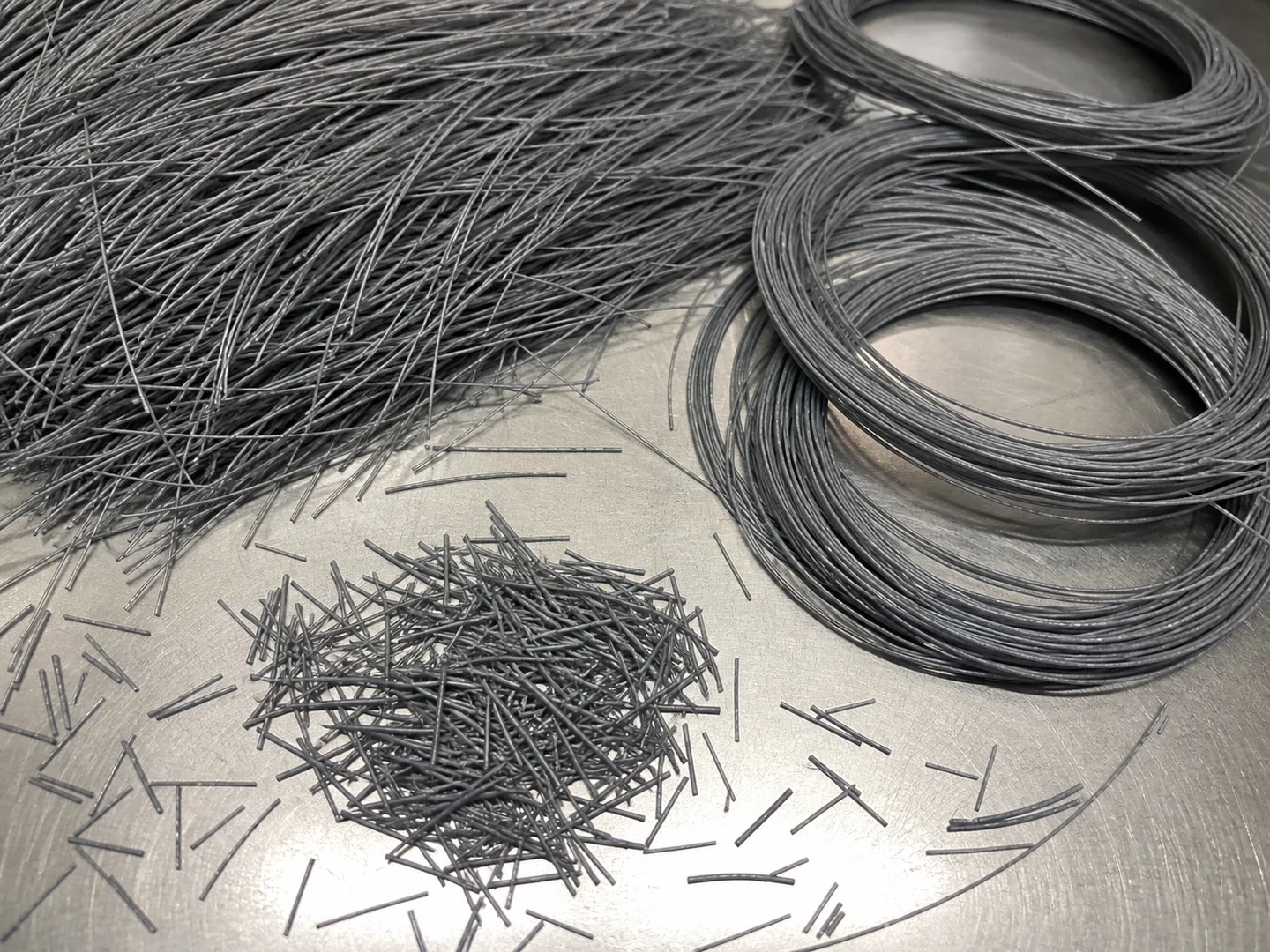
| Polyester (PBT) | Medium-High | Good (mineral acids) | Fair (limited resistance to strong alkalis) | ~120°C (248°F) | Acid baths where higher temperature is needed; better stiffness than PP |
| Natural Fibers (Tampico, etc.) | Low-Medium | Poor (swells, rots) | Fair | ~60°C (140°F) | Soft cleaning on extremely delicate surfaces; limited chemical immersion |
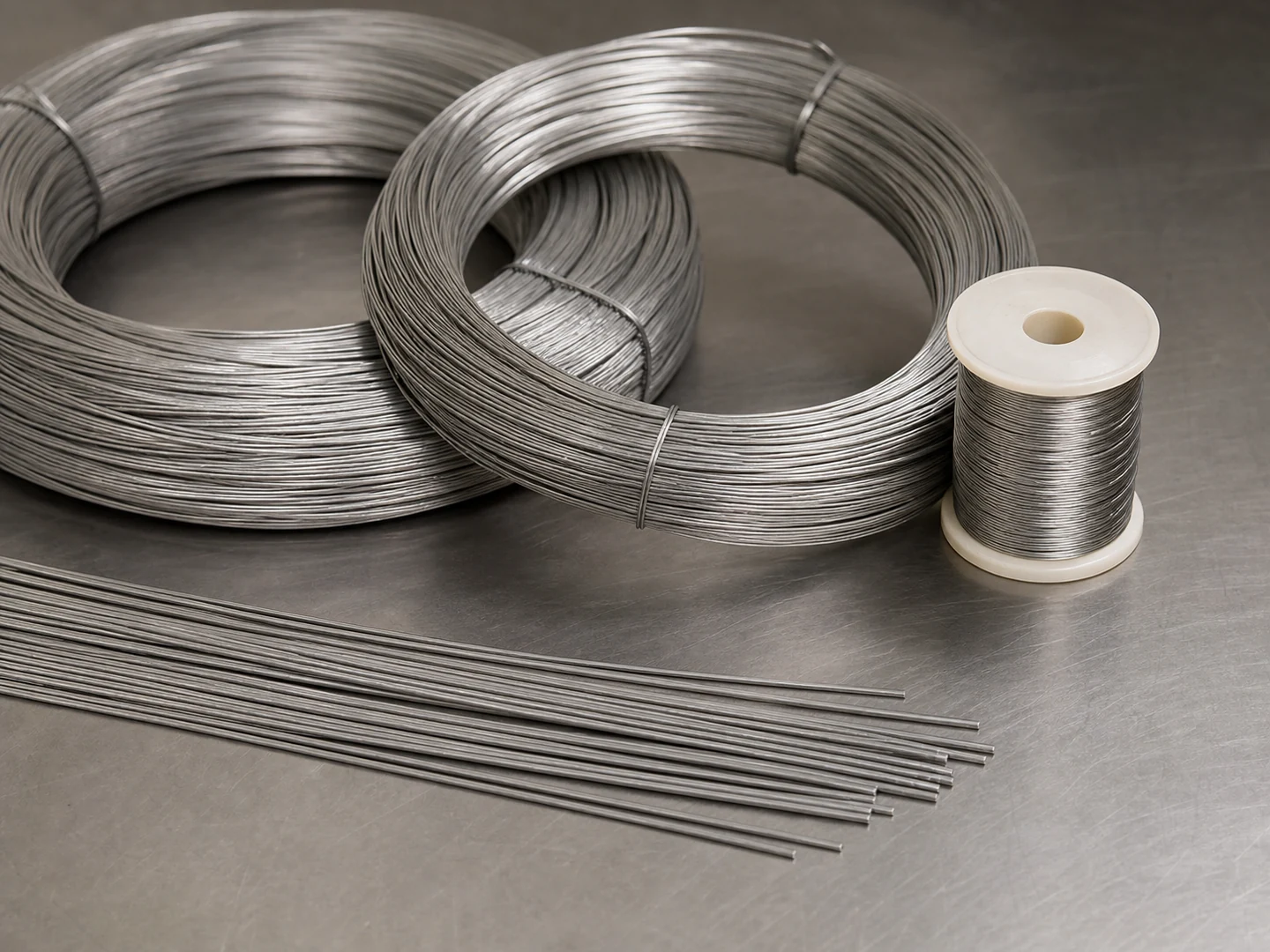
| Stainless Steel Wire (0.1–0.3 mm) | Very High | Check grade (316L for most acids) | Good (316L) | High (depends on grade) | Aggressive scale removal; high risk of surface marking; use only when surface finish is not critical |
Note: Always verify chemical compatibility charts with your brush supplier, especially for mixed acid/alkali chemistries or proprietary solutions.
How to Choose the Right Acid Alkali Cleaning Brush Roller
Walk through these decision factors before you ask for a custom quote. A systematic approach reduces costly reorders and field failures.
Residue Type and Adhesion
Loose, powdery smut needs only a gentle wiping action (low-stiffness filament, high speed). Tightly bonded scale demands aggressive scrubbing (abrasive filament or wire, slower rotation to let bristles dig in). Identify the hardest-to-remove residue your line produces; design for that.
Surface Sensitivity
If the metal is soft (aluminum, thin cold-rolled steel, coated strip), stiff bristles can cause micro-scratches that affect paint or plating quality later. Ask for filament samples to test on production material. A softer filament that still meets chemical resistance is often safer.
Equipment Interface
Measure your brush roller mounting points: shaft diameter, bearing type, center distance, allowable brush OD, and face length. These dimensions are non-negotiable. Provide a dimensional sketch to the brush manufacturer.
Wet and Chemical Exposure
Consider not only the bath chemistry but also the splash zone. Core materials (typically stainless steel, epoxy-coated steel, or engineered polymers) must withstand the same environment. Sealed bearings are often required to prevent acid ingress.
Hygiene Expectations
In food-grade or high-purity metal processing, filament materials must not shed fibers or trap contaminants. Food-grade polypropylene (compliant with FDA standards) or stainless steel may be mandated. Discuss any residue testing requirements early.
Maintenance Frequency
How often can you afford to change the brush? Longer-wear filaments (abrasive nylon, stainless steel) extend service intervals but may cost more upfront. Balance replacement labor cost against brush cost drivers. Consider stocking a spare set to minimize downtime.
Custom Size Requirements
Brush rollers for very wide strip (over 2 m) often require split construction or intermediate bearing supports. For small pilot lines, miniature brush rollers with fine filaments are common. Provide exact strip width and line speed so the manufacturer can recommend the right core rigidity and fill density.
Core and Mounting Options
The core (or hub) is the brush roller’s structural backbone. It holds the filaments and connects to the drive system. Common configurations include:
- Straight-through shaft: A single shaft passes through the entire roller, supported by bearings at both ends. Most common for wide lines.
- Stub shaft / journal: Roller has short shafts at each end, bolted or keyed to the drive. Easier to replace without disturbing adjacent equipment.
- Quick-change cartridge: The brush face is a replaceable module that slides onto a fixed shaft. Ideal for high-frequency changeouts.
Core material is typically 304 or 316 stainless steel for corrosion resistance. For lightweight needs, fiberglass-reinforced polymer is sometimes used. Ensure the mounting method allows for thermal expansion if the line temperature varies significantly.
Common Mistakes When Ordering Custom Cleaning Brush Rollers
Avoid these frequent pitfalls:
- Guessing chemical compatibility: Assuming a material works because it ‘looks like plastic’ leads to premature failure. Always request a chemical resistance datasheet.
- Over-specifying stiffness: Aggressive brushes wear faster and may damage strip surface. Start with the softest filament that still cleans effectively.
- Neglecting the core: A chemically resistant filament is useless if the core rusts or swells. Check core material and sealing.
- Ignoring line speed vs. brush diameter: A brush that rotates too slowly fails to scrub; too fast, and the bristles may deflect or flutter. Discuss recommended RPM with the supplier based on your line speed and brush OD.
- Ordering without a trial: Even the best calculations need validation. If possible, test a one-foot sample or a small prototype section before committing to a full production set.
- Focusing only on cost drivers: The lowest-cost brush roller may cost more in frequent replacements and strip quality defects. Compare lifecycle cost, not just unit cost drivers.
When an Acid Alkali Cleaning Brush Roller Is the Wrong Choice
A brush roller is a mechanical aid; it cannot replace proper chemical process control. If scale formation is excessive, the root cause may be upstream issues: bath temperature, concentration, or inadequate pre-rinse. Improving chemistry often reduces brush wear and improves results at lower mechanical impact.
In some cases, additional cleaning stages are necessary. For example:
- Ultrasonic cleaning may be needed for intricate profiles or deep pits.
- High-pressure spray bars can assist the brush in breaking loose scale before scrubbing.
- An alternative brush type, such as a disc brush or a face brush, might be better for cleaning strip edges or narrow sections.
If you are processing extremely hard alloys or refractory metals, traditional filament materials may wear out in hours. In such cases, discuss the option of a steel bristle brush with a hardened core, but weigh the risk of surface marking. A supplier drawing review and a small-scale trial are strongly advised before scaling up.
Final Takeaway
Buying an acid alkali cleaning brush roller for a pickling line is an engineering decision, not a commodity purchase. Start by defining the residue you need to remove, the chemical environment, and the strip sensitivity. Use the comparison table to narrow filament material choices. Then, work with a brush manufacturer to refine stiffness, diameter, and mounting details based on your line dimensions and speed. A thoughtful customization process, backed by a trial if possible, will yield a brush roller that cleans effectively, lasts longer, and protects your metal surface quality.
Frequently Asked Questions
What is the typical diameter range for acid alkali cleaning brush rollers?
They vary widely depending on the line design. Small pilot lines may use rollers as small as 100 mm (4 inches) in outer diameter, while heavy-gauge pickling lines can exceed 400 mm (16 inches). The diameter is usually chosen to match existing machine clearances and to achieve the correct tip speed relative to strip speed. Always measure the available space before ordering.
Can I get a sample brush roller before committing to a large order?
Yes, many brush manufacturers can produce a short sample section (e.g., 12-inch length) or a single full-diameter roller for trial. Testing a sample under actual production conditions is the best way to validate filament choice, stiffness, and wear rate. Expect to pay for the sample, but this investment can prevent costly mistakes.
How do I specify custom dimensions for a brush roller?
Prepare a dimensioned drawing or a detailed specification sheet that includes: overall length (face length), brush outer diameter, core/shaft diameter, bearing type and distance, and any keyway or set-screw details. If the roller is not a single piece, indicate segment lengths. Include the direction of rotation relative to the strip.
What if my pickling line uses both acid and alkali stages?
You may need two different brush roller designs. An acid-stage brush requires strong acid resistance (polypropylene or polyester), while an alkali-stage brush can often use nylon or polyester. In some lines, a single material (polyester) works across both environments, but you must verify resistance to the specific chemicals at the operating temperatures on both stages.
How should I clean and maintain the brush roller during production stops?
Rinse the brush with fresh water immediately after a production stop to prevent chemical drying and filament clumping. Periodically inspect for filament breakage or core corrosion. Some facilities use a dedicated cleaning cycle where the brush spins against a water spray. Never let the brush sit soaked in concentrated acid or alkali for prolonged periods.
Does brush stiffness affect the risk of scratching the metal surface?
Absolutely. Stiffer filaments (thicker gauge, abrasive-impregnated, or steel wire) increase the risk of surface marking. For soft metals or high-quality finish requirements, choose a softer filament like polypropylene with a smaller diameter. If you need more aggressive cleaning, consider dual-purpose brushes with alternating stiff and soft rows, or reduce brush pressure by adjusting the gap.
Can I use the same brush roller for different strip widths?
Yes, if the brush face length covers your widest strip and you control the side-to-side positioning. However, cleaning only the middle portion may cause uneven wear. For long-term reliability, it is better to have a brush roller that matches the normal strip width range to avoid edge erosion and to maintain consistent cleaning across varying product mixes.
How do I compare brush roller suppliers fairly?
Request quotes using the same specification sheet. Ask for filament material datasheets, core material, bearing type, and expected wear life. Compare not only the unit cost drivers but also the supplier’s experience with pickling applications, availability of samples, and lead times for custom builds. A supplier who asks detailed questions about your line is more likely to deliver a suitable product than one who offers a one-size-fits-all solution.
Technical References
- OSHA — Hazard Communication
- OSHA — Chemical Hazards and Toxic Substances
- World Stainless — Corrosion Resistance of Stainless Steels
Which bristle material fits this job — AISI 304 Stainless Steel Wire, Abrasive Nylon or Nylon PA?
| Material | Continuous temperature (°C) | Peak temperature (°C) | Water absorption | Hardness |
|---|---|---|---|---|
| AISI 304 Stainless Steel Wire | 400 | 500 | 0% | Rockwell B 70–95 depending on temper and cold work |
| Abrasive Nylon | 120 | 150 | 0.1–1.0% | Abrasive filament; stiffness and cutting level is controlled by PA base, grit type, grit size, filament diameter and trim height. |
| Nylon PA | 93 | 121 | 0.3–9% by PA grade and conditioning | Medium to firm; filament diameter and trim length control bending force. |
| Polypropylene PP | 80–100 | 120–140 | ≤0.03% | Shore D 65–75 |
Figures as published by Alleima; Perlon; Brushtec / DuPont. Confirm the exact grade against the supplier datasheet before ordering.
What should replace AISI 304 Stainless Steel Wire for pickling lines: what to compare?
- AISI 304 Stainless Steel Wire — Use AISI 316 stainless steel wire for chloride, marine, dairy, beverage, chemical washdown, or higher pitting-resistance requirements. Use carbon steel for dry aggressive cutting and brass or abrasive nylon for lower marking risk.
- Abrasive Nylon — Compare Abrasive Nylon with PP, PBT, PET. Change material when wet stiffness, temperature, chemical resistance, conductivity, particle shedding, or surface marking becomes the limiting factor.
- Nylon PA — Compare Nylon PA with PP, PBT, PET. Change material when wet stiffness, temperature, chemical resistance, conductivity, particle shedding, or surface marking becomes the limiting factor.
- Polypropylene PP — Compare Polypropylene PP with Nylon, PBT, PET. Change material when wet stiffness, temperature, chemical resistance, conductivity, particle shedding, or surface marking becomes the limiting factor.