Quick Answer
On a treatment line the brush lives in the process bath or in its splash zone, often for months. Chemical compatibility and temperature come first; the cleaning duty comes second. A fill that outperforms everything for a week and then embrittles has failed, because changing it means stopping the line.
What the Line Does to the Brush
- Acid pickling and descaling — low pH, often warm, continuous immersion or spray. Metal parts of the brush matter as much as the fill: a steel core in an acid bath is a shorter-lived component than the filament it holds.
- Alkaline degreasing and electrocleaning — high pH with surfactants. Nylon hydrolyses here over time; that is the single most common wrong choice on these lines.
- Anodising and plating pretreatment — the surface must arrive at the tank uncontaminated, so a shedding brush is a defect source rather than a cleaning step.
- Heat treatment and annealing — the limit is temperature at the contact point, not average bath temperature.
Filament by Chemistry
| Line condition | Where to start | Why |
|---|---|---|
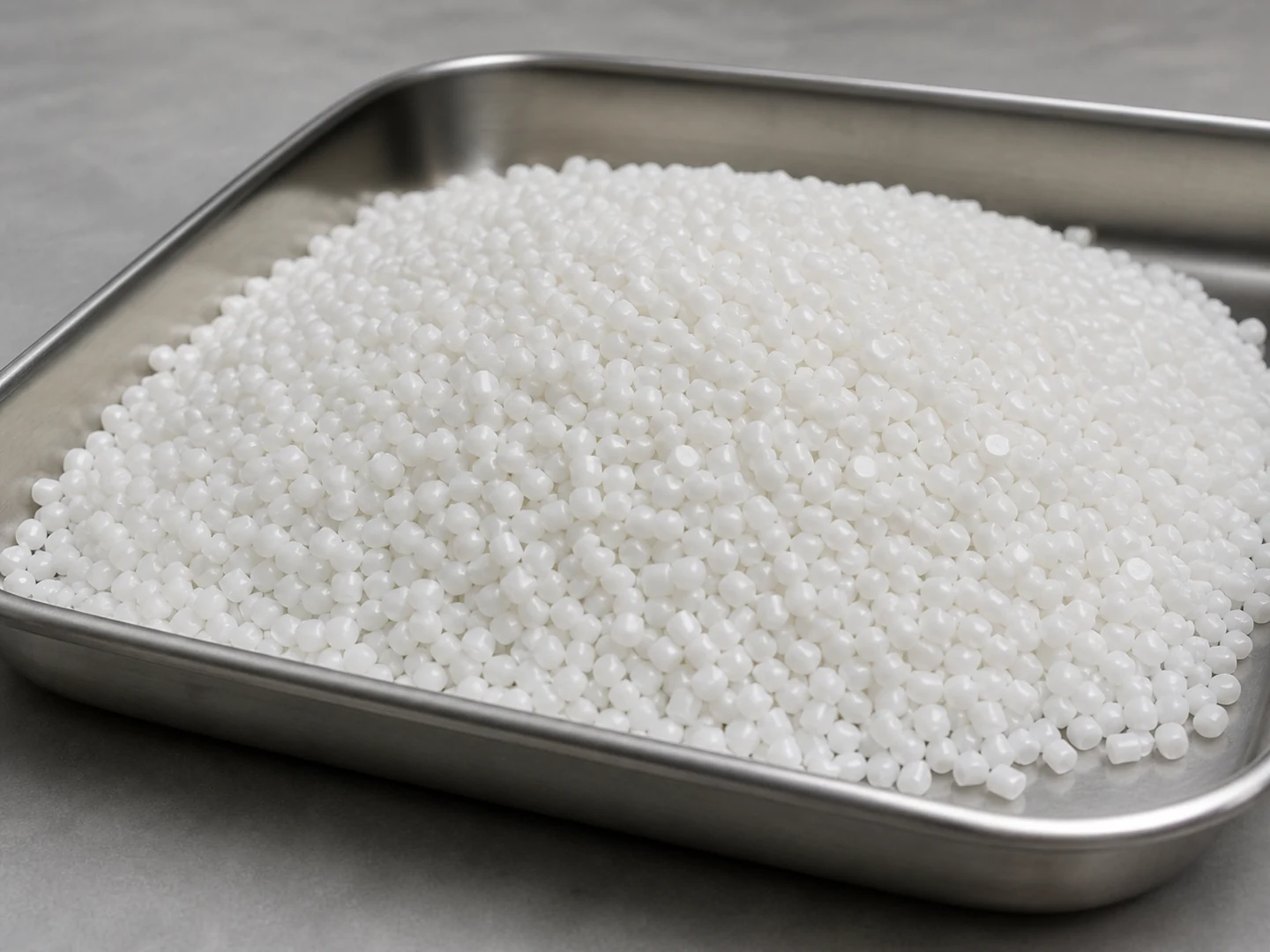
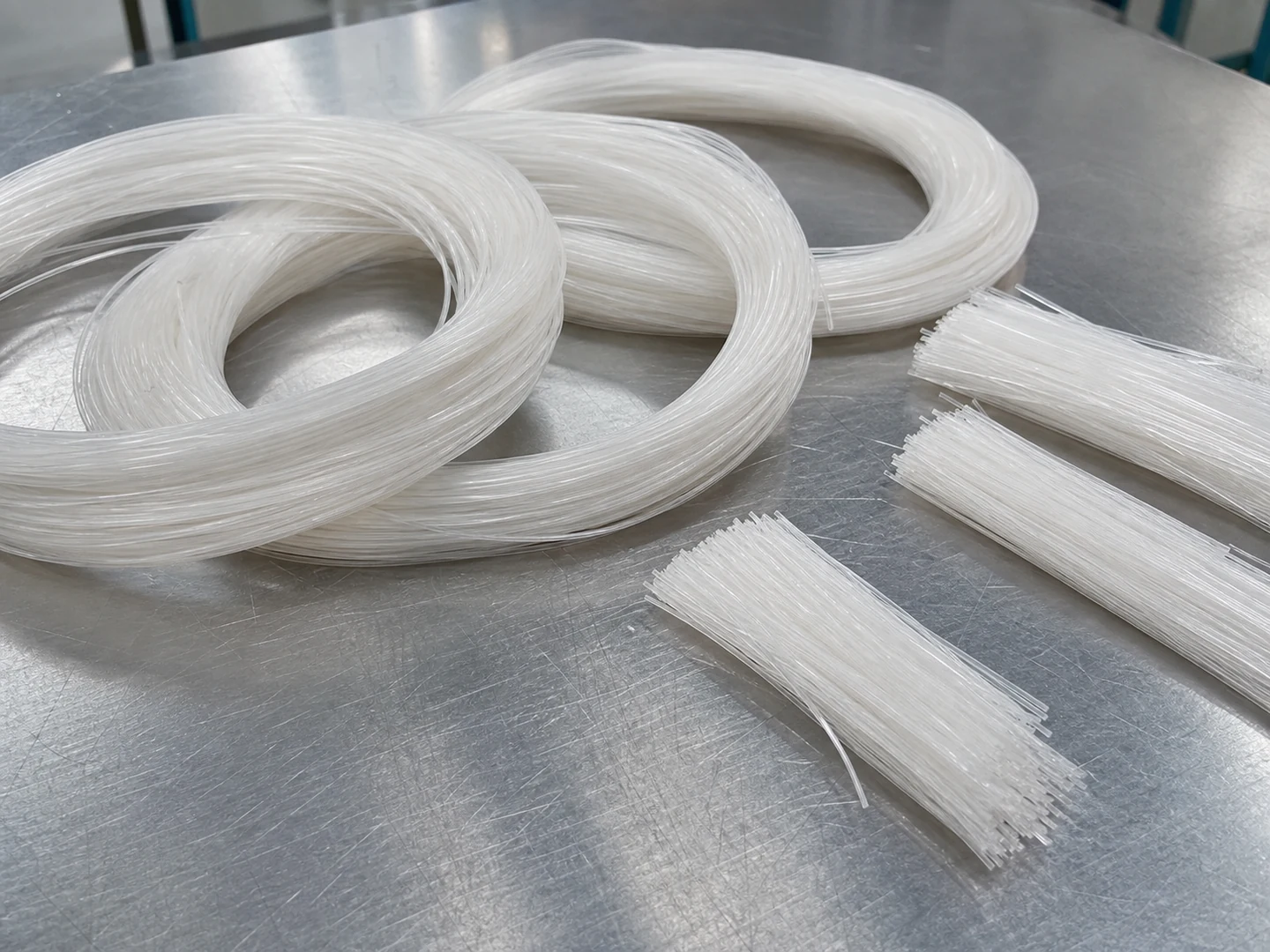
| Strong acid, continuous contact | Polypropylene PP or PVDF Filament | holds up at low pH where nylon and PBT do not |
| Strong alkali, continuous contact | Polypropylene PP | nylon hydrolyses in caustic; PP does not |
| Both ends of the swing in one cycle | PBT | keeps bend recovery through acid and caustic alternately |
| Elevated temperature with chemistry | PEEK Filament or PPS | chosen when the temperature rules out the commodity polymers |
| Any wire section in the bath | AISI 316 Stainless Steel Wire | 304 pits in chloride and in warm acid |
Construction and Mounting
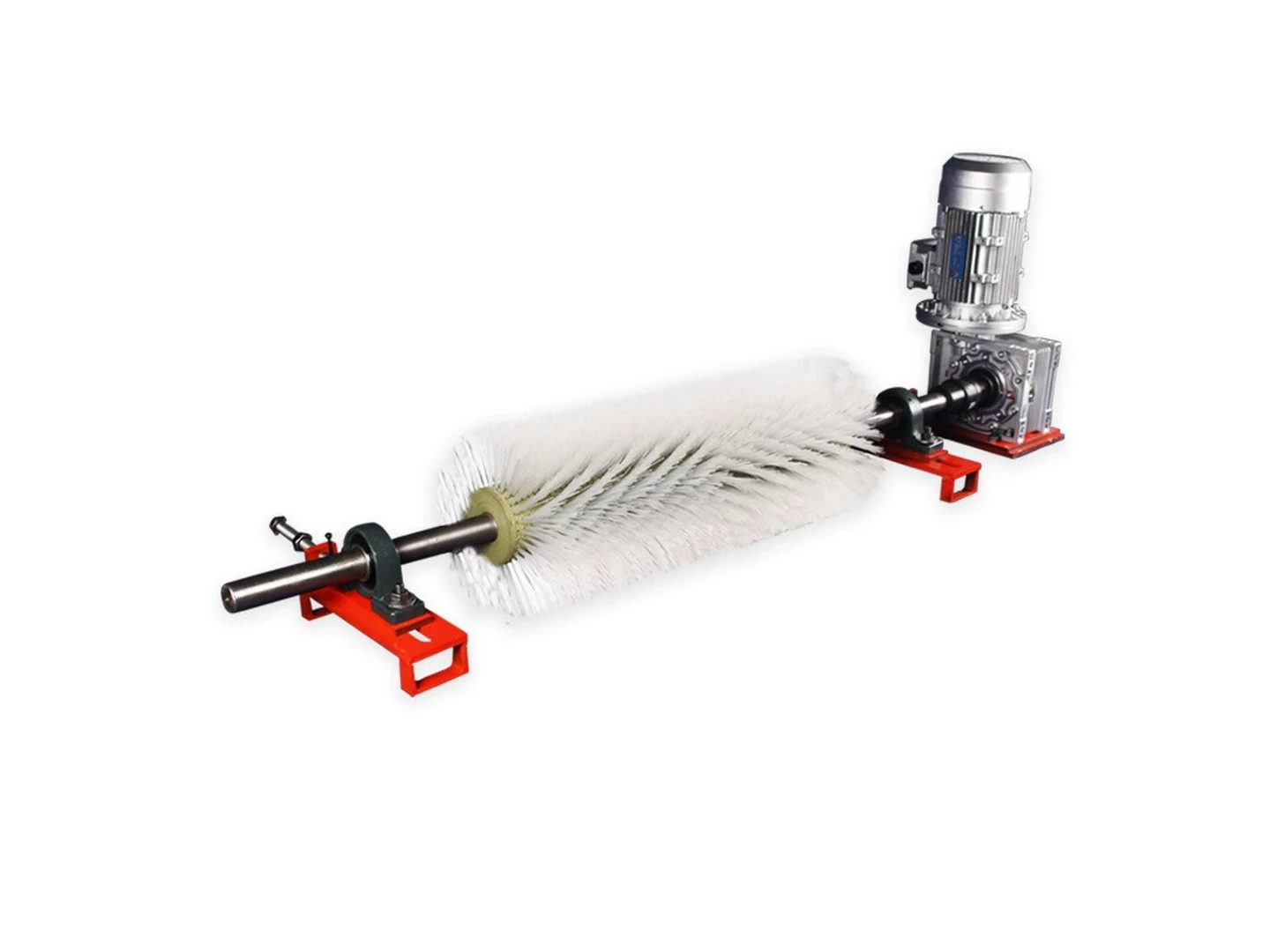
Roller and strip brushes dominate here because the work moves continuously. What varies is the core and the mount: a filled core that traps liquor becomes a contamination carrier between tanks, so a sealed or drainable construction is usually specified over a cheaper wound one. Where the brush is above the bath rather than in it, splash and vapour still set the material, not the nominal duty.
Where It Goes Wrong
- Specifying the fill from the cleaning task and discovering the chemistry afterwards. On these lines the chemistry is the specification.
- Matching the filament and forgetting the core, the channel, the shaft and the fasteners. They sit in the same bath.
- Carrying liquor from one tank to the next inside a brush that cannot drain. The defect shows up in the finish, not in the brush.
- Assuming a splash zone is milder than immersion. Alternate wet and dry with a concentrated film is often harder on a polymer than staying wet.
What to Send for a Quote
The chemistry by name and concentration, the pH range, the operating temperature at the brush, whether contact is immersed or splash, the line speed, and the mounting. If the brush moves between tanks, say so — that changes the core before it changes the fill.
Which bristle material fits this job — Polypropylene PP, PVDF Filament or PBT?
| Material | Continuous temperature (°C) | Peak temperature (°C) | Water absorption | Hardness |
|---|---|---|---|---|
| Polypropylene PP | 80–100 | 120–140 | ≤0.03% | Shore D 65–75 |
| PVDF Filament | 130–150 | 170–190 | ≤0.04% | Shore D 75–82 |
| PBT | 120–140 | 160–180 | 0.05–0.20% | Shore D 80–90 |
| PEEK Filament | 250–260 | 300 | 0.10–0.50% | Shore D 85–90 |
| AISI 316 Stainless Steel Wire | 400 | 500 | 0% | Rockwell B 70–95 depending on temper and cold work |
Figures as published by Perlon; Ensinger; Alleima. Confirm the exact grade against the supplier datasheet before ordering.
When are Roller and Conveyor Brushes the wrong choice?
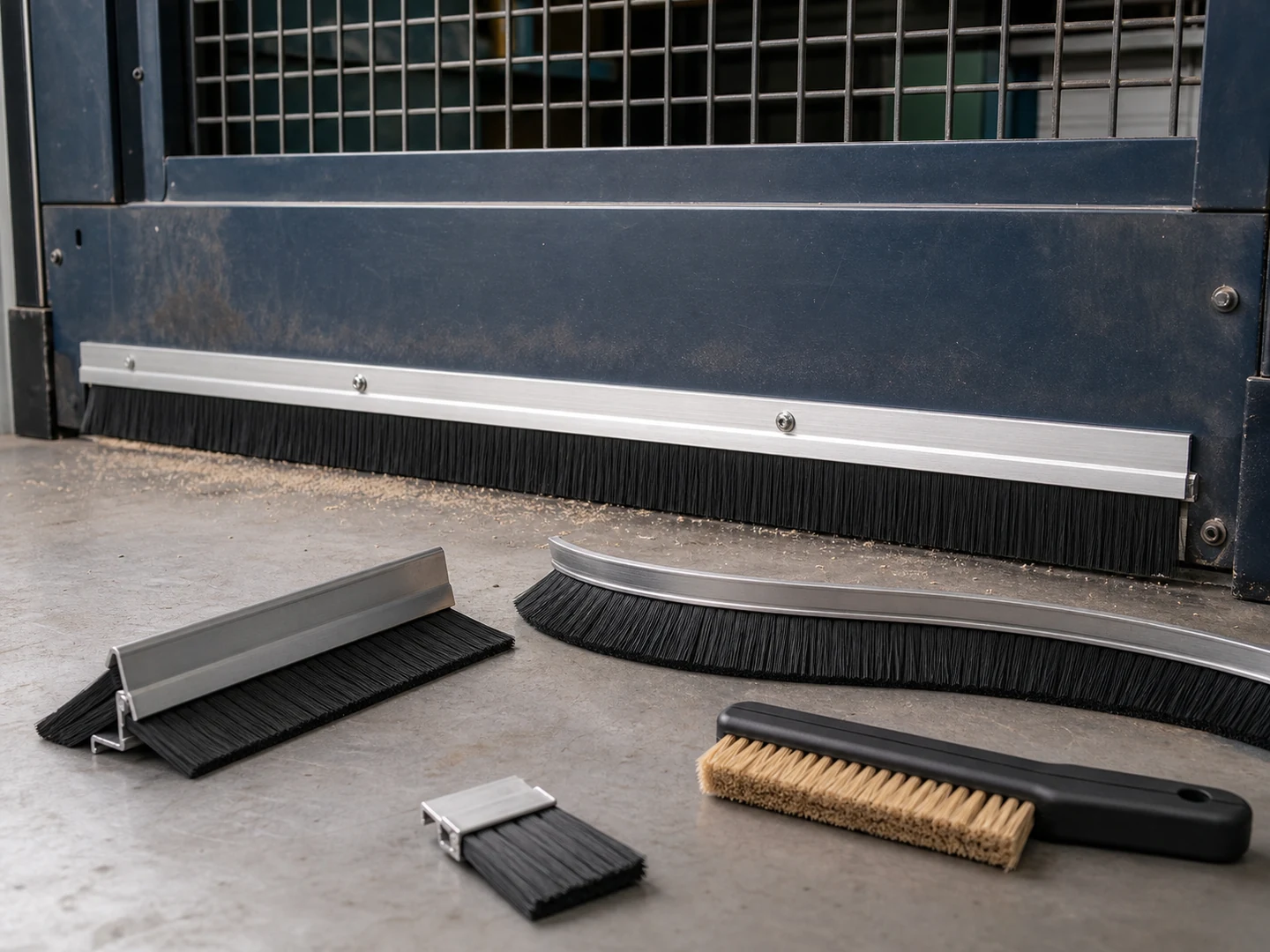
- Roller and Conveyor Brushes — Use a stationary strip brush for a fixed linear seal or wipe, or another process when rotating line contact interferes with the product or cannot discharge the residue safely.
- Strip Seal Brushes — Use rubber lips, foam, labyrinth seals, air curtains, or rigid scrapers when pressure sealing or liquid containment is required.
- Disc Brushes — Use a cylindrical brush when line contact and debris pickup matter more than a flat rotating footprint, or use another method when the surface cannot tolerate circular brushing.
- Handheld Detail Brushes — Use a tube brush, powered brush, scraper, wipe, sponge, or vacuum when the target is internal, heavily bonded, or highly delicate.
What should replace Roller and Conveyor Brushes when they stop working?
- Roller and Conveyor Brushes — Roller and conveyor brushes hold cylindrical line contact across a working width, including helix-wound builds where the filament path is set to move loosened material toward one side; a strip brush holds the same line without rotating, so it seals or wipes but cannot carry residue along the width.
- Strip Seal Brushes — Strip brushes create a linear barrier or guide; machine-table brush plates distribute load and support products over a broad area. Closest alternative: Machine Table Brush Plates.
- Disc Brushes — Disc brushes use a flat circular working face; cylindrical floor or roller brushes use tangential line contact and are better when debris pickup or continuous width contact is important. Closest alternative: Floor Scrubber Sweeper Brushes.
- Handheld Detail Brushes — Handheld detail brushes cover general precision cleaning; auto-detailing brushes impose tighter controls for painted, polished, leather, display, and trim surfaces.