What Is an Anodizing Line Brush?
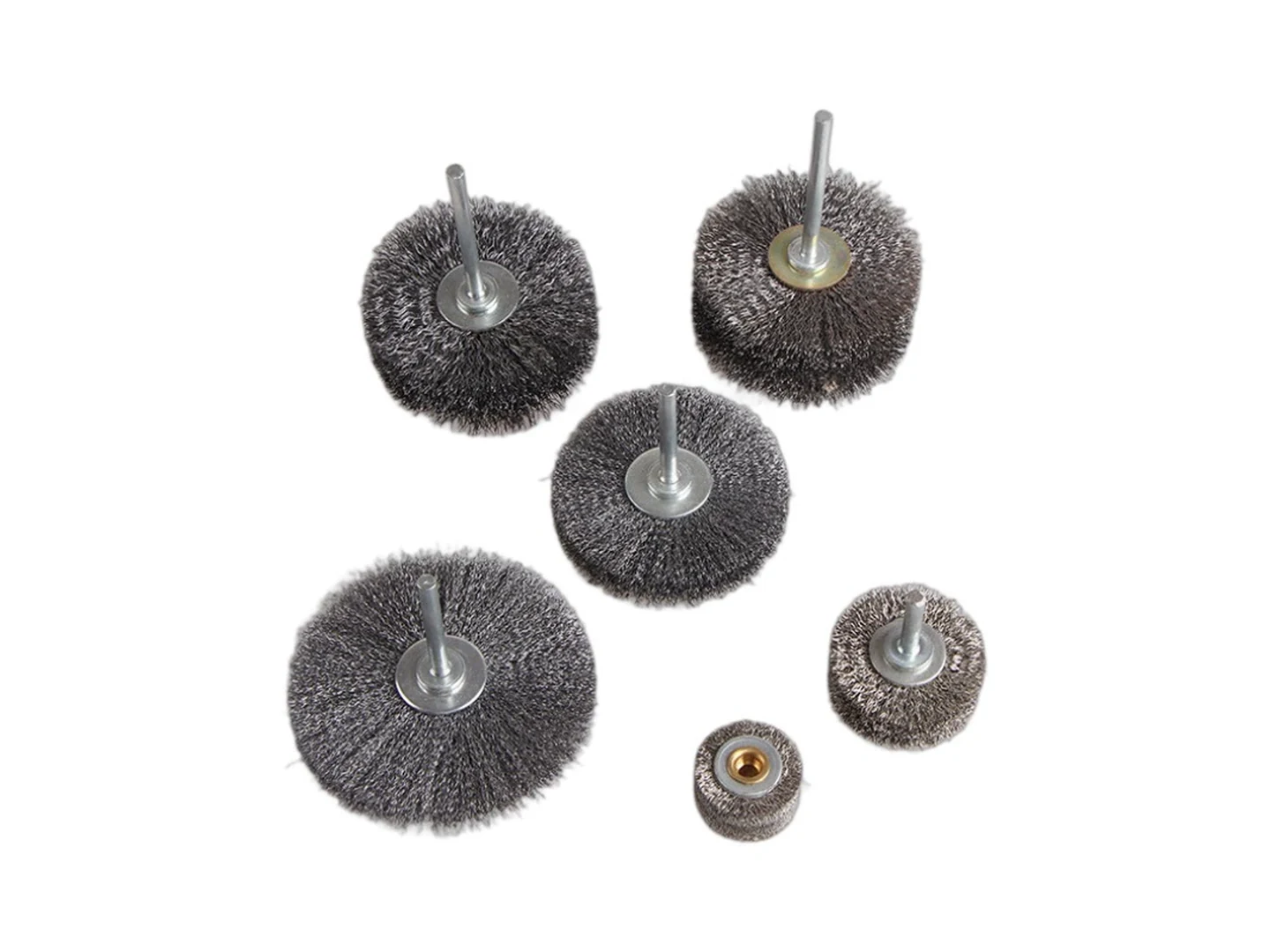
An anodizing line brush is a rotary or stationary brush roll, wheel, or strip that runs in contact with a moving metal web, extrusion, or racked part during the pretreatment stage. It is typically placed ahead of alkaline clean, acid etch, or desmut tanks. The brush can be driven at adjustable speeds or mounted as a fixed contact roll. The main job is physical removal of soils that chemical cleaning alone cannot fully break, especially in continuous anodizing lines processing coiled aluminum strip or long extrusions. The brush must withstand wet, chemically aggressive environments, often operating partially submerged or experiencing splash exposure to caustic cleaners, acid fumes, and rinses.
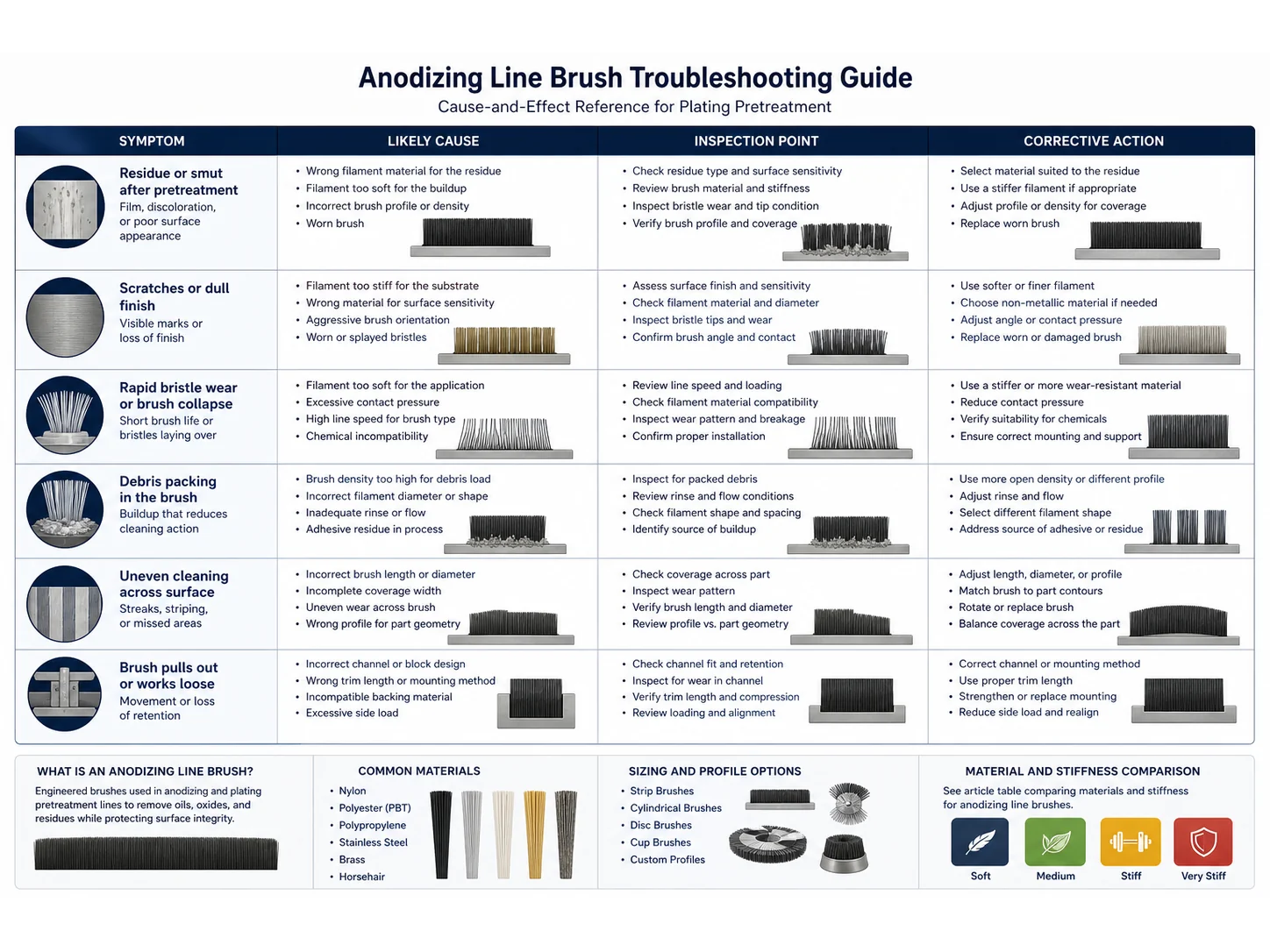
Common Materials for Anodizing Line Brushes
Brush filament material directly affects cleaning aggressiveness, chemical resistance, and service life. The most common families are:
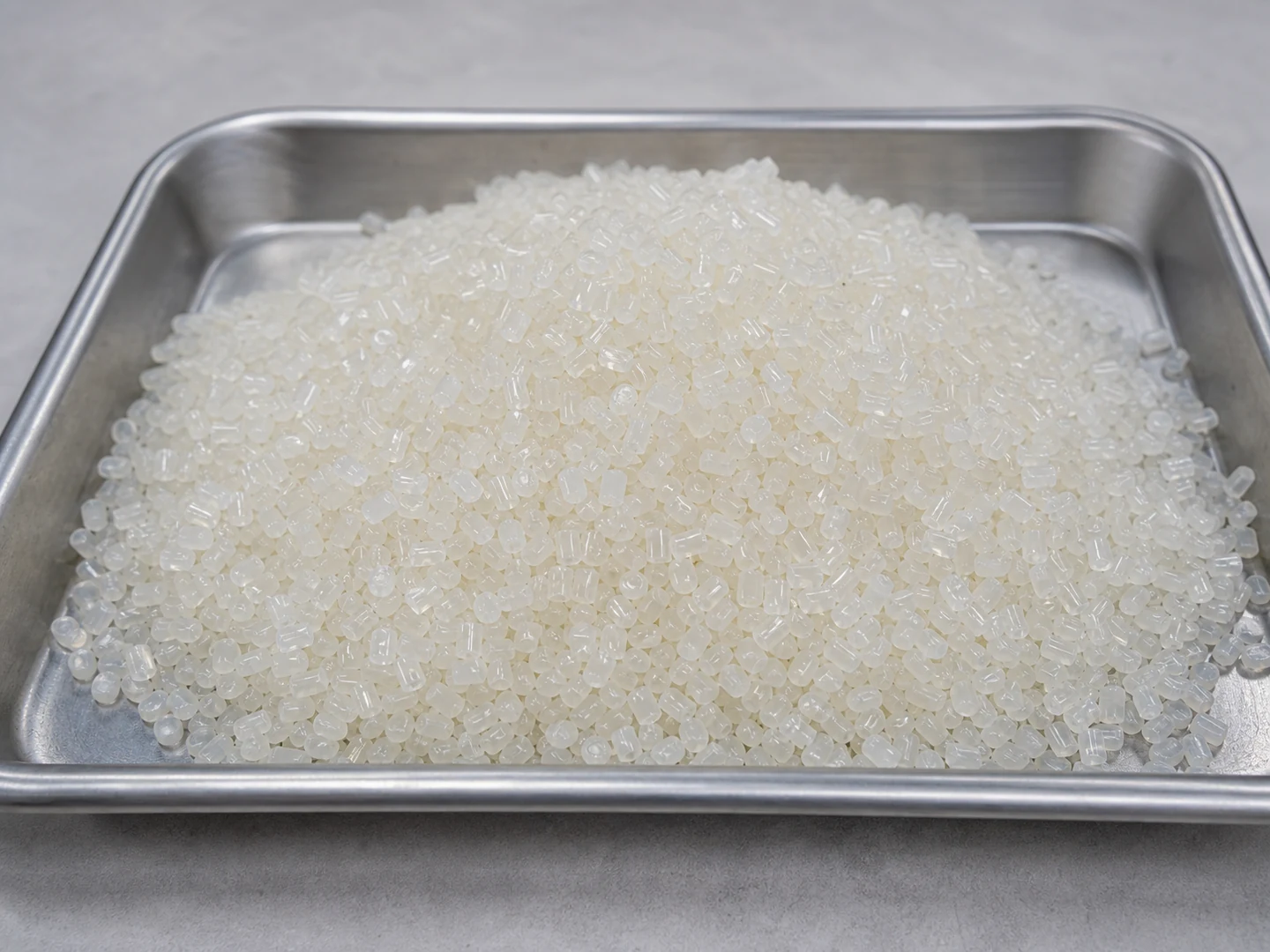
- Nylon 6.12 (solid or abrasive-impregnated): Good abrasion resistance, withstands mild alkaline solutions, moderate stiffness, available with silicon carbide or aluminum oxide grit bonded directly into the filament for surface conditioning. Not recommended for prolonged high-acid immersion.
- Polypropylene: Excellent chemical resistance to acids and alkalis, lower water absorption than nylon, softer filament tips, good for sensitive surfaces where scratching must be avoided. Often used in cleaning and squeegee-style contacts.
- Horsehair (natural): Very soft, high water absorption, for gentle wiping of decorative trim or polished aluminum parts where no scratch is permitted. Limited temperature resistance and can degrade in strong chemicals.
- Tampico (natural, vegetable fiber): Medium stiffness, holds water well for wet contact cleaning, resists mild chemicals, used in light cleaning or rinsing stations. Not ideal for heavy residue or high-speed lines.
- Abrasive-filled nylon (ceramic, diamond, SiC): For heavy oxidation removal, deep scratch patterns, or texturing; often used in coil anodizing brush scrubbing stations before bright dip or etching processes.
Sizing and Profile Options
Beyond material, the physical dimensions determine brush fit and cleaning coverage.
- Overall brush roll diameter: Typically 100–250 mm for coil lines, smaller brushes for extrusion or rack lines. Must match the machine opening and allow for wear adjustment.
- Face length (working width): Must exceed the widest strip or part dimension by 25–100 mm to prevent edge shadowing. For extrusions, brush length aligns with the conveyor or immersion cell size.
- Fill density: Expressed as knot spacing or bristles per square inch. Higher density gives more cleaning points per area but can trap solids; lower density rinses cleaner.
- Trim length: The free length of the bristle affects stiffness and conformability. Shorter trim provides aggressive scrub; longer trim wraps around contours.
- Core or shaft type: Solid metal core, keyed shaft, or insert hub for quick change. Must be compatible with wet environment; stainless steel cores are common.
Material and Stiffness Comparison Table
| Material | Typical Stiffness | Chemical Resistance | Surface Sensitivity | Best Use |
|---|---|---|---|---|
| Nylon 6.12 (plain) | Medium-firm | Good in alkalis, limited acids | Medium; can micro-scratch | General cleaning, light smut removal |
| Nylon with SiC grit | Firm-aggressive | Good (but grit wear-out) | Aggressive; scratches | Heavy oxidation, texturing, coarse scrub |
| Polypropylene | Soft-medium | Excellent acid & alkali | Low scratch risk | Rinsing, squeegee, final contact wipe |
| Horsehair | Very soft | Poor in strong chemicals | No scratch | Polished part wiping, decorative trim |
| Tampico | Medium-soft | Moderate (short life in acids) | Low scratch | Light wash station, gentle particulate removal |
How to Choose the Right Anodizing Line Brush
Decision factors should be ranked by the actual residue, surface finish requirements, and line environment:
- Residue type and thickness: Oily films need softer, high-filament-count brushes plus chemical pre-rinse. Smut or oxidation patches need abrasive or medium-stiff synthetic brushes. Polishing compound requires a brush that can release solids without loading.
- Substrate hardness and anodized layer quality level: Soft alloys (e.g., 1100, 3003 series aluminum) scratch easily; choose polypropylene or soft natural materials. For architectural anodizing where color consistency is critical, avoid random scratch patterns from overly stiff brushes.
- Chemical exposure: If the brush sits between etch and desmut tanks, consider polypropylene for acid resistance. Nylon can degrade faster in strong nitric or sulfuric environments.
- Machine interface: Check core diameter, mounting style, and available adjustment range. A brush roll too large or too flexible might interfere with pinch rolls or leveler rolls.
- Maintenance and brush loading: Dense brushes with fine filaments can trap contaminant particles and require frequent high-pressure wash-down. Evaluate cleaning access and typical downtime windows.
- Custom size vs. stock: Many anodizing lines need non-standard face lengths or custom core machining. Work with the equipment provider to get a drawing review before ordering.
Common Specification Mistakes
- Specifying by cost drivers or off-the-shelf availability alone: A cheaper brush that sheds bristles or swells in chemicals causes more rework than the initial purchase savings.
- Ignoring water absorption rating: Nylon absorbs moisture and softens; a brush rated for dry use may deflect excessively when submerged in hot rinse water, changing contact pressure and cleaning uniformity.
- Choosing overly aggressive filament for light cleaning: Operators sometimes pick a stiff abrasive brush to Help confirm cleaning speed, but it can create micro-scratches that lead to hazy or uneven anodizing.
- Mismatched core material: Mild steel cores corrode in acidic lines; always confirm stainless steel (304 or 316) or composite core material for wet sections.
- Forgetting filament flex fatigue: Continuous flexing at high RPM in wet conditions can cause bristle cracking, especially with dry abrasive filaments; verify flex fatigue data from the supplier.
When an Anodizing Line Brush Isn’t Enough
Brushes are only one part of pretreatment. If the incoming metal has heavy, uneven mill scale, deep corrosion pits, or thick bonded lubricant that brush action cannot fully remove, the anodizing quality will suffer despite correct brush selection. In such cases, upstream mechanical descaling, chemical bright dipping, or a combination of ultrasonic cleaning and brush scrubbing may be required. Additionally, if the brush is expected to deburr or polish to a specific Ra value, ananodizing line brush is typically not designed for precision surface finishing; consider using a dedicated polishing brush station with finer grit and controlled pressure. When surface profile must meet tight roughness specifications, a sample test with the anodizing line brush material on the actual substrate is essential before line integration.
Final Takeaway
An anodizing line brush is a critical pretreatment contact component that directly influences cleaning uniformity and final anodized surface quality. Match the brush material to the residue chemistry and surface sensitivity, choose dimensions that interface properly with the machine, and verify chemical resistance under actual wet operating temperatures. Avoid the trap of selecting based on size or cost drivers without testing the filament-stiffness-chemical compatibility triangle. When in doubt, request a supplier drawing review and a sample brush set for trial run validation.
Frequently Asked Questions
Can a single brush material work for both cleaning and rinsing in one anodizing line?
It is generally not recommended because cleaning and rinsing require different stiffness and water absorption properties. A brush optimized for soil removal may hold too much residue and re-deposit it in the rinse section. It is better to use a firmer cleaning brush followed by a softer, non-abrasive rinse brush, often made of polypropylene.
How do I know if the brush core needs to be stainless steel?
If the brush operates in a zone exposed to acid fumes, acid rinses, or humid alkaline atmosphere, a stainless steel core (304 or 316) is necessary. Mild steel cores will rust and contaminate the bath or leave rust stains on parts. Check the specific chemical environment and operating temperature with your supplier.
What is the difference between a brush with knot construction and a solid strip brush?
Knot brushes (tufted) provide more open area for debris to escape and are less likely to load with heavy residues. Strip brushes (continuous metal-backed filament) give denser, more uniform contact and are often used for wiping or light scrubbing. Choice depends on the residue type and line speed.
Can I use the same brush for different aluminum alloys on the same anodizing line?
It is possible but risky if one alloy is softer than another. A brush stiff enough to clean a harder alloy may scratch a softer one. If you must run mixed alloys, select a filament that is safe for the softest alloy in your product mix, or plan for adjustable brush pressure per run.
How often should an anodizing line brush be replaced?
There is no universal fixed schedule. Replacement triggers include visual bristle wear beyond 30–40% of original trim length, loss of stiffness resulting in reduced cleaning performance, core corrosion, or chemical degradation (brittleness, swelling). Monitor brush condition during scheduled line stops and keep a log of brush service hours.
What if my brush supplier does not have the exact size I need?
Many industrial brush manufacturers offer custom-cut cores and filament lengths. Provide a dimensioned sketch of the brush housing, shaft diameter, and required face length. Request a sample of the exact filament material and density for trial before committing to a full custom order. Custom brushes normally have longer lead times, so plan spares accordingly.
Is there a standard test to check brush cleaning performance on aluminum before anodizing?
While no single standard exists, many anodizing lines run a coupon test: a small aluminum panel with the same mill finish and contaminant is passed through the brush station and then checked under controlled lighting for residue removal and surface scratch depth. Comparing to a reference panel or performing a water break test can indicate cleaning uniformity.
Technical References
- OSHA — Hazard Communication
- OSHA — Chemical Hazards and Toxic Substances
- World Stainless — Corrosion Resistance of Stainless Steels
- NIST — Metric SI
Which bristle material fits this job — Nylon PA, AISI 304 Stainless Steel Wire or Horsehair?
| Material | Continuous temperature (°C) | Peak temperature (°C) | Water absorption | Hardness |
|---|---|---|---|---|
| Nylon PA | 93 | 121 | 0.3–9% by PA grade and conditioning | Medium to firm; filament diameter and trim length control bending force. |
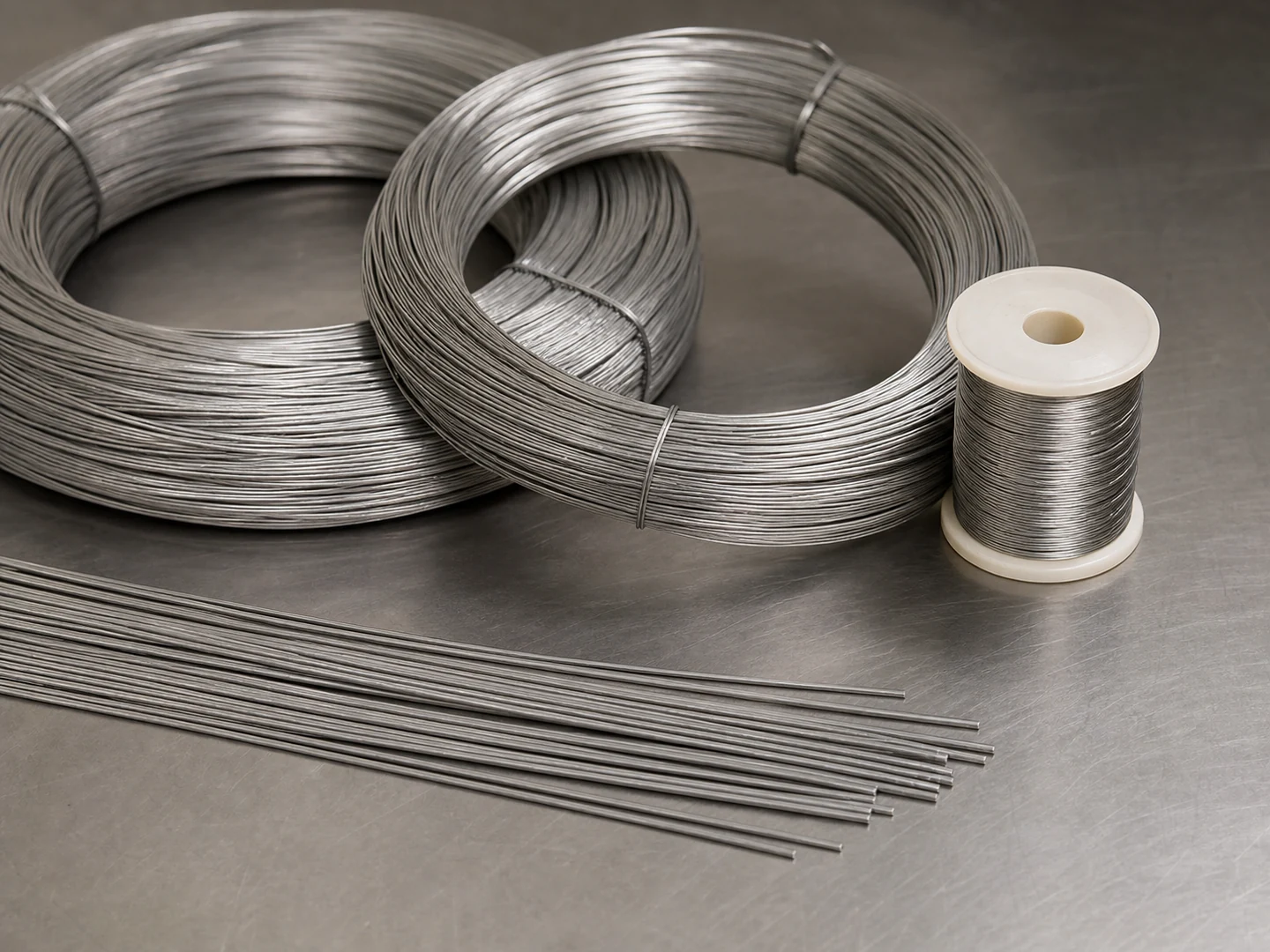
| AISI 304 Stainless Steel Wire | 400 | 500 | 0% | Rockwell B 70–95 depending on temper and cold work |
| Horsehair | 60–80 | 100–120 | 8–15% | — |
| Silicon Carbide Abrasive Nylon | 80–120 | 140–170 | 0.3–2.0% | Carrier Shore D 70–85; SiC Mohs Hardness Approximately 9.2 |
| Polypropylene PP | 80–100 | 120–140 | ≤0.03% | Shore D 65–75 |
Figures as published by Brushtec / DuPont; Alleima; Perlon. Confirm the exact grade against the supplier datasheet before ordering.
When are Strip Seal Brushes the wrong choice for anodizing line brush?
- Strip Seal Brushes — Use rubber lips, foam, labyrinth seals, air curtains, or rigid scrapers when pressure sealing or liquid containment is required.
- Nylon PA — The nylon family spans several grades, so heat, moisture and chemical limits should follow the selected PA resin rather than a generic nylon value.
- AISI 304 Stainless Steel Wire — Avoid using AISI 304 as the default in marine, brine, hypochlorite, and persistent chloride environments; use AISI 316 when higher pitting and crevice-corrosion resistance is required.
- Horsehair — Not for aggressive scrubbing or wet chemical process cleaning.
What should replace Strip Seal Brushes for anodizing line brush?
- Strip Seal Brushes — Strip brushes create a linear barrier or guide; machine-table brush plates distribute load and support products over a broad area. Closest alternative: Machine Table Brush Plates.
- Nylon PA — Compare Nylon PA with PP, PBT, PET. Change material when wet stiffness, temperature, chemical resistance, conductivity, particle shedding, or surface marking becomes the limiting factor.
- AISI 304 Stainless Steel Wire — Use AISI 316 stainless steel wire for chloride, marine, dairy, beverage, chemical washdown, or higher pitting-resistance requirements. Use carbon steel for dry aggressive cutting and brass or abrasive nylon for lower marking risk.
- Horsehair — Compare Horsehair with Boar bristle, goat hair, microfiber. Change material when wet stiffness, temperature, chemical resistance, conductivity, particle shedding, or surface marking becomes the limiting factor.