What Is an Anodizing Line Brush?
An anodizing line brush is designed to operate in wet or dry pretreatment stages of anodizing lines—etching, cleaning, rinsing, or chemical conversion zones. It removes scale, smut, light burrs, and process residues from aluminum, titanium, or magnesium profiles, sheets, and coils without damaging the substrate. These brushes are built with specific filament materials, fill patterns, and core designs to survive chemical exposure and high-cycle operation.
Common Brush Materials and Their Surface Finish Impact
The filament material is the most critical choice for anodizing line brushes. It directly affects cleaning action, chemical resistance, and the risk of scratching or contamination.
| Material | Hardness | Chemical Resistance | Best Use Case | Surface Risk |
|---|---|---|---|---|
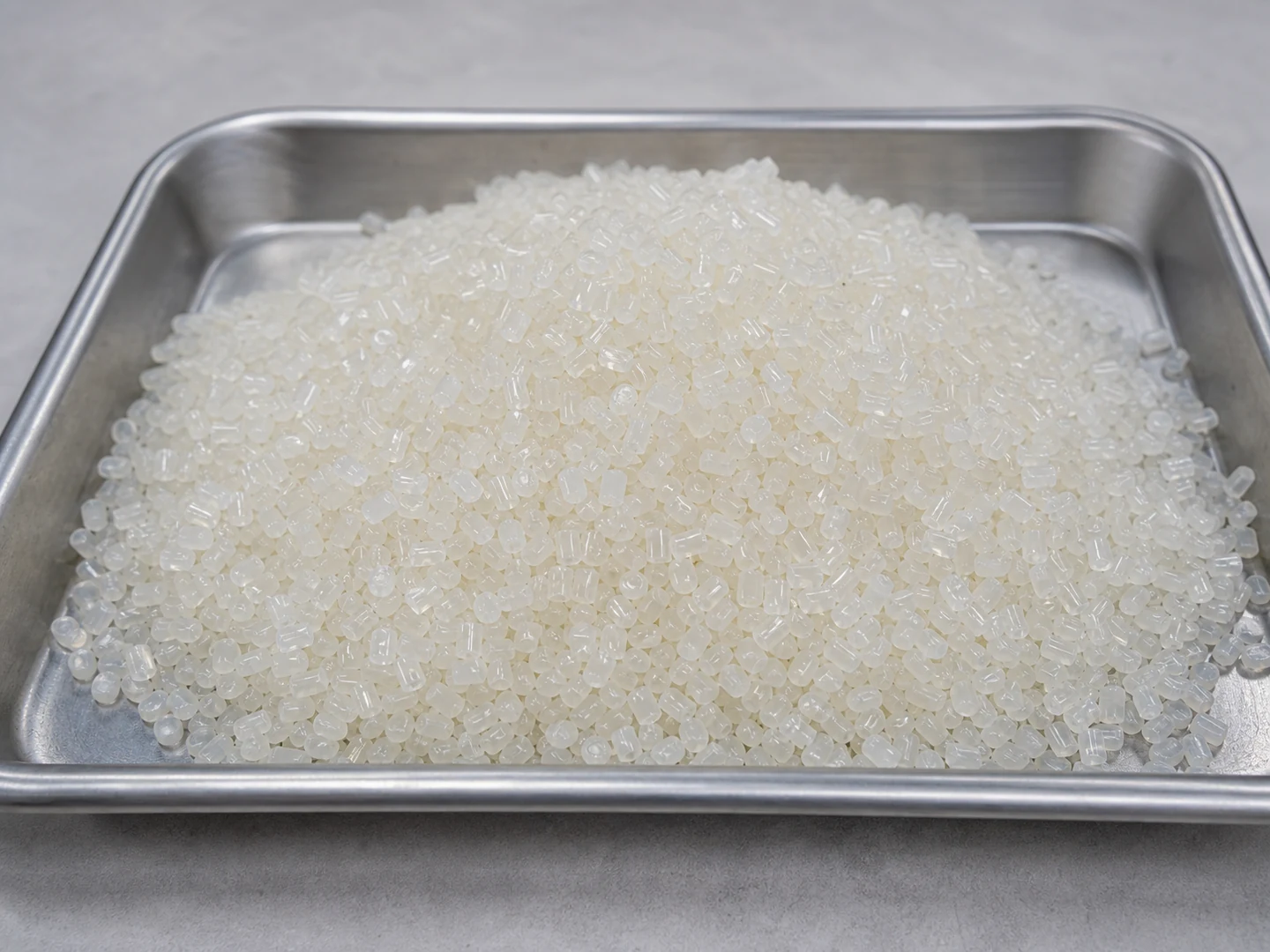
| Nylon (abrasive-filled) | Medium–High | Good against mild acids/alkalis | Deburring, light scale removal | Can scratch if too coarse |
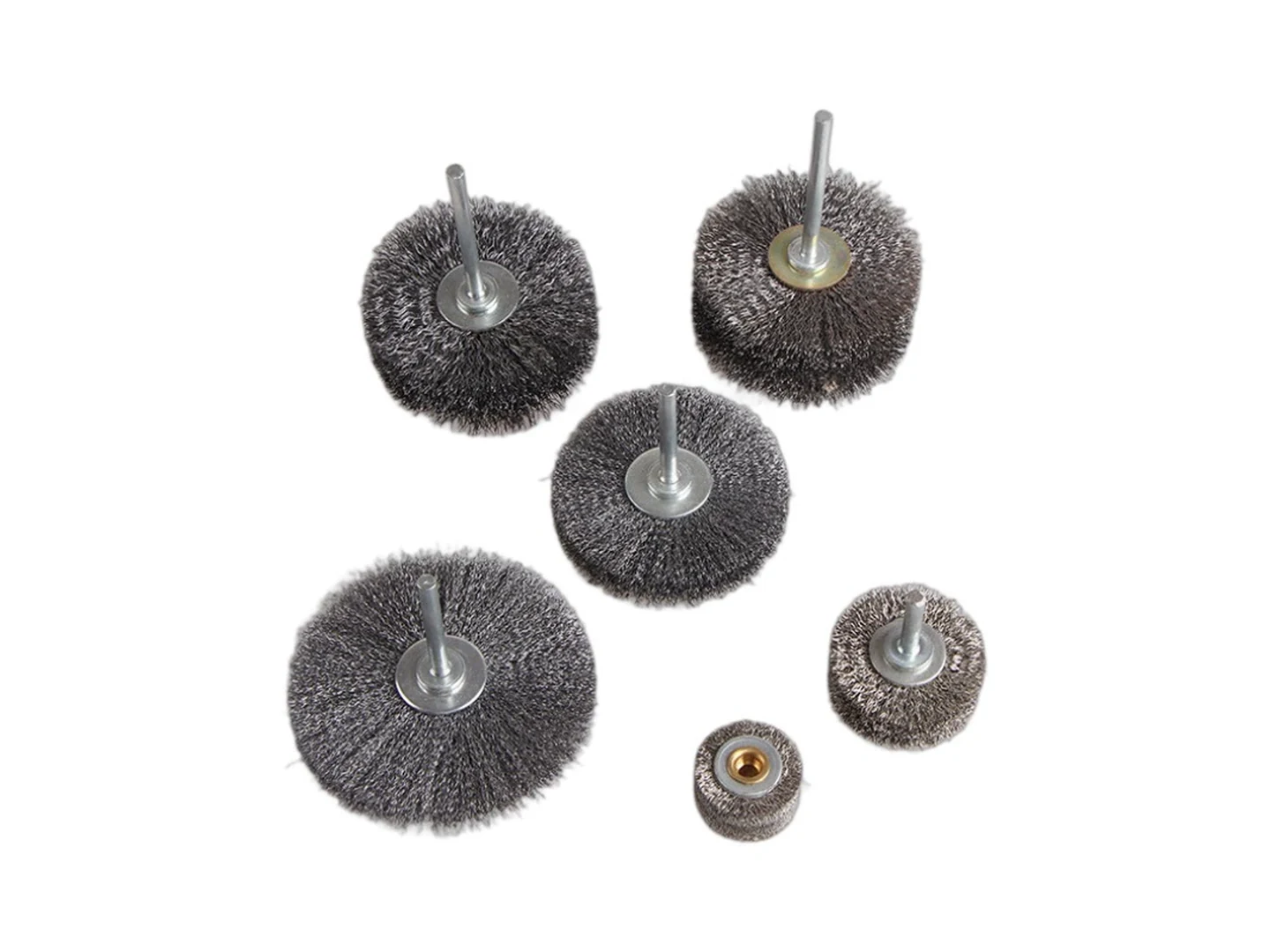
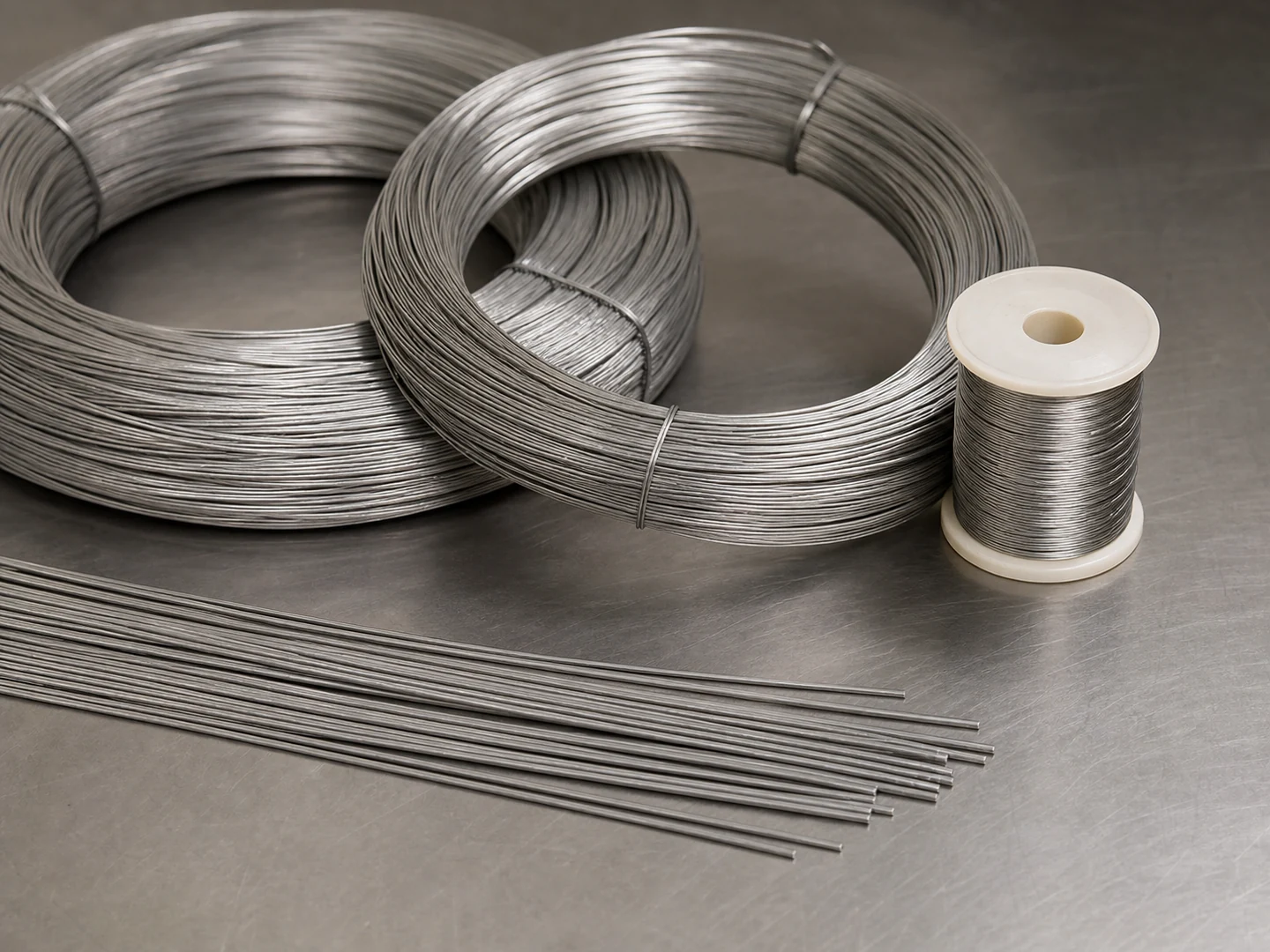
| Stainless steel wire | High | Excellent, but may corrode in certain acids | Heavy scale, oxide removal | Galling on aluminum, embedding risk |
| Brass wire | Medium | Good, less sparking | Sensitive aluminum surfaces, anti-static needs | Low, but can discolor some alloys |
| Polypropylene | Low | Excellent broad chemical resistance | Light cleaning, dust removal, gentle wiping | Minimal, but may not remove tough residue |
| Natural fiber (tampico/horsehair) | Low | Poor against chemicals, absorbs moisture | Polishing, dusting, final wipe before anodize | Very low, but short life in wet lines |
Key Specification Parameters: Diameter, Stiffness, Core, and Mounting
Beyond material, these dimensions determine fit and function:
- Brush outer diameter (OD): Must match the gap between work and machine, including allowance for compression and filament flex. A brush that is too large can overload the drive; too small leaves gaps.
- Filament diameter and trim length: Thicker filaments and shorter trim increase stiffness. For delicate anodizing prep, a softer fill is often safer.
- Core design: Solid metal cores for high-speed, wide brushes; tube cores for lighter, fluid-through designs. Material needs chemical compatibility.
- Mounting: Common interfaces include keyed shafts, flanges, stub shafts, or quick-change adapters. Match to the roller shaft or drive system precisely.
How to Select the Right Brush Based on Residue Type and Surface Sensitivity
Start with the specific contamination or residue you need to remove, then evaluate the surface sensitivity:
- Heavy oxide scale or smut: Stainless steel wire or aggressive abrasive nylon. Verify the aluminum alloy can tolerate the mechanical action without galling or embedding.
- Light dust, lint, or dry particles: Polypropylene or soft nylon. Anti-static fill may be needed to prevent re-attraction.
- Oily films or drawing compounds: Nylon with absorbent or wicking fill can help, but chemical pre-treatment usually required. Avoid natural fibers that degrade.
- Mirror or decorative finish: Use a non-abrasive brush like soft nylon or natural fiber at low pressure. Any abrasive fill will leave haze.
- Chemical exposure: If the brush sits in an etching or acid bath, choose a filament with proven resistance (polypropylene, stainless steel) and a core that won’t contaminate the bath.
Common Mistakes When Specifying an Anodizing Line Brush
- Choosing wire brush for aluminum without testing: Steel wire can embed in aluminum and cause galvanic corrosion later. Brass brushes are safer but still need validation.
- Ignoring chemical environment: Nylon degrades in strong acids; natural fibers swell. Check chemical compatibility charts.
- Mismatched mounting interface: Even the best brush will fail if the shaft connection slips or vibrates. Always verify keyway, bore tolerance, and rotational direction.
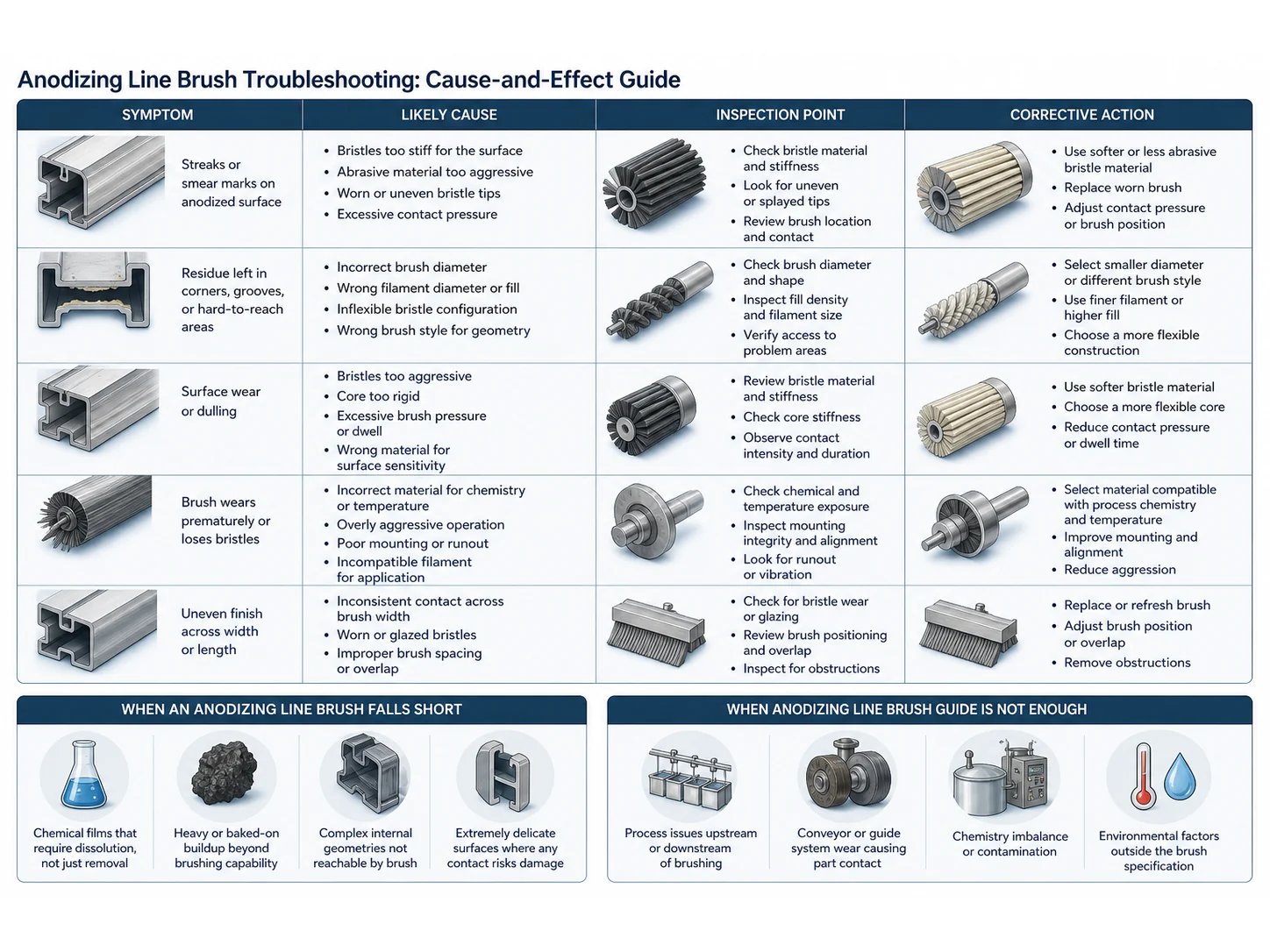
- Over‑specifying stiffness: Too stiff a brush can wear the substrate or cause chatter. Softer, higher filament density often gets better conformity and finish.
- Neglecting maintenance access: If the brush cannot be easily removed for cleaning or replacement, downtime increases.
- Specifying by diameter alone: Without considering filament length and density, the actual working stiffness and contact area may be wrong.
When an Anodizing Line Brush Falls Short
A brush alone may not solve every surface problem. Consider alternative or supplementary methods when:
- Residue is chemically bonded or requires etching—use a chemical dip or spray stage before the brush.
- Surface finish spec is too tight for mechanical contact—non‑contact ultrasonic or high‑pressure spray may be safer.
- Part geometry has deep pockets or blind holes—custom miniature brushes or jetting may be needed.
- Electrostatic attraction causes re‑contamination—add anti‑static features or ionization bars.
- Production volume demands near‑zero maintenance—validate the brush with a supplier drawing review and run a sample trial before finalizing the specification.
Final Takeaway
Specify the anodizing line brush as part of the total process, not as a commodity. Match filament material and stiffness to your residue and surface sensitivity. Verify the mounting interface. Always test with sample parts—especially when changing alloy, line speed, or chemical environment. A supplier drawing review before ordering custom sizes can prevent costly mistakes.
When an Anodizing Line Brush Is the Wrong Choice
This brush is not enough when the main problem is blocked access, unsafe working conditions, damaged equipment, incompatible chemicals, or a process setting that keeps recreating the residue. In those cases, review bath chemistry, line speed, filament chemical resistance, contact pressure, and the finish the anodic layer has to carry and confirm the surrounding cleaning method before increasing brush stiffness or contact pressure.
Frequently Asked Questions
What is the difference between a coil brush and a strip brush for an anodizing line?
A coil brush has a continuous spiral‑wound metal strip holding the bristles, offering excellent stiffness and heat dissipation for heavy-duty cleaning. A strip brush uses a flexible backing with rows of bristles, suitable for contour following and lighter pressure. Choose based on the required stiffness and whether the brush must conform to uneven surfaces.
Can I use a standard wire brush instead of a purpose‑made anodizing line brush?
Not recommended. Standard off‑the‑shelf brushes may use materials or fill densities that are incompatible with chemical baths or that contaminate the aluminum surface. An anodizing line brush is engineered for specific chemical resistance, mounting, and surface finish requirements.
How often should anodizing line brushes be replaced?
Replacement intervals depend on line speed, loading, and filament wear. Monitor brush diameter reduction, uneven wear patterns, and cleaning effectiveness. Many plants schedule brush replacement during quarterly maintenance or when the effective OD drops below 90% of the original size.
How do I clean and maintain these brushes?
Rinse thoroughly with water or compatible solvent after each shift to remove chemical residues. Store in a dry area. For wire brushes, inspect for broken bristles that could shed into the process. Never use compressed air if it could dislodge bristles into sensitive areas.
What safety precautions should I take when operating anodizing line brushes?
Always lock out equipment power before changing brushes or clearing jams. Wear cut‑resistant gloves when handling wire brushes. Provide adequate ventilation and PPE for chemical exposure. Ensure guards are in place to contain bristle shedding.
How do I order a custom‑sized brush for my line?
Prepare a simple drawing showing outside diameter, core diameter, overall length, mounting bore, keyway (if any), direction of rotation, and filament material or fill specification. Share your line’s chemical exposure and expected production rate so the supplier can recommend appropriate fill density and core construction.
Do I need anti‑static brushes for anodizing lines?
Sometimes. If you observe dust attraction or particle re‑deposition after cleaning, especially on anodized surfaces before sealing, adding conductive filaments or an anti‑static coating to the brush may help reduce the problem.
Technical References
- OSHA — Hazard Communication
- OSHA — Chemical Hazards and Toxic Substances
- World Stainless — Corrosion Resistance of Stainless Steels
- NIST — Metric SI
Which bristle material fits this job — Nylon PA, AISI 304 Stainless Steel Wire or Abrasive Nylon?
| Material | Continuous temperature (°C) | Peak temperature (°C) | Water absorption | Hardness |
|---|---|---|---|---|
| Nylon PA | 93 | 121 | 0.3–9% by PA grade and conditioning | Medium to firm; filament diameter and trim length control bending force. |
| AISI 304 Stainless Steel Wire | 400 | 500 | 0% | Rockwell B 70–95 depending on temper and cold work |
| Abrasive Nylon | 120 | 150 | 0.1–1.0% | Abrasive filament; stiffness and cutting level is controlled by PA base, grit type, grit size, filament diameter and trim height. |
| Brass Wire | 150–200 | 250–300 | 0% | Rockwell B 40–90 |
| Silicon Carbide Abrasive Nylon | 80–120 | 140–170 | 0.3–2.0% | Carrier Shore D 70–85; SiC Mohs Hardness Approximately 9.2 |
Figures as published by Brushtec / DuPont; Alleima; Perlon. Confirm the exact grade against the supplier datasheet before ordering.
What should replace Strip Seal Brushes for anodizing line brush?
- Strip Seal Brushes — Strip brushes create a linear barrier or guide; machine-table brush plates distribute load and support products over a broad area. Closest alternative: Machine Table Brush Plates.
- Nylon PA — Compare Nylon PA with PP, PBT, PET. Change material when wet stiffness, temperature, chemical resistance, conductivity, particle shedding, or surface marking becomes the limiting factor.
- AISI 304 Stainless Steel Wire — Use AISI 316 stainless steel wire for chloride, marine, dairy, beverage, chemical washdown, or higher pitting-resistance requirements. Use carbon steel for dry aggressive cutting and brass or abrasive nylon for lower marking risk.
- Abrasive Nylon — Compare Abrasive Nylon with PP, PBT, PET. Change material when wet stiffness, temperature, chemical resistance, conductivity, particle shedding, or surface marking becomes the limiting factor.