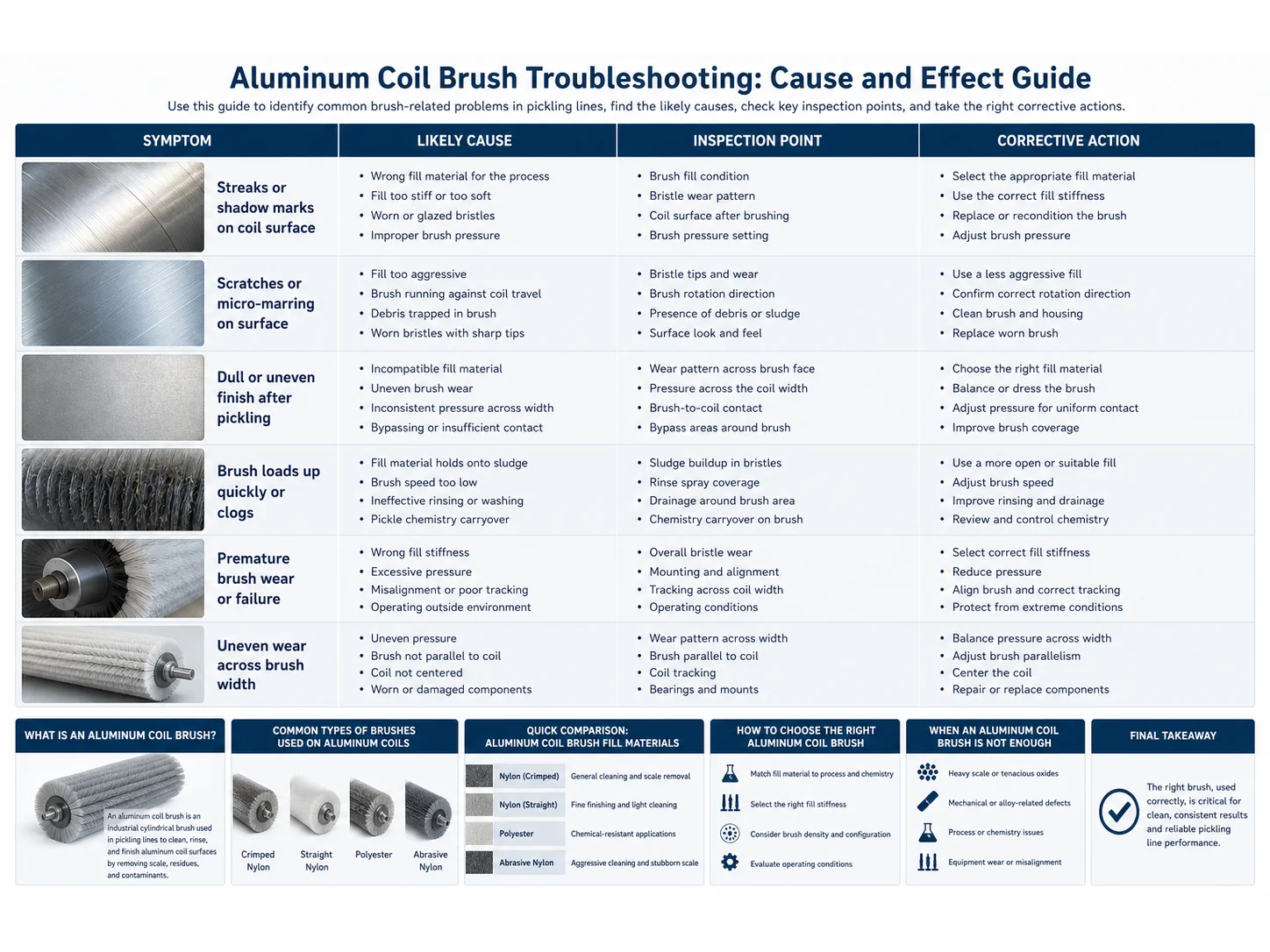
What Is an Aluminum Coil Brush?
A coil brush for aluminum surfaces is a rotary or inline cleaning tool with bristles engineered to mechanically scrub away the thin, tenacious oxide layer that forms naturally on aluminum. Unlike a general‑purpose wire brush, a properly specified aluminum coil brush balances abrasive action with surface safety. It prevents loading, smearing, or embedding contaminants that can ruin adhesion or appearance downstream. These brushes are typically mounted on coil‑to‑coil processing lines, slitting equipment, or dedicated washing stations.
Common Types of Aluminum Coil Brushes
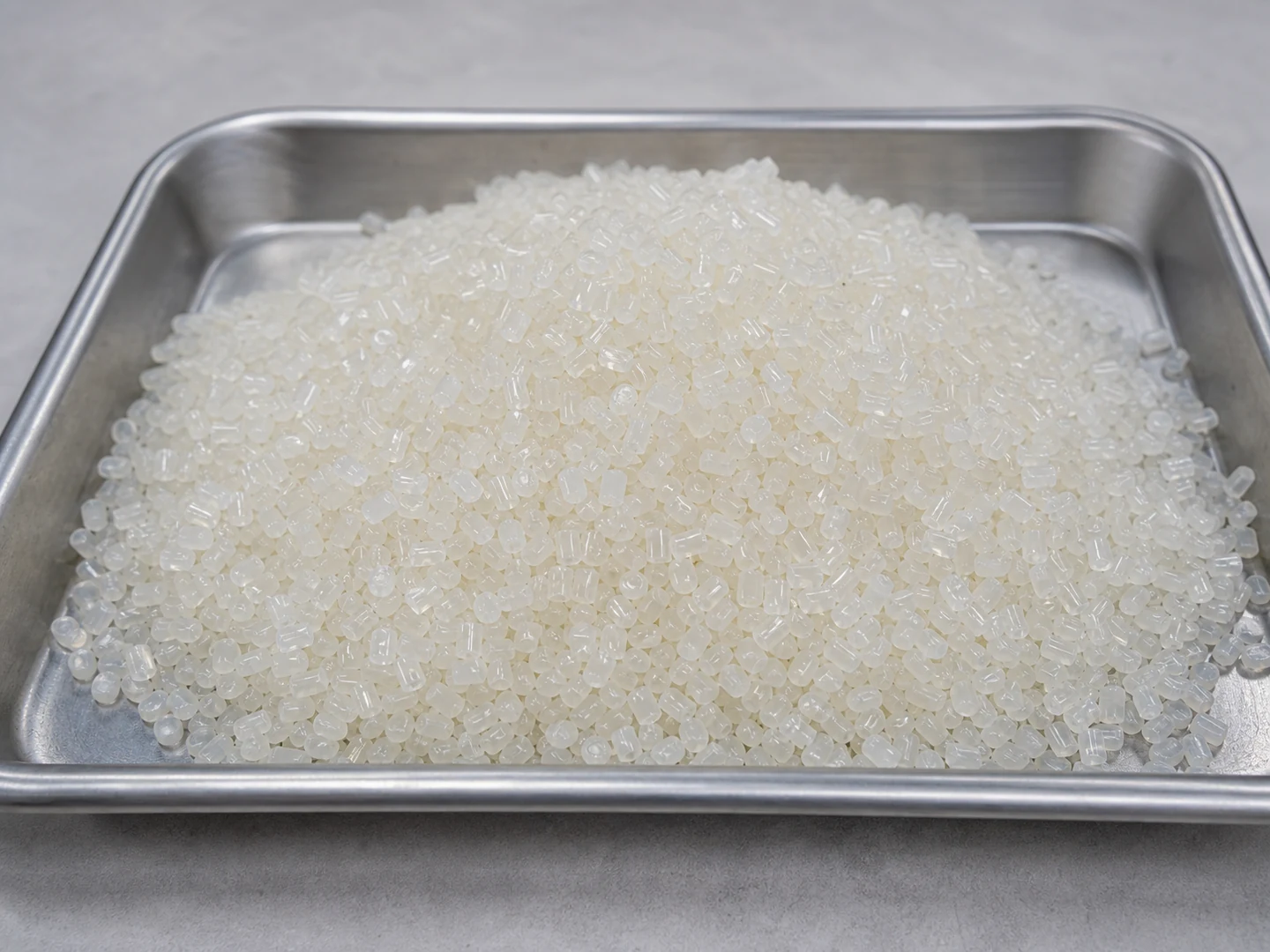
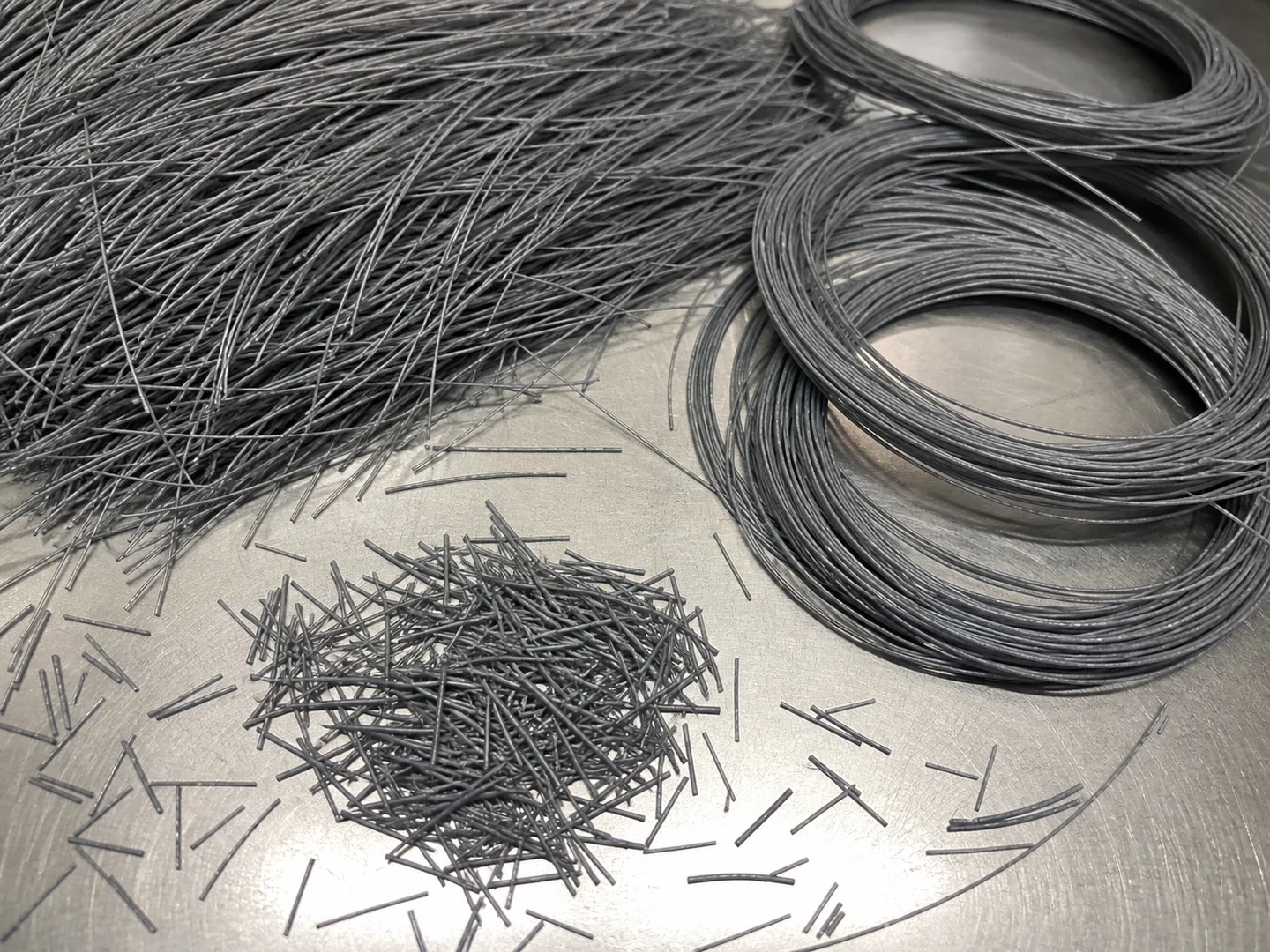
Most aluminum oxide removal brushes fall into two families: wire‑bristle and abrasive‑nylon. Wire brushes use metallic filaments—carbon steel, stainless steel, or brass. Abrasive‑nylon brushes combine flexible nylon strands with abrasive grit (aluminum oxide or silicon carbide). A third category, composite‑hub brushes, combines elements of both for specific line speeds or wet conditions. The right type depends entirely on oxide thickness, surface sensitivity, and line environment.
Key Features to Compare
Choosing an aluminum coil brush requires comparing several technical attributes. The table below highlights the most important differentiators and their practical impact.
| Feature | Common Options | Impact on Oxide Removal | Surface Risk |
|---|---|---|---|
| Bristle material | Carbon steel, stainless steel, brass, abrasive nylon | Steel cuts heavy oxide; brass is softer and safer; nylon with grit gives controlled aggression | Steel can gouge soft aluminum; brass may leave residue; worn nylon loses consistency |
| Wire diameter / filament size | 0.006 in. to 0.020 in. (wire); 0.4–1.5 mm (nylon) | Thinner wires reach into shallow profiles; thicker wires remove more oxide per pass | Too thin bends easily; too thick may scratch deep |
| Stiffness / bristle density | Low, medium, high fill density; crimped vs. straight wire | Higher density cleans faster but runs hotter; crimped wire adds flexibility | Excess stiffness creates heat, smearing, or grain tearing |
| Core / handle design | Solid hub, split hub, keyed bore, quick‑change shaft | Determines how the brush mounts to a drive shaft or rotating arbor | Incorrect bore causes vibration, chatter marks, and spline wear |
| Mounting style | Radial (coil‑wound), cylinder, cup, end‑brush | Radial and cylinder brushes suit inline coil cleaning; cup and end‑brushes for edge work | Wrong brush shape misses oxide on edges or across width |
| Chemical tolerance | Wet‑rated stainless, nylon with acid‑resistant grit, sealed hub | Essential when brushes run with alkaline cleaners or acidic etchants | Corrosion of metal components contaminates the surface |
How to Choose the Right Brush for Oxide Removal
Base your selection on the real cleaning task, not just catalog numbers. Work through these factors in order:
- Residue type and thickness. Mill‑fresh, powdery oxide needs less aggression; heat‑treated, smut‑type oxide often requires a stainless wire or abrasive‑nylon brush.
- Surface sensitivity. Decorative or bright‑finish aluminum demands brass or fine‑grit nylon. Structural alloy may tolerate carbon steel if passivation follows.
- Equipment interface. Check shaft diameter, keyway, RPM range, and available mounting space. A brush that cannot fit the existing arbor stops the line.
- Wet or chemical exposure. For wash stations using alkaline or acid solutions, choose stainless steel wire or chemically resistant abrasive‑nylon. Avoid exposed carbon steel.
- Hygiene expectations. In food‑contact or cleanroom applications, abrasive‑nylon with G10‑rated holders prevents particle shedding.
- Maintenance frequency. A high‑density brush lasts longer but may load faster. Balance cleaning cycles with abrasive life—denser is not always better.
- Custom size requirements. Off‑the‑shelf brushes sometimes miss the edges of wide coils. Ask for cut‑to‑length or segmented designs if standard widths leave untreated margins.
Common Mistakes and How to Avoid Them
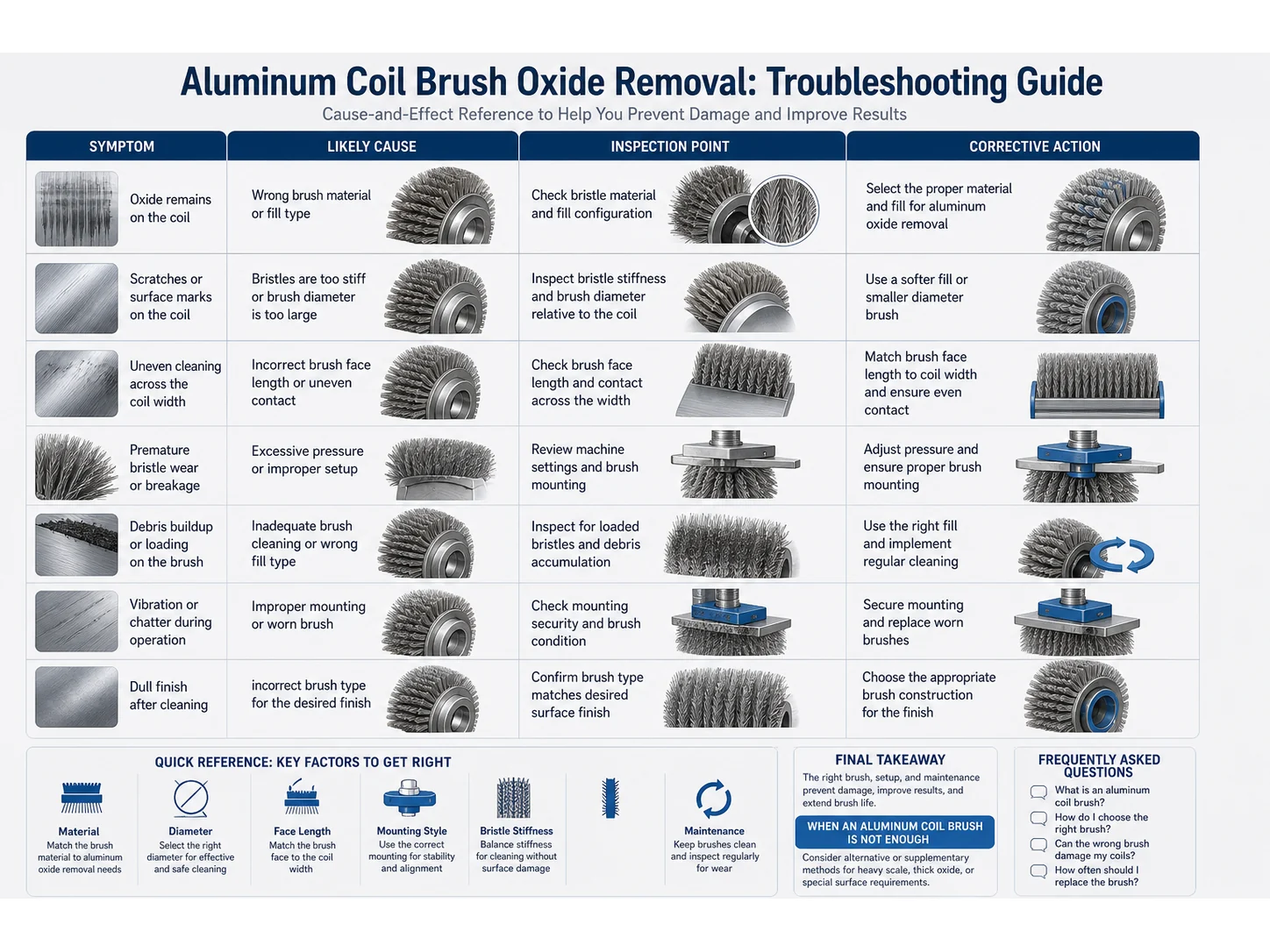
Real‑world failures follow a short list of preventable errors. Recognizing them saves money and rejected coils.
- Mistake 1: Using a carbon steel brush on soft aluminum. Steel bristles gouge the surface, embed particles, and create corrosion sites. Solution: switch to brass or fine‑grit nylon for alloys with Brinell hardness below 60.
- Mistake 2: Choosing the wrong wire diameter. Thin wire cuts oxide but wears quickly; thick wire lasts longer but scuffs the substrate. Solution: match diameter to oxide scale—0.010 in. to 0.014 in. covers most rolling mill oxides.
- Mistake 3: Ignoring chemical compatibility. Exposure to alkaline degreasers corrodes plain steel hubs and wires. Solution: pick stainless or sealed nylon when the brush runs wet, and always check the chemical vendor’s compatibility chart.
- Mistake 4: Overlooking mounting fit. A brush with a loose bore causes vibration, chatter marks, and drive wear. Solution: verify keyway dimensions, shaft tolerances, and set‑screw alignment before ordering.
- Mistake 5: Running without a test sample. Buying a full batch of untested brushes risks line shutdowns. Solution: always run a sample on actual coil stock and measure oxide removal uniformity before committing.
- Mistake 6: Confusing speed with cleaning quality. Higher RPM burns the brush face, smears oxide, and reduces life. Solution: stay inside the brush manufacturer’s speed rating, usually 1,200–3,600 RPM for small diameters.
- Mistake 7: Skipping maintenance and inspection. Worn brushes lose cut depth; buildup creates hot spots. Solution: schedule visual checks every shift and track wear with a simple gauge or work‑piece comparator.
When an Aluminum Coil Brush Is the Wrong Choice
An aluminum coil brush is a mechanical device, not a universal solution. It cannot replace chemical pretreatments when oxide is heat‑aged or intergranular. For heavy smut, a combination of alkaline etch and mechanical brushing works better than a brush alone. Similarly, if the final surface must meet a Class A finish for visible parts, a brush may leave directional marks—a non‑woven flap wheel or chemical polishing step is often required downstream. When the aluminum alloy contains high silicon (casting alloys), abrasive wires load rapidly and lose effectiveness; in such cases, alternative media like ceramic‑grit brushes are worth evaluating. Finally, if line speeds exceed 500 feet per minute, a single brush station rarely removes all oxide—multiple staggered brush heads or a wet‑scrub system may be necessary. Always involve the brush supplier in a drawing review or on‑site trial before scaling to full production.
Final Takeaway
Selecting an aluminum coil brush is a process decision, not a commodity purchase. Start with the oxide layer’s true character, define the surface‑quality requirement, then match bristle material, stiffness, diameter, and mounting design to your line. Avoid the trap of copying an existing part number without fresh testing. When in doubt, request a sample, document cleaning results, and involve technical support—this small upfront effort prevents large batches of rejected material.
Frequently Asked Questions
Can I use a steel wire brush on aluminum?
It depends on the alloy and end use. For soft, decorative aluminum, steel wire can scratch and embed particles. For structural grades that will be painted, a stainless steel wire brush is often acceptable if the surface is then phosphated or passivated. Always test on scrap first.
What type of wire brush is safest for aluminum?
Brass wire brushes are the gentlest metallic option and reduce the risk of galvanic corrosion. For speed and consistency, medium‑grit abrasive‑nylon brushes are widely used because they cut oxide without shedding metal particles.
How do I determine the right brush diameter for my coil line?
Measure the working gap between the coil surface and the brush mount. Allow enough interference so the bristle tips press firmly but not flattened. A common starting interference is 0.5–1.5 mm for nylon, 0.2–0.8 mm for wire. Consult your brush supplier’s interference chart.
Does a crimped or knotted wire brush work better on aluminum oxide?
Crimped wire is more flexible and better for broad oxide removal on flat coil surfaces. Knotted wire is too aggressive and typically reserved for heavy scale on steel, not aluminum.
How often should I replace an aluminum coil brush?
Replace when bristle length wears below 50% of its original length, when the brush face becomes uneven, or when oxide removal quality degrades. In high‑volume coil lines, this might be every 20–40 operating hours; log wear data to build a predictive replacement schedule.
Are stainless steel brushes necessary for wet cleaning applications?
Yes, if the cleaning solution is alkaline or acidic, or if the brush runs continuously submerged. Carbon steel rusts quickly and contaminates the coil. Stainless steel or sealed‑hub abrasive‑nylon brushes resist corrosion and extend tool life.
Can I get a custom‑length brush for wide‑width coils?
Most brush manufacturers offer custom cut lengths and segmented designs. Provide the exact coil width, desired end‑trim margin, and mounting configuration. A drawing review by the supplier ensures the brush covers the full web without leaving untreated edges.
What is the difference between an aluminum coil brush and a general‑purpose wire brush?
A general‑purpose wire brush often uses carbon steel without regard for surface finish or oxide type. An aluminum coil brush is selected for controlled aggression, chemical resistance, and consistent filament density to remove oxide without damaging the underlying metal or interfering with downstream bonding.
Technical References
Which bristle material fits this job — Nylon PA, Abrasive Nylon or AISI 304 Stainless Steel Wire?
| Material | Continuous temperature (°C) | Peak temperature (°C) | Water absorption | Hardness |
|---|---|---|---|---|
| Nylon PA | 93 | 121 | 0.3–9% by PA grade and conditioning | Medium to firm; filament diameter and trim length control bending force. |
| Abrasive Nylon | 120 | 150 | 0.1–1.0% | Abrasive filament; stiffness and cutting level is controlled by PA base, grit type, grit size, filament diameter and trim height. |
| AISI 304 Stainless Steel Wire | 400 | 500 | 0% | Rockwell B 70–95 depending on temper and cold work |
| Brass Wire | 150–200 | 250–300 | 0% | Rockwell B 40–90 |
Figures as published by Brushtec / DuPont; Perlon; Alleima. Confirm the exact grade against the supplier datasheet before ordering.
What should replace Nylon PA for oxide removal?
- Nylon PA — Compare Nylon PA with PP, PBT, PET. Change material when wet stiffness, temperature, chemical resistance, conductivity, particle shedding, or surface marking becomes the limiting factor.
- Abrasive Nylon — Compare Abrasive Nylon with PP, PBT, PET. Change material when wet stiffness, temperature, chemical resistance, conductivity, particle shedding, or surface marking becomes the limiting factor.
- AISI 304 Stainless Steel Wire — Use AISI 316 stainless steel wire for chloride, marine, dairy, beverage, chemical washdown, or higher pitting-resistance requirements. Use carbon steel for dry aggressive cutting and brass or abrasive nylon for lower marking risk.
- Brass Wire — Compare Brass Wire with Steel wire, stainless wire, nylon. Change material when wet stiffness, temperature, chemical resistance, conductivity, particle shedding, or surface marking becomes the limiting factor.