What Is a Metal Pickling Brush Roller?
A metal pickling brush roller is a rotating cylinder filled with filaments or abrasive materials designed to clean metal strip surfaces in continuous pickling or treatment lines. It applies controlled mechanical force to remove scale, smut, or coating residues while the strip passes through acid tanks, rinse sections, or dryer zones. The brush roller can be driven by the line speed or independently, and its design must withstand aggressive chemical environments, elevated temperatures, and constant mechanical stress.
Common Types and Material Options for Pickling Brush Rollers
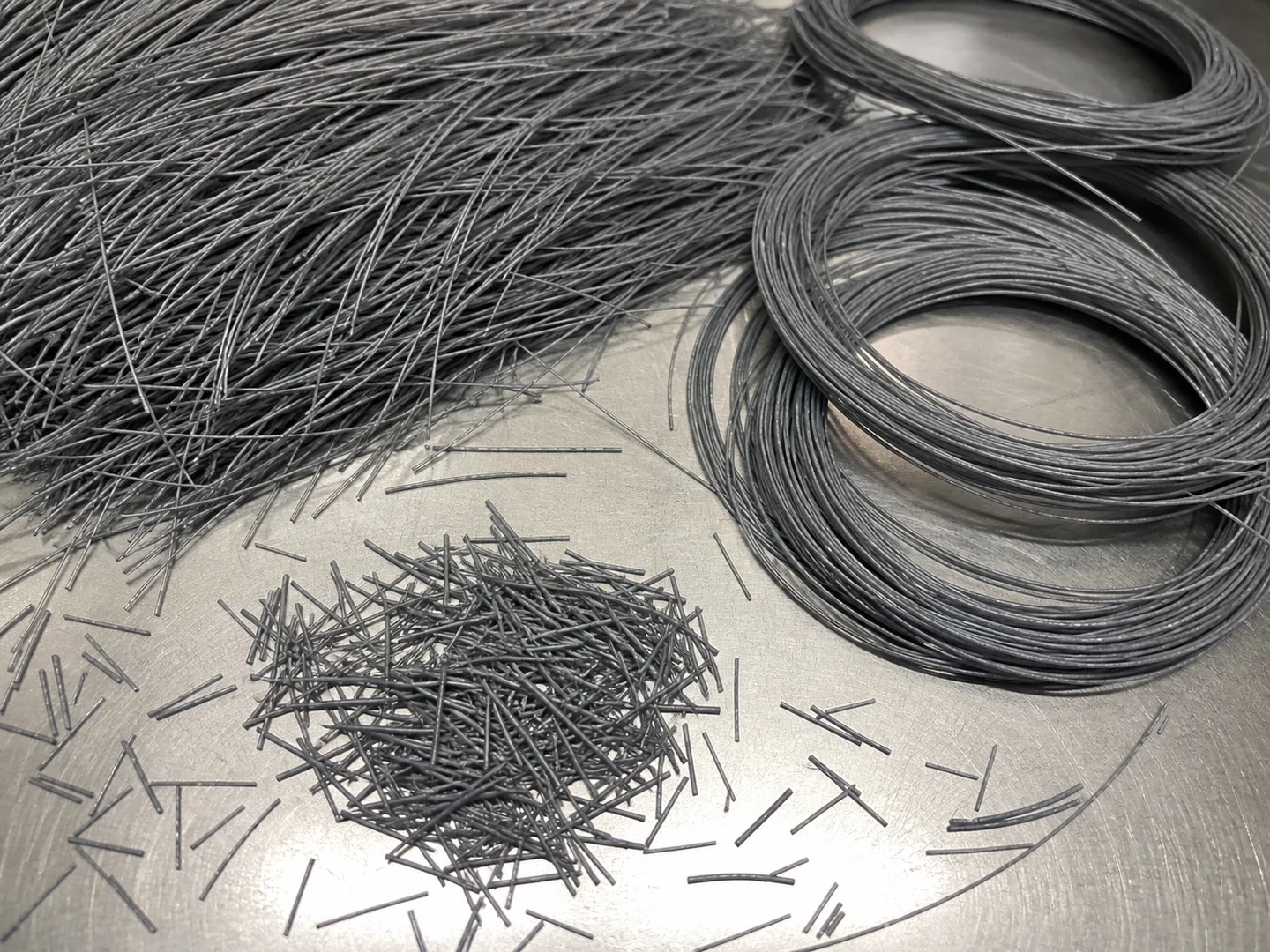
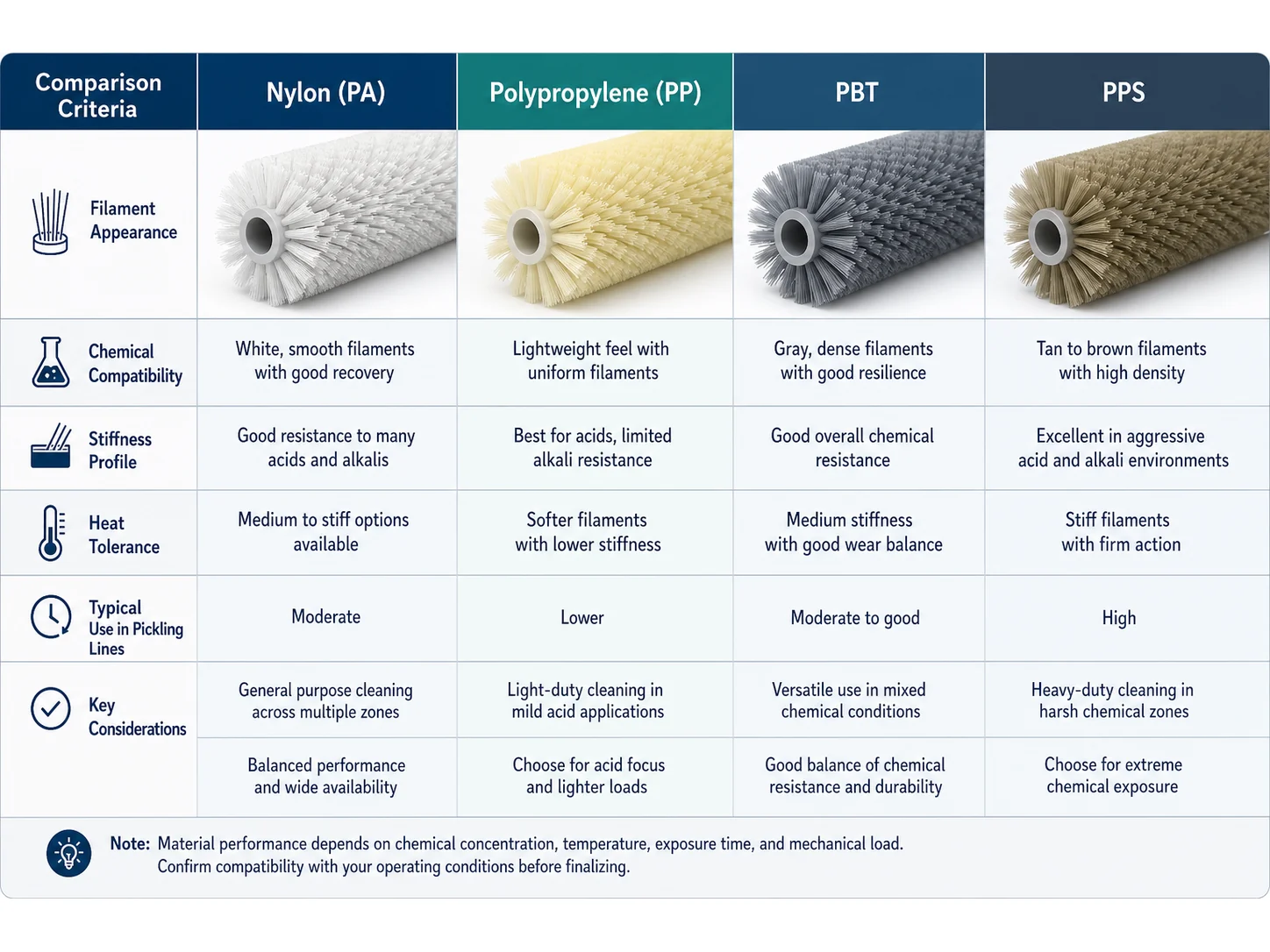
The two primary categories are filament-based brush rollers and abrasive-impregnated rollers. Filament brushes use individual bristles made from synthetic or natural materials, while abrasive rollers embed grit in a matrix. The choice depends on the pickling acid type, strip sensitivity, and required surface finish. Below are the most common filament materials:
- Polypropylene (PP): Good chemical resistance to many acids and alkalis, moderate temperature tolerance. Suitable for light scale and general cleaning.
- Abrasive Nylon (silicon carbide or aluminum oxide impregnated): Provides aggressive cleaning with grit embedded in the filaments. Used for heavier scale or when a specific surface profile is needed.
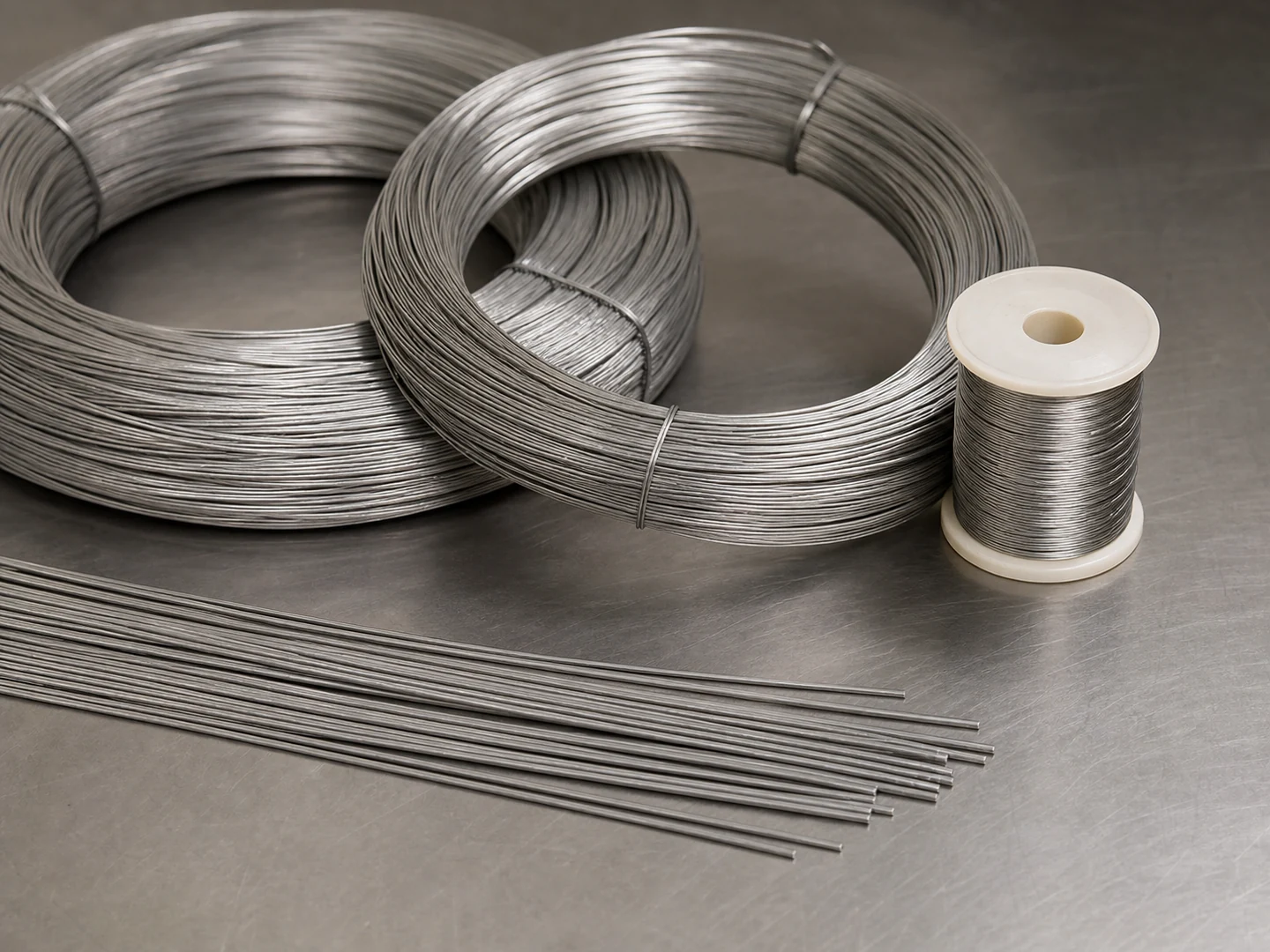
- Stainless Steel Wire: Excellent for very heavy scale removal and high-temperature applications. Requires careful control to avoid surface scratching.
- Brass-Coated Steel Wire: Softer than stainless, reduces risk of sparking, suitable for less aggressive scale or where surface marring must be minimized.
- Tampico (natural fiber): Used for final wringing, drying, or when non-abrasive wiping is required. Holds water well and resists some chemicals.
Key Customization Choices: A Comparison Table
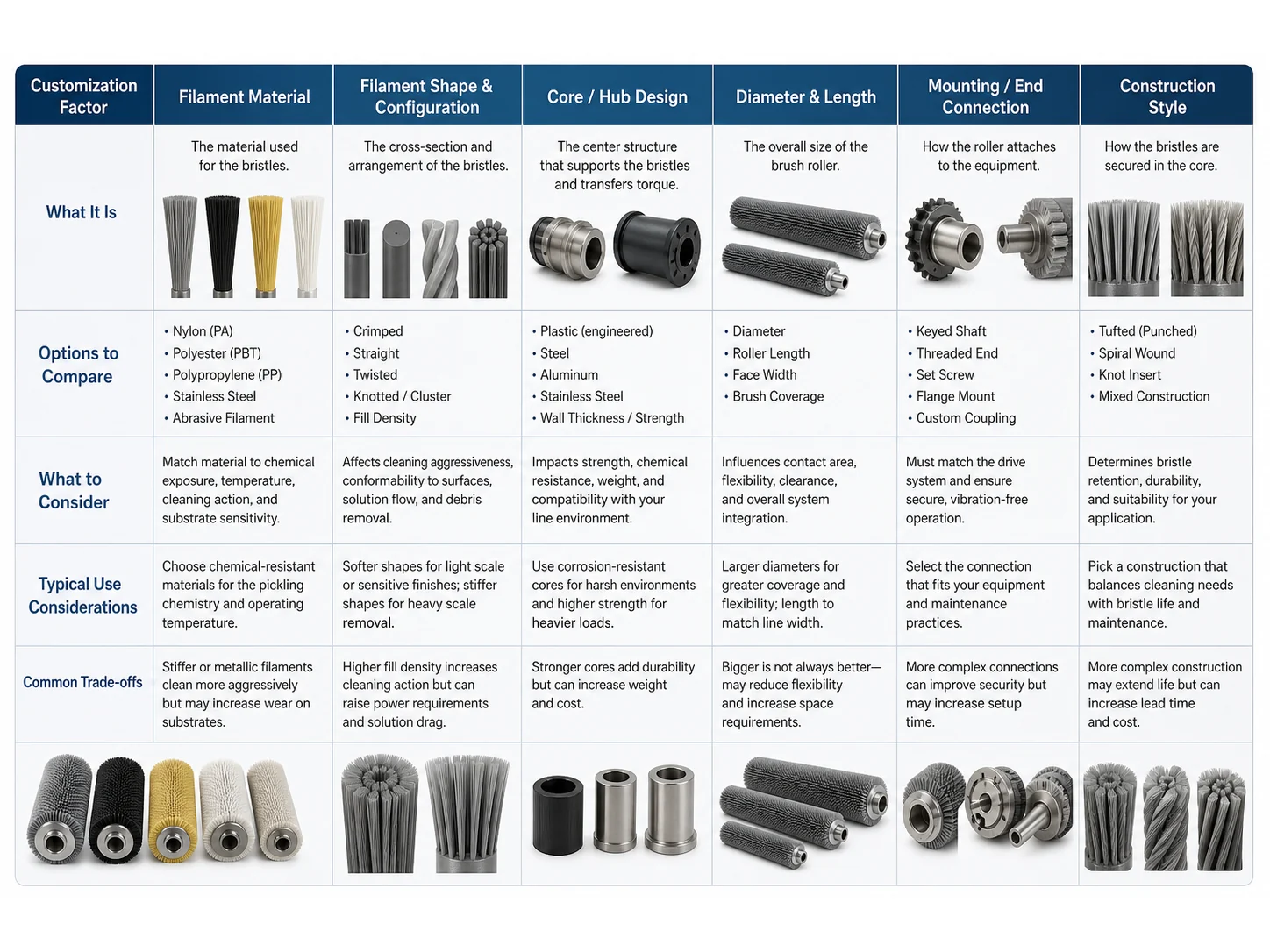
When specifying a custom metal pickling brush roller, these are the factors that directly affect performance and longevity. Use the table below to compare options before finalizing a drawing.
| Customization Factor | Options / Typical Range | What to Consider |
|---|---|---|
| Filament Material | PP, abrasive nylon, stainless steel, brass-coated steel, Tampico | Chemical compatibility with pickling acid, temperature resistance, required abrasiveness |
| Filament Diameter | 0.3 – 1.5 mm (varies by material) | Thicker filaments provide more aggressive cleaning; thinner filaments offer finer finishing |
| Brush Density | Light, medium, dense fill | Higher density increases brushing action and life but may trap debris |
| Core Material | Stainless steel, carbon steel with coating, aluminum, engineered plastic | Must resist acid attack; stainless steel common for most pickling lines |
| Core Diameter / Outer Diameter | Custom to line design (e.g., 200 – 600 mm OD) | Must match existing roller gaps and strip pass line height |
| Face Length | Up to 2,500 mm or more | Should exceed maximum strip width plus allowance for oscillation |
| Mounting Type | Keyed shaft, flange mount, split hub, custom end fittings | Must interface with existing drive journals and bearing housings |
| Trim Length (filament length) | 20 – 80 mm | Longer trim provides more flexibility and conformability; shorter trim is stiffer |
How to Choose the Right Brush Roller for Your Pickling Line
Start by defining the residue type and cleaning goal. Then work through the operating conditions:
- Residue type: Thin oxide films can be removed with polypropylene or Tampico; heavily adhered scale needs abrasive nylon or steel wire.
- Surface sensitivity: Polished or thin-gauge strip may require softer filaments to avoid scratching. Use non-abrasive materials or lower density.
- Acid environment: Verify the filament and core material data sheets for the specific acid concentration and temperature. Hydrochloric acid often demands stainless steel or carefully selected synthetics.
- Temperature: Continuous operating temperature can degrade some plastics. For temperatures above 80°C (176°F), metallic filaments or high-temperature synthetics are preferred.
- Line speed: Higher speeds may require denser fill or larger diameter rollers to maintain effective contact time.
- Maintenance frequency: Choose a design that allows for easy filament replacement or cleaning if downtime is critical. Split-core designs speed up changeover.
- Custom size requirements: Always provide a dimensional drawing of the existing roller location and drive connection to ensure correct fit.
Setup and Operating Factors That Influence Brush Performance
Even the best brush roller will underperform if not set up correctly. Consider these factors:
- Penetration depth: How far the filaments press into the strip surface. Too little depth reduces cleaning; too much causes rapid wear or surface damage.
- Oscillation: A side-to-side movement of the brush roller helps distribute wear evenly and prevents grooving.
- Spray or immersion: Brushes can operate in flooded, spray-rinsed, or dry conditions. Ensure the filament material can handle constant wetting or chemical splash without softening.
- Backup rolls: The strip should be supported by a roll opposite the brush to maintain consistent pressure.
- Cleaning of the brush itself: Self-cleaning designs or external spray bars help flush away removed debris, which prevents loading and extends brush life.
Common Mistakes When Specifying Custom Brush Rollers
- Choosing by cost drivers alone: A cheaper brush that fails quickly or damages the strip creates much higher overall costs.
- Ignoring chemical compatibility: Assuming all plastics are acid-resistant leads to rapid filament degradation and line contamination.
- Wrong filament diameter for the job: Too thin wears out fast; too thick may scratch or remove too much base metal.
- Mismatched core material: A steel core that corrodes in acid can swell, causing runout or jamming.
- Not accounting for thermal expansion: At high temperatures, core and filament dimensions change; the brush must remain concentric.
- Skipping sample testing: Ordering full production without an in-line trial often results in a performance gap that is expensive to fix.
When a Metal Pickling Brush Roller Is the Wrong Choice
Mechanical brushing has its limits. A brush roller cannot replace chemical descaling if the scale layer is extremely thick, tightly bonded, or contains alloy elements resistant to the selected acid. In such cases, pre-conditioning with shot blasting, stronger acid concentration, or longer immersion times may be required. Additionally, if the required surface roughness (Ra) is very low and cosmetic appearance critical, a brush may need to be followed by a polishing step or switched to a non-abrasive final wipe roller. If the strip is very soft (e.g., pure aluminum or copper), even soft filaments can leave marks; a sample test is essential to define acceptable pressure and filament type. Finally, if the line has frequent width changes, quick-change or segmented brush designs should be considered to avoid long downtime.
Final Takeaway: Matching the Brush to the Process
There is no universal metal pickling brush roller. The right choice balances chemical resistance, mechanical aggressiveness, and operational fit. Start by defining your worst-case residue, note the acid and temperature, and then work with a supplier that can provide material data sheets and in-line trial support. A well-specified brush roller reduces acid consumption, improves strip quality, and lowers total operational cost far more than an off-the-shelf alternative.
Frequently Asked Questions
Can I use a standard off-the-shelf brush roller instead of custom?
In most pickling lines, standard rollers rarely fit the exact diameter, length, chemical, and mounting requirements. Customization ensures the brush matches the strip width, line speed, and acid exposure, which improves cleaning quality and reduces premature failures.
What filament material is best for hydrochloric acid pickling?
Hydrochloric acid is highly corrosive. Polypropylene offers good resistance at moderate temperatures, but for higher temperatures or longer contact, stainless steel filaments or acid-resistant synthetics (like certain grades of nylon) are often used. Always request a chemical resistance chart for your specific concentration and temperature.
How do I determine the correct brush roller diameter for my line?
The diameter must physically fit into the available space in the tank or frame while providing enough filament contact arc. It should also match the line speed to give sufficient dwell time. Provide the existing center distance to backup rolls and available clearance; a supplier can then calculate the maximum OD.
How often should I replace the brush roller?
Replacement depends on filament wear, chemical attack, and mechanical damage. Monitor filament length and cleaning performance weekly. When the trim length is reduced by 30–50% or uneven wear appears, schedule a change. In aggressive hydrochloric pickling, life may be as short as a few weeks; in milder conditions, several months.
Can I test a sample before ordering a full batch?
Yes, and it is highly recommended. Request a prototype or small section of the brush roller to run under actual line conditions. Testing reveals whether the chosen material, density, and diameter meet your cleaning spec without damaging the strip.
What core material is recommended for high-temperature pickling?
For temperatures consistently above 80°C (176°F), stainless steel cores are preferred due to their thermal stability and corrosion resistance. Aluminum cores may be used at lower temperatures but can react with certain acids. Ensure the core design accounts for thermal expansion to maintain concentricity.
How do I clean and maintain the brush roller to extend its life?
Install spray bars that continuously flush the roller during operation to remove loose scale. During maintenance stops, visually inspect for wrapped debris, broken filaments, or chemical swelling. If the brush is removed for long periods, store it in a dry, neutral environment to avoid acid concentration spots.
Is it possible to retrofit a brush roller to an older pickling line?
Usually, yes. You will need accurate measurements of the existing drive journal, bearing housing, and available space. Custom end fittings and adapters can often match the old line’s interface. Consult with a supplier early, providing a dimensional drawing and photos of the current roller mount.
Technical References
- OSHA — Hazard Communication
- OSHA — Chemical Hazards and Toxic Substances
- World Stainless — Corrosion Resistance of Stainless Steels
Which bristle material fits this job — AISI 304 Stainless Steel Wire, Abrasive Nylon or Polypropylene PP?
| Material | Continuous temperature (°C) | Peak temperature (°C) | Water absorption | Hardness |
|---|---|---|---|---|
| AISI 304 Stainless Steel Wire | 400 | 500 | 0% | Rockwell B 70–95 depending on temper and cold work |
| Abrasive Nylon | 120 | 150 | 0.1–1.0% | Abrasive filament; stiffness and cutting level is controlled by PA base, grit type, grit size, filament diameter and trim height. |
| Polypropylene PP | 80–100 | 120–140 | ≤0.03% | Shore D 65–75 |
| Nylon PA | 93 | 121 | 0.3–9% by PA grade and conditioning | Medium to firm; filament diameter and trim length control bending force. |
Figures as published by Alleima; Perlon; Brushtec / DuPont. Confirm the exact grade against the supplier datasheet before ordering.
What should replace AISI 304 Stainless Steel Wire when it stops working?
- AISI 304 Stainless Steel Wire — Use AISI 316 stainless steel wire for chloride, marine, dairy, beverage, chemical washdown, or higher pitting-resistance requirements. Use carbon steel for dry aggressive cutting and brass or abrasive nylon for lower marking risk.
- Abrasive Nylon — Compare Abrasive Nylon with PP, PBT, PET. Change material when wet stiffness, temperature, chemical resistance, conductivity, particle shedding, or surface marking becomes the limiting factor.
- Polypropylene PP — Compare Polypropylene PP with Nylon, PBT, PET. Change material when wet stiffness, temperature, chemical resistance, conductivity, particle shedding, or surface marking becomes the limiting factor.
- Nylon PA — Compare Nylon PA with PP, PBT, PET. Change material when wet stiffness, temperature, chemical resistance, conductivity, particle shedding, or surface marking becomes the limiting factor.