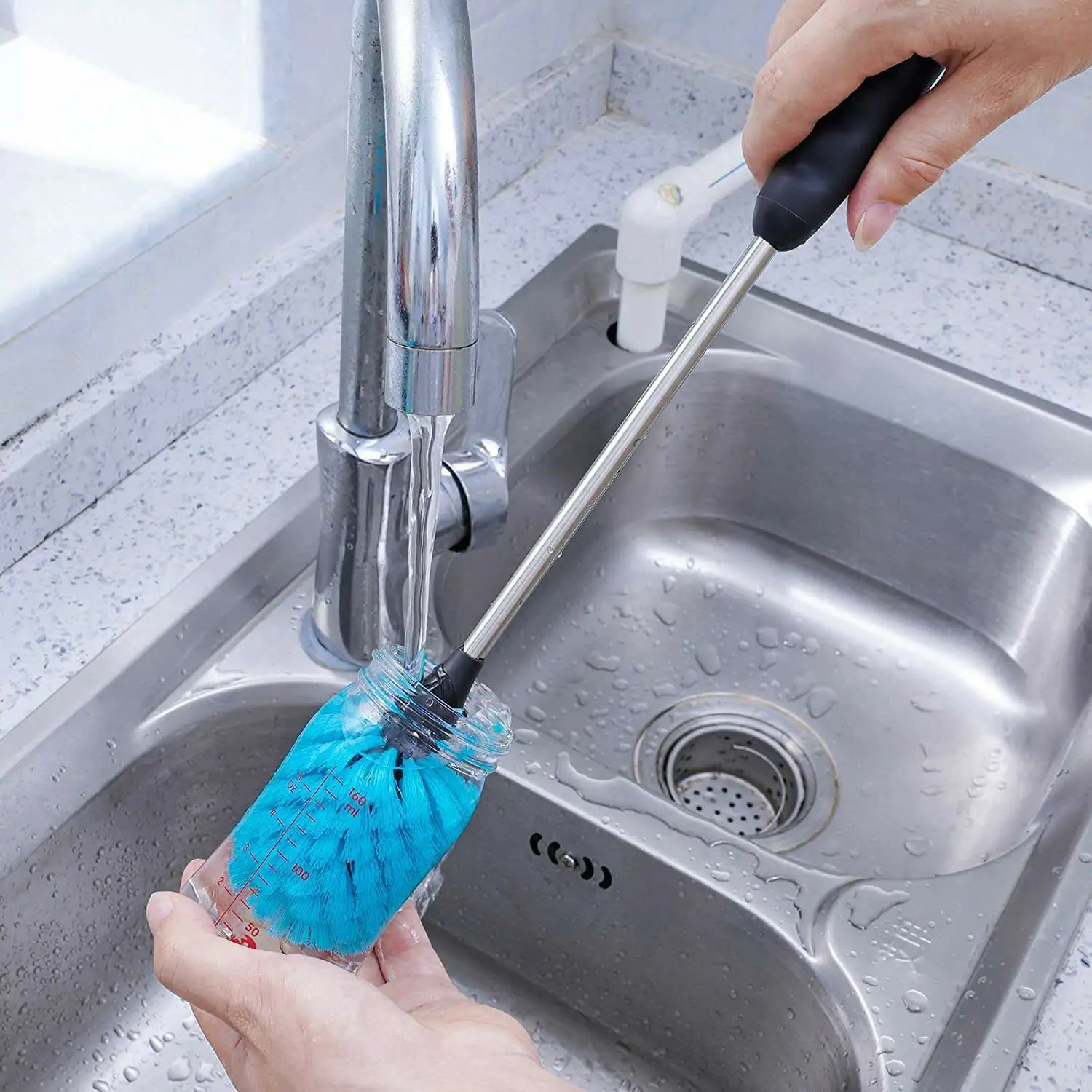
What Is a Food and Beverage Bottle Washing Brush?
A food and beverage bottle washing brush is a brush head or complete assembly mounted on automated washing machinery to remove soil, labels, residues, and microorganisms from bottles before filling. These brushes typically use bristles made from supported by food-contact documentation materials, stainless steel shafts, and precision-machined hubs that rotate consistently under water and chemical spray. Unlike manual bottle brushes, machine brushes are subject to continuous operation, high temperatures, and chemical exposure, making material selection and mechanical integrity critical.
Common Types of Bottle Washing Brushes for Production Lines
Inline bottle washers rely on specialized brushes matched to specific cleaning tasks:
- Internal rotary brushes: Enter through the bottle neck and spin to scrub inner walls. Designed for smooth or slightly textured interiors.
- External cylindrical brushes: Mounted beside the conveyor, these rotate against the bottle’s outside surface to remove labels, dust, and external grime.
- Neck and bore brushes: Focus on the narrow finish area and threads where residues accumulate.
- All-in-one soaker brushes: Combine soaking, internal, and external action in a single station for high-speed lines.
- Specialty brushes: Custom shapes for irregular bottles, flasks, or multi-neck containers.
Comparison Table: Matching Brush Type to Application
| Brush Type | Primary Application | Typical Bottle Material | Best for Residue Type | Speed Suitability | Chemical Resistance Note | Bristle Retention Risk |
|---|---|---|---|---|---|---|
| Internal Rotary Brush | Inside scrubbing | Glass, PET, HDPE | Sugary drinks, dairy, sauces | Medium to high | Must withstand CIP chemicals | High if bristles loosen at shaft |
| External Cylindrical Brush | Outside scrubbing, label removal | Glass, metal | Paper labels, adhesive, dust | High | Often soaked in caustic | Moderate; bristle wear from abrasion |
| Neck/Bore Brush | Threads, finish, small crevices | All | Product buildup, mold | Medium | Direct spray exposure | Lower due to small size |
| All-in-One Soaker | Combined soak + scrub | Glass bottles | Heavy soil, returnables | High | High tolerance needed | Dependent on design quality |
How to Evaluate Brush Integration and Material Safety
Integrating a brush into an existing washer is not a simple drop-in replacement. Engineers should verify:
- Mounting interface: Shaft diameter, keyway, or flange pattern must match machine side. Slight mismatches cause runout.
- Material documentation: Request FDA 21 CFR or EU 1935/2004 compliance statements for all bristle and hub materials. Third-party test reports for specific migration limits are preferred.
- Bristle retention design: In molded brushes, bristles are cast into the hub, reducing shedding risk. Staple-set brushes may lose bristles over time if not monitored.
- Shaft straightness and runout: Excessive runout wears bearings, damages bottles, and breaks bristles. Acceptable tolerance is typically ≤0.1 mm depending on line speed.
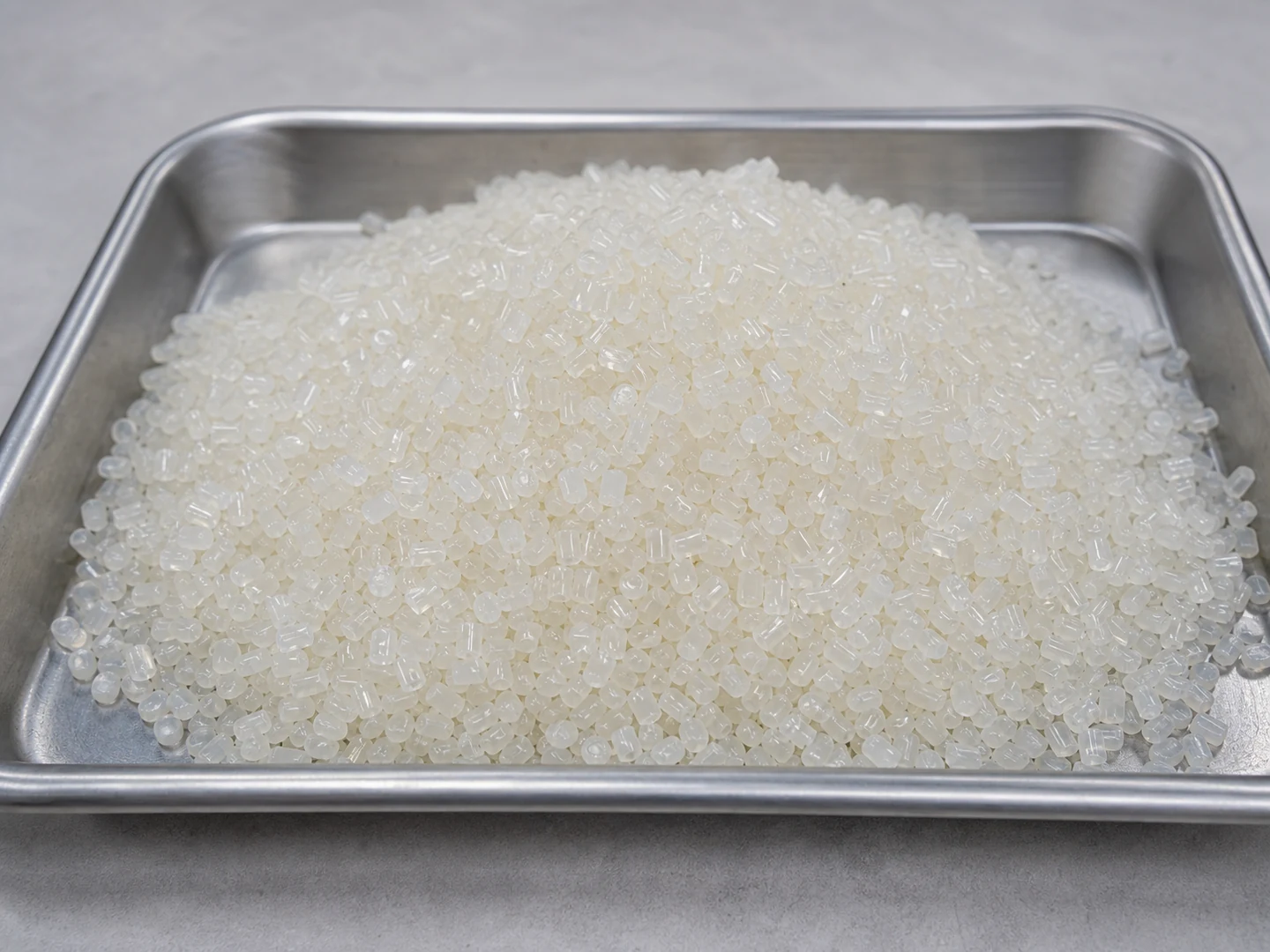
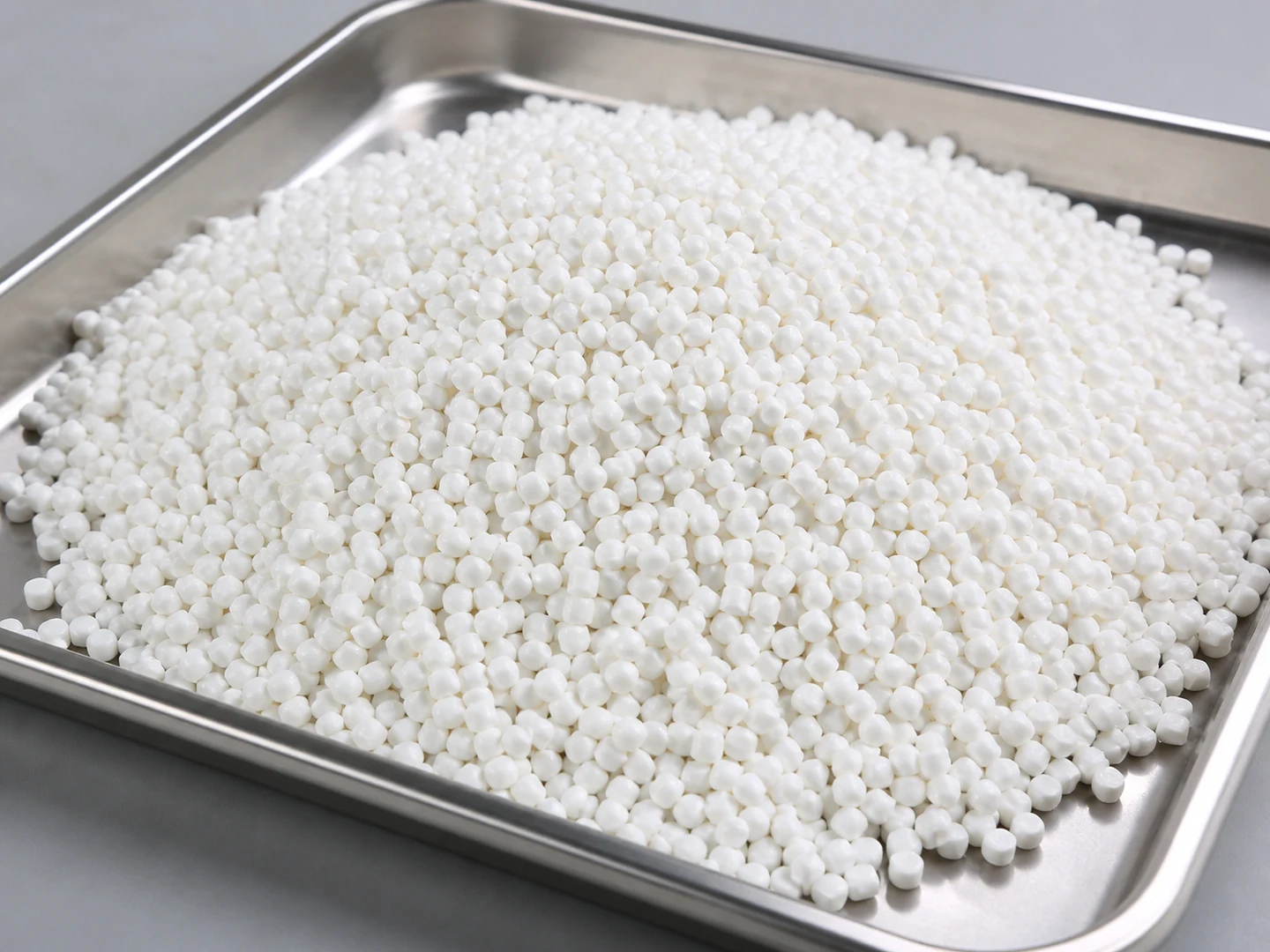
- Chemical and thermal compatibility: Validate that bristle material (nylon, polyester, PBT) holds stiffness at wash temperatures and does not degrade in caustic or acid solutions.
No brush by itself establishes food safety compliance. The buyer must actively review documentation and test performance under actual process conditions.
Common Mistakes in Brush Selection and Integration
- Ignoring bottle geometry: A brush that cleans wide-mouth jars may not reach the shoulder of a narrow-neck bottle. Conversely, a brush too small for the diameter misses spots.
- Overlooking shedding risk: In high-speed lines, a shed bristle can become a foreign body contaminant. Specify bristle retention testing if not provided.
- Neglecting shaft runout: Misalignment creates vibration, uneven brush wear, and potential bottle breakage. Always measure runout at installation.
- Choosing by cost alone: Lower-cost brushes may use inferior bristle materials that swell, soften, or shed faster, increasing downtime and risk.
- Assuming one brush fits all: Different products (dairy vs. brewery) leave different residues needing specific bristle stiffness or length.
When Standard Brushes Are the Wrong Choice
Machine brushes are excellent mechanical cleaners, but they may not replace validated sterilization steps when:
- Aseptic or sterile filling is required. A brush alone cannot achieve a sterility assurance level (SAL) of 10⁻⁶; rinsing, sanitization, and validation are mandatory.
- Regulatory standards like 3-A Sanitary Standards or EHEDG guidelines require documented cleanability and materials certification beyond a basic supplier data sheet.
- Residues are chemically tenacious (e.g., baked-on sugars, silicones) where ultrasonic or high-pressure spray might be more effective.
- Microbiological targets mandate a specific log reduction that must be demonstrated through a tested process, not just brush scrubbing alone.
Final Takeaway
Selecting the right bottle washing brush means moving beyond generic size and cost comparisons. Focus on brush design, material safety documentation, and real-world performance under line conditions. A well-chosen brush improves cleaning consistency, reduces downtime, and supports food safety compliance. Always verify machine interface, material certifications, and predict where shedding or runout could become a risk before full-scale deployment.
Frequently Asked Questions
What bristle materials are common in food-grade bottle brushes?
Nylon 6.12, polyester (PET), and PBT are typical because they resist moisture, maintain stiffness at elevated temperatures, and can comply with FDA food contact regulations when properly formulated.
How often should machine bottle brushes be replaced?
Replacement intervals depend on line hours, chemical exposure, and bristle wear. Visual inspection for flattened or missing bristles, combined with runout checks, is more reliable than a fixed schedule. Many plants do a frequent check and replace when bristle length or density falls below critical limits.
Can one brush handle both hot caustic and ambient water washes?
Yes, if the bristle material is rated for the full temperature and pH range. Nylon can soften above 90°C in caustic, while PBT offers better hot caustic resistance. Always check the material’s thermal and chemical resistance chart.
What should I check when brushes break frequently?
Look for shaft runout, improper mounting, aggressive bottle handling, or chemical attack on the bristle base. Also verify that the brush diameter does not overload the motor or cause excessive bending.
How can I verify if a brush is truly food-grade?
Request a written certificate of compliance to FDA 21 CFR 175.300 or EU 1935/2004 for all plastic parts in the brush assembly. A supplier should also provide migration test results or a declaration that the bristles meet overall and specific migration limits.
What is the difference between molded and staple-set bristles?
Molded bristles are cast directly into the hub and rarely shed. Staple-set bristles are mechanically anchored into a metal channel; they are more common in heavy-duty brushes but require more careful inspection because individual tufts can loosen.
Is a narrower brush always better for narrow-neck bottles?
No. The brush must still expand inside to scrub the bottle walls effectively. An excessively narrow brush may not apply enough pressure. Look for brushes with a flexible but supportive core that maintains contact.
Technical References
- CDC — Preventing Food Poisoning
- FDA — Food Code
- eCFR — 21 CFR 177.1500 Nylon Resins
- eCFR — 21 CFR 177.1630 Polyethylene Phthalate Polymers
- British Plastics Federation — Thermoplastics
- FDA — Food Safety in Your Kitchen
Which bristle material fits this job — Nylon PA, PBT or AISI 304 Stainless Steel Wire?
| Material | Continuous temperature (°C) | Peak temperature (°C) | Water absorption | Hardness |
|---|---|---|---|---|
| Nylon PA | 93 | 121 | 0.3–9% by PA grade and conditioning | Medium to firm; filament diameter and trim length control bending force. |
| PBT | 120–140 | 160–180 | 0.05–0.20% | Shore D 80–90 |
| AISI 304 Stainless Steel Wire | 400 | 500 | 0% | Rockwell B 70–95 depending on temper and cold work |
Figures as published by Brushtec / DuPont; Perlon; Alleima. Confirm the exact grade against the supplier datasheet before ordering.
What should replace Bottle & Container Brushes when they stop working?
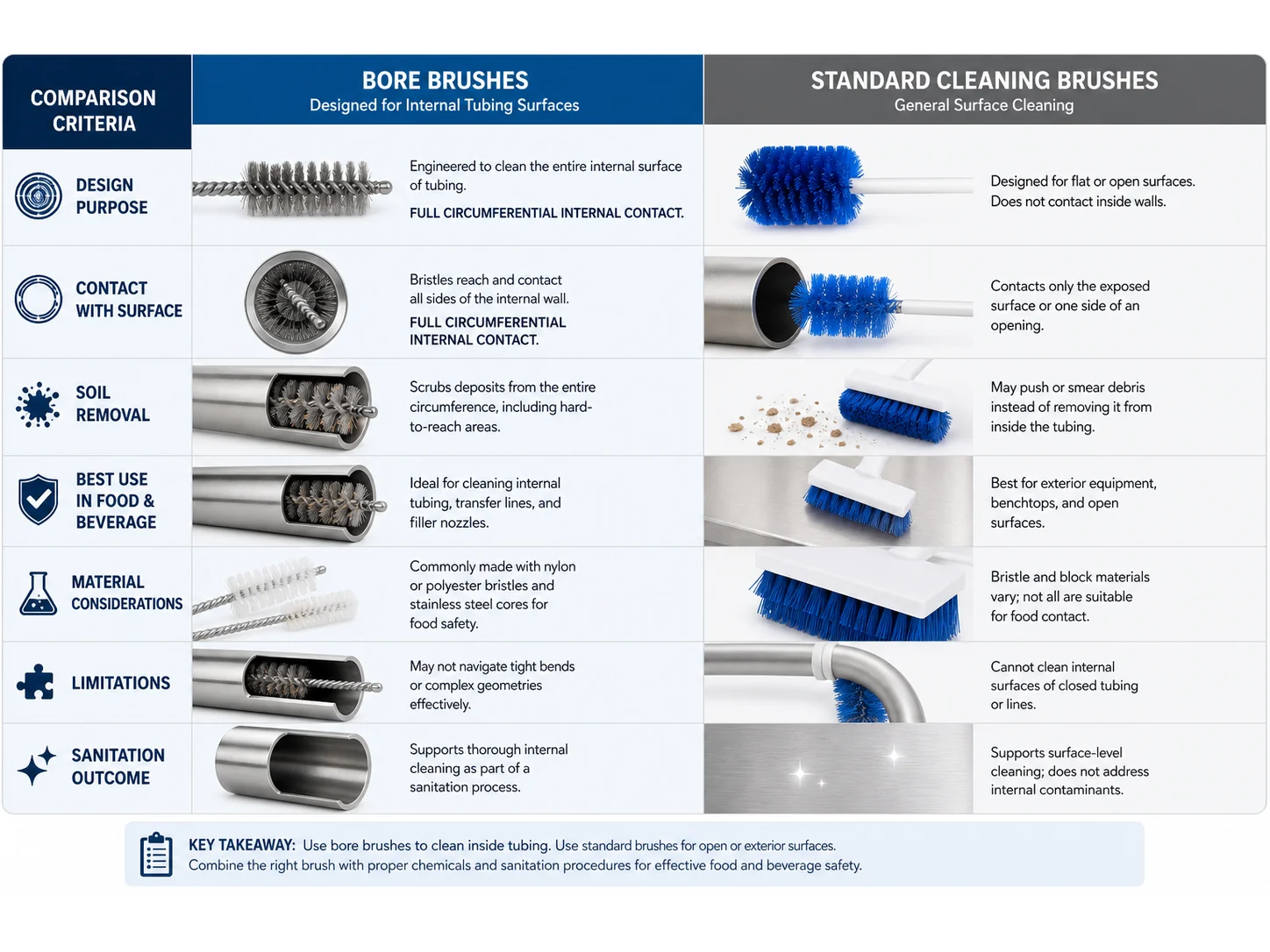
- Bottle & Container Brushes — Bottle and container brushes are selected around an opening plus a larger vessel body and bottom geometry; tube and bore brushes are selected mainly around a long diameter-controlled passage. Closest alternative: Tube & Pipe Bore Brushes.
- Nylon PA — Compare Nylon PA with PP, PBT, PET. Change material when wet stiffness, temperature, chemical resistance, conductivity, particle shedding, or surface marking becomes the limiting factor.
- PBT — Compare PBT with Nylon, PP, PET. Change material when wet stiffness, temperature, chemical resistance, conductivity, particle shedding, or surface marking becomes the limiting factor.
- AISI 304 Stainless Steel Wire — Use AISI 316 stainless steel wire for chloride, marine, dairy, beverage, chemical washdown, or higher pitting-resistance requirements. Use carbon steel for dry aggressive cutting and brass or abrasive nylon for lower marking risk.