Quick Answer
Start with the motion and access path. Use straight handles for direct push-pull work, angled handles for clearance, ring or T-handles for pull and torque, removable connectors for interchangeable heads, telescopic handles for variable reach, water-fed handles when liquid delivery is part of the process, and flexible shafts for curved access.
Handle style is a control and access decision: straight, angled, ring, T-handle, threaded, quick-change, telescopic, water-fed and flexible structures suit different motions and working spaces.
Choose the Handle from the Cleaning Motion, Not from Appearance
A brush handle is part of the working geometry. It determines how the operator approaches the surface, how much push, pull or turning force can be applied, whether the hand clears nearby parts, and how the brush connects to a replaceable or powered head. The best handle style is therefore selected from the cleaning motion and access path first, then from reach, grip, hygiene and connection requirements.
Keep three decisions separate. Handle style answers how the operator holds and controls the brush. Handle length answers how far the hand must stay from the working area. Brush head size answers what can enter the opening and contact the surface. Mixing those decisions is a common reason a brush looks suitable on a drawing but feels awkward or cannot reach the actual cleaning zone.
Handle Style Selection at a Glance
| Handle style | Best when | Main design check |
|---|---|---|
| Straight / inline | The push-pull direction is close to the brush axis and the operator has direct access. | Grip diameter, hand clearance, overall balance and whether the head needs one- or two-hand control. |
| Angled / offset | The hand would otherwise collide with a wall, lip, machine frame, sink edge or recessed surface. | Offset angle and knuckle clearance while keeping the bristle face correctly loaded. |
| Loop / ring | A compact twisted-wire or pull-through brush needs a secure end grip, hanging point or manual pull. | Ring size, stem stiffness and whether the brush must pass completely through the bore. |
| T-handle / cross grip | The user needs higher manual torque or controlled two-hand push-pull force. | Crossbar width, shaft strength and the maximum force the brush head and stem can safely accept. |
| Ergonomic / overmoulded grip | The brush is used repeatedly, with wet or oily hands, or at higher manual pressure. | Grip texture, diameter, chemical exposure, cleanability and whether soft overmould creates unwanted crevices. |
| Threaded / removable | One handle must accept several brush heads or a worn head should be replaced without replacing the handle. | Thread standard, anti-loosening behavior, material compatibility and cleaning of the joint. |
| Quick-change / click-on | Frequent head changes matter more than a permanent connection. | Locking method, accidental release risk, wear of the connector and whether the joint can be cleaned and inspected. |
| Telescopic | The same tool must cover several working heights or reach walls, tanks, solar panels or overhead equipment. | Collapsed and extended length, lock strength, pole deflection, head weight and steering control at full reach. |
| Water-fed | Rinsing or wash liquid should be delivered through the handle to the brush head. | Flow path, pressure rating, hose connection, on/off control, leakage points and chemical compatibility. |
| Flexible / formable shaft | The path is curved or offset and a rigid straight handle cannot reach the target. | Minimum bend radius, pushability, torsional stiffness and recovery after repeated bending. |
Use a Straight Handle When the Cleaning Direction Is Already Correct
A straight handle is the simplest choice when the operator can approach the work directly and the required force is mainly along the brush axis. It works well for general hand scrubbing, bottle and tube cleaning, bench work and many floor or equipment tools. A straight handle also makes the relationship between hand movement and brush movement easy to predict.
Do not choose it automatically just because it is the easiest part to manufacture. If the hand must be bent sharply to keep the bristle face flat, or the operator’s knuckles hit the surrounding structure before the brush reaches the residue, the geometry is wrong even if the handle length is adequate.
Choose an Angled or Offset Handle for Clearance and Wrist Position
An angled neck moves the hand away from the brush contact plane. This is useful for tracks, corners, recessed machine details, sinks, vehicle surfaces and other areas where a straight grip would collide with an edge. Commercial long-handle cleaning brushes also use angled bristle or head geometry to maintain contact in hard-to-reach areas.
The key measurement is not simply “30° or 45°.” Measure the approach line from the user’s hand to the working surface, the height of nearby obstructions and the direction in which force must be applied. The handle angle should create clearance without causing the operator to load the bristles from the side. An offset that solves knuckle clearance but turns a wiping motion into side-loading is not an improvement.
Use Loop, Ring and T-Handles When Pull or Torque Is the Main Motion
Ring-handled twisted-wire tube brushes are a practical example of a handle integrated into the stem. The ring provides a compact hand grip for manual through-hole cleaning and can also serve as a hanging point. For long pull-through tools, a grip at each end can make repeated push-pull cleaning easier to control.
A T-handle is different: the crossbar gives the user leverage around the shaft axis. It is useful where the brush must be rotated by hand or where a larger bore brush needs controlled push-pull force. Before specifying a T-handle, confirm that the shaft, core and brush head are designed for the extra torque. A larger grip can let the operator apply more force than a light twisted-wire stem should carry.
Separate Grip Ergonomics from the Connector
The part held by the operator and the connection to the brush head solve different problems. A handle may have an ergonomic ribbed or overmoulded grip while still using a fixed head, threaded head or quick-change connector. Professional parts-washing brushes, for example, use moulded polypropylene handle shapes to improve grip and wrist comfort while the cleaning head and fluid connection remain separate design features.
For wet, oily or long-duration work, check grip diameter, texture, local pressure points and whether the user wears gloves. For food, pharmaceutical or sanitation environments, also check whether the grip has joints, cavities or soft-overmould interfaces that are difficult to clean. Hygienic handle systems deliberately use smooth or one-piece constructions to reduce soil-harbourage points while still providing grip texture.
Threaded and Quick-Change Handles Need an Interface Specification
“Removable handle” is not a complete specification. The drawing or RFQ should identify the actual interface: thread type and pitch, bayonet, snap-lock, click-on, clamp, pin or another defined connector. Standardised threaded systems are useful because one handle can support several tools and worn heads can be replaced separately, but the connection must stay secure during repeated push-pull or rotary hand motion.
For a custom system, confirm the direction of working load. A connector that is secure in axial push may loosen under repeated rotation. Also consider how the joint will be cleaned, whether liquid can collect inside it, and whether the head can be changed with gloves. If frequent changeover is expected, a positive quick-change lock may be more practical than a fine thread; if maximum rigidity is more important, a fixed or robust threaded interface may be preferable.
Use a Telescopic Handle for Variable Reach, Not as a Substitute for Rigidity
Telescopic handles are appropriate when the same brush must reach different heights or when the tool needs to collapse for transport and storage. Professional systems use locking sections so the operator can adjust working length, and high-reach systems often pair the pole with an angle adapter so the brush face remains controllable at height.
The design trade-off is stiffness. As a pole extends, bending and steering error increase, especially with a large wet brush head. Specify the minimum and maximum working length, expected head weight, push force and allowable deflection. If the task is always at one fixed distance, a rigid handle may provide better control than a telescopic mechanism.
Choose a Water-Fed Handle Only When Liquid Delivery Is Part of the Process
A water-fed handle combines the mechanical function of the handle with a fluid path. It is useful for vehicle washing, glass, façades, solar panels and other cleaning where rinsing at the brush head reduces the need to carry a separate hose. Professional water-fed systems may include an on/off control, hose routing, pressure limits and a quick or threaded brush connection.
Specify the liquid, pressure, temperature and connector before choosing materials. A hollow aluminium, polymer or composite handle that works with plain water may not be suitable for every detergent, acid or chlorine-containing cleaner. The fluid path also adds sealing points, so leakage, drainage and cleanability need to be considered in the design.
Flexible and Formable Handles Are for Curved Access Paths
When the brush must pass around a bend, the access path—not the user’s preferred grip—controls the design. Flexible tube brushes and flexible-shaft tools can follow curved pipes, drains, fittings, ducts or offset cavities that a rigid handle cannot enter. The stem must still be stiff enough to push the brush forward and, where rotation is required, transmit enough torque without winding up excessively.
Record the smallest bend radius, internal diameter, total path length and whether the brush must reverse direction. A flexible shaft that bends easily in free space may still buckle when pushing an oversized head through a loaded curve.
For Hygienic Cleaning, Minimise Soil Traps in the Handle
In food and other hygiene-sensitive environments, handle design is also a cleanability decision. One-piece moulded handles reduce joints and crevices where soil can accumulate. Colour coding can support tool segregation, and hanging features should drain rather than hold water. Removable connectors, telescopic locks and overmoulded grips can still be used, but they should be evaluated as cleanable assemblies rather than only as ergonomic features.
Where hygienic zoning matters, specify handle material, colour, connection type, storage method and cleaning/disinfection conditions together. Do not assume a comfortable consumer-style grip is automatically suitable for a washdown or controlled-hygiene process.
What to Put on a Custom Brush Handle Drawing or RFQ
- Handle style: straight, angled, loop, T-handle, pistol/ergonomic, telescopic, flexible, water-fed or another defined geometry.
- Working motion: push, pull, scrub, wipe, hand rotation, pull-through or guided high-reach cleaning.
- Hand clearance: minimum distance from knuckles, guards, hot surfaces, machine frames or vessel edges.
- Grip: diameter or width, usable grip length, texture, glove use and wet/oily conditions.
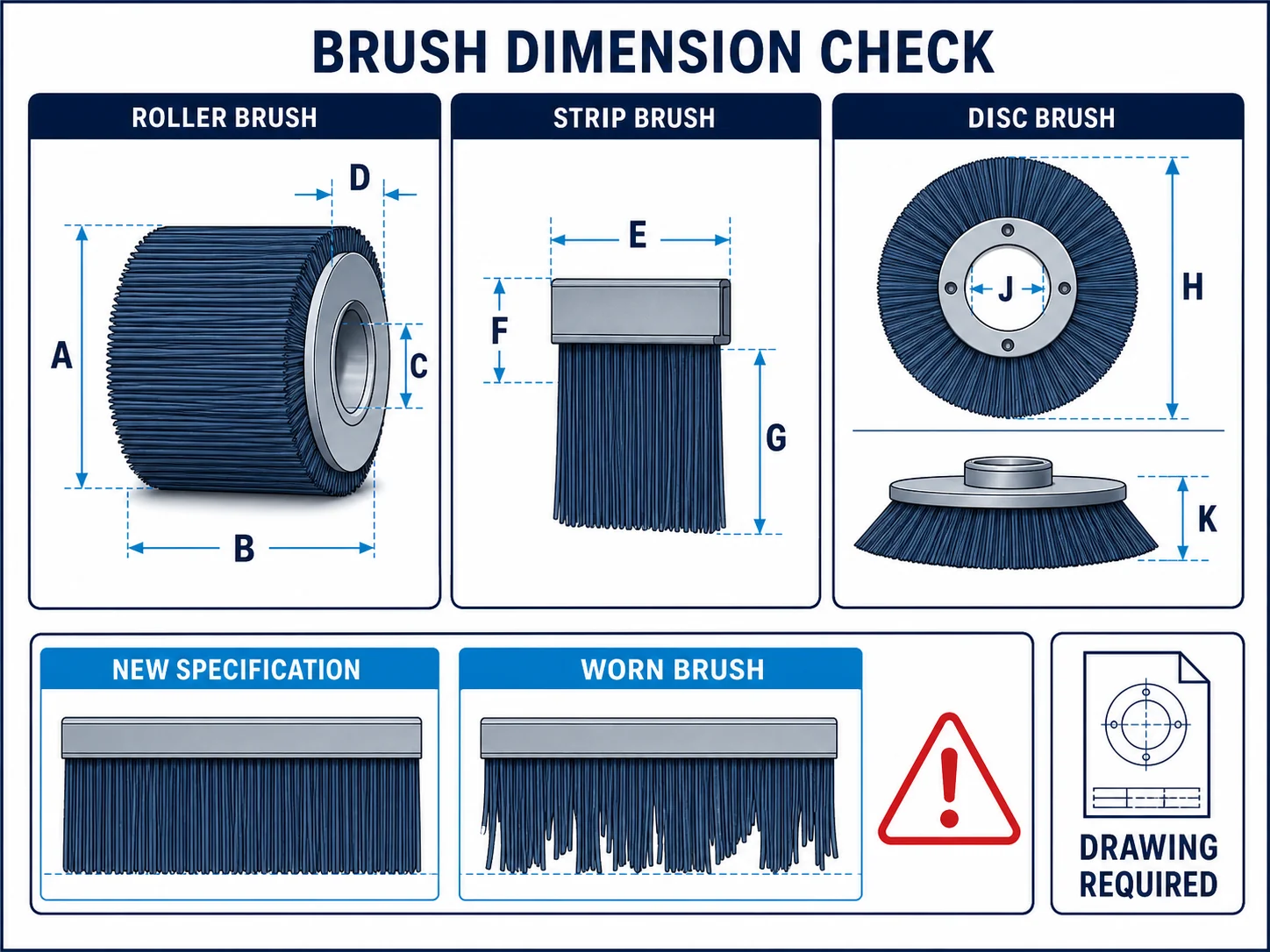
- Reach: fixed working length or telescopic minimum/maximum. Use the separate brush-dimension selection guide when exact length is the main question.
- Connector: fixed, thread, bayonet, snap, clamp, quick-change, hose fitting or other interface with dimensions.
- Load: expected push/pull force and any manual torque.
- Environment: water, detergent, solvent, temperature, food-contact or sanitation requirements.
- Storage: hanging hole, rack position, drainage and whether the head must be removable.
Common Handle-Selection Mistakes
- Choosing handle length before checking the approach angle and hand clearance.
- Using a straight handle where an offset is needed to keep the brush face flat.
- Adding a large T-grip without checking whether the shaft can tolerate the extra torque.
- Calling a connection “quick-change” without defining how it locks and how accidental release is prevented.
- Using a telescopic pole at maximum extension with a head that is too heavy to steer accurately.
- Adding water feed without defining pressure, hose routing, chemical compatibility and drainage.
- Using soft overmoulds or complex joints in hygiene-sensitive work without checking cleanability.
- Assuming a flexible shaft can negotiate any bend without specifying bend radius and brush diameter.
Keep Handle Style, Handle Length and Brush Head Geometry as Separate Decisions
Choose the handle style from the required motion, access direction and operator control. Then determine the working length from reach and safe hand position, and size the brush head from the opening, contact area and surface geometry. This sequence keeps the three decisions from competing with each other and gives the buyer a clear path from “how should I hold and control the tool?” to “how long should it be?” and finally “what head will fit and clean the surface?”
For exact reach and overall dimensions, use How to Measure and Select the Correct Brush Dimensions. For brush diameter, trim length and filament interaction, use Brush Diameter, Trim Length, and Filament Diameter.
Technical References
- American Brush Manufacturers Association — Brush Lingo
- OSHA — 1910.242 Hand and Portable Powered Tools
- OSHA — Personal Protective Equipment
What to specify
Specify cleaning motion, hand clearance, grip size, working reach, connector, push/pull or torque load, wet or chemical exposure, hygiene requirements and storage method. Handle length and brush-head diameter are separate sizing decisions.
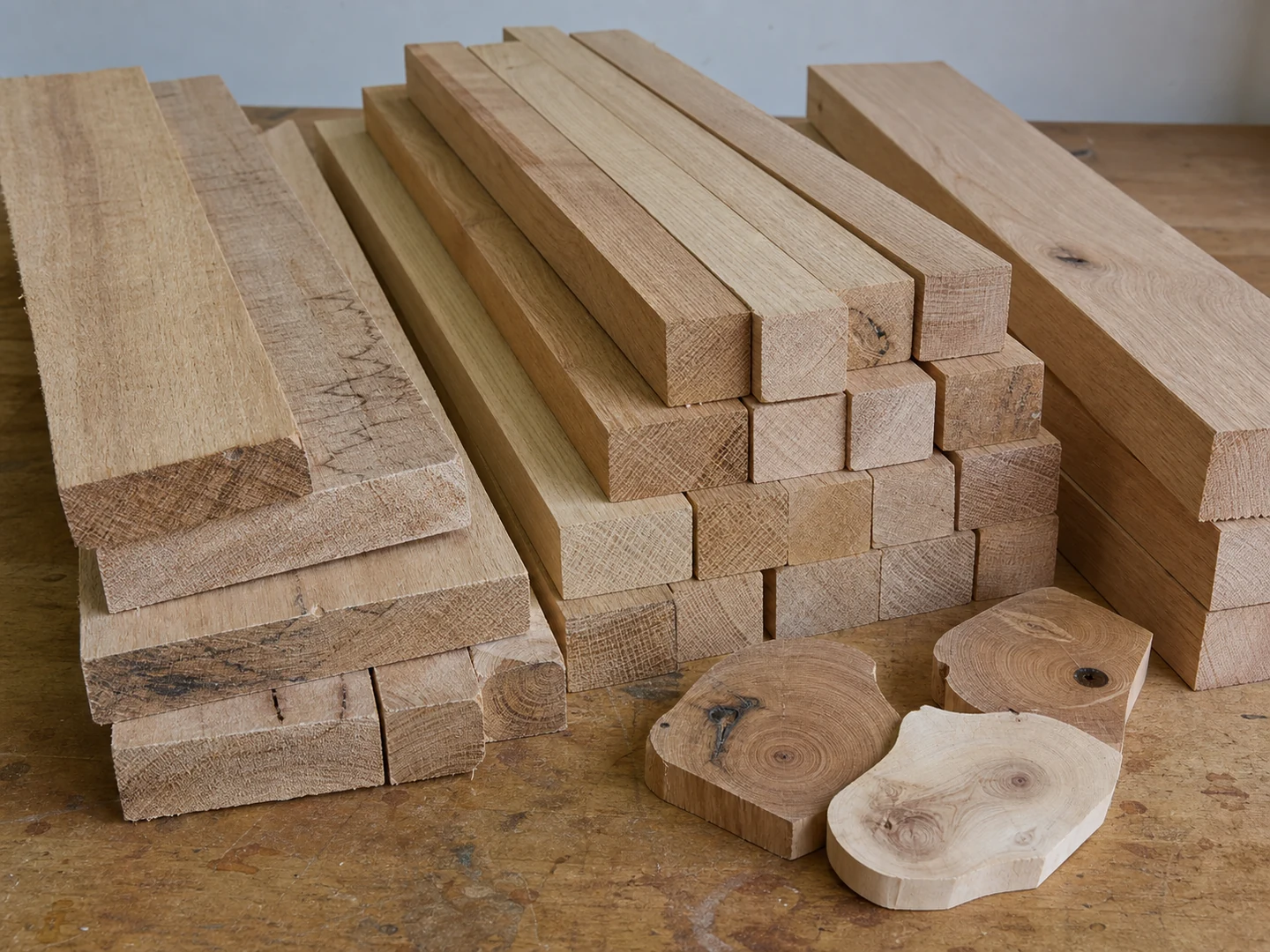
When is Hardwood Brush Base the wrong choice?
- Hardwood Brush Base — Not preferred for continuous immersion, steam sanitation, cleanroom duty or tight wet dimensional tolerance.
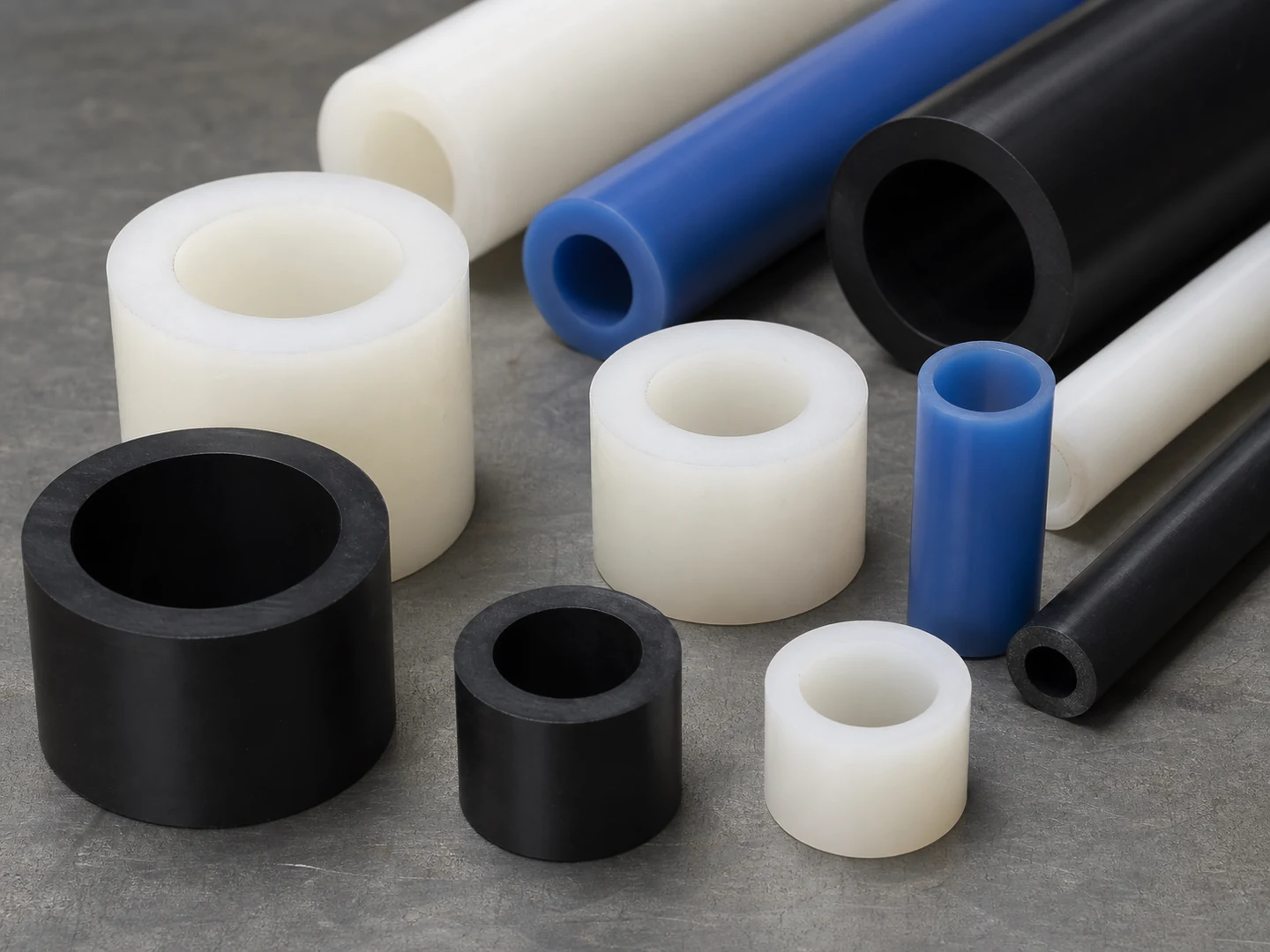
- Engineering Plastic Tube Core — Creep, keyway failure, thermal expansion, poor adhesive bonding and bore growth can make a generic plastic tube unsuitable.
- Aluminum Holder — Wrong slot size, weak wall, galvanic corrosion or poorly located fasteners can release or distort the strip.
What should replace Hardwood Brush Base when it stops working?
- Hardwood Brush Base — Compare Hardwood Brush Base with PP block, PE board, PVC board, engineering-plastic core. Change material when wet stiffness, temperature, chemical resistance, conductivity, particle shedding, or surface marking becomes the limiting factor.
- Engineering Plastic Tube Core — Compare Engineering Plastic Tube Core with Steel tube, stainless tube, aluminum core, molded nylon core. Change material when wet stiffness, temperature, chemical resistance, conductivity, particle shedding, or surface marking becomes the limiting factor.
- Aluminum Holder — Compare Aluminum Holder with Stainless holder, PVC holder, flexible polymer backing. Change material when wet stiffness, temperature, chemical resistance, conductivity, particle shedding, or surface marking becomes the limiting factor.