What Is a Boar Bristle Cleaning Brush for Leather?
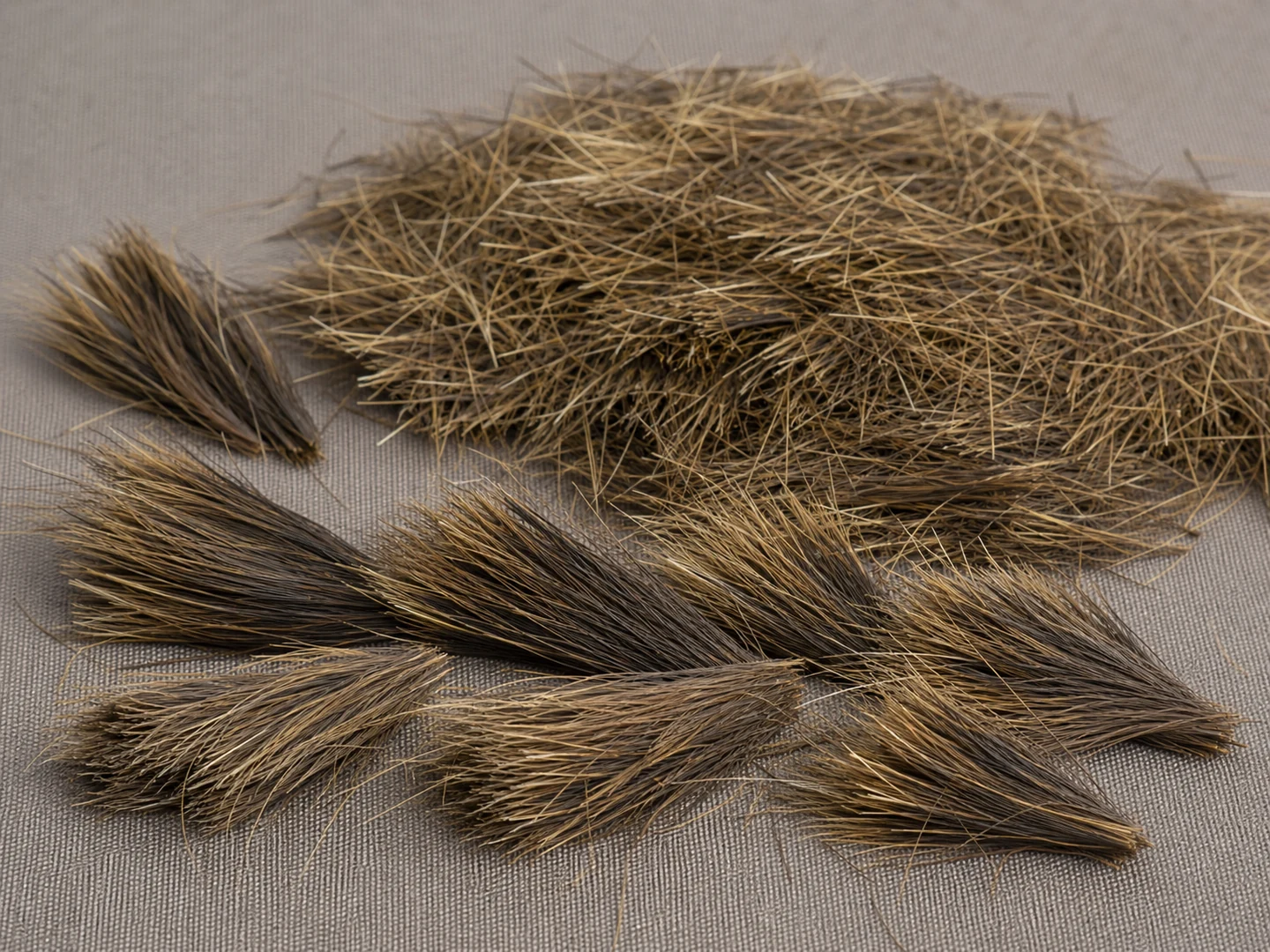
A boar bristle leather cleaning brush uses natural bristles harvested from boars to gently remove dirt, dust, and light soiling from leather surfaces without scratching or damaging the finish. Boar bristle is valued for its stiffness, resilience, and ability to lift particles while being soft enough for fine leathers—making it ideal for shoe care, upholstery, automotive interiors, and other high‑end leather maintenance applications.
Common Standard vs. Custom Brush Options
Standard brushes come in predefined shapes and sizes, while custom brushes are specified to meet exact operational requirements. The table below compares the two approaches across typical decision factors.
| Specification Factor | Standard Off‑the‑Shelf | Custom |
|---|---|---|
| Dimensions | Common sizes only | Exact width, length, trim length, and overall shape |
| Bristle Density | Fixed density | Controlled knot count, loft, and distribution |
| Handle / Holder | Plastic or wood, fixed design | Custom material, shape, ergonomics, or integration interface |
| Mounting Interface | None or basic hole | Threaded inserts, mandrels, quick‑change fittings |
| Bristle Grade | Generic boar bristle blend | Specific cut, stiffness, color, or blending with other fibers |
| Quantity | Any bag size | Scalable to production volume, with consistent quality |
| Samples | Not available | Pre‑production sample for approval |
What to Specify When Requesting a Custom Boar Bristle Leather Cleaning Brush
A clear RFQ (request for quotation) helps suppliers provide accurate proposals. Provide the following details:
- Brush type: Hand brush, strip brush, roller brush, or cup brush.
- Drawing or sample: Ideal; otherwise, detailed dimensions and description.
- Dimensions: Overall length, width, trim length, and bristle height.
- Bristle material: Pure boar bristle, blended, or specific grade/cut.
- Core or holder material: Wood, plastic, metal, or composite.
- Mounting interface: Threaded, clamped, or custom adapter.
- Quantity: Estimated annual usage to guide tooling and pricing.
- Application: Leather type (smooth, suede, nubuck), cleaning method (dry, damp, with cleaner), and expected frequency.
- Operating environment: Temperature, humidity, chemical exposure, or sanitary requirements.
- Packaging & documentation: Bulk, retail, or specific labeling; test reports, certificates of origin, or material data sheets.
How Each Specification Affects Fit, Durability, and Cost
- Bristle length and stiffness: Longer bristles reach deeper grain but may bend more; stiffer boar bristle (from specific parts of the animal or blended) trades gentleness for cleaning power.
- Density: Higher density increases brush life and cleaning evenness but raises cost and may trap debris.
- Holder material: Metal is durable but heavier and more expensive; wood is traditional but may swell with moisture; engineered plastics balance cost and chemical resistance.
- Mounting complexity: Non‑standard interfaces add custom tooling cost and production schedule but reduce changeover time on production lines.
- Quantity: Higher volumes justify dedicated tooling and better unit pricing; small orders often rely on manual assembly.
- Sample confirmation: Pre‑production samples let you verify fit and performance before bulk production, avoiding costly reorders.
Common Mistakes in RFQs for Custom Brushes
- Sending only a photo without dimensions: Leads to incorrect scaling and wrong brush size.
- Skipping a technical drawing: Ambiguity on bristle length, overall width, or trim angle creates unusable prototypes.
- Ignoring bristle grade specifications: “Boar bristle” varies widely; specify stiffness, color, or mixing ratio with other fibers.
- Underestimating environmental factors: Exposure to oils, solvents, or high humidity can degrade natural bristles or wooden components.
- Too few samples for trial: One sample may not reveal production variation; request a small pilot batch for field testing.
- Unclear packaging instructions: Brushes can bend during transit if not properly packed, ruining first impressions.
When a Standard Brush Is Sufficient
Standard boar bristle leather brushes work well when:
- You are cleaning common leather items like shoes, belts, or handbags with widely available brush sizes.
- Your process allows manual adjustment (e.g., an operator can tolerate a slightly short handle).
- Order volumes are low and custom tooling cost would be excessive.
- There is no special mounting requirement—the brush is handheld or clamped in a simple fixture.
- Consumable replacement speed is high, and standardized purchasing keeps inventory simple.
In these cases, testing a few commercial options is faster and cheaper than going custom.
When Custom Tooling, Testing, or Supplier Review Is Necessary
Consider a full custom project when:
- The brush must integrate into automated machinery or hold a precise position relative to leather parts.
- You need a non‑standard shape—angled head, curved profile, split trim—to clean complex seams or folds.
- Leather is unusually delicate (e.g., museum‑grade artifacts) and bristle stiffness must be controlled within a narrow range.
- Production volumes are high enough that a minor design improvement yields significant cost or quality gains.
- Regulatory or hygiene standards require consistent bristle source documentation, washable materials, or metal‑detectable construction.
In such cases, involve a capable supplier early to review drawings, discuss yield rates, and plan for pre‑production trials.
Final Takeaway
Deciding whether to customize a boar bristle cleaning brush for leather comes down to three questions: Does your geometry fall outside common ranges? Will a standard brush survive your operating environment and life expectations? Will the cost of custom tooling be offset by process efficiency gains? Document your requirements, share them with multiple experienced brush manufacturers, request samples where possible, and choose the solution that balances initial investment with long‑term performance.
When a Boar Bristle Cleaning Brush Is the Wrong Choice
This brush is not enough when the main problem is blocked access, unsafe working conditions, damaged equipment, incompatible chemicals, or a process setting that keeps recreating the residue. In those cases, review surface finish, solvent exposure, access angle, scratch tolerance, and soil severity and confirm the surrounding cleaning method before increasing brush stiffness or contact pressure.
Frequently Asked Questions
What is the typical production schedule for custom boar bristle brushes?
production schedule varies with complexity. A simple custom hand brush may take a project-specific schedule after sample approval, while machine‑integrated designs with new tooling can take a project-specific schedule. Always confirm with the supplier before committing to a timeline.
Can I customize both the bristle and the handle?
Yes, most brush manufacturers can tailor the bristle material, length, density, and stiffness as well as the handle or holder material, shape, and surface finish. Provide clear specifications for each component.
How do I confirm bristle quality before ordering?
Request a pre‑production sample or a material data sheet showing bristle origin, cut, and any treatments. Some suppliers can provide a small batch for field testing. Visual inspection and burn‑test (smell) can help distinguish pure boar bristle from synthetic blends.
Is a larger order quantity always cheaper?
Larger quantities often reduce the unit cost due to economies of scale in material purchasing and batch setup, but you should also consider inventory holding costs and the risk of design changes. Negotiate a break‑even volume with your supplier.
What documentation should I request with a custom brush order?
Common documents include a documented drawing, material test reports, certificates of origin, and inspection reports. For food‑grade or cleanroom use, ask for compliance certificates relevant to your industry.
When should I avoid natural boar bristle and choose synthetic?
Synthetic bristles (nylon, polyester) are more chemically resistant, easier to sterilize, and perform better in wet or high‑humidity environments. If your process involves frequent washing, detergents, or sanitizing chemicals, a synthetic alternative may last longer.
Do custom brushes require special packaging for overseas shipping?
Yes, long‑bristled brushes can deform under weight or moisture during transit. Insert spacers, individual wrapping, or rigid boxes. Clearly specify packaging requirements and agree on a packaging standard in advance.
Can a supplier help if I only have a photo of the brush I need?
A photo is a starting point, but it cannot replace measured dimensions. A reputable supplier will ask for additional details and may create a preliminary drawing for your approval, but final responsibility for fit rests on accurate specifications.
Technical References
Which natural bristle fiber fits this job — Boar Bristle, Horsehair or Goat Hair?
| Fiber | Continuous temperature (°C) | Peak temperature (°C) | Water absorption | Hardness |
|---|---|---|---|---|
| Boar Bristle | 60–80 | 100–120 | 10–18% | — |
| Horsehair | 60–80 | 100–120 | 8–15% | — |
| Goat Hair | 50–70 | 90–110 | 12–20% | — |
| Pig Bristle | 80 | 110 | 5–20% | Medium natural bristle; similar to boar bristle for polishing and gentle scrubbing. |
| Mohair | 80 | 110 | 5–20% | Very soft |
What should replace Boar Bristle for leather care?
- Boar Bristle — Compare Boar Bristle with Horsehair, nylon, PBT. Change material when wet stiffness, temperature, chemical resistance, conductivity, particle shedding, or surface marking becomes the limiting factor.
- Nylon PA — Compare Nylon PA with PP, PBT, PET. Change material when wet stiffness, temperature, chemical resistance, conductivity, particle shedding, or surface marking becomes the limiting factor.