What Is a PVC Dust Sealing Strip Brush?
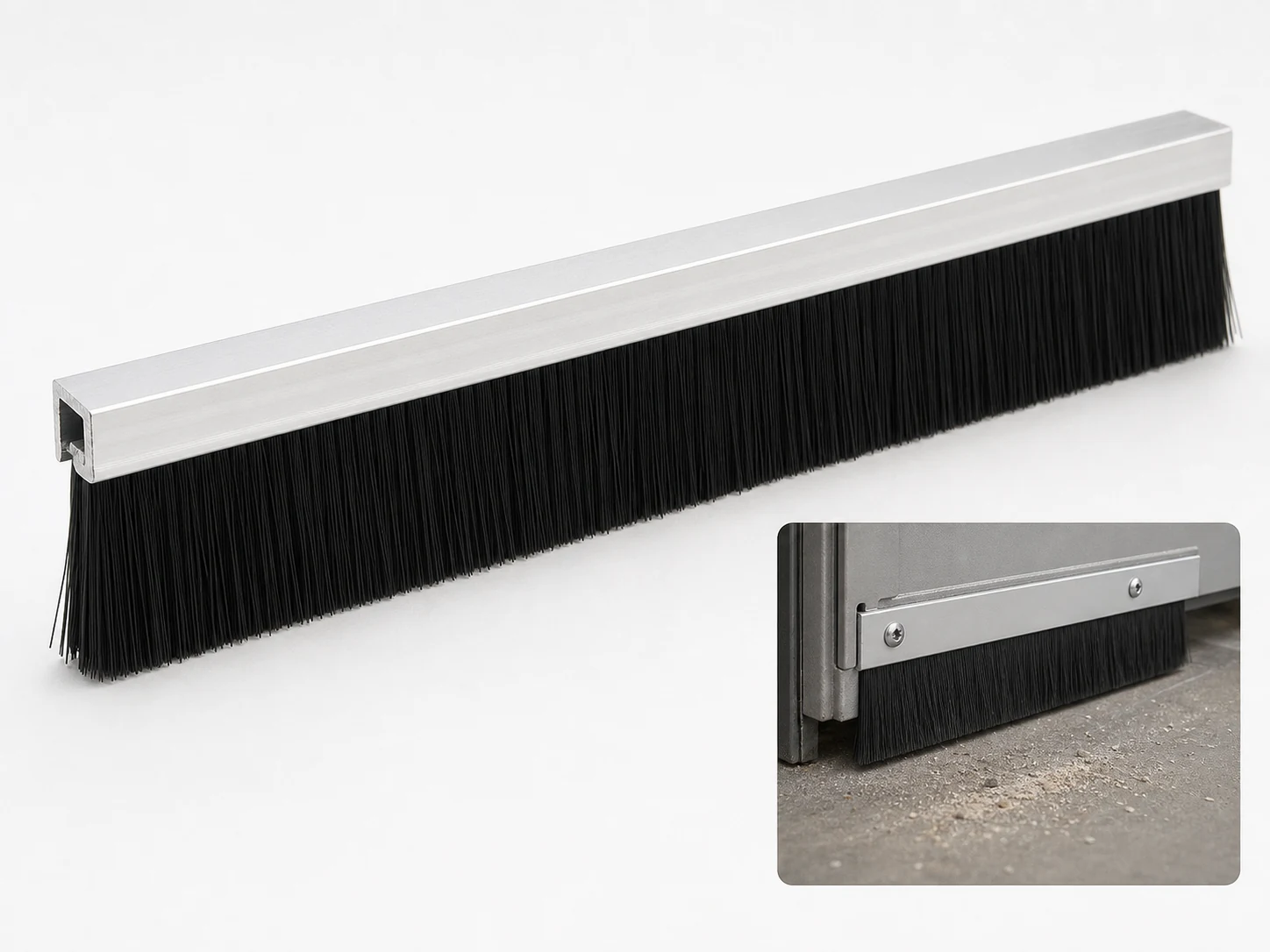
A PVC strip brush consists of a flexible PVC or polypropylene spine that holds a continuous row of bristles. The spine can be extruded with an integrated mounting flange, fitted into an aluminum or plastic holder, or backed with adhesive tape. The bristles are typically nylon, polypropylene, horsehair, or abrasive nylon, depending on the sealing and durability requirements. In dust removal and sealing applications, the brush forms a soft, adaptable barrier that blocks particles without scratching moving parts.
Common Types and Options
Strip brushes for dust sealing come in several configurations, each suited to different operating conditions:
- Straight strip brush: The most common form, used for linear gaps on doors and fixed panels.
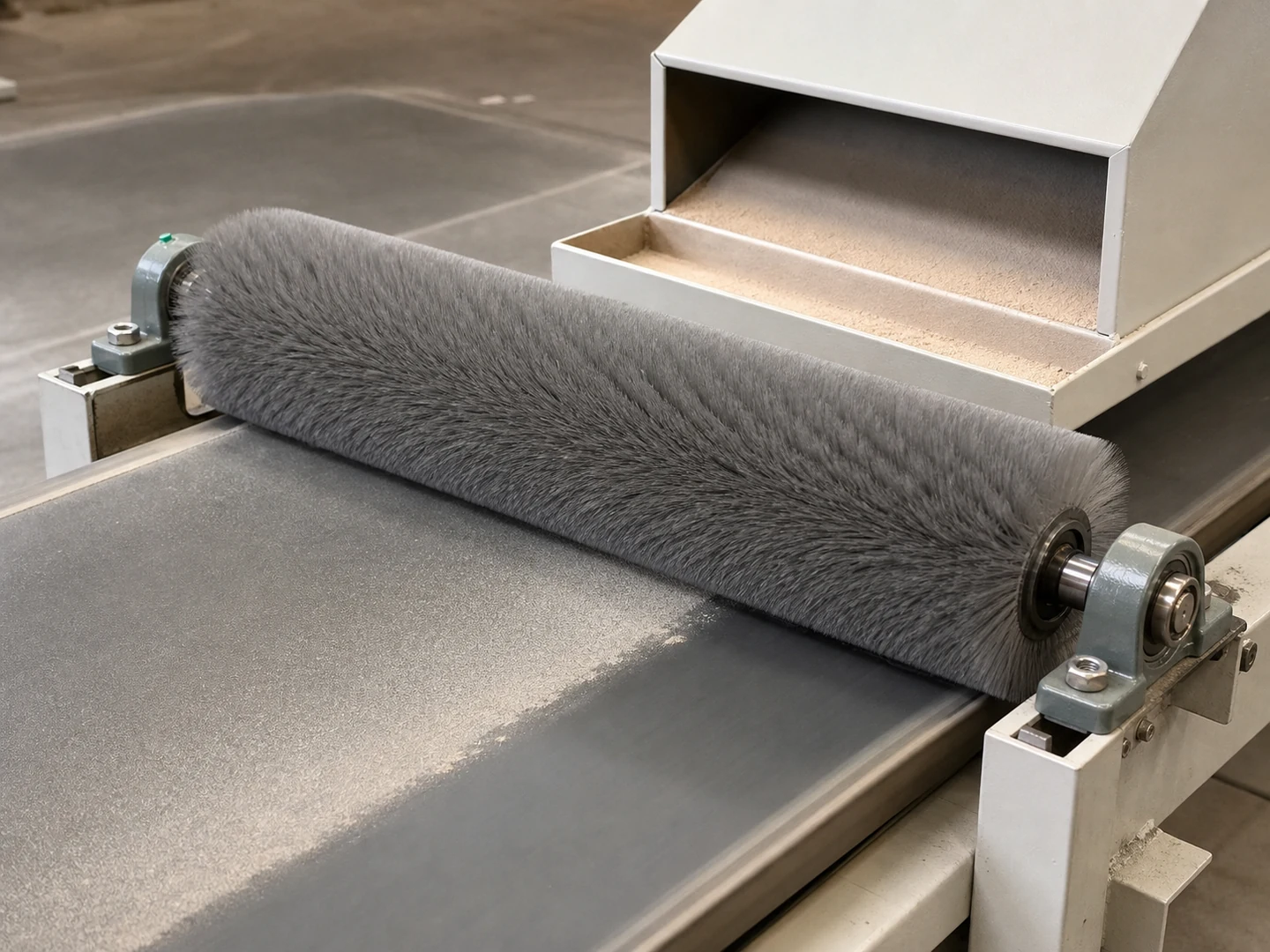
- Angled strip brush: Bristles are set at an angle (e.g., 45 or 90 degrees) to sweep debris sideways or improve sealing against a moving surface.
- Coil (spiral) brush strip: A continuous spiral‑wound brush often used for cable pass‑through or rotary sealing.
- Flame-retardant strip brush: Bristles treated or made from self-extinguishing materials for use near heat sources.
- Anti‑static strip brush: Incorporates conductive fibers to dissipate static charges, critical in electronics and volatile environments.
- Adhesive-backed brush strip: Features a pressure-sensitive adhesive for quick, tool-less mounting on clean, flat surfaces.
- Aluminum holder brush strip: A rigid aluminum channel holds the brush spine, offering stronger clamping and easy replacement.
Key Comparisons: Brush Structures, Bristles, and Mounting Methods
The table below compares the most important variables when selecting a PVC strip brush for dust sealing.
| Feature | Option | Typical Use | Pros | Cons |
|---|---|---|---|---|
| Brush structure | Straight strip | Linear gaps, door seals | Simple, low cost | May bend under heavy contact |
| Angled (45°, 90°) | Sweeping conveyors, angled seals | Directs dust away from gap | Higher bristle wear if misaligned | |
| Bristle material | Nylon (PA6/PA66) | General dust sealing, medium wear | Good abrasion resistance, affordable | Absorbs moisture, can degrade in wet conditions |
| Polypropylene (PP) | Wet areas, chemical exposure | Excellent moisture resistance | Lower heat resistance than nylon | |
| Anti-static nylon | Electronics manufacturing, cleanrooms | Prevents static buildup | Higher cost | |
| Mounting method | Adhesive tape | Lightweight panels, temporary setups | Fast installation, no drilling | Limited holding strength, sensitive to temperature |
| Aluminum holder | Heavy-duty industrial doors, machine guards | Robust, allows brush replacement | Requires mechanical fastening | |
| Spine type | PVC extruded spine | Most standard strip brushes | Flexible, easy to cut to length | Can deform under high heat |
| Polypropylene spine | Higher chemical resistance needs | Better resistance to acids and alkalis | Slightly more expensive | |
| Bristle trim length | 5 mm – 150 mm | Depends on gap depth and contact pressure | Standard range covers most uses | Shorter bristles are stiffer; longer ones may bend |
How to Choose the Right PVC Strip Brush
Selecting the optimal strip brush goes beyond measuring the gap width. Evaluate these five factors to ensure a reliable seal and long service life.
1. Equipment interface and mounting surface: Is the mounting surface flat, curved, or irregular? Aluminum holders work best where mechanical fasteners are permitted; adhesive-backed strips are ideal for smooth, powder-coated panels where drilling is not an option. For moving parts, confirm the brush does not snag or catch and that the mounting remains secure under vibration.
2. Contact surface and movement: Will the brush seal against a stationary frame, a sliding door, or a rotating shaft? For sliding friction, choose a bristle material with low coefficient of friction and good recovery. For rotary applications, check the surface speed: very high speeds may require a specialized labyrinth or multi‑row brush.
3. Residue or dust type: Dry, fine dust (e.g., cement, flour) requires a dense bristle pattern to prevent leakage. Oily or sticky residues may clump on bristles; in those cases, polypropylene bristles and a coarser trim may be easier to clean. Abrasive particles call for nylon bristles with higher wear resistance.
4. Operating environment: Temperature extremes, chemical exposure, and moisture all influence material choice. Nylon absorbs moisture and can swell, affecting seal consistency; polypropylene resists most acids and bases but softens above 80 °C. For outdoor applications, UV‑stabilized bristles and corrosion‑resistant holders are essential.
5. Replacement cycle and maintainability: If the brush will be replaced frequently—for example, in a high‑wear conveyor seal—choose an aluminum holder with a snap‑in spine so operators can swap out the brush strip without removing the entire holder. For long‑life static seals, a simple adhesive‑backed strip may suffice.
Common Mistakes When Selecting a PVC Strip Brush
- Choosing by brush width only: Many buyers specify only the overall width (e.g., 15mm brush strip) and ignore bristle length, density, and material. This often leads to excessive air leakage or premature wear.
- Using the wrong bristle type for the residue: Natural fibers like horsehair can absorb oil and degrade. Conversely, using stiff nylon bristles on a polished surface may cause scratching.
- Skipping environmental checks: A standard PVC spine can soften and distort near an oven or heat‑generating equipment. A flame‑retardant or high‑temperature version may be necessary.
- Over‑relying on adhesive mounting in high‑vibration areas: Adhesive tape can peel under constant vibration or strong dust extraction vacuum. Mechanical holders are safer for dynamic applications.
- Ignoring static electricity risks: In electronics assembly or flammable atmosphere areas, a non‑conductive plastic brush can build up a dangerous charge. Anti‑static strip brushes are mandatory there.
- Not planning for replacement: If the brush is glued or riveted in place, future maintenance becomes time‑consuming. Designing for easy strip brush replacement saves downtime.
When a Standard PVC Strip Brush Is the Wrong Choice
Off‑the‑shelf strip brushes cover most general sealing tasks, but certain situations require a custom solution:
- Extreme temperatures: Applications above 150 °C or below -40 °C may need specialty materials like PEEK or PTFE bristles that are not commonly available in standard catalog brushes.
- High‑speed rotary seals: Surface speeds above 5 m/s typically demand a precision‑engineered brush with specific bristle orientation, density, and balancing, often designed through a custom drawing.
- Unique profile or multi‑angle sealing: When sealing around complex curved edges or corners, a single straight brush cannot conform. A custom‑formed brush with a matching aluminum profile or a 3‑D welded brush may be required.
- FDA or food‑safe requirements: In food processing, bristles must meet strict material regulations and often be installed in stainless‑steel holders. Standard PVC spines are not always allowed. A custom sample with documentation may be needed.
- Explosion‑proof environments (ATEX): Brushes for zones with combustible dust must be fully anti‑static and sometimes constructed with spark‑resistant materials. A supplier should review the drawing against the exact zone classification before production.
- Very wide or continuous gaps: Gaps wider than 200 mm may require a multi‑row brush assembly or a combined brush‑rubber sealing system. This goes beyond a simple strip brush and benefits from an engineering review.
In these borderline cases, a simple online order is risky. Instead, contact a manufacturer with a detailed sketch showing the gap dimensions, movement type, environment, required IP rating, and any certifications needed. Request a sample for fit‑check before committing to a production batch.
Final Takeaway
Choosing a PVC dust sealing strip brush is a balancing act between the mechanical interface, the nature of the dust or residue, and the operating environment. Start by documenting the exact mounting surface and gap dimensions, then move to bristle material compatibility. Always verify the mounting method can handle the vibration and thermal conditions. For standard applications, a nylon straight strip brush in an aluminum holder is a solid, maintainable choice. But when conditions stray from the ordinary—high heat, strict hygiene, complex shapes—a custom drawing and a pre‑production sample are your safest path to a reliable seal.
Frequently Asked Questions
What does “PVC strip brush dust removal plastic” actually mean?
It describes a plastic‑bodied strip brush (usually with a PVC or polypropylene spine) that uses nylon, polypropylene, or similar bristles to block dust and particles. The term “plastic” refers to the synthetic bristles and often the spine, distinguishing it from natural‑fiber or metal‑backed brushes.
How do I measure the gap for a strip brush?
Measure the widest point of the gap under normal operating conditions. Choose a bristle trim length (the free length beyond the spine) that is about 1.5 to 2 times the gap width to allow flex and sealing pressure without excessive bending.
Can I cut a PVC brush strip to length myself?
Yes. Most PVC extruded spines can be cut with a fine‑tooth saw or tin snips. For a clean edge, cut the spine a few millimeters shorter than the desired length and then trim the bristles evenly with scissors. For aluminum holders, a hacksaw works well.
What is the difference between a dust brush strip and a sealing brush strip?
They are very similar, but a dust brush strip often has denser bristles and a stiffer trim to sweep away particles, while a sealing brush strip may be softer and longer to conform closely to irregular surfaces and block airflow or light. The terms overlap in many industrial catalogs.
Is an anti‑static brush strip always necessary in electronics?
Not always, but it is strongly recommended where sensitive components or flammable vapors are present. If you see dust clinging to the brush or experience ESD‑related defects, switching to an anti‑static strip brush with conductive fibers will likely solve the issue.
How often should I replace a PVC strip brush?
Replacement depends on wear, not time. Inspect brushes frequent for bent or missing bristles, cracks in the spine, or signs of bristle softening. In high‑friction applications, a brush may need replacement based on wear condition, operating load, and the equipment maintenance plan; in static seals, it can last years.
Can I use a PVC strip brush outdoors?
Standard PVC and nylon can degrade under UV light and extreme weather. For outdoor use, look for UV‑stabilized polypropylene bristles and anodized aluminum or stainless‑steel holders. Confirm with the supplier that the materials are rated for outdoor exposure.
What if my brush strip doesn’t completely block fine dust?
First, check that the bristle density is adequate—a finer dust needs a denser brush. You might also need a longer trim length to create more contact surface. In severe cases, a two‑row strip brush or a combination of a brush and a rubber lip seal may provide a tighter barrier.
Technical References
Which bristle material fits this job — PVC, Nylon PA or AISI 316 Stainless Steel Wire?
| Material | Continuous temperature (°C) | Peak temperature (°C) | Water absorption | Hardness |
|---|---|---|---|---|
| PVC | 50–70 | 75–90 | 0.04–0.40% | Shore A 70–95 or Shore D 70–85 |
| Nylon PA | 93 | 121 | 0.3–9% by PA grade and conditioning | Medium to firm; filament diameter and trim length control bending force. |
| AISI 316 Stainless Steel Wire | 400 | 500 | 0% | Rockwell B 70–95 depending on temper and cold work |
| AISI 304 Stainless Steel Wire | 400 | 500 | 0% | Rockwell B 70–95 depending on temper and cold work |
| Horsehair | 60–80 | 100–120 | 8–15% | — |
Figures as published by Perlon; Brushtec / DuPont; Alleima. Confirm the exact grade against the supplier datasheet before ordering.
What should replace Strip Seal Brushes for dust removal?
- Strip Seal Brushes — Strip brushes create a linear barrier or guide; machine-table brush plates distribute load and support products over a broad area. Closest alternative: Machine Table Brush Plates.
- PVC — Compare PVC with PE board, PP, elastomer, aluminum holder. Change material when wet stiffness, temperature, chemical resistance, conductivity, particle shedding, or surface marking becomes the limiting factor.
- Nylon PA — Compare Nylon PA with PP, PBT, PET. Change material when wet stiffness, temperature, chemical resistance, conductivity, particle shedding, or surface marking becomes the limiting factor.
- Aluminum Holder — Compare Aluminum Holder with Stainless holder, PVC holder, flexible polymer backing. Change material when wet stiffness, temperature, chemical resistance, conductivity, particle shedding, or surface marking becomes the limiting factor.