What Is a Nylon Strip Brush?
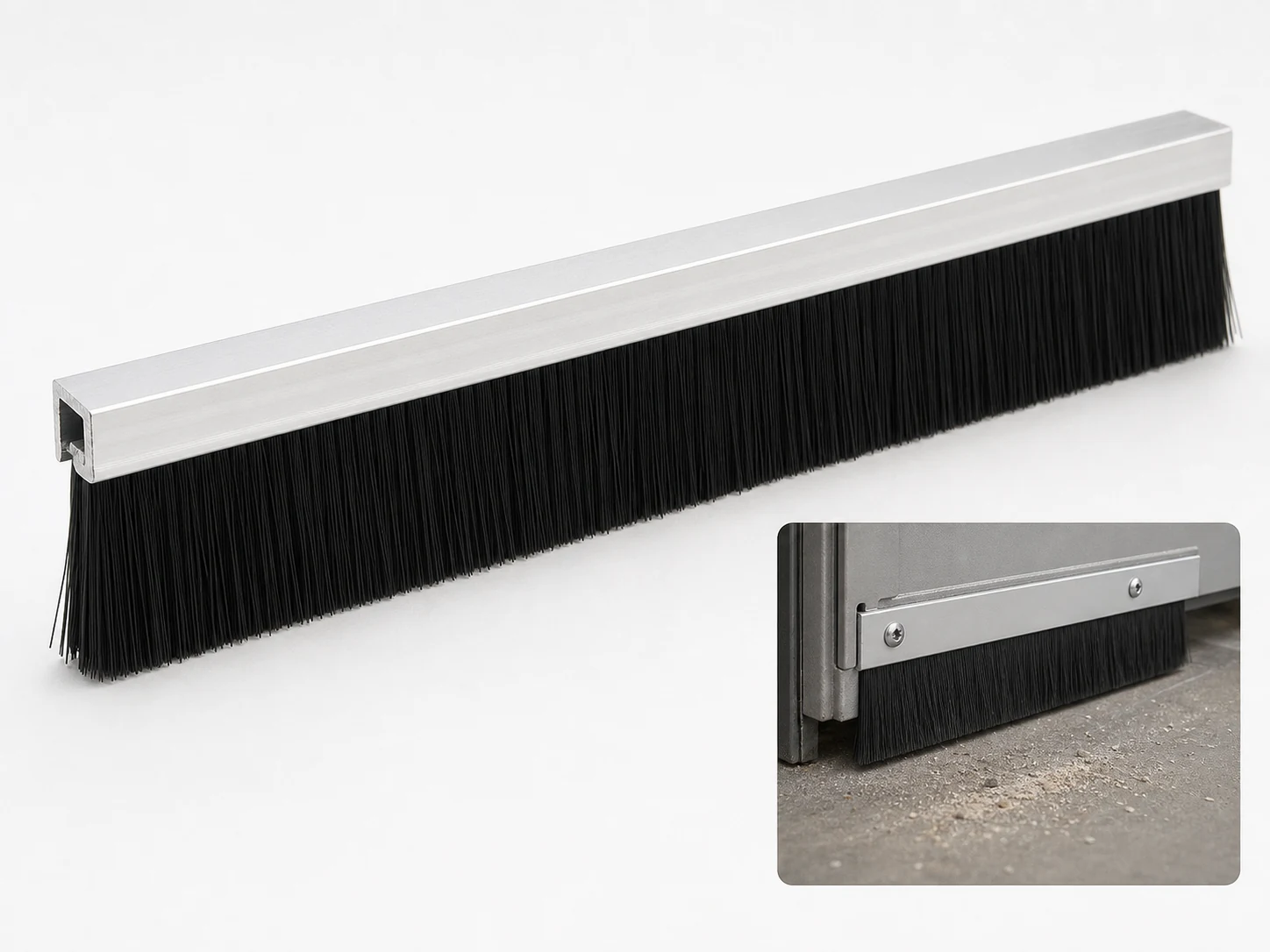
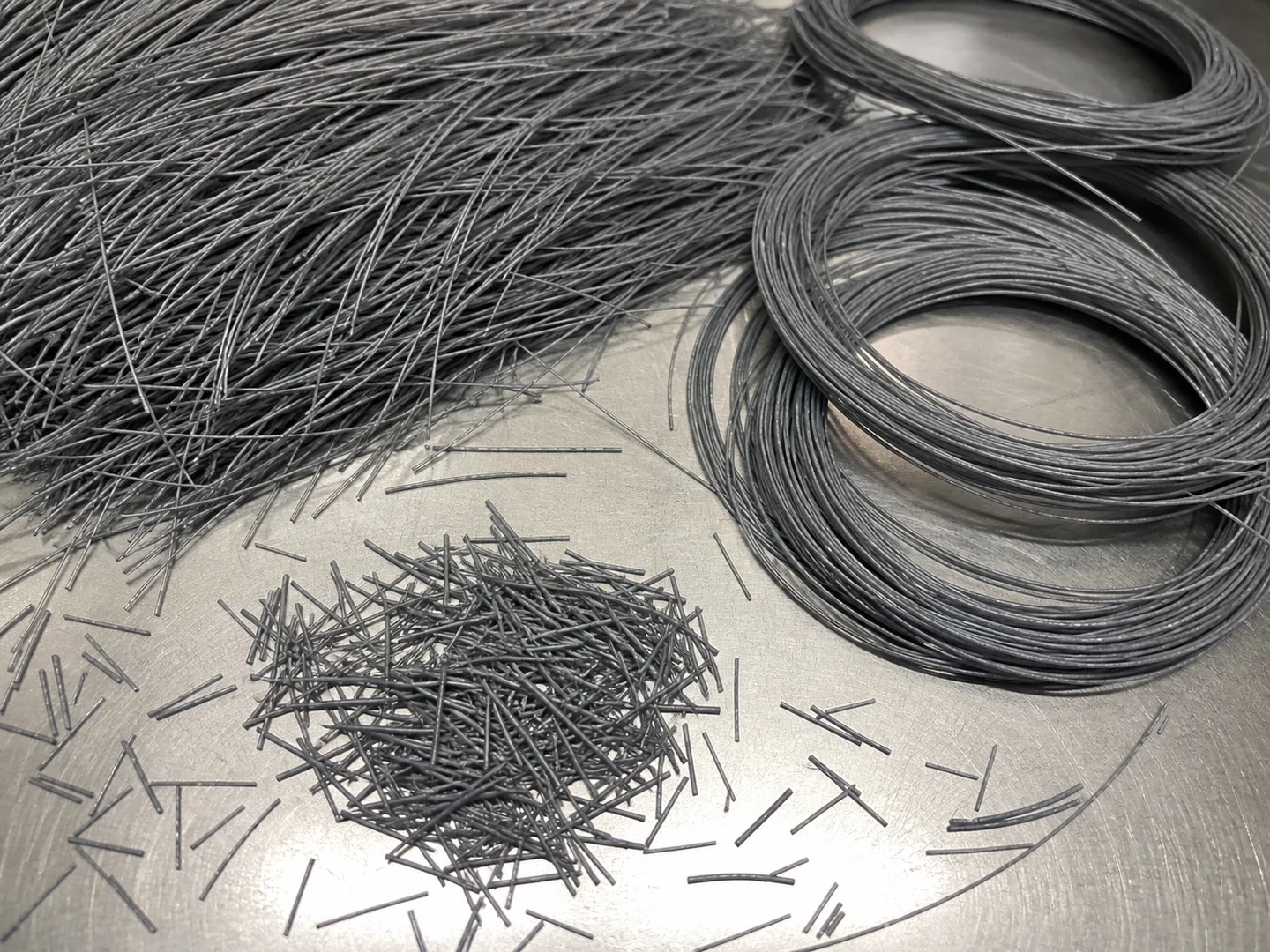
A nylon strip brush consists of nylon filaments (bristles) crimped or set into a metal or plastic spine, forming a continuous linear brush. It functions as a flexible barrier, scraper, wiper, seal, or static eliminator. The nylon bristles are selected for their natural resilience, consistent stiffness, moisture resistance, and abrasion resistance. Unlike rubber or metal strips, nylon can be tuned for stiffness and surface aggressiveness across a wide range without damaging delicate surfaces.
Common Types of Nylon Strip Brushes
Nylon strip brushes vary by bristle type, filament diameter, backing profile, and specialty treatment. The key material options include:
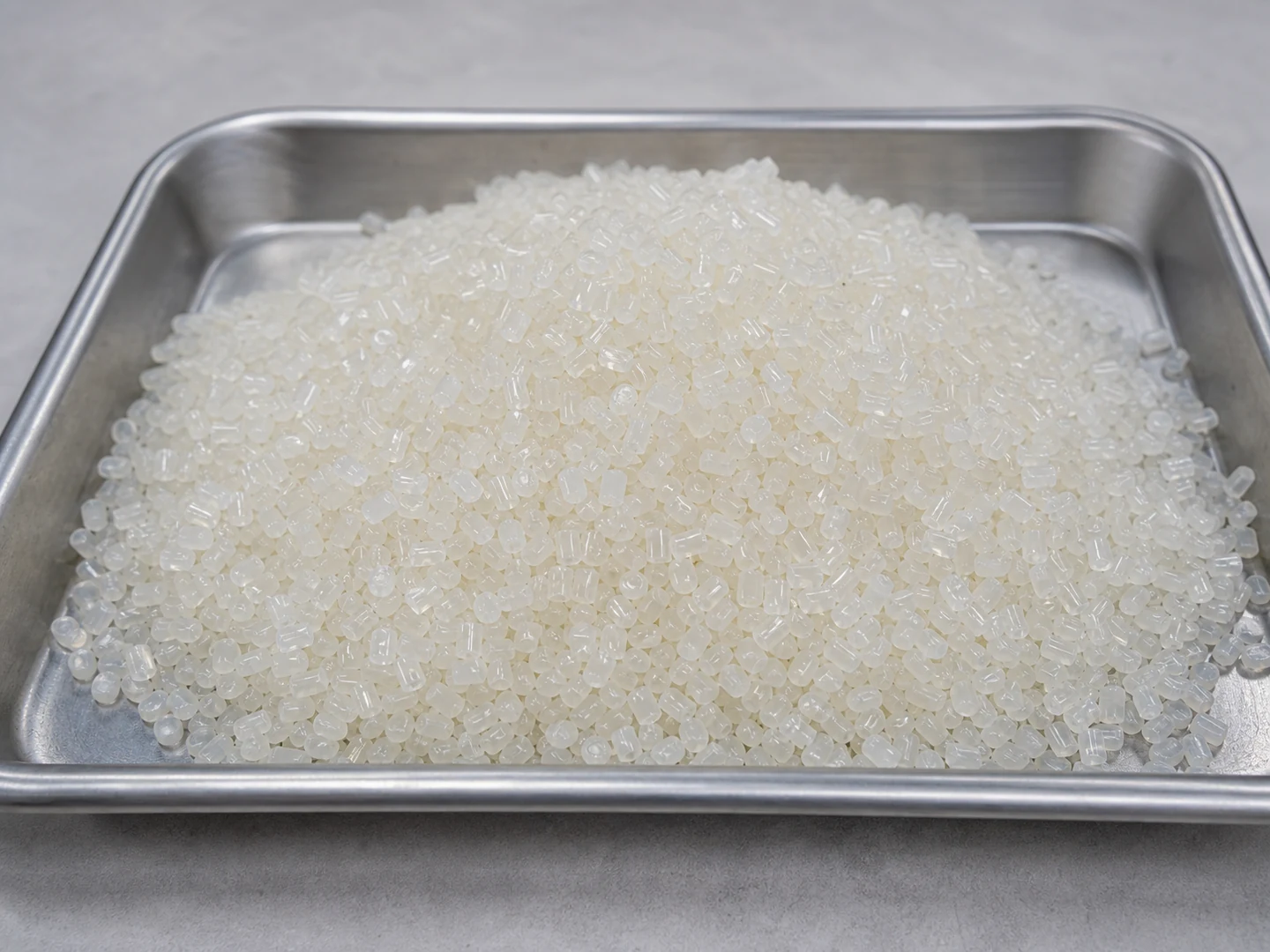
- Standard Nylon: General-purpose nylon (typically Nylon 6 or 6.6) with good wear resistance, moderate stiffness, and low moisture absorption.
- Abrasive Nylon: Filaments impregnated with abrasive grit (silicon carbide, aluminum oxide) for deburring, surface finishing, and aggressive cleaning without damaging the workpiece.
- Anti‑Static Nylon: Nylon infused with conductive carbon or metallic fibers to dissipate static charges safely in electronics manufacturing, printing, or spark-sensitive or hazardous work areas.
- Heat‑Resistant Nylon: Specialty formulations (e.g., Nylon 6.6 with glass fill) that can withstand higher intermittent temperatures, though still limited compared to metal brushes.
- Flame‑Retardant Nylon: Additive‑treated bristles that self‑extinguish to meet safety codes in building products and transportation.
Backing profiles also vary: flat metal spine, flexible plastic spine, coiled strip, or custom aluminum/steel channels for specific mounting requirements.
Nylon Strip Brush vs. Other Brush Materials
Selecting the wrong bristle material leads to premature failure or product damage. The table below compares nylon with common alternatives for industrial strip brush applications.
| Property | Nylon (PA6/PA66) | Polypropylene | Horsehair | Brass‑Coated Steel |
|---|---|---|---|---|
| Stiffness | Medium to high, adjustable with filament diameter | Soft, flexible | Very soft | Hard, aggressive |
| Moisture Absorption | Low–moderate (slight swelling in wet service) | Almost zero | High, loses stiffness when wet | None, but may rust if uncoated |
| Temperature Resistance | Continuous up to ~120 °C, intermittent higher | Up to ~80 °C | Up to ~60 °C | High, up to ~300 °C or more |
| Surface Safety | Good, non‑marring on most substrates | Excellent, extremely gentle | Excellent, soft | Poor, can scratch and abrade |
| Static Control | Can be anti‑static with additives | Generates high static | Natural, low static | Conductive (but unpredictably) |
| Chemical Resistance | Good against oils, greases, many solvents; not strong acids | Good against acids, poor against some solvents | Poor | Can corrode |
| Typical Wear Life | Long, if abrasion is dry | Moderate | Short in abusive use | Long in harsh scrub applications |
How to Choose the Right Nylon Strip Brush
Selecting a nylon strip brush requires matching bristle properties to the job, not just picking a standard size. Work through these engineering questions:
- Contact surface: Is the target material scratch-sensitive? Nylon is often a safe middle ground, but you may need a softer bristle (polypropylene) or a harder one (abrasive nylon) depending on the finish requirement.
- Type of residue: Dust, light powder, sticky liquids, or baked‑on debris? Stiffness and filament tip shape (flagged, crimped, or straight) affect cleaning efficiency.
- Machine speed: High‑speed conveyor wiping demands stiff, dense bristles to avoid bristle flutter. Low‑speed sealing may allow softer, flexible fills.
- Dry or wet operation: Wet environments can cause nylon to swell slightly, increasing bristle diameter and stiffness. If constant wet exposure is expected, verify dimensional stability or consider polypropylene.
- Temperature range: Continuous heat above 120 °C will soften nylon. Use a heat‑resistant grade only if validated for your peak temperature.
- Chemical exposure: Strong acids, oxidizing agents, or certain organic solvents can degrade nylon over time. Confirm chemical compatibility with the filament supplier.
- Static control: If you need conductive or anti‑static performance, specify an anti‑static nylon grade and ensure the metal spine is grounded.
- Documentation needs: Food‑contact applications, for example, require FDA‑ or EU‑compliant materials. Not all nylon strip brushes are food‑grade; request certification from the brush manufacturer.
Common Selection Mistakes
Even experienced engineers can oversimplify the choice. Avoid these pitfalls:
- Selecting by cost per foot alone: Cheaper nylon may have inconsistent filament diameter, leading to early failure or surface scratching.
- Ignoring bristle stiffness effects: Too stiff a brush can damage coatings, labels, or thin foils; too soft may not clean properly.
- Neglecting moisture absorption: In high‑humidity or wet service, nylon swells, which can increase pressure and binding. This swelling is often reversible but may alter performance.
- Assuming “nylon” means food‑safe: Only specific nylon grades with approved additives and manufacturing processes are compliant. Always verify.
- Overlooking static generation: Standard nylon generates substantial static when rubbing against plastics; anti‑static additives are essential in electronics or solvent environments.
- Not testing under real conditions: A lab specification sheet cannot replicate your exact dust load, humidity cycle, or mechanical vibration. Sample testing pays for itself.
When a Standard Nylon Strip Brush Isn’t Enough
Nylon excels in many general‑purpose roles, but there are clear limits:
- Sustained high heat above 130 °C: Nylon will deform and lose structural integrity. Look to metal wire brushes or silicone‑filled profiles.
- Highly abrasive environments: If the brush must continuously scrub rough surfaces (e.g., concrete, heavy rust), abrasive nylon wears faster than hardened steel bristles.
- Strong acid or alkaline baths: Chemical attack can embrittle nylon. Special chemically resistant materials like PTFE or polypropylene may be required.
- Cleanroom or sterile applications: Standard nylon can shed particles; ultra‑low‑particulate filaments may be available, but metal spines are often avoided.
- Mechanical impact loads: A strip brush used as a conveyor stop or under constant impact may need a reinforced backing or impact‑modified nylon.
- Custom material blends: When your application falls between two standard grades, a compounder can blend nylon with other polymers to achieve specific flexibility, temperature resistance, or conductivity. Request lab samples and run a pilot.
Final Takeaway: Test Before You Commit
Selecting a nylon strip brush is a materials‑and‑process exercise, not an off‑the‑shelf guess. Define your operating window (temperature, speed, chemical contact, surface finish), then map those requirements to the bristle type, filament dimensions, and spine configuration. Always test a sample strip under real‑world conditions before buying a full‑scale production batch. The right nylon strip brush will improve throughput, reduce maintenance, and protect your product.
Frequently Asked Questions
Can nylon strip brushes be used for wet cleaning?
Yes, but be aware that nylon absorbs a small amount of moisture, which can cause slight swelling and increased bristle diameter. In applications where precise clearance is critical, allow for this dimensional change or consider a low‑absorption material like polypropylene.
How do I determine the right bristle stiffness?
Stiffness depends on filament diameter, fill density, and bristle length. A larger filament diameter (e.g., 0.4 mm vs. 0.2 mm) gives a stiffer brush. The best approach is to define the required cleaning or sealing pressure and request samples with different filament diameters from a reputable supplier.
Are nylon strip brushes safe for indirect food contact?
Nylon strip brushes can be suitable for indirect food contact zones when manufactured with approved materials. However, you must verify that the specific nylon grade and any additives meet FDA or EU food‑contact regulations, and that the brush spine and hardware do not introduce contaminants.
Can nylon strip brushes dissipate static electricity?
Standard nylon is an insulator and can generate static. Anti‑static nylon grades incorporate conductive carbon or metallic fibers, which lower surface resistance enough to bleed static charges when the brush spine is grounded. Verify the required surface resistance range with your ESD coordinator.
How long do nylon strip brushes last?
Service life varies widely by duty cycle, bristle material, and environment. Under light wiping, a nylon brush can last years; in aggressive abrasive cleaning, weeks or months. Choose abrasive‑nylon if wear life is a concern, and regularly inspect for bristle loss or spine deformation.
What is the difference between Nylon 6 and Nylon 6.6 for strip brushes?
Both are common. Nylon 6 offers slightly better impact and moisture resistance; nylon 6.6 provides higher temperature capability and creep resistance. For most strip brush applications, either works, but if your process runs close to thermal limits, confirm which grade is used.
Can I bend a nylon strip brush into a curve or circle?
Yes, nylon strip brushes can be coiled or formed into arcs, but the minimum bend radius depends on the spine material and profile. Metal spines with punched teeth can usually be coiled into diameters as small as a few inches; solid plastic spines are more rigid. Discuss your shape with the brush supplier before ordering.
Which bristle material fits this job — Nylon PA, Abrasive Nylon or Flame Retardant Nylon?
| Material | Continuous temperature (°C) | Peak temperature (°C) | Water absorption | Hardness |
|---|---|---|---|---|
| Nylon PA | 93 | 121 | 0.3–9% by PA grade and conditioning | Medium to firm; filament diameter and trim length control bending force. |
| Abrasive Nylon | 120 | 150 | 0.1–1.0% | Abrasive filament; stiffness and cutting level is controlled by PA base, grit type, grit size, filament diameter and trim height. |
| Flame Retardant Nylon | 150 | 180 | 1–8% by PA grade | Set by the specific grade, reinforcement and additive package; compare with ordinary filament through sample testing. |
| AISI 316 Stainless Steel Wire | 400 | 500 | 0% | Rockwell B 70–95 depending on temper and cold work |
| AISI 304 Stainless Steel Wire | 400 | 500 | 0% | Rockwell B 70–95 depending on temper and cold work |
Figures as published by Brushtec / DuPont; Perlon; Alleima. Confirm the exact grade against the supplier datasheet before ordering.
When are Strip Seal Brushes the wrong choice for strip brush?
- Strip Seal Brushes — Use rubber lips, foam, labyrinth seals, air curtains, or rigid scrapers when pressure sealing or liquid containment is required.
- Nylon PA — The nylon family spans several grades, so heat, moisture and chemical limits should follow the selected PA resin rather than a generic nylon value.
- Abrasive Nylon — Exposed grit can change a surface finish, and high heat or aggressive chemicals can weaken the polymer carrier.
- Flame Retardant Nylon — Flame classification follows the named resin grade and test method; finished-brush classification covers the complete filament, base, holder, and mounting assembly.
What should replace Strip Seal Brushes for strip brush?
- Strip Seal Brushes — Strip brushes create a linear barrier or guide; machine-table brush plates distribute load and support products over a broad area. Closest alternative: Machine Table Brush Plates.
- Nylon PA — Compare Nylon PA with PP, PBT, PET. Change material when wet stiffness, temperature, chemical resistance, conductivity, particle shedding, or surface marking becomes the limiting factor.
- Abrasive Nylon — Compare Abrasive Nylon with PP, PBT, PET. Change material when wet stiffness, temperature, chemical resistance, conductivity, particle shedding, or surface marking becomes the limiting factor.
- Flame Retardant Nylon — Compare Flame Retardant Nylon with Standard PA6/PA66, PPS, PEEK, flame-retardant polyester. Change material when wet stiffness, temperature, chemical resistance, conductivity, particle shedding, or surface marking becomes the limiting factor.