Specification parameters decide whether a custom bead lubricant swab performs in the bay or sits in a drawer. A vague brief produces a swab that is too short for the tire you actually handle, a head that will not hold enough lubricant, a handle nobody wants to grip, or a tool that mats after a week. These are the five parameters worth fixing before you ask for a quote.
1. Overall length: reach and operator posture
Overall length settles two things at once — whether the swab can follow the full bead circumference, and whether the operator has to stoop to reach either the tire or the lubricant container.
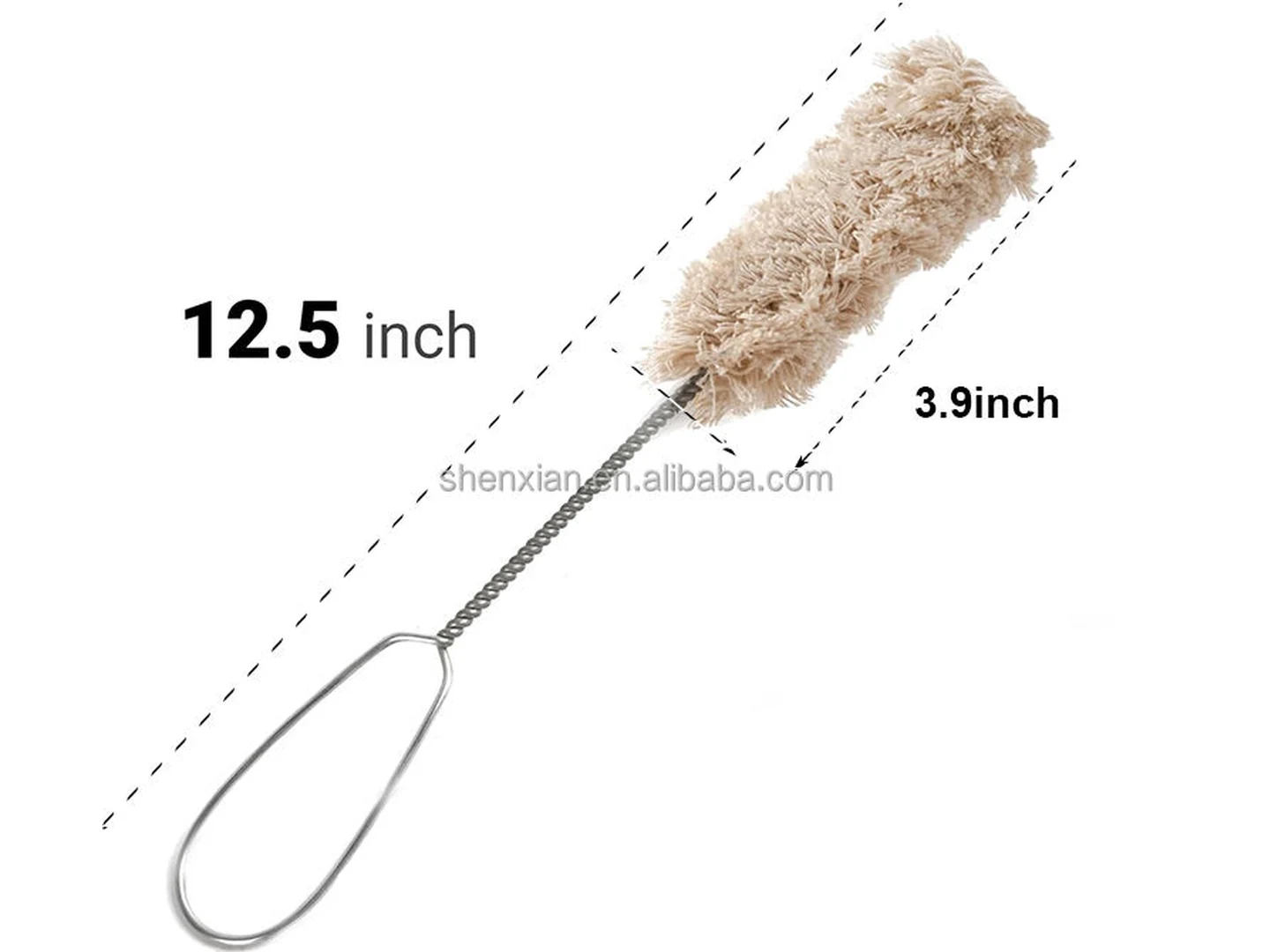
For passenger-car and light-truck work, 11.5–12 in (approx. 29–30.5 cm) is a practical starting range and the configuration most shops recognise. Larger truck, agricultural or earthmover tires need a longer stem, often 15 in (approx. 38 cm) or more. Motorcycle and small-tire work is easier with something shorter and more manoeuvrable.
Tell your supplier: the largest tire diameter you handle, whether the operator works standing or crouching, and how deep the lubricant container is — the swab has to reach into it without the operator dipping their knuckles.
2. Head material and density: absorption and even release
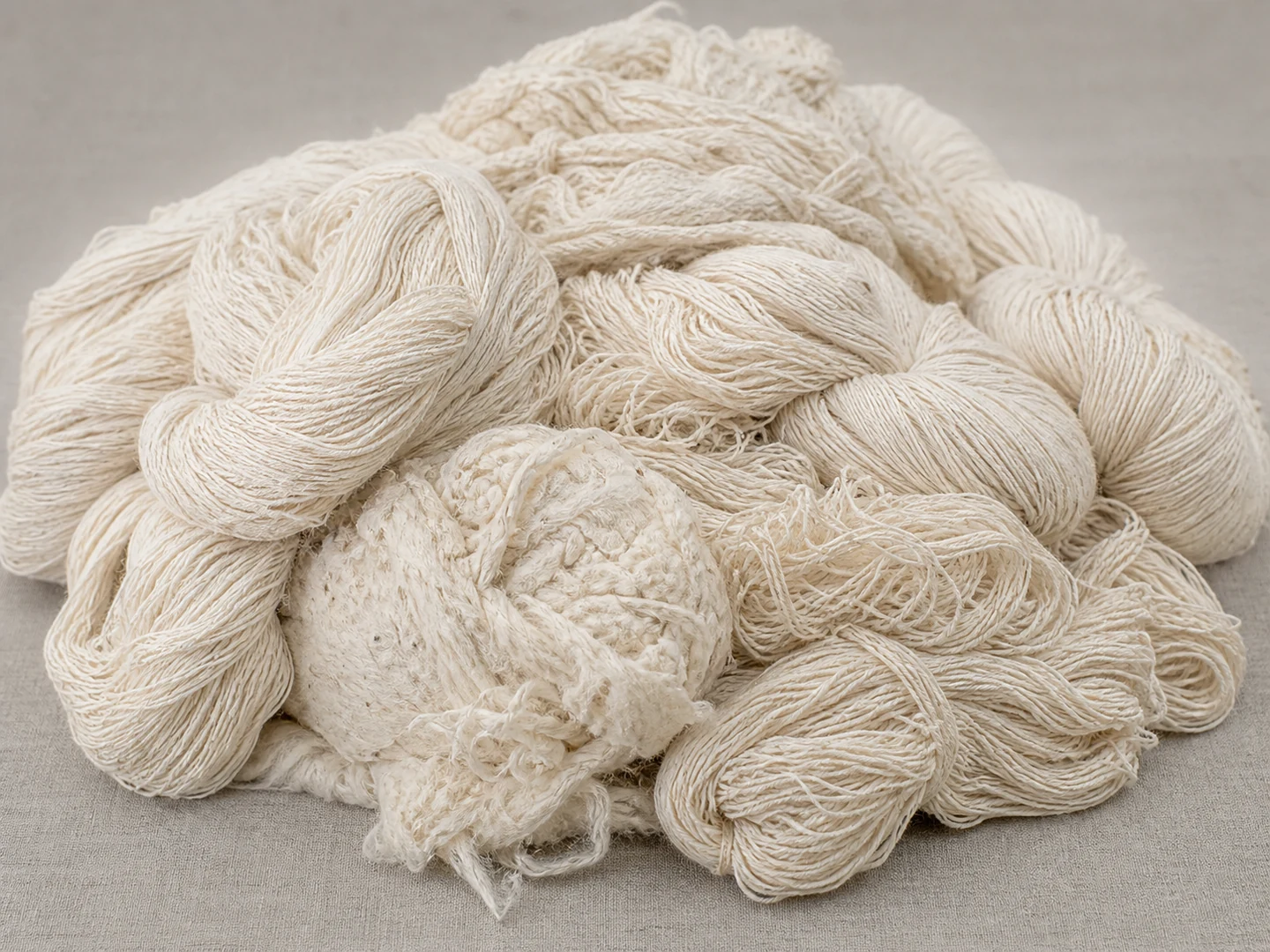
The head decides how much lubricant the swab picks up, how evenly it lets go, and how long it stays usable. Twisted cotton yarn held in the wire core is the normal construction, but “cotton” alone is not a specification — fill density is what changes the behaviour.
- Loose cotton filler — higher capacity per dip, fewer stops to reload. Suits high-volume mounting where the operator wants to cover several beads before returning to the container.
- Denser cotton pile — slower, more controlled release. Suits work where the lubricant volume has to be held down deliberately.
Cotton is not lint-free. As the head takes up lubricant it becomes heavier and mats, and fibres loosen and shed with repeated use. Treat the head as a consumable and replace it on matting, fraying or visible fibre loss rather than on a fixed calendar interval.
Tell your supplier: paste or liquid lubricant, how many tires you lubricate between reloads, and how much drip you can tolerate.
3. Stem material: flexibility and service life
The stem is the twisted metal core between head and handle, and it decides both flexibility and how long the swab survives the bay.
Twisted-wire construction has one property worth understanding: the head is held mechanically by the twist, not by adhesive, so there is no glue line to fail when the head is saturated with lubricant. The same twist lets the stem be bent to reach a working angle and hold it.
- Galvanized steel wire — the standard, and adequate for a normal dry bay.
- Stainless steel wire — for humid bays and water-based lubricants where a zinc coating will not last.
- Coated wire — an extra barrier where splash and standing fluid are routine.
Tell your supplier: whether the bay is humid or wet, whether the stem needs to be bent and how often, and what the lubricant chemistry is.
4. Handle design: grip and working life
The handle looks like the simplest part and is the one operators complain about first. Wood is the common default. Beyond it, the useful options are a moulded plastic or rubber grip for lower weight, a TPE over-mould where the tool is held for long stretches, a metal handle for heavy-duty service, and a hang hole where the swab lives at the station rather than in a drawer.
Handle length interacts with overall length: some configurations get their reach from a long stem and a short handle, others from a longer handle. Say which you prefer, because the balance in the hand is different.
Tell your supplier: how long the tool is held continuously, how it is stored, and whether any hygiene or material restriction applies in your facility.
5. Customization: “exactly right” versus “good enough”
The four parameters above cover a standard swab. Volume, demanding conditions or branding are what justify going further.
| Area | What can be specified |
|---|---|
| Head | Width and length, profile (cylindrical, flat, tapered, contoured), filler density, colour coding by station |
| Stem | Length, stiffness, galvanized / stainless / coated wire |
| Handle | Wood, plastic, metal or TPE over-mould; straight or contoured; laser or hot-stamp marking |
| Packaging | Bulk, individual bag, kit, retail display, private label or neutral |
Tell your supplier: estimated annual volume, whether branding is required, and what the end-user packaging has to look like.
Turning a vague requirement into a specification
The expensive part of a custom swab enquiry is rarely the price negotiation. It is converting “I need a good swab” into something a factory can build. Answer these five and the quote comes back as a product rather than a guess.
| Parameter | What you need to define |
|---|---|
| Overall length | Which tire sizes; operator height and working posture |
| Head material and density | Paste or liquid; how many tires between reloads |
| Stem material | Humid bay? Does the stem need to bend? |
| Handle design | How long is it held? Anti-slip or hang feature needed? |
| Customization | Branding? Special packaging? Annual volume? |
For the vocabulary used in these specifications — fill, trim, ferrule, twisted-in-wire — the American Brush Manufacturers Association glossary is a useful reference when writing the enquiry.
Frequently Asked Questions
What is the difference between a swab and a brush applicator?
A swab carries lubricant inside an absorbent head and lays it down as the head is drawn across the bead. A bristle applicator carries lubricant on the outside of the filament, which tends toward uneven coverage and over-application. For paste and liquid mounting lubricants, the absorbent head is the more controllable of the two.
Can one swab handle both paste and liquid lubricants?
Yes, with the head density matched to the thicker of the two. A head chosen for paste will still carry liquid; a head chosen for thin liquid may release paste too slowly. If you run both, specify the paste.
How do I know what head width I need?
The head should cover the bead and rim-flange contact band in one pass without reaching past the area the service procedure names. Approximately 2.5 in (6.35 cm) is a common reference width. If your bead band is wider, ask for a wider head rather than making two passes.
How should the swab be stored between uses?
Keep it covered and clean, let the head air-dry, and do not use the same swab for different lubricants. Do not soak it in solvent to extend its life — replace it when the head mats, frays or stops releasing evenly.
Which lubricants should be avoided?
Tire Review’s mounting-lubrication guidance warns against petroleum-based oils and grease, which attack tire rubber; against solvent-based products, for rubber damage and vapour hazard; and against silicone types where rim slippage is a concern. Follow the tire, wheel and lubricant manufacturer instructions for the procedure you actually run, and the training and equipment requirements in OSHA 1910.177, Servicing multi-piece and single piece rim wheels.
Which plant fiber fits this job — Cotton Yarn, Tampico Fiber or Mexican White Tampico Fiber?
| Fiber | Continuous temperature (°C) | Peak temperature (°C) | Water absorption | Hardness |
|---|---|---|---|---|
| Cotton Yarn | 80–100 | 130–150 | 7–12% | — |
| Tampico Fiber | 70–90 | 110–130 | 10–18% | — |
| Mexican White Tampico Fiber | 100 | 130 | high | Medium natural fiber stiffness with good liquid-carrying feel. |
| Sisal Fiber | 70–90 | 110–130 | 10–20% | — |
| Mountain Palm Fiber | 100 | 130 | moderate | Naturally variable, generally durable and flexible with a coarse scrubbing character. |
When are Handheld Detail Brushes the wrong choice for bead lubricant swab?
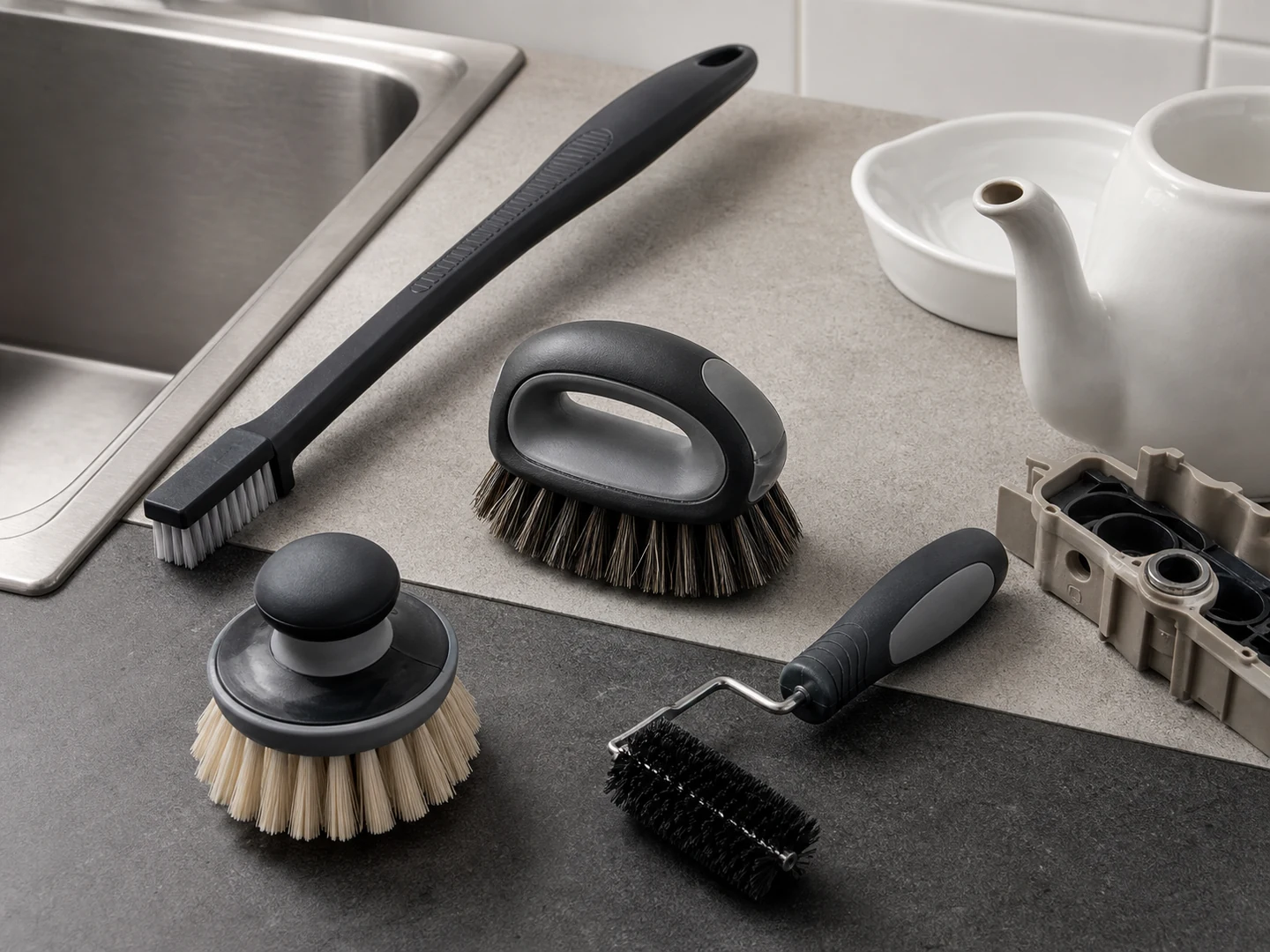
- Handheld Detail Brushes — Use a tube brush, powered brush, scraper, wipe, sponge, or vacuum when the target is internal, heavily bonded, or highly delicate.
- Cotton Yarn — Lint, moisture retention, slow drying, fiber contamination and exposed wire make cotton unsuitable for some cleanroom, food or precision uses without validation.
What should replace Handheld Detail Brushes for bead lubricant swab?
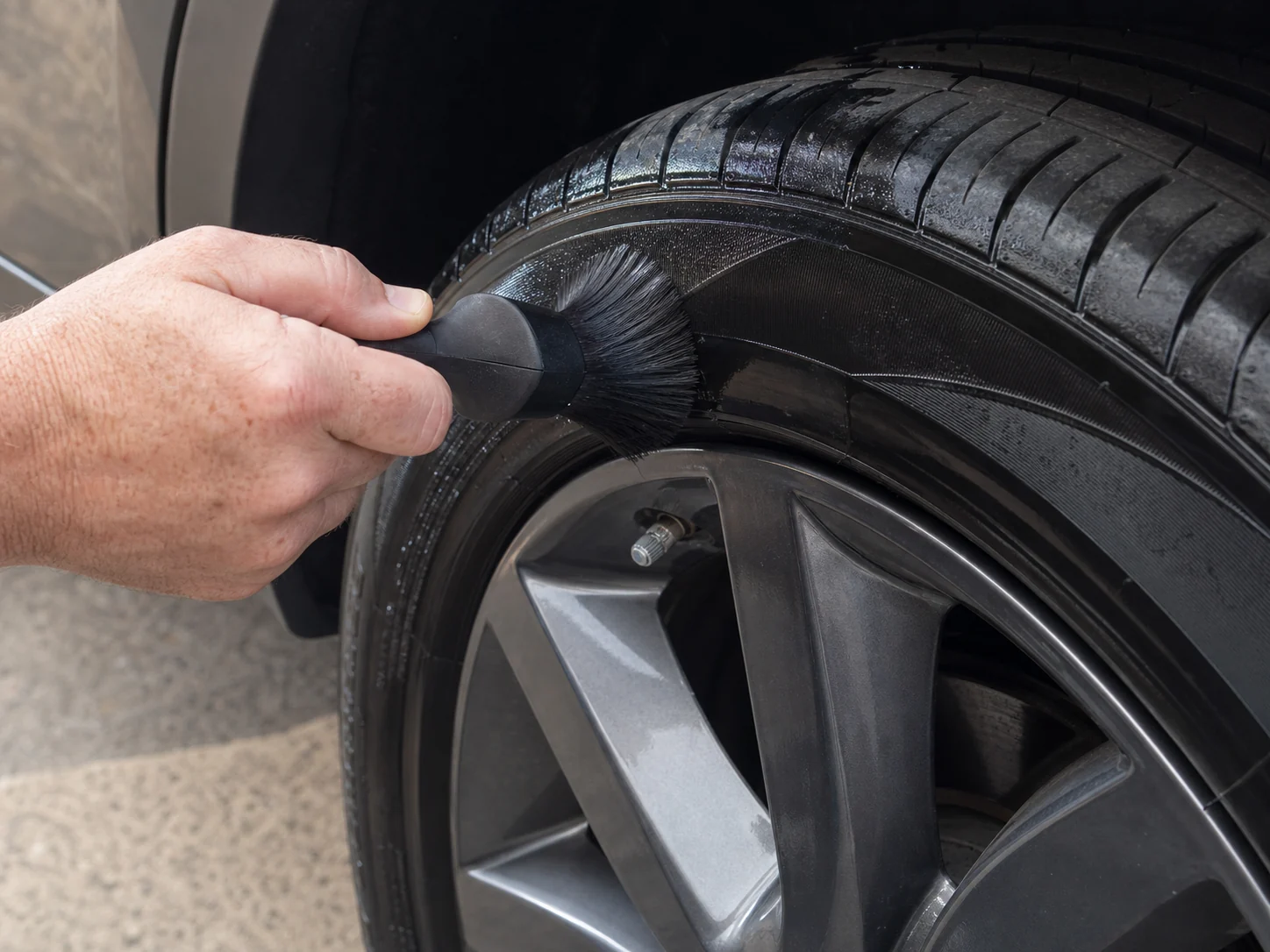
- Handheld Detail Brushes — Handheld detail brushes cover general precision cleaning; auto-detailing brushes impose tighter controls for painted, polished, leather, display, and trim surfaces.
- Cotton Yarn — Compare Cotton Yarn with Microfiber, wool, felt, PVA sponge. Change material when wet stiffness, temperature, chemical resistance, conductivity, particle shedding, or surface marking becomes the limiting factor.