
Custom Cleaning Brush
Bead Lubricant Swab – Cotton Tire Mounting Applicator for Bead Lube
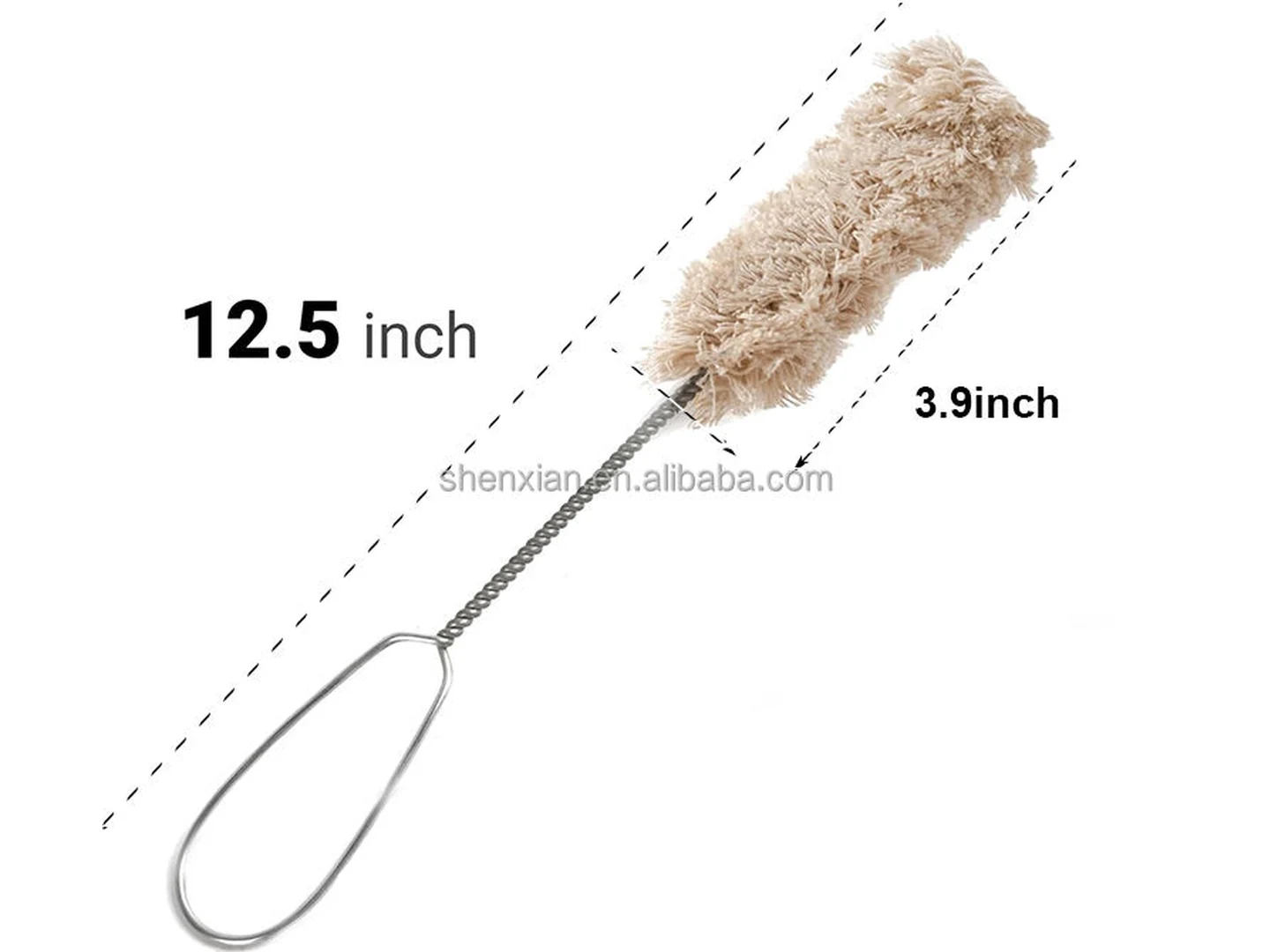
Custom bead lubricant swab with a cotton head, twisted-wire stem and wood handle for applying tire-mounting lubricant to the bead and rim.
Small brush
500 pcs
Minimum order
Held in one hand: tube, bottle, detail and swab brushes — including long-handled ones with a small head.
Production lead time, once the specification is confirmed
- Up to 500 pcsWithin 7 days
- 501–50,000 pcsWithin 14 days
- Over 50,000 pcsWithin 21 days
Peak season can extend these times; the shipping date is confirmed in writing with your quotation. Sampling and shipping are quoted separately.
A shop-grade cotton swab for applying tire-mounting lubricant to the tire bead and the rim contact area, reducing installation friction and helping protect the bead during tire service.
What can this brush do for you?
Applies lubricant evenly to the bead area
The dense cotton head holds and releases a controlled amount of bead lubricant, coating the bead contact area in a consistent pass. This helps avoid dry spots while reducing unnecessary puddling and wasted product.
High absorbency holds more lubricant
The loose cotton filler absorbs and retains a useful volume of lubricant, so the operator dips less often. That matters on repeated mounting work where steady pickup and release keeps the cycle time predictable.
Reaches the full bead circumference
The twisted-wire core and slender profile let the swab follow the bead contour around the tire. On passenger-car tires or light-truck wheels, the head keeps contact as the operator works around the bead.
Controlled application with less splashing
The cotton head gives a broad, absorbent contact area that transfers lubricant without the spray pattern of an atomizing applicator. Cotton is not lint-free: after repeated use, and especially once the head is saturated, heavier and matted, fibers can loosen and shed. Replace the swab when fraying, matting, contamination, or visible fiber loss becomes noticeable.
Works with paste and liquid mounting lubricants
The head can be configured for standard tire-mounting pastes and for liquid bead lubricants. Head density is matched to lubricant viscosity so the swab picks up enough product without releasing more than the process needs.
What is a Bead Lubricant Swab?
A bead lubricant swab is a hand tool used in tire mounting and demounting to apply bead lubricant to the tire bead and the wheel areas the service procedure specifies. It is a twisted-wire stem carrying a cotton head that holds lubricant and transfers it to the mating surfaces. The same tool is also called a tire mounting swab, a bead lube applicator, or a bead lube swab.
During tire service the swab places mounting lubricant before the bead is moved over and seated on the wheel. The lubricant temporarily lowers friction so the bead can move with less mounting stress.
Unlike a scrub brush, this is not a tool for removing rust, scale, brake dust, or heavy contamination. It is a lubricant applicator for mounting and demounting work.
Technical Specifications
Swab dimensions, stem, head density and handle are all adjustable to fit your tire service workflow. The figures below are a common reference configuration, not a fixed catalogue item.
| Parameter | Typical value / options |
|---|---|
| Head material | Cotton, loose or denser filler depending on the lubricant pickup and release you need |
| Handle material | Wood; custom plastic or other grip options available |
| Stem material | Twisted galvanized steel wire; stainless or coated wire available for custom orders |
| Overall length | 11.5–12 in (approx. 29–30.5 cm) reference range; custom lengths available |
| Head width | Approx. 2.5 in (approx. 6.35 cm) reference size; custom widths available |
| Weight | Approx. 3 oz (approx. 0.1 kg) for a common 12-inch reference configuration |
| Head profile | Cylindrical with a rounded end; custom tapered or contoured profiles available |
| Stem construction | Twisted-wire core for flexibility and mechanical retention of the cotton head |
| Brush type | Custom Handheld Detail Brushes |
| How it is driven | Hand-guided |
| Cleaning target | tire mounting and demounting in automotive and commercial vehicle service |
| Surface or part | tire bead, bead heel and toe, rim barrel, drop centre, and safety hump |
| Residue or debris | bead lubricant paste and liquid mounting lubricant applied rather than removed |
| Mounting / connection | Fixed |
Where does this brush work best?
- Tire mounting and demounting in automotive and commercial vehicle service shops.
- Applying an approved bead lubricant to tire beads and the wheel contact areas the service procedure specifies.
- Passenger-car and light-truck tire service where controlled hand application is preferred.
- Shops running paste or liquid mounting lubricants that need a reusable hand applicator.
- Service bays where controlled coverage and reduced product waste matter.
How do I choose the right one?
Start with tire size and working reach
Choose an overall length and head size that let the operator reach the whole working area without awkward posture. Larger commercial tires call for a longer stem or a bigger head; smaller tires are easier to work with a compact applicator.
Match head density to lubricant viscosity
Loose cotton filler carries more lubricant per dip. A denser head releases more slowly and more controllably. Match the density to the paste or liquid you actually run.
Choose handle length for comfort and control
The overall length has to let the operator reach both the bead area and the lubricant container without stooping. Handle shape and grip can be customized for repetitive shop use.
Consider stem flexibility
The twisted-wire stem can be built to different stiffness levels. Moderate flexibility helps the swab follow curved tire and wheel geometry; a stiffer stem gives the operator more direct control.
When to use a different applicator
Use another applicator if your approved lubricant system or tire-changing procedure specifies a brush, pad, spray, or dedicated dispenser. Use a bead lubricant swab when a hand-guided absorbent cotton applicator is what the specified process calls for.
Can I customize this brush?
Bead lubricant swabs are configurable because tire sizes, lubricant viscosity, container geometry and operator preference all vary. Send the tire size range, lubricant type, preferred overall length, head size and handle style; a photo of the working setup helps confirm the configuration.
- Head size and profile — length, width, cylindrical, rounded, tapered or contoured
- Head material and density — cotton grade, filler density and absorbency level
- Stem material and flexibility — galvanized steel, stainless steel, coated wire, different stiffness levels
- Handle style — wood, plastic, ergonomic grip, hanging hole, or molded branding
- Colour and marking — identification coding or custom handle marking where practical
- Packaging — bulk, individual bag, kit, or project-specific packing
If your project needs material documentation, inspection support or third-party testing, we can arrange it during customization.
When is a bead lubricant swab – cotton tire mounting applicator for bead lube worn out rather than just dirty?
How do I know the swab head is the right size?
The head should cover the intended bead-contact area efficiently without making the applicator hard to control. For a custom order, give the tire size range and the working area you want the head to cover.
How often should I replace the swab?
Replace it when the cotton is heavily matted, contaminated or frayed, when it starts shedding noticeably, or when the head no longer picks up and releases lubricant consistently. Replace it as well if the stem is badly bent or corroded, or no longer gives the operator adequate control.
Can this swab be used with any lubricant?
No. Use only a tire-mounting lubricant approved for the tire, wheel and service procedure. If the chemistry or viscosity is unusual, confirm compatibility with the cotton head, wire stem and handle before ordering.
How can I verify lubricant coverage before mounting?
Follow the tire and wheel service procedure and confirm visually that the specified contact area carries a consistent coating with no dry spots and no unnecessary excess. If the swab leaves gaps or releases too much, change the head size, the density, or the application method.
Does the swab need special cleaning between uses?
Keep it in a clean, covered area between uses and avoid cross-contaminating different lubricants. Do not try to extend service life indefinitely with aggressive solvent washing. Once the cotton is contaminated, matted or shedding, replace the applicator.
When is a bead lubricant swab not the right tool?
It is not a rust-removal or wheel-cleaning brush. If the bead-seat area needs corrosion or residue removed, use the cleaning method specified for that wheel before lubrication. If the tire changer, the lubricant supplier, or the tire or wheel manufacturer specifies another application method, follow that instead.
Guides that go deeper on this
Bead Lubricant Swab: Common Mistakes and How to Avoid Them
Read this guideGuideCustom Bead Lubricant Swab: Five Specs You Must Define
Read this guideGuideTire Lubricant Swab Head: Cotton or Synthetic Fiber?
Read this guideGuideWhy Bead Lubrication at Tire Mounting Cuts Returns
Read this guideGuideTire Brushes for Washing, Scrubbing and Retreading: Which Fill?
Read this guideGuideTire Mold Cleaning Brush: Which Wire Clears Vents Safely?
Read this guideCustom Manufacturing RFQ
Describe Your Application
Please share the brush dimensions, working area, residue type, material direction, quantity, and a drawing or photo for quotation.
Drawing or photo optional — it speeds things up, it does not gate the enquiry.
Custom Brush RFQ
Send Your Brush Project
Upload a drawing, product photo, or sample photo and provide the core dimensions and cleaning conditions.
“We need a brush to remove wet residue from a stainless steel conveyor, about 800mm wide. The current brush wears quickly. We can send photos.”
“We sell drinkware and need a cleaning brush to include with the product. Quantity around 5,000 pieces.”