
Custom Cleaning Brush
Balance Brush
Soft goat-hair balance brush for removing powder, dust, sample particles, and lint from balance pans, draft-shield chambers, and weighing surfaces.
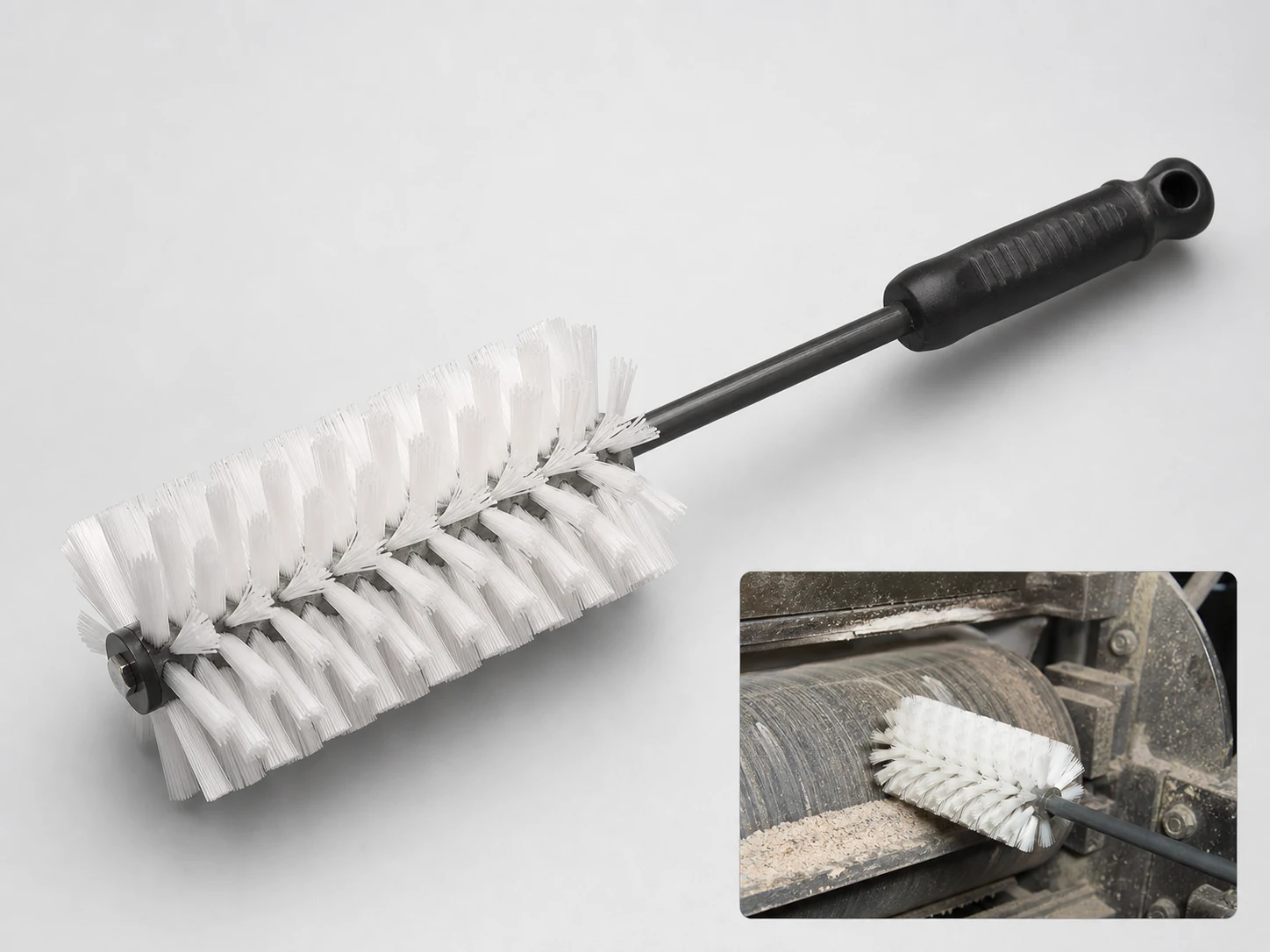
Medium brush
100 pcs
Minimum order
Worked with two hands or on a pole: chimney, gutter and pond-filter brushes, discs, cups and tank brushes.
Production lead time, once the specification is confirmed
- Up to 100 pcsWithin 7 days
- 101–5,000 pcsWithin 14 days
- 5,001–50,000 pcsWithin 21 days
- Over 50,000 pcsConfirmed with your quotation
Peak season can extend these times; the shipping date is confirmed in writing with your quotation. Sampling and shipping are quoted separately.
A soft hand-guided goat-hair cleaning brush for dry removal of powder, fine dust, sample particles, and lint from laboratory balance pans, draft-shield chambers, corners, and accessible weighing surfaces. Available in round and flat head configurations matched to the reach, clearance, and surface geometry of your balance.
What can this brush do for you?
Lifts fine powder without grinding it into the pan
Goat hair has fine, tapered tips that contact the surface gently and collect loose particles instead of pressing them deeper. There are no stiff plastic filament ends or metal bristles to leave marks on polished stainless pans, anodized aluminum, glass draft shields, or coated weighing surfaces.
Reaches corners, tracks, and tight draft-shield clearances
The compact head, standard 19 mm round profile, and narrow flat widths of 13 to 50 mm allow the operator to work between the pan support, slider tracks, door edges, and chamber corners without touching surrounding surfaces. A working brush length of 30 to 50 mm keeps control close to the target area.
Removes sample residue between weighings
Powder left from a previous sample can shift the next reading, affect tare results, and carry into later batches. A quick dry sweep with the brush removes loose particles before they become a cross-contamination or measurement drift problem.
Introduces no moisture or cleaning agent into the weighing area
The brush is used dry. It does not add water, solvent, or lint from paper towels to the balance. This keeps the weighing space dry and reduces the chance of clumping fine powder or leaving cleaning residue behind.
Provides a dedicated tool for routine powder handling
The lightweight wood handle and metal ferrule give enough control for repeated use between sample transfers. Handles can be color-coded or marked per substance group, so each weighing process keeps its own brush.
What is a Balance Brush?
A Balance Brush is a short-headed hand-cleaning tool designed for dry particulate removal on analytical and precision balances. It uses natural goat hair set into a metal ferrule and a wood handle. The head is intentionally compact so the operator can clean inside a draft shield without contacting the pan, load cell cover, or glass walls.
In use, the operator sweeps loose powder from the center of the pan outward, then clears the chamber floor, corners, slider tracks, and any accessible weighing surfaces. Light, short strokes work better than heavy scrubbing because the goal is to lift particles rather than press them into the surface.
This is not a wet-cleaning, disinfection, or chemical decontamination tool. Sticky, oily, baked-on, or chemically bonded residues should be removed first with a compatible solvent wipe, and the surface should be dry before using the brush. Do not use the brush as a substitute for validated cleaning procedures in regulated environments.
Technical Specifications
| Parameter | Value / Option |
|---|---|
| Overall length | 140–180 mm; custom lengths available on request |
| Working brush length | 30–50 mm from ferrule to tip |
| Head configuration | Round or flat |
| Round head diameter | 19 mm standard; other diameters available |
| Flat head width | 13–50 mm |
| Fill material | Natural goat hair, soft grade for fine dust pickup |
| Fill density | Selected for powder particle size and surface sensitivity |
| Ferrule | Crimped metal ferrule anchoring fill to handle |
| Handle | Wood, smooth-sealed for balance and grip |
| Operating temperature | -20°C to 100°C |
| Recommended use | Dry removal of powder, fine dust, sample particles, and lint |
| Not recommended for | Wet residues, oils, tacky deposits, or aggressive solvents without compatibility review |
| Brush type | Custom Handheld Detail Brushes |
| How it is driven | Hand-guided |
| Cleaning target | analytical and semi-micro balance, chemical qc weighing station, and sample preparation area cleaning |
| Surface or part | pans, chambers, corners, tracks, glass, walls, door edges, and wood |
| Residue or debris | powder, particles, dust, fine powder, lint, hair, granules, and fine dust |
| Mounting / connection | Fixed |
All dimensions are standard ranges. Final head shape, length, fill density, and handle configuration are matched to the balance model and chamber clearance during order confirmation.
Where does this brush work best?
- Analytical and semi-micro balances with round or square pans where spilled powder must be removed before the next weighing.
- Pharmaceutical, food, cosmetic, environmental, and chemical QC weighing stations where fine powders, granules, or dust accumulate around the pan.
- Inside glass or acrylic draft-shield chambers, including side walls, bottom track, door edges, corners, and the pan support area.
- Flat top-pan balances where a flat head 25 to 50 mm wide clears the platform in a few controlled strokes.
- Sample preparation areas where powder from spatulas, scoops, or transfer vessels lands on accessible bench surfaces near the balance.
How do I choose the right one?
Match the head shape to the surface
A round head works well on circular pans, recessed weighing areas, and corners. A flat head covers square or rectangular platforms, chamber floors, and wider flat surfaces more efficiently.
Check the draft-shield clearance
Measure the vertical opening between the raised door and the pan. Select a working brush length that enters the space without hitting the door, while the overall length should allow comfortable operator reach into the chamber.
Choose the fill for the particle type
Fine, light powders respond to softer, denser goat hair fill that collects particles without flicking them into the air. Coarser granules or heavier sample particles may work better with a shorter trim and slightly firmer packing.
Separate brushes by substance class
Use a dedicated or color-coded brush for each material family when cross-contamination risk is high. This is especially important for potent, hazardous, or regulated compounds.
When this brush is not enough
Wet, oily, sticky, or baked-on residues require a solvent-compatible wipe or another cleaning step before dry brushing. Strong acids, alkalis, and aggressive solvents can degrade natural goat hair, so choose a chemically resistant brush when those agents are part of routine cleaning. For hazardous powders that cannot be released into the air, a disposable swab or vacuum with a HEPA filter may be the safer choice.
| Situation | Suggested configuration |
|---|---|
| Round balance pan | Round head, 19 mm diameter |
| Square or rectangular platform | Flat head, width matched to pan size |
| Low draft-shield clearance | Short working fill, approximately 30 mm |
| Deep chamber requiring more reach | Longer handle within the 140–180 mm range or custom length |
| Frequent fine powder spills | Soft, dense goat hair fill |
| Wet or sticky residue | Not a brush-first job; use a solvent wipe and dry the surface first |
Can I customize this brush?
Balance brushes are configured around the balance they clean. To define a custom configuration, provide the balance make and model, pan diameter or platform dimensions, internal draft-shield height and door clearance, particle type and particle size, any special cleanliness requirements, and preferred color or identification needs.
- Head shape and size – round, flat, tapered, chisel, angled, or custom geometry
- Working length, head width or diameter, and fill density
- Fill grade and softness matched to particle size and surface sensitivity
- Overall handle length, wood type, grip diameter, hanging hole, or ergonomic shape
- Ferrule material and plating
- Handle marking – logo, part number, color bands, or laser marking for substance segregation
- Packaging – bulk, individual sealed bag, cleanroom-compatible packaging, or kit configuration
If your project requires material documentation, inspection, third-party testing, or other project-specific quality support, we can assist with those requirements during the customization process.
How long does a balance brush last, and how is it cleaned between runs?
How do I clean the brush between uses with the same powder?
Tap the handle and ferrule over a waste container to release loose powder. If washing is needed, use mild detergent and warm water, rinse thoroughly, and allow the brush to air dry completely before using it again. Never store the brush damp, and follow site safety procedures for hazardous or potent compounds.
Will natural goat hair shed onto the weighing pan?
A properly made goat-hair brush should not shed under normal dry use. Inspect the head under light before each use and remove any loose hairs with a clean pair of forceps. If you see repeated hair loss, clumping, or matting, replace the brush before it becomes a contamination source.
Does this brush eliminate static charge on powders?
No. The brush removes loose particles but does not neutralize static charge. If static is causing powders to jump or cling to the draft shield, use an ionizer, anti-static mat, or appropriate grounding in addition to the brush.
Can I use the brush on a hot balance or near heat sources?
The standard operating range is -20°C to 100°C. Brief contact with surfaces inside that range is acceptable. Do not leave the brush on a hot surface, expose it to open flame, or use it above 100°C; the wood handle and natural hair can deform or degrade.
Does this brush sterilize or decontaminate the balance?
No. It removes loose dry particulates only. Sterilization, disinfection, and validated decontamination require separate procedures and should not be performed with this brush. Do not autoclave the brush; the wood handle and natural hair are not autoclave-compatible.
When should I replace the brush?
Replace it when the fill becomes matted or clumped, the ferrule is loose, the handle is split or cracked, visible hair loss continues after cleaning, or the brush retains color or odor from a previous powder. A worn brush introduces more contamination risk than it removes.
Guides that go deeper on this
We have not written a guide specific to this one yet. The material that covers selection, filament, dimensions, maintenance and sourcing is collected in the technical resources library.
Custom Manufacturing RFQ
Describe Your Application
Please include the main sizes, application, residue, preferred material, interface, quantity, and any drawing or sample available.
Drawing or photo optional — it speeds things up, it does not gate the enquiry.
Custom Brush RFQ
Send Your Brush Project
Upload a drawing, product photo, or sample photo and provide the core dimensions and cleaning conditions.
“We need a brush to remove wet residue from a stainless steel conveyor, about 800mm wide. The current brush wears quickly. We can send photos.”
“We sell drinkware and need a cleaning brush to include with the product. Quantity around 5,000 pieces.”