
Custom Cleaning Brush
Ceiling Fan Cleaning Brush
Long-reach ceiling fan cleaning brush with U-shaped microfiber head and edge filaments for both-side blade dusting.
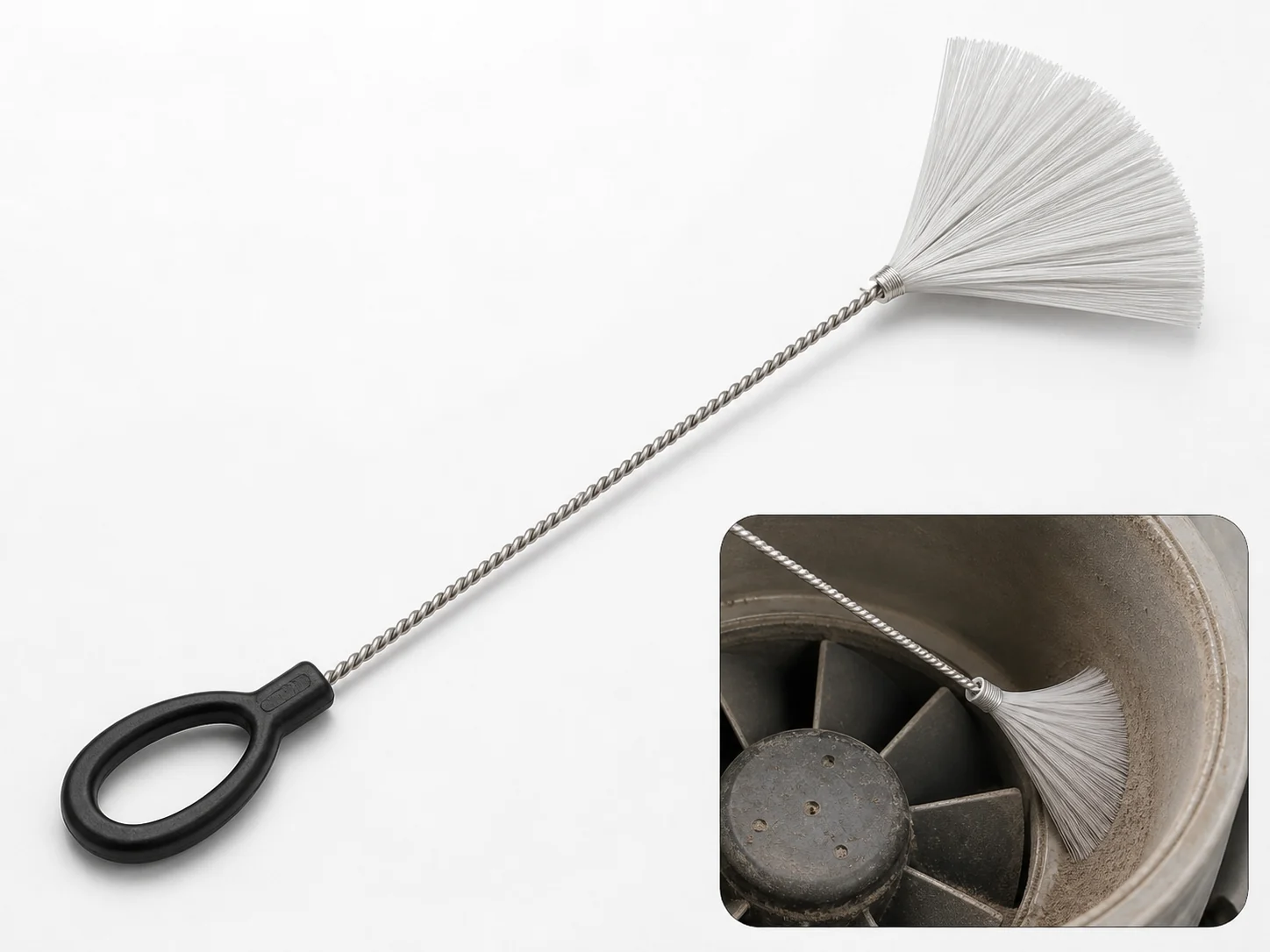
Medium brush
100 pcs
Minimum order
Worked with two hands or on a pole: chimney, gutter and pond-filter brushes, discs, cups and tank brushes.
Production lead time, once the specification is confirmed
- Up to 100 pcsWithin 7 days
- 101–5,000 pcsWithin 14 days
- 5,001–50,000 pcsWithin 21 days
- Over 50,000 pcsConfirmed with your quotation
Peak season can extend these times; the shipping date is confirmed in writing with your quotation. Sampling and shipping are quoted separately.
A long-reach ceiling fan cleaning brush with a blade-straddling microfiber head and edge filaments that captures dust from both sides of fan blades and other elevated flat surfaces without ladders or airborne redistribution.
What can this brush do for you?
One Pass Cleans Both Sides of the Blade
The U-shaped head slides over the fan blade so the microfiber contact surfaces press against both the top and bottom at the same time. When you pull the brush along the blade, you remove the visible top dust and the hidden underside dust in the same motion. Maintenance crews finish a fan in less than half the time of wiping each side separately.
Dust Stays on the Brush, Not in the Air
Microfiber holds fine dust electrostatically, while the polyester/nylon blend edge filaments trap loosened particles before they drift into the room. This is the practical difference in hotel lobbies, restaurants, and showrooms where falling dust is as much a problem as the dust on the blade.
Floor-Level Reach for High Ceilings
The handle extends far enough to place the cleaning head on blades at ceiling height while the operator keeps both feet on the floor. Fewer ladder moves means lower fall risk and faster room turnover for crews working through a building.
Soft Contact Protects Finished Blades
The contact surfaces are microfiber and fine synthetic filaments — no exposed metal, stiff bristles, or abrasive backing. Painted, laminated, and lacquered fan blades keep their finish, which matters for decorative fans in hospitality and residential settings.
Replaceable Sleeve Keeps the Tool Working
When the microfiber cover loads with dust, the operator removes it, launders it, and puts it back on the frame, or swaps in a fresh sleeve. The handle and head frame remain in service, so the cost per cleaning stays low and the tool is ready for the next room without waiting for a full brush replacement.
What is a Ceiling Fan Cleaning Brush?
A Ceiling Fan Cleaning Brush is a dry-dusting hand tool built on a long handle that brings a blade-straddling head to ceiling height without a ladder. The head typically has a split or U-shaped frame that slides over the fan blade, with contact media on the inner surfaces facing the blade top and bottom. An outer microfiber sleeve or filament border catches dust that lifts off the edges.
In use, the operator stands below the fan, positions the open slot over the blade near the motor housing, and pulls the brush outward along the blade. Loose dust transfers to the media and stays there; the edge filaments sweep particles that would otherwise escape sideways. When the blade is done, the same head can be used flat against tall cabinet tops, beams, light coves, or HVAC registers.
The brush is designed for routine removal of dust, lint, and light surface dirt. It is not a wet mop, not a grease cutter, and not a replacement for vacuuming heavy debris. If blades have baked-on oil or thick caked dust, those deposits should be handled with a separate cleaning step before this brush is used for maintenance dusting.
Technical Specifications
Dimensions and contact materials can be configured to match your fan blade width, ceiling height, and surface finish. The ranges below represent standard production options; project-specific values are confirmed from your measurements.
| Parameter | Value / Options |
|---|---|
| Head configuration | U-shaped / split-blade frame with contact on both inner faces |
| Head coverage width | 105–430 mm, selected to match blade width |
| Working head length | 240–430 mm (depth of contact along blade) |
| Blade thickness capacity | 10–40 mm standard; wider slot available on request |
| Handle / overall reach | 660–2900 mm, fixed or telescoping sections |
| Grip / body diameter | 25–35 mm, round or ergonomic profile |
| Primary contact materials | Microfiber; Polyester / Nylon Blend Filament; Nylon PA |
| Sleeve attachment | Elastic cuff, hook-and-loop closure, drawstring, or clip system |
| Handle material | Lightweight aluminum, fiberglass, or steel core with corrosion-resistant finish |
| Head pivot | Fixed, 180° swivel, or multi-position locking (optional) |
| Sleeve washability | Machine washable; hang dry; no fabric softener |
| Operating environment | Dry interior dusting on painted, laminated, coated, or natural wood surfaces |
| Brush type | Custom Handheld Detail Brushes |
| How it is driven | Hand-guided |
| Cleaning target | commercial ceiling fan, residential and multi-family maintenance programs covering apartment, and elevated flat surface cleaning |
| Surface or part | ceilings, edges, elevated flat surfaces, frames, high shelves, light fixtures, slots, and housings |
| Residue or debris | dust, grease, particles, lint, loose dust, and oil |
| Mounting / connection | Elastic cuff, hook-and-loop closure, drawstring, or clip system |
Where does this brush work best?
- Commercial ceiling fans in hotels, lobbies, restaurants, offices, retail stores, and event spaces where blade dust is visible to guests.
- Residential and multi-family maintenance programs covering apartments, common areas, and model units with fans at 8–12 ft ceiling heights.
- Building service contractors who clean fans as part of recurring janitorial routes and need a ladder-free, repeatable tool.
- Elevated flat surfaces: tops of tall cabinets, wardrobes, room dividers, beam ledges, high shelves, and light fixture tops.
- Kitchens and food-service areas where routine dust removal prevents buildup before it mixes with airborne grease (not for active grease removal).
- Schools, churches, theaters, and other high-ceiling spaces where ladders are disruptive or restricted during occupied hours.
How do I choose the right one?
Start with blade dimensions
The first measurements are the widest point of the blade and the blade thickness. The U-shaped opening must clear the thickness with a few millimeters of slack, and the coverage width should be at least the blade’s widest area so one pull covers the full surface. A blade that tapers from hub to tip may need a slightly wider head; specify the widest dimension. A head that is too wide may snag adjacent blades.
Choose reach from ceiling height
Add ceiling height and operator reach; total reach should allow the cleaning head to rest on the blade while the operator stands with elbows slightly bent, not fully extended. For buildings with varying ceiling heights, a telescoping handle with locking sections is more practical; for a single building standard, a fixed one-piece handle offers lower weight and fewer failure points.
Match contact material to surface and dust
For fine, dry house dust on painted or lacquered blades, microfiber is the right primary contact. For environments with more static or lint, a polyester/nylon blend filament border helps hold particles. For slightly tenacious or textured dust on laminated blades, a nylon PA edge strip offers firmer contact without scratching. If the blades have an oily film or sticky residue, this brush is not the correct tool; degrease first.
Consider pivot and storage
A pivoting head follows the blade angle if the fan slopes or the operator must work from one side. A fixed head is simpler and cheaper. Check where the brush will be stored on the janitorial cart or vehicle; a two-piece or telescoping handle may be required.
When this brush is not the right choice
Use a vacuum with a soft brush attachment when dust is heavy enough to overload the sleeve quickly or when airborne dust control is the absolute priority. Use a wet wipe or degreaser for oily kitchen fan blades. Use a professional lift or platform for ceilings beyond safe pole reach. The ceiling fan cleaning brush is for routine dry dust removal, not heavy deposit removal or wet cleaning.
Can I customize this brush?
Every installation is different, so the brush is built to your measurements and use pattern. Provide the blade width at its widest point, blade thickness, ceiling height, operator height, blade surface material, dust severity and cleaning frequency, handle storage constraints, and any branding or packaging requirements.
- Head frame: U-depth, slot width, spring tension, coverage width, pivot angle, fixed or adjustable opening.
- Contact media: microfiber sleeve density and color, polyester/nylon blend filament length and density, nylon PA edge filaments, replaceable or fixed sleeve.
- Handle: length, telescoping section count and lock type, aluminum/fiberglass/steel, grip diameter and profile, hanging hole, non-slip sleeve.
- Color and branding: custom color head and handle, molded or printed logo, sleeve imprint, color-coded sizes for facility programs.
- Packaging: bulk pack, individual polybag, retail hang card, case pack with spare sleeves, or project-specific kit.
- Project support: material documentation, inspection reports, third-party testing, and certification assistance for your project requirements.
How do you confirm a ceiling fan cleaning brush has actually cleaned the surface?
How do I confirm the brush will fit my ceiling fan blades?
Measure the blade at its widest point and its thickest point near the motor hub. The head slot must be at least 2–3 mm wider than the blade thickness, and the head coverage width should match or slightly exceed the widest blade area. If the blade tapers, use the widest dimension. A sample blade photo or a paper template helps us verify the fit before production.
Can I use this brush on wet or greasy fan blades?
No. The brush is designed for dry dust and light surface dirt. Wet cleaning can saturate the microfiber, leave water marks on finished blades, or cause dust to smear. For greasy kitchen or workshop fans, degrease the blades with an appropriate cleaner and a separate sponge or cloth, wipe dry, then use this brush for routine dust maintenance afterward.
How do I clean and maintain the microfiber sleeve?
Remove the sleeve and machine wash it in warm water with mild detergent. Do not use fabric softener or bleach, which degrade electrostatic performance and fiber structure. Air dry or tumble dry on low. Replace the sleeve when the fibers mat down, the elastic loses tension, or the sleeve no longer visibly collects dust after laundering.
Will the brush scratch painted or decorative blades?
The contact surfaces are microfiber and fine synthetic filaments, which are non-abrasive on cured paint, lacquer, and laminate. Check that no frame edges, staples, or metal clips protrude through the media. For extremely delicate hand-painted or gold-leaf blades, test on an inconspicuous section first or request a microfiber-only configuration without edge filaments.
Does one pass clean both the top and bottom of the blade?
In most cases, yes. The U-shaped head contacts both surfaces simultaneously, so a slow pull from hub to tip removes loose dust from the top and bottom in one motion. For heavy buildup, make a second pass or gently tap the blade first to dislodge packed dust. The brush does not remove adhered oily film or sticky residue.
When should I choose a different cleaning method?
Choose a vacuum attachment when dust is deep enough to overload the sleeve quickly and airborne dust control is critical. Choose a wet system when the blades have oily residue. Choose a professional lift or platform when the ceiling is beyond safe reach with a pole or when the fan is above stairwells and atrium openings. The ceiling fan cleaning brush fills the routine dusting gap between those extremes.
Guides that go deeper on this
We have not written a guide specific to this one yet. The material that covers selection, filament, dimensions, maintenance and sourcing is collected in the technical resources library.
Custom Manufacturing RFQ
Describe Your Application
An accurate custom quote starts with the dimensions, working surface, residue, material choice, connection, quantity, and reference files.
Drawing or photo optional — it speeds things up, it does not gate the enquiry.
Custom Brush RFQ
Send Your Brush Project
Upload a drawing, product photo, or sample photo and provide the core dimensions and cleaning conditions.
“We need a brush to remove wet residue from a stainless steel conveyor, about 800mm wide. The current brush wears quickly. We can send photos.”
“We sell drinkware and need a cleaning brush to include with the product. Quantity around 5,000 pieces.”